5th Grade Math Help — Step-by-Step Video Lessons & Practice
Help your child understand every 5th grade math topic and build real confidence, one lesson at a time.
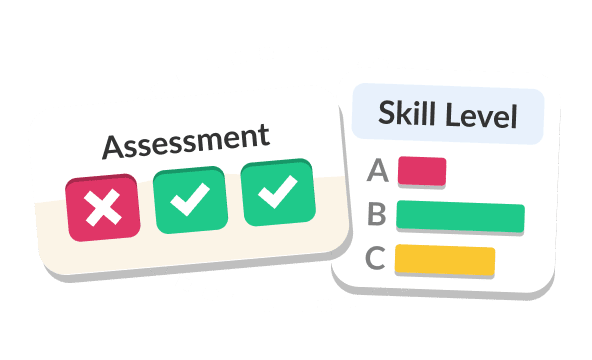
Finds the Gaps
See what your child needs to review.
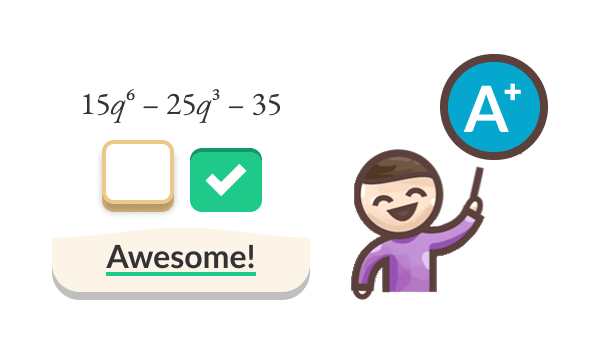
Step-by-Step Videos
Your child learns the method and solves alone.

Curriculum Aligned
Matches your child's state standards.
Try It Now
Test your knowledge
Our approach aligns with the evidence
Exam Scores
Better Recall
Less Anxiety
5th Grade Math Topics
2. Representing Numbers
3. Patterns
4. Adding and Subtracting Integers
5. Multiplying and Dividing Integers
6. Arithmetic Properties
7. Factors and Multiples
8. Introduction to Fractions
9. Adding and Subtracting Fractions
10. Multiplying Fractions
11. Decimals
12. Estimation
14. Time
15. Angles and Lines
16. Polygons
17. Introduction to 3D Shapes
18. Data Management
19. Statistics
19 Chapters · 76 Topics · 1247 Videos

Ready to practice 5th Grade Math?
Try practice questions on every 5th Grade Math topic — with instant feedback and step-by-step video solutions when you get stuck.
Discover Our Learning Areas
Explore key subjects and start learning with interactive content.













What Is 5th Grade Math?
5th grade math is the final year of elementary mathematics — and one of the most important. This is where children move from basic arithmetic into the broader mathematical thinking they'll need throughout middle school and beyond. The curriculum covers fraction and decimal operations in depth, introduces coordinate geometry and volume, and lays the groundwork for algebraic reasoning. If your child has a strong 5th grade math year, the transition to 6th grade math feels manageable. If gaps go unaddressed, they tend to grow.
What Topics Are Covered in 5th Grade Math?
5th grade math covers a wide range of connected concepts. Here is what most children work through over the course of the year:
Fractions and mixed numbers — adding, subtracting, multiplying, and dividing fractions and mixed numbers. This is the heart of 5th grade math and the area where most children need extra support.
Decimals and place value — reading, writing, comparing, and operating with decimals to the thousandths. Children learn to multiply and divide decimals fluently, connecting this work to their fraction understanding.
Order of operations and algebraic thinking — writing and evaluating numerical expressions, understanding parentheses, and beginning to work with simple patterns and rules. This is an early introduction to the algebraic reasoning that becomes central in 6th and 7th grade.
Geometry — classifying two-dimensional shapes by their properties, understanding volume of rectangular prisms using unit cubes and formulas, and plotting and interpreting points on a coordinate plane.
Measurement and data — converting measurement units, interpreting line plots with fractional data, and understanding how measurement connects to real-world problem solving.
Is 5th Grade Math Hard? Common Struggle Points
For many children, 5th grade math is the first year where the work feels genuinely difficult. The jump from 4th grade is real, and there are a few recurring areas where children get stuck:
Dividing fractions is the single most common struggle. Children often learn the "flip and multiply" rule without understanding what dividing by a fraction actually means — and this creates fragile knowledge that breaks down under exam conditions.
Multiplying decimals trips children up because they apply whole-number intuition ("multiplication makes things bigger") to situations where that isn't true. A clear conceptual explanation makes a large difference here.
Coordinate planes are new and abstract. Many children need repeated, low-pressure practice before the x-axis/y-axis relationship becomes natural.
Volume requires spatial reasoning that not all children have developed yet. Working through the concept with visual models — before moving to the formula — dramatically improves retention.
The encouraging reality is that all of these struggles are very teachable. Most children need the concept explained well, followed by guided practice that builds gradually — exactly the sequence StudyPug's certified teachers follow.
How Is 5th Grade Math Assessed in the US?
5th grade math is assessed at both the state and school level. Most US states administer a standardized math assessment at the end of 5th grade, typically tied to Common Core State Standards or a state-specific adaptation. These assessments include multi-step word problems, fraction and decimal operations, and geometry questions — all of which require children to apply methods, not just recall facts. Many states also conduct interim assessments mid-year. Schools use report cards alongside these assessments to give families a full picture of progress. Knowing which topics appear most frequently on your state's assessment is a useful guide for where to focus practice.
Why StudyPug for 5th Grade Math?
StudyPug is built around three things that make a real difference for 5th grade math: finding gaps fast, teaching the method clearly, and building skills through consistent practice.
The diagnostic assessment starts by identifying exactly where your child needs to focus. Instead of working through topics your child already understands, the diagnostic pinpoints the gaps — so practice time goes where it matters most.
From there, certified teacher video lessons explain each concept step by step. These are not AI-generated — they are real teachers who break down the method so your child understands how to approach a type of problem, not just how to answer one specific question. This matters enormously for 5th grade math, where concepts like dividing fractions require genuine understanding to stick.
The adaptive practice adjusts to your child's level as they work, presenting questions that challenge without overwhelming. Progress is tracked automatically, and the parent dashboard gives you a clear view of improvement per topic — so you always know where your child stands without having to quiz them yourself.
For families with more than one child, the Family Plan covers up to 5 children at all grade levels under one price. And every plan comes with a 30-day money-back guarantee — the only guarantee StudyPug makes — so you can try everything with no risk.
What Your Child Will Learn: 5th Grade Math Curriculum Coverage
StudyPug's 5th grade math content is built around Common Core State Standards and aligns with state math instruction across the US. The full topic list includes:
- Fraction operations: addition, subtraction, multiplication, and division of fractions and mixed numbers
- Decimal place value, comparison, and operations (including multiplying and dividing decimals)
- Order of operations and numerical expressions
- Volume of rectangular prisms: conceptual understanding and formula application
- Coordinate planes: plotting points, interpreting graphs, and solving problems
- Classifying two-dimensional figures by properties
- Unit conversion within the same measurement system
- Line plots and data interpretation with fractions
For families who want to see how this content maps to their own state, you can explore the texas 5th grade math curriculum and the 5th grade math california curriculum pages for detailed topic-by-topic breakdowns aligned to those states' standards. If your state follows a Common Core adaptation, the coverage will be very similar.
How to Use StudyPug for 5th Grade Math
Getting started takes less than five minutes. Here is the approach that works best for most families:
Step 1 — Run the diagnostic. Let the diagnostic assessment identify which 5th grade math topics your child is confident in and which ones need attention. This removes all the guesswork about where to begin.
Step 2 — Watch the lesson first. Before any practice, have your child watch the certified teacher video for the topic. The lesson teaches the method — once your child understands the concept, the practice problems make much more sense and frustration drops significantly.
Step 3 — Practice with feedback. Work through the adaptive practice questions. StudyPug provides instant feedback so your child understands what went wrong immediately, while the question is still fresh. This is far more effective than reviewing a marked-up test a week later.
Step 4 — Check the parent dashboard. Review progress in the parent dashboard to see which topics are improving and which still need a session. You can track every child individually if you are on the Family Plan.
Step 5 — Use free practice to warm up. StudyPug's free daily practice content is a great low-pressure warm-up before homework or ahead of a test. No subscription is needed to access this content — it is a genuine starting point with no commitment required.
Photo Search is also available for all grades — if your child is stuck on a specific problem in their worksheet or textbook, Photo Search finds the matching lesson so they can watch the relevant explanation immediately.
5th Grade Math FAQ
Unsure how StudyPug works? Need help with setting up? Check our frequently asked questions or contact us for help.
What does my child learn in 5th grade math, and what topics does it cover?
In 5th grade math, children build on foundational arithmetic and move into more complex territory. Key topics include operations with fractions and mixed numbers, multiplying and dividing decimals, understanding place value to the thousandths, introductory algebra concepts like expressions and order of operations, geometry (area, volume, and coordinate planes), and data interpretation. These topics form the bridge between elementary and middle school math, making this a pivotal year for building solid skills.
Is 5th grade math hard, and where do children commonly struggle?
5th grade math is a significant step up for many children. The most common struggle points are fraction operations — especially multiplying and dividing fractions, which require understanding the concept rather than just a procedure. Decimals and place value cause confusion when children try to apply whole-number thinking. Volume calculations and coordinate geometry are also new and abstract. The good news is that these challenges are very teachable; most children click quickly once the method is explained clearly and step by step.
What should my child know before 5th grade math, and what comes next?
Before 5th grade math, children should be confident with 4th grade skills: multi-digit multiplication and division, comparing fractions, understanding decimal notation to the hundredths, and basic angle/geometry concepts. After 5th grade, the path leads into 6th grade math, which introduces ratios, rates, negative numbers, and early algebra — topics that build directly on the fraction and decimal fluency your child develops in 5th grade. A strong 5th grade foundation makes 6th grade considerably easier.
How does StudyPug 5th grade math map to what my child learns at school?
StudyPug's 5th grade math lessons are built around Common Core State Standards, which guide math instruction in most US states. Whether your child's school follows a state-specific adaptation or the core standards directly, the topics covered — fractions, decimals, geometry, and algebraic thinking — align with classroom instruction. You can also explore how lessons align to specific state curricula, including the 5th grade math California and texas 5th grade math curriculum pages, to see exactly how coverage maps to your state.
What is one of the trickiest 5th grade math concepts, and how is it taught?
Dividing fractions is widely considered the trickiest 5th grade math concept. Children often memorize "multiply by the reciprocal" without understanding why — and this leads to errors when the context changes. StudyPug's certified teachers first build the conceptual understanding (what does it mean to divide by a fraction?) using visual models, then walk through the algorithm step by step. By teaching the method, not just the answer, children can apply the skill to word problems and unfamiliar question formats — exactly what state assessments require.
How much math practice should my child do in 5th grade?
Most educators and curriculum guides suggest 15–20 minutes of focused math practice per day for 5th graders, on top of homework. Short, consistent sessions are more effective than infrequent long ones. A practical approach: use StudyPug's free daily practice content as a warm-up, then move into adaptive practice on whichever topic your child is currently covering in class. The parent dashboard shows you practice time and progress per topic, so you can stay informed without hovering.





Written by the StudyPug Team
Last updated June 5, 2026
3 M+
students
★★★★★
4.8 average
K–12
all grades