Online 5th Grade English Help for Your Child
Practice reading comprehension, grammar, and vocabulary with real teachers — aligned to state standards.
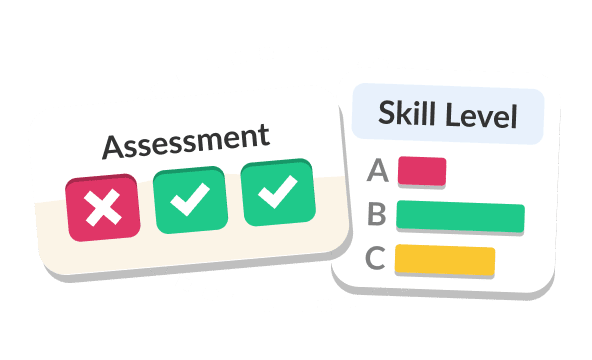
Find Learning Gaps
See where your child needs help most.
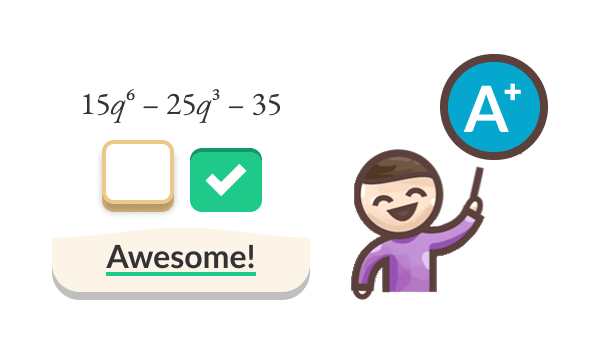
Expert Video Solutions
Teachers explain answers for kids to learn.

Curriculum Aligned
Built around your standards not a generic course.
Try It Now
Test your knowledge
Our approach aligns with the evidence
Exam Scores
Better Recall
Less Anxiety
5th Grade ELA Topics
1. CCSS.ELA-LITERACY.RL.5.1
2. CCSS.ELA-LITERACY.RL.5.2
3. CCSS.ELA-LITERACY.RL.5.3
4. CCSS.ELA-LITERACY.RL.5.4
5. CCSS.ELA-LITERACY.RL.5.5
6. CCSS.ELA-LITERACY.RL.5.6
7. CCSS.ELA-LITERACY.RL.5.7
8. CCSS.ELA-LITERACY.RL.5.9
9. CCSS.ELA-LITERACY.RL.5.10
10. CCSS.ELA-LITERACY.L.5.1.A
11. CCSS.ELA-LITERACY.L.5.1.B
12. CCSS.ELA-LITERACY.L.5.1.C
13. CCSS.ELA-LITERACY.L.5.1.D
14. CCSS.ELA-LITERACY.L.5.1.E
15. CCSS.ELA-LITERACY.L.5.2.A
16. CCSS.ELA-LITERACY.L.5.2.B
17. CCSS.ELA-LITERACY.L.5.2.C
18. CCSS.ELA-LITERACY.L.5.2.D
19. CCSS.ELA-LITERACY.L.5.2.E
20. CCSS.ELA-LITERACY.L.5.3.A
21. CCSS.ELA-LITERACY.L.5.3.B
22. CCSS.ELA-LITERACY.L.5.4.A
23. CCSS.ELA-LITERACY.L.5.4.B
24. CCSS.ELA-LITERACY.L.5.4.C
25. CCSS.ELA-LITERACY.L.5.5.A
26. CCSS.ELA-LITERACY.L.5.5.B
27. CCSS.ELA-LITERACY.L.5.5.C
28. CCSS.ELA-LITERACY.L.5.6
29. CCSS.ELA-LITERACY.SL.5.1.A
30. CCSS.ELA-LITERACY.SL.5.1.B
31. CCSS.ELA-LITERACY.SL.5.1.C
32. CCSS.ELA-LITERACY.SL.5.1.D
33. CCSS.ELA-LITERACY.SL.5.2
34. CCSS.ELA-LITERACY.SL.5.3
35. CCSS.ELA-LITERACY.SL.5.4
36. CCSS.ELA-LITERACY.SL.5.5
37. CCSS.ELA-LITERACY.SL.5.6
38. CCSS.ELA-LITERACY.W.5.1.A
39. CCSS.ELA-LITERACY.W.5.1.B
40. CCSS.ELA-LITERACY.W.5.1.C
41. CCSS.ELA-LITERACY.W.5.1.D
42. CCSS.ELA-LITERACY.W.5.2.A
43. CCSS.ELA-LITERACY.W.5.2.B
44. CCSS.ELA-LITERACY.W.5.2.C
45. CCSS.ELA-LITERACY.W.5.2.D
46. CCSS.ELA-LITERACY.W.5.2.E
47. CCSS.ELA-LITERACY.W.5.3.A
48. CCSS.ELA-LITERACY.W.5.3.B
49. CCSS.ELA-LITERACY.W.5.3.C
50. CCSS.ELA-LITERACY.W.5.3.D
51. CCSS.ELA-LITERACY.W.5.3.E
52. CCSS.ELA-LITERACY.W.5.4
53. CCSS.ELA-LITERACY.W.5.5
54. CCSS.ELA-LITERACY.W.5.6
55. CCSS.ELA-LITERACY.W.5.7
56. CCSS.ELA-LITERACY.W.5.8
57. CCSS.ELA-LITERACY.W.5.9.A
58. CCSS.ELA-LITERACY.W.5.9.B
59. CCSS.ELA-LITERACY.W.5.10
60. CCSS.ELA-LITERACY.RF.5.3.A
61. CCSS.ELA-LITERACY.RF.5.4.A
62. CCSS.ELA-LITERACY.RF.5.4.B
63. CCSS.ELA-LITERACY.RF.5.4.C
64. CCSS.ELA-LITERACY.RI.5.1
65. CCSS.ELA-LITERACY.RI.5.2
66. CCSS.ELA-LITERACY.RI.5.3
67. CCSS.ELA-LITERACY.RI.5.4
68. CCSS.ELA-LITERACY.RI.5.5
69. CCSS.ELA-LITERACY.RI.5.6
70. CCSS.ELA-LITERACY.RI.5.7
71. CCSS.ELA-LITERACY.RI.5.8
72. CCSS.ELA-LITERACY.RI.5.9
73. CCSS.ELA-LITERACY.RI.5.10
73 Chapters · 117 Topics · 99 Videos
Discover Our Learning Areas
Explore key subjects and start learning with interactive content.



What is 5th Grade English?
5th grade English is the bridge between elementary reading foundations and the analytical thinking demanded in middle school. At this level, students move beyond basic comprehension into evaluating texts, identifying literary elements like theme and author's purpose, and applying grammar rules to their own writing. It's a pivotal year — and it can feel like a big leap.
Parents often notice their child handling shorter passages confidently in 4th grade, then hitting a wall when 5th grade introduces longer informational texts, multi-step grammar concepts, and close reading questions that require inference rather than recall. That gap is real, and it's exactly where targeted practice makes the difference.
StudyPug's 5th Grade English course covers the full scope of state standards: reading comprehension across literary and informational texts, vocabulary in context, grammar and conventions, literary elements, and the analytical skills students need heading into 6th grade.
What reading comprehension skills do 5th graders need?
By 5th grade, reading comprehension goes well beyond finding the main idea. Students are expected to make inferences, determine theme, compare and contrast multiple texts, and evaluate an author's point of view. They read both literary texts — fiction, poetry, drama — and informational texts like articles, essays, and historical documents.
The challenge is that many students can decode words fluently but still miss deeper meaning. Comprehension practice at this level means working through passages actively: identifying text evidence, summarizing accurately, and distinguishing between what the text says directly and what it implies. StudyPug's practice problems mirror this structure, with questions that ask students to cite evidence and explain their reasoning — exactly the skills tested on state assessments.
If your child finds comprehension questions frustrating, it usually signals a gap in one specific strategy — inference, summarizing, or identifying text structure. A diagnostic assessment pinpoints which skill needs work so practice stays focused.
How does grammar instruction work in 5th grade English?
5th grade grammar builds significantly on earlier years. Students work with verb tenses (including perfect tenses), correlative conjunctions, punctuation for effect, and sentence structure — including combining clauses and correcting run-ons and fragments. They also study punctuation in context and learn to use commas, colons, and dashes correctly.
Grammar is one of the areas where students most benefit from adaptive practice. A child who understands simple past tense may still struggle with past perfect or progressive forms. Rather than drilling every tense in order, StudyPug's assessments identify the exact tense or rule causing errors and route practice there first. Skill gaps close faster when practice is targeted, not random.
Grammar at this level also intersects with reading — recognizing how an author uses punctuation for emphasis, or how verb tense signals a shift in time, are comprehension skills as much as grammar skills. StudyPug connects these dots explicitly in its video lessons.
What vocabulary skills does 5th grade English cover?
Vocabulary in 5th grade is taught primarily through context — students learn to use surrounding words and phrases to determine the meaning of unfamiliar words, including figurative language, idioms, and domain-specific terms in informational texts. They also study Greek and Latin roots and affixes to decode new words independently.
This shift — from memorizing word lists to deriving meaning from context — trips up many students. If your child can recite definitions but freezes on reading passages with unfamiliar words, the context-clue strategy needs explicit practice. StudyPug's lessons walk through exactly how to identify context clues, use roots and affixes, and distinguish literal from figurative meaning in a text.
Strong vocabulary skills directly support reading comprehension scores. Students who can decode unfamiliar academic vocabulary move through passages faster and answer inference questions more accurately.
What are literary elements and why do they matter in 5th grade?
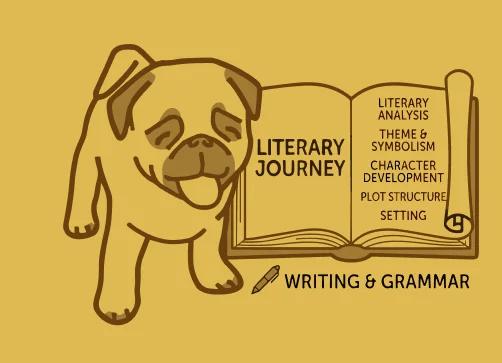
Literary elements are the building blocks of fiction: plot structure (exposition, rising action, climax, resolution), character development, setting, theme, point of view, and conflict. In 5th grade, students are expected not just to identify these elements but to explain how they contribute to meaning — how the setting shapes a character's choices, or how the theme develops across the whole story.
This analytical layer is what makes 5th grade English feel harder than earlier grades. A student who can name the conflict may not yet be able to explain how the author uses that conflict to develop the theme. StudyPug's certified-teacher video lessons model this thinking step by step, using grade-appropriate texts to demonstrate how to move from identification to analysis.
Literary element questions appear on virtually every 5th grade state assessment. Building fluency with them now prepares students not just for current tests but for the deeper literary analysis expected in 6th grade and beyond.
How is 5th grade English assessed on state tests?
Most state assessments in 5th grade ELA include two main components: a reading section with literary and informational passages followed by multiple-choice and short-answer questions, and a writing/grammar section testing conventions and language skills. Questions are based on real exam formats — students answer comprehension questions that require citing text evidence, vocabulary questions using context clues, and grammar questions in sentence-correction formats.
StudyPug's practice is built around these skills. Every reading comprehension question type, grammar convention tested, and vocabulary strategy assessed at the state level is covered. Parents using StudyPug often report that their child recognizes question formats on state tests because the practice has prepared them for exactly that style of assessment.
What should 5th graders know before starting 6th grade English?
Heading into 6th grade, students benefit most from solid foundations in three areas: reading comprehension with text evidence, grammar conventions (especially complex sentence structures), and vocabulary strategies for unfamiliar words. These skills underpin nearly everything in middle school English — literary analysis essays, research projects, and close reading assignments all depend on them.
Students who finish 5th grade with gaps in any of these areas often find 6th grade English unexpectedly difficult, not because the new content is impossible but because it assumes mastery of earlier skills. A diagnostic assessment at the end of 5th grade identifies exactly what needs reinforcement before the transition. Closing those gaps now saves significant frustration in September.
Why StudyPug for 5th Grade English?
StudyPug combines certified-teacher video lessons, a diagnostic assessment engine, and adaptive practice in one platform — and it covers all subjects and grades K–10 under a single subscription. For 5th grade English specifically, that means:
- Diagnostic Assessment: A short diagnostic identifies exactly which reading, grammar, and vocabulary skills need the most attention. Your child starts practicing the right things from day one — not working through topics they've already mastered.
- Certified-Teacher Video Lessons: Real teachers walk through every concept — how to identify a theme, how to use context clues, how to correct a run-on sentence — with clear, step-by-step explanations. These are not AI-generated videos; they are taught by qualified educators.
- Adaptive Practice: After watching a lesson, students practice with questions that adjust in difficulty based on their performance. Skills build progressively. No frustration from too-hard problems; no wasted time on easy ones.
- Curriculum Alignment: All 5th Grade English content is aligned to state standards, covering the same skills and texts students encounter in class. Practice reinforces school learning rather than running parallel to it.
- Progress Tracking: Parents see measurable improvement over time — not just a grade, but visibility into which specific skills are strengthening and which still need work.
- Free Practice Content: Students can explore free sample lessons and practice before committing. When you subscribe, the 30-day money-back guarantee means there's no risk.
One subscription covers up to 5 children across all subjects and grades. For families with multiple children or students who need support in more than one subject, that breadth of coverage is a significant advantage.
What You Learn in 5th Grade English
StudyPug's 5th Grade English course covers the full range of skills aligned to state standards:
- Reading Comprehension: Literary and informational texts; main idea and supporting details; making inferences with text evidence; summarizing; comparing and contrasting texts; author's purpose and point of view.
- Literary Elements: Plot structure; character development and motivation; theme; setting; conflict; point of view; figurative language including metaphor, simile, hyperbole, and personification.
- Grammar and Conventions: Verb tenses including perfect and progressive forms; correlative conjunctions; punctuation for effect; sentence combining; run-ons and fragments; pronoun-antecedent agreement.
- Vocabulary: Context clues; Greek and Latin roots and affixes; domain-specific vocabulary in informational texts; figurative language and idioms; connotation and denotation.
- Informational Text Skills: Text structure (cause/effect, problem/solution, compare/contrast); integrating information from multiple sources; evaluating evidence and reasoning.
Students in Florida can explore how these skills map to their specific state requirements via the Florida grade 5 ELA curriculum. Students in New York can review alignment at the New York grade 5 ELA curriculum page.
Using StudyPug for 5th Grade English Practice
Getting started with StudyPug takes less than five minutes. After signing up, your child takes a short diagnostic assessment that maps their current skill level across reading comprehension, grammar, and vocabulary. The platform then recommends where to start — not necessarily at the beginning of the course, but at the exact point where practice will have the most impact.
A typical study session looks like this: watch a short certified-teacher video lesson on a specific concept (for example, identifying theme in a literary text), then work through adaptive practice questions on that concept. Questions adjust in difficulty based on performance — harder if your child is getting them right, easier if they need more scaffolding. The session ends with a progress update that shows exactly what was covered and what to practice next.
Parents can check the dashboard at any time to see which skills are improving and which still need attention. Photo Search is available as a supporting feature: if your child has a specific homework question they're stuck on, they can snap a photo and be routed to the lesson that addresses it.
StudyPug works on desktop, tablet, and mobile — so practice fits into homework time, evenings, or weekend sessions without requiring special equipment. The 30-day money-back guarantee means you can try the full platform risk-free and see results before committing long term.
5th Grade English FAQ
Unsure how StudyPug works? Need help with setting up? Check our frequently asked questions or contact us for help.
What's included in the subscription?
Full access to all 5th Grade English video lessons, practice problems, assessments, and progress tracking. One subscription covers up to 5 children and all grades, subjects, and courses on StudyPug.
Can I sign up free to try it?
Yes! You can sign up free to explore sample lessons and practice materials. When you're ready to subscribe, we offer a 30-day money-back guarantee — if it's not right for your child, we'll refund you.
How much does it cost?
Plans start with one low monthly payment, with annual options for the best value. One plan covers up to 5 children and all subjects. 30-day money-back guarantee. [See all plans →]
What ELA skills does 5th grade cover?
5th grade English covers reading comprehension, literary elements (plot, theme, character), informational text analysis, grammar rules, and vocabulary in context — the foundation for middle school English.
How do assessments help my child?
Short diagnostic assessments identify exactly which 5th grade reading and grammar skills have gaps. Practice then focuses on those areas — no wasted time on what your child already knows.
Is 5th grade English hard?
5th grade introduces literary analysis and more complex grammar, which can feel like a big jump. StudyPug breaks every concept into manageable steps so your child builds confidence gradually.





Written by the StudyPug Team
Last updated June 5, 2026
3 M+
students
★★★★★
4.8 average
K–12
all grades