6th Grade Math Help — Step-by-Step Video Lessons & Practice
Help your child understand every 6th grade math topic and build real confidence, one lesson at a time.
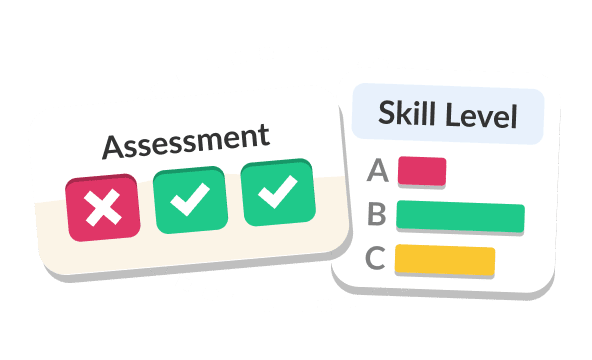
Diagnostic Finds Gaps
Know exactly where your child needs help.
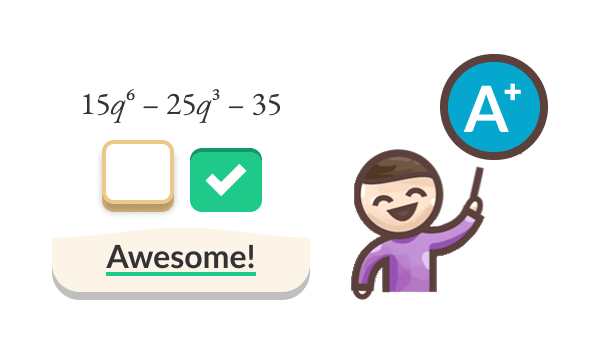
Expert Video Solutions
Teachers explain so your child solves alone.

Matches School Work
Matches your state standards exactly.
Try It Now
Test your knowledge
Our approach aligns with the evidence
Exam Scores
Better Recall
Less Anxiety
6th Grade Math Topics
1. Understanding Numbers
2. Number Theory
3. Adding and Subtracting Integers
4. Multiplying and Dividing Integers
5. Introduction to Ratios, Rates and Percentages
6. Operations with Decimals
7. Adding and Subtracting Fractions
8. Multiplying and Dividing Fractions
9. Measuring Systems
10. Coordinates, Quadrants and Transformations
11. Tessellations
12. Introduction to Variables and Expressions
13. Introduction to Equations
14. Introduction to Inequalities
15. Surface Area and Volume of 3D Shapes
17. Data Management
18 Chapters · 91 Topics · 849 Videos

Ready to practice 6th Grade Math?
Try practice questions on every 6th Grade Math topic — with instant feedback and step-by-step video solutions when you get stuck.
Discover Our Learning Areas
Explore key subjects and start learning with interactive content.











What Is 6th Grade Math?
Sixth grade math is the bridge between elementary arithmetic and the algebraic thinking children will use in middle and high school. For the first time, students work with variables, reason about ratios, and operate across the full number line — including negative integers. It is a foundational year: the concepts introduced here directly feed everything from pre-algebra and geometry to data analysis in later grades. If your child is finding the jump from 5th grade difficult, that is completely normal — and it is exactly the kind of gap that structured video lessons and targeted practice can close quickly.
What Are the Core Topics in 6th Grade Math?
The Common Core framework — which most US states follow closely — organises 6th grade math into five major areas:
Ratios and Proportional Relationships. Children learn to reason about ratios, compute unit rates, and solve problems involving percent. This strand underpins consumer math, science, and data literacy throughout the middle grades.
The Number System. Students extend their understanding of division to include fractions divided by fractions, and they meet negative numbers in a formal way — plotting them on a number line, ordering them, and using them in real-world contexts such as temperature and elevation.
Expressions and Equations. Children write, read, and evaluate algebraic expressions; identify equivalent expressions; and solve one-step equations and inequalities. This is where many students first encounter the idea that a letter can stand in for an unknown quantity.
Geometry. The focus shifts to calculating area of polygons, surface area of three-dimensional figures using nets, and volume of rectangular prisms — including those with fractional edge lengths.
Statistics and Probability. Students learn to pose statistical questions, display data in dot plots, histograms, and box plots, and describe distributions using measures of centre (mean, median) and variability (range, interquartile range, mean absolute deviation).
Why Is 6th Grade Math Hard — and What Can Parents Do?
The difficulty spike in 6th grade is real and well-documented. Three factors drive it. First, abstraction: working with variables and unknowns requires a qualitatively different kind of thinking from computing with known numbers. Second, fraction fluency: many children carry gaps from 4th and 5th grade, and 6th grade fraction work (especially dividing fractions by fractions) exposes those gaps immediately. Third, vocabulary load: terms like ratio, coefficient, absolute value, and statistical variability pile up fast.
The most effective thing a parent can do is identify the specific gap early and address it directly — rather than waiting for a report card. A diagnostic assessment is the fastest way to do that. Rather than working through an entire textbook chapter, your child gets directed to the exact concept they need to revisit, practices it adaptively, and moves forward. That targeted approach is far more efficient than rereading class notes or trying random YouTube videos.
How Is 6th Grade Math Assessed in the US?
Assessment varies by state, but most 6th graders in the US sit a state standardised mathematics assessment in the spring — typically aligned to state standards derived from or directly matching the Common Core. In Texas, this is the STAAR (State of Texas Assessments of Academic Readiness) Grade 6 Math test. In Florida, students take the Florida Assessment of Student Thinking (FAST) Math PM3 at Grade 6. In California, students sit the Smarter Balanced Summative Assessment. Beyond standardised tests, children are assessed through unit tests, quizzes, and teacher-set problem sets throughout the year. StudyPug's practice questions are based on real exam-style problems, so children become familiar with the format and question types they will encounter — reducing test-day anxiety significantly.
What Is the Trickiest Concept in 6th Grade Math?
Most teachers and parents would point to dividing fractions by fractions as the concept that generates the most confusion. The procedural shortcut — keep the first fraction, change the division sign to multiplication, flip the second fraction — is easy to memorise but nearly impossible to apply reliably without understanding. Children who only learn the rule forget it under pressure or apply it in the wrong direction.
The stronger approach is to build the concept visually first: how many times does one-half fit into three-quarters? Drawing that on a number line makes the answer intuitive before the algorithm is introduced. StudyPug's certified teachers do exactly this — they model the concept visually, explain the reasoning, and only then show the procedural shorthand. Children who learn this way can reconstruct the method even if they forget the exact steps, because they understand what division of fractions actually means.
A close second is writing and solving equations from word problems. The skill of translating natural language into a symbolic expression — recognising that "5 more than a number" means n + 5, not 5 + n in a different sense, or that "twice a number decreased by 3" means 2n − 3 — requires deliberate practice with varied problem types. The practice sets on StudyPug cover this systematically, adjusting difficulty as your child's accuracy improves.
Why StudyPug for 6th Grade Math Help?
Parents choose StudyPug because it combines three things that are rarely found together: a diagnostic that tells you exactly where to focus, certified-teacher video lessons that explain the method rather than just demonstrating steps, and adaptive practice that builds from where your child actually is rather than where the curriculum assumes they should be.
The diagnostic assessment is the starting point. It takes only a few minutes and surfaces the specific topics — whether that is integer operations, ratio reasoning, or algebraic expressions — where your child most needs support. That means your child's first session on StudyPug is already targeted, not generic.
The video lessons are made by certified teachers, not generated by software. Each teacher explains not just the procedure but the reasoning behind it, using clear worked examples. Because children can pause, rewind, and rewatch as many times as they need, a concept that was confusing after one explanation in a crowded classroom can become clear after two or three viewings at home — without anyone feeling embarrassed to ask again.
For families with more than one child, the Family Plan covers up to 5 children across all grade levels and subjects for one subscription price. The parent dashboard gives you a per-child view of progress so you always know which topics each child has worked on and how they are improving. And because there is a 30-day money-back guarantee, there is no financial risk in getting started today.
What Your Child Will Learn — 6th Grade Math Curriculum Coverage
StudyPug's 6th grade math course is aligned to Common Core State Standards and state-level adaptations used across the US. Key topic areas include: ratios and unit rates; fraction and decimal operations (including dividing fractions by fractions); introduction to integers and absolute value; algebraic expressions and one-step equations; area, surface area, and volume; and descriptive statistics including measures of centre and variability.
If you want to see exactly how the curriculum maps to your state's standards, you can explore the Texas 6th grade math curriculum breakdown or the Florida grade 6 math curriculum guide — both show the topic-by-topic alignment between StudyPug lessons and state standards.
Coverage is comprehensive: every unit your child encounters in a typical 6th grade classroom has a corresponding set of lessons and practice problems on StudyPug. That means if a topic comes up on a quiz at school, there is almost certainly a lesson on StudyPug that addresses it directly — your child can find it, watch it, and practise the same evening.
How to Use StudyPug for 6th Grade Math
Getting started takes less than five minutes. Once your child has an account, they take the short diagnostic assessment. Results appear immediately and direct your child to the topics where they will make the fastest progress.
A simple evening routine works well for most families: ten to fifteen minutes watching a video lesson on a topic covered in class that day, followed by a practice set on the same topic. The adaptive practice adjusts question difficulty based on how your child is performing — getting harder as accuracy improves, and stepping back if they are struggling — so the session always stays in the right zone of challenge.
Parents can log into the parent dashboard at any point to review progress. You can see which topics your child has completed, how many practice problems they have attempted, and where accuracy is still developing. That information makes conversations with teachers much more concrete: instead of "she's struggling with math," you can say "she's solid on ratios but still working on dividing fractions."
Photo Search is also available for all grades and subjects — if your child is stuck on a specific homework problem, they can search for the matching lesson directly. It finds the lesson, not the answer, so the learning still happens.
There is no risk to getting started. Free practice content is available without a subscription, and the 30-day money-back guarantee means that if StudyPug is not the right fit, you can request a full refund within the first month. Most families find the difference in their child's confidence and homework completion noticeable well before 30 days are up.
6th Grade Math FAQ
Unsure how StudyPug works? Need help with setting up? Check our frequently asked questions or contact us for help.
What does my child learn in 6th grade math, and what topics does it cover?
Sixth grade math is a big year — students move from arithmetic into pre-algebraic thinking. Core topics include ratios and proportional relationships, operations with fractions and decimals, introduction to integers and the number system, writing and evaluating algebraic expressions and equations, geometry (area, surface area, and volume), and basic statistics and probability. By the end of the year, children are expected to reason with variables and apply math to real-world problems, laying the groundwork for pre-algebra and algebra in grades 7 and 8.
Is 6th grade math hard, and where do children commonly struggle?
Many children find 6th grade math a significant step up because it introduces abstract thinking — especially working with variables in expressions and equations. Common struggle points include understanding ratios and unit rates, dividing fractions by fractions, plotting and interpreting negative numbers on a number line, and translating word problems into algebraic expressions. The jump from working only with whole numbers to handling integers, fractions, and unknowns together can feel overwhelming at first. Consistent practice and clear explanation of the 'why' behind each method help children build the confidence to keep going.
What should my child know before 6th grade math, and what comes next?
Children entering 6th grade should be comfortable multiplying and dividing multi-digit numbers, adding and subtracting fractions with unlike denominators, and understanding basic place value through decimals. Strong multiplication-table fluency also makes a real difference. After 6th grade, students move into 7th grade math, which deepens ratio reasoning, introduces proportional relationships, and expands work with negative numbers — and then on to pre-algebra and algebra. Gaps from 5th grade (especially fractions and decimals) often show up in 6th grade, so addressing them early keeps progression smooth.
How does StudyPug 6th grade math map to what my child learns at school?
StudyPug's 6th grade math content is aligned to Common Core State Standards and state-level standards across the US, including the Texas Essential Knowledge and Skills (TEKS) and Florida's Benchmarks for Excellent Student Thinking (B.E.S.T.). Every lesson corresponds to the units and topics your child covers in class — ratios, the number system, expressions and equations, geometry, and statistics — so there's no confusion between what they see on StudyPug and what their teacher presents. If your state follows a variation on Common Core, the core topic sequence is still closely matched.
What is one of the trickiest 6th grade math concepts, and how is it taught?
Dividing fractions by fractions trips up many 6th graders. The standard algorithm — 'keep, change, flip' (multiply by the reciprocal) — is easy to memorize but hard to understand without a visual model. StudyPug's certified teachers walk through the concept using number line diagrams and area models before introducing the algorithm, so children understand *why* it works, not just how to apply it. That deeper understanding means they can tackle unfamiliar problems on tests instead of freezing when a question looks slightly different from what they practiced.
How much math practice should my child do at 6th grade?
Most education guidance suggests 20–30 minutes of focused math practice per day outside school for middle-school-age children. In 6th grade, short daily sessions tend to outperform longer occasional sessions because spaced repetition strengthens retention. A good routine: review one video lesson on a topic the child found difficult in class, then complete a practice set on that topic. StudyPug's adaptive practice adjusts difficulty to keep your child challenged without overwhelming them, making it easy to fit into an evening routine without turning homework time into a stressful event.




Written by the StudyPug Team
Last updated June 5, 2026
3 M+
students
★★★★★
4.8 average
K–12
all grades