Grade 12 Basic Algebra Help — Video Lessons & Practice
Get clear explanations for any algebra problem and build exam-ready confidence.
Value vs. Private Tutor
Expert algebra help without the cost.

Multi-Subject
Master algebra today and any subject tomorrow.
Practice Until Perfect
Master this topic before moving on.
Try It Now
Test your knowledge
Our approach aligns with the evidence
Exam Scores
Better Recall
Less Anxiety
Basic Algebra Topics
2. Ratios, Rates, Proportions and Percent
3. Fractions
4. Algebraic Expressions
5. Linear Relations
6. Linear equations
7. Linear inequalities
8. Linear Functions
9. Solving Linear Systems
10. Introduction to exponents
11. Exponents
12. Operations of Polynomials
13. Factoring polynomial Expressions
14. Scale Factors and Similarity
15 Chapters · 113 Topics · 876 Videos

Ready to practice Basic Algebra?
Try practice questions on every Basic Algebra topic — with instant feedback and step-by-step video solutions when you get stuck.
Discover Our Learning Areas
Explore key subjects and start learning with interactive content.



What Is Basic Algebra?
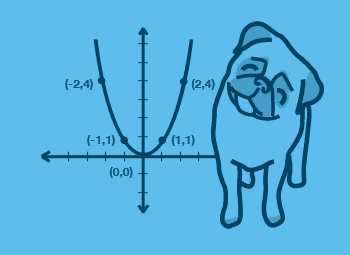
Basic Algebra is the branch of mathematics that uses letters and symbols to represent numbers and relationships, allowing you to write general rules, solve for unknowns, and model real-world situations. At the Grade 12 level, Basic Algebra is often taken as a consolidation or remediation course — a chance to solidify the skills that underpin every higher-level math subject before graduation or standardized testing. In one sentence: Basic Algebra teaches you how to work with variables and equations so that all other math becomes easier.
What Topics Are Covered in Basic Algebra?
A high school Basic Algebra course typically spans six major topic areas:
Expressions and operations. Simplifying algebraic expressions, combining like terms, applying the distributive property, and working with integer and rational exponents form the entry point of the course. These skills are used in every subsequent topic.
Linear equations and inequalities. Solving one-step, two-step, and multi-step equations is the core skill of algebra. Students extend this to inequalities — understanding how flipping the inequality sign when multiplying or dividing by a negative number changes the solution set.
Graphing and linear functions. Plotting points, understanding slope and y-intercept, writing equations in slope-intercept and standard form, and interpreting graphs in context. This topic bridges algebra and geometry.
Systems of equations. Solving two equations simultaneously using substitution and elimination. Systems appear on virtually every standardized test and in science, economics, and statistics courses.
Polynomials and factoring. Adding, subtracting, multiplying, and dividing polynomials; factoring out the greatest common factor; factoring trinomials; and recognizing special products like difference of squares and perfect square trinomials.
Introduction to quadratic equations. Solving quadratics by factoring and by applying the quadratic formula; understanding what the discriminant tells you about the number and type of solutions.
Is Basic Algebra Hard? Where Do Students Struggle Most?
For most students, Basic Algebra is not inherently difficult — but it does require a shift in thinking. Arithmetic asks you to compute; algebra asks you to reason. The three areas where Grade 12 students most often hit a wall are:
Sign and negative-number errors. A single dropped negative sign cascades through an entire solution. Students who develop a habit of checking sign changes at each step dramatically reduce their error rate.
Factoring polynomials. Unlike most algebra procedures, factoring has no single algorithm. You need to recognize patterns — and that recognition comes only from seeing many examples worked out clearly, then practising independently with feedback.
Word problems and equation setup. Translating a real-world sentence into an algebraic equation is a separate skill from solving that equation. Many students can solve equations fluently but freeze when they need to write one from scratch. Targeted practice on translating language into algebra closes this gap faster than general review.
The good news: these are all learnable patterns. Once you see the method demonstrated step by step and then work similar problems yourself, the concepts tend to click quickly.
How Does Basic Algebra Fit Into the Bigger Picture?
Basic Algebra sits at the foundation of the entire high school math sequence. Before this course, students need solid arithmetic — operations with fractions, decimals, and integers. After it, the path opens to Algebra 2, Pre-Calculus, Calculus, Statistics, and Physics. Every one of those subjects treats algebraic manipulation as a tool rather than a topic, which means any gap in algebra fluency creates compounding difficulty at higher levels.
For Grade 12 students, there is another critical reason to sharpen algebra skills: standardized tests. The SAT's Heart of Algebra domain and the ACT Math section both draw heavily from linear equations, systems, and polynomial expressions. A focused review of Basic Algebra topics is among the highest-leverage preparations a Grade 12 student can do before sitting either exam.
Why StudyPug for Basic Algebra?
StudyPug is built around three capabilities that work together to help you improve your algebra grade efficiently.
Diagnostic assessment that finds your gaps. Instead of reviewing topics you already know, you start with a short diagnostic that maps your current understanding. StudyPug then surfaces the specific topics where your time will have the most impact — study smarter, not harder.
Certified-teacher concept videos that teach the method. Every lesson is recorded by a certified teacher and walks you through the reasoning behind each step — not just the procedure. This matters because tests always include variations on the problems you have practised. When you understand why a step works, you can adapt to new problem types. These are not AI-generated videos; they are real instructors teaching real methods.
Adaptive practice that adjusts to your level. After watching a lesson, you practise with problems that respond to your performance. Get a few right and the difficulty increases; struggle on a type and the system gives you more scaffolded practice before moving on. This keeps you in the productive challenge zone rather than grinding through problems that are too easy or too hard.
On top of these core features, StudyPug's lessons are aligned to the US curriculum standards your school follows, and the platform includes SAT- and ACT-style practice questions based on real exam formats — so your algebra study and your test prep happen in the same place.
Free practice content is available without a subscription, so you can start building skills today at no cost. When you are ready for full access, all paid plans come with a 30-day money-back guarantee — no risk, no long-term commitment.
What You Learn in Basic Algebra — Curriculum Coverage
The StudyPug Basic Algebra course covers the complete set of topics aligned to US high school algebra standards, including:
- Simplifying and evaluating algebraic expressions
- Solving linear equations and inequalities (one-variable and two-variable)
- Graphing linear functions; slope, intercepts, and transformations
- Writing and interpreting equations in multiple forms
- Solving systems of linear equations by substitution and elimination
- Operations with polynomials: addition, subtraction, multiplication
- Factoring strategies: GCF, trinomials, difference of squares
- Solving quadratic equations by factoring and the quadratic formula
- Introduction to rational expressions and equations
- Word-problem translation and algebraic modeling
Every topic includes at least one concept video, worked examples, and a practice set. Topics that appear frequently on the SAT and ACT are flagged so you can prioritize them in your review.
Note: No validated internal topic-page links are available for this course in the current sitemap. Links will be added once the topic URLs are confirmed in the SP_PageFeed.
How to Use StudyPug for Basic Algebra
Step 1 — Take the diagnostic. Spend five to ten minutes on the diagnostic assessment. You will get a clear picture of which algebra topics are strong and which need work. This is your study roadmap.
Step 2 — Watch the concept video for your first target topic. Each video is focused on a single concept and runs typically five to fifteen minutes. Pause, rewind, and rewatch any step that is unclear — there is no shame in watching a video twice. The goal is to understand the method, not just copy the steps.
Step 3 — Do the practice problems immediately after. Research consistently shows that practicing right after watching improves retention significantly more than re-watching. Work through the adaptive practice set for that topic before moving on.
Step 4 — Use Photo Search when you are stuck on a homework problem. StudyPug's Photo Search feature lets you photograph a problem and find the matching lesson instantly — available for all grades and subjects. It is a fast way to connect a specific homework question to the concept video that explains the method behind it.
Step 5 — Run a practice test before your exam. StudyPug includes practice tests with exam-style questions based on real SAT, ACT, and course-exam formats. Take a timed practice test a few days before your exam, review every question you missed using the video solutions, and then do a shorter follow-up set on your weak areas.
Consistency matters more than marathon sessions. Twenty to thirty minutes of focused practice four or five times a week will produce steady, measurable progress — and the adaptive system ensures every minute is spent on what will actually move your grade.
Basic Algebra FAQ
Unsure how StudyPug works? Need help with setting up? Check our frequently asked questions or contact us for help.
What do you learn in Basic Algebra, and what topics does it cover?
Basic Algebra covers the foundational skills needed to work with variables, expressions, and equations. Core topics include simplifying expressions, solving one- and two-step equations, working with linear equations and inequalities, graphing lines, understanding slope and intercepts, factoring polynomials, and an introduction to quadratic equations. These concepts underpin nearly every higher-level math course, so a solid grounding in algebra pays dividends across all of high school math and beyond.
What is the difference between Basic Algebra and Pre-Calculus?
Basic Algebra focuses on the rules and mechanics of working with variables, expressions, and equations — it is the language of mathematics. Pre-Calculus builds directly on that foundation, introducing functions in depth, trigonometry, exponential and logarithmic models, and limits as a bridge to Calculus. Think of algebra as learning to read and write the language, while Pre-Calculus is reading more complex texts written in that language. You need algebra fluency before Pre-Calculus makes sense.
Is Basic Algebra hard, and where do students struggle most?
Basic Algebra is manageable once you understand why each step works, but students most commonly struggle with three areas: sign errors when working with negative numbers, factoring polynomials (especially trinomials), and translating word problems into equations. The key is learning the method, not just the procedure. When you understand the reasoning behind moving terms across an equation or distributing a factor, the steps become logical rather than arbitrary — and errors drop significantly.
What should I take before Basic Algebra, and what comes after it?
Before Basic Algebra you should be comfortable with arithmetic operations, fractions, decimals, and basic number properties — typically covered through middle-school math. After completing Basic Algebra, students move into Intermediate Algebra or Algebra 2, which deepens work with functions, complex polynomials, and quadratics, then into Pre-Calculus and eventually Calculus. For Grade 12 students reinforcing algebra, this course is also excellent preparation for the math portions of standardized tests like the SAT and ACT.
Is Basic Algebra on the SAT or ACT, and how is it tested?
Yes — Basic Algebra is central to both the SAT and ACT. The SAT Math section places heavy emphasis on linear equations, systems of equations, and algebraic word problems, and the College Board designates 'Heart of Algebra' as one of its primary test domains. The ACT Math section tests algebraic expressions, linear equations, inequalities, and polynomials throughout its 60-question format. Mastering the core algebra skills covered in this course directly improves your score on both exams.
What is one of the hardest concepts in Basic Algebra, and how do you tackle it?
Factoring polynomials — especially factoring trinomials of the form ax² + bx + c — is consistently the concept students find toughest. The difficulty is that there is no single algorithm; you need to recognize patterns, trial factor pairs, and check your work by expanding. The best approach is to start with the special cases (difference of squares, perfect square trinomials), build intuition through repeated practice with immediate feedback, and always verify by multiplying back out. Seeing the method worked through step by step on varied examples is what builds real fluency.




Written by the StudyPug Team
Last updated June 5, 2026
3 M+
students
★★★★★
4.8 average
K–12
all grades