Grade 12 Precalculus Help — Video Lessons & Practice
Get clear explanations for any Precalculus problem and build exam-ready confidence.
Value vs. Private Tutor
Get expert precalculus help for less.
Multi-Subject
Stuck? Switch subjects anytime.
Practice Until Perfect
Practice until it truly clicks.
Try It Now
Test your knowledge
Our approach aligns with the evidence
Exam Scores
Better Recall
Less Anxiety
Precalculus Topics
1. Functions
2. Polynomials
3. Rational Functions
4. Piecewise Functions
5. Radical
6. Exponential and Logarithmic functions
7. Roots and Rational Exponents
8. Systems of Equations
9. System of Inequalities
10. Trigonometry
11. Bearings
12. Inverse Trigonometric Functions
13. Sequences and Series
14. Statistics
15. Complex Numbers and Complex Plane
16. Vectors
17. Probability
18. Quadratic functions
19. Conic Sections
20. Introduction to Matrices
21. Properties of Matrices
22. Determinants and Inverses of Matrices
23. Transformations with Matrices
23 Chapters · 197 Topics · 1232 Videos

Ready to practice Precalculus?
Try practice questions on every Precalculus topic — with instant feedback and step-by-step video solutions when you get stuck.
Discover Our Learning Areas
Explore key subjects and start learning with interactive content.



What is Precalculus?
Precalculus is a high school math course designed to prepare students for Calculus by deepening their understanding of functions, trigonometry, and algebraic reasoning. It sits between Algebra 2 and AP Calculus AB or BC, and it is the course where abstract math ideas begin to connect into a coherent system. In a single sentence: Precalculus gives you every mathematical tool you need before derivatives and integrals enter the picture.
Grade 12 Precalculus in the United States typically aligns with state standards that build toward AP Calculus readiness, and the content increasingly overlaps with SAT Math and ACT Math test material. Students who finish Precalculus with a strong foundation tend to find Calculus far more approachable — and their standardized test scores often reflect that preparation.
What topics are covered in Precalculus?
A full Precalculus course moves through several major topic families, each building on the last.
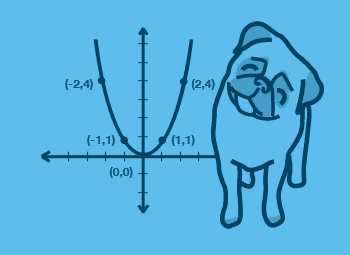
Functions and their graphs form the backbone of the course. You learn to identify, transform, compose, and invert functions — skills that show up in virtually every Calculus topic later. Domain and range, even and odd functions, piecewise functions, and function notation all live here.
Polynomial and rational functions extend what students learned in Algebra 2. Factoring, finding zeros, analyzing end behavior, and graphing rational functions with asymptotes are key skills tested on the SAT and ACT.
Exponential and logarithmic functions are where many students first encounter serious difficulty. Understanding the relationship between exponential growth and logarithms — and being able to solve equations involving both — is essential for AP Calculus and for modeling real-world situations in STEM fields.
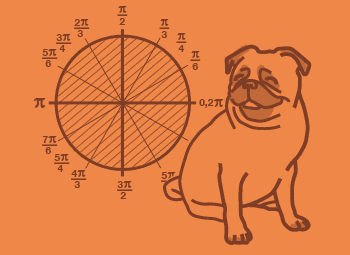
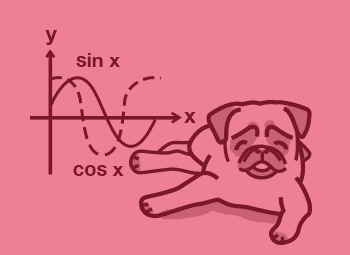
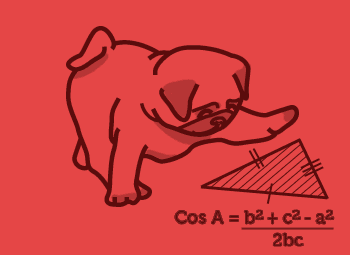
Trigonometry typically takes up the largest portion of a Precalculus course. The unit circle, radian measure, the six trig functions, graphing sine and cosine, trig identities, inverse trig functions, and the laws of sines and cosines are all standard content. This is also where AP Precalculus, introduced by the College Board, places significant emphasis.
Conic sections — parabolas, ellipses, hyperbolas, and circles — connect algebra and geometry in ways that reappear in physics and engineering. Students learn to write equations in standard form and graph each conic.
Sequences, series, and limits introduce the idea of infinity in mathematics — a concept that becomes the formal foundation of Calculus. Arithmetic and geometric sequences, sigma notation, and the concept of a limit as a value approaches a point all prepare students for AP Calculus AB or BC.
Vectors, polar coordinates, and parametric equations appear in many US Precalculus courses, particularly those feeding into AP Calculus BC or college-level math.
Is Precalculus hard?
Precalculus has a well-earned reputation as one of the most demanding high school math courses. The reason is not that any single concept is impossibly difficult — it is that the course moves quickly, covers a large amount of ground, and requires strong fluency with earlier algebra skills that many students have partially forgotten.
The topics students most commonly struggle with are trigonometric identities and proofs, graphing and transforming functions accurately, understanding logarithms intuitively (not just procedurally), and working with limits for the first time. Conic sections also trip up students who are not comfortable switching between algebraic and geometric thinking.
The students who do best in Precalculus typically share one habit: when they get stuck, they go back and watch a worked example that explains the reasoning behind each step — not just the mechanical procedure. Understanding why a step is taken is what lets you handle a problem you have never seen before, which is exactly what the SAT, ACT, and AP exams require.
What comes before and after Precalculus?
Precalculus follows Algebra 2 (sometimes called Advanced Algebra or Math 3 depending on your state's course sequence). Before starting Precalculus, students should be comfortable solving systems of equations, factoring polynomials, working with quadratics, understanding function notation, and graphing lines and parabolas. A shaky Algebra 2 foundation is the single most common reason students hit a wall in Precalculus.
After Precalculus, the natural next step is AP Calculus AB — which covers limits formally, derivatives, and an introduction to integrals — or AP Calculus BC for students seeking a more accelerated path into university-level math. Some students take AP Precalculus (the College Board course) in 11th grade and then AP Calculus in 12th, while others complete Precalculus as their final high school math course and begin Calculus in college.
Precalculus content is also directly tested on the SAT Math section and the ACT Math section, meaning strong Precalculus preparation serves double duty: it readies you for Calculus and improves your standardized test scores at the same time.
Why use StudyPug for Precalculus?
StudyPug is built for exactly the situation most Precalculus students face: you understand the class well enough to keep up some days, but there are specific topics — trig identities, log equations, function transformations — where you hit a wall and need a clear explanation right now, not at the next tutoring appointment.
The platform starts with a diagnostic assessment that identifies your specific gaps across every Precalculus topic. Instead of reviewing material you already know, you go straight to what actually needs work. That is what studying smarter looks like in practice.
Certified-teacher concept videos cover every topic in the Precalculus curriculum. These are not AI-generated — they are made by qualified teachers who explain the method behind each step. You learn how to approach a problem, not just what the answer is. That distinction matters enormously on tests where the question is slightly different from anything you have practiced before.
Adaptive practice adjusts to your performance in real time. As you get problems right, the difficulty increases. When you make mistakes, the system serves problems that target the specific gap. This means every practice session is efficiently targeted to where you are right now, not where you were last month.
For Grade 12 students in the US, StudyPug's content is aligned to state standards and includes SAT, ACT, and AP Precalculus exam prep as part of the subscription. You practice with exam-style questions based on real test formats, so the style and difficulty of the actual exam is familiar before you sit down to take it.
There is no free trial, but there is a 30-day money-back guarantee. If StudyPug does not work for you, you get your money back — no questions asked.
What you learn — Precalculus curriculum coverage
StudyPug's Precalculus library covers the full scope of the US Grade 12 Precalculus curriculum, organized so you can navigate directly to whatever topic you need right now. Key areas include:
- Functions: domain and range, transformations, compositions, and inverses
- Polynomial and rational functions: zeros, end behavior, asymptotes, and graphing
- Exponential and logarithmic functions: properties, equations, and applications
- Trigonometry: unit circle, graphing trig functions, identities, inverse trig, and laws of sines and cosines
- Conic sections: circles, ellipses, parabolas, and hyperbolas
- Sequences and series: arithmetic, geometric, and sigma notation
- Limits: intuitive introduction and evaluating limits as preparation for Calculus
- Vectors, polar coordinates, and parametric equations (where included in your state's course)
- AP Precalculus exam-style practice and SAT/ACT Precalculus content
Every topic includes at least one concept video, worked example problems, and adaptive practice questions. If your teacher assigns a section from your textbook, you can find the matching StudyPug topic and watch a lesson on it the same day.
How to use StudyPug for Precalculus
Most students use StudyPug in one of three ways — and often all three across a semester.
As a just-in-time explainer: You get stuck on tonight's homework — limits, say, or proving a trig identity. You find the matching topic in StudyPug, watch the concept video, and finish your homework. This is the fastest way to get unstuck without waiting for office hours or a tutoring session.
As a test-prep tool: In the week before a Precalculus test, you run through practice problems on the specific topics the test covers. The adaptive practice identifies which ones you are still shaky on so you can go back to the video and fix the gap before the test — not discover it during the test.
As a structured study plan: Start with the diagnostic assessment, which maps your current Precalculus skills. StudyPug shows you exactly which topics to prioritize. Work through the video lessons and practice in that order, and the platform adjusts difficulty as you improve. This approach is especially effective for students preparing for AP Precalculus, SAT Math, or ACT Math over a full semester.
Photo Search is also available across all grades and subjects — if you have a printed problem, you can use it to find the matching lesson directly. It finds the lesson; you watch and learn the method.
StudyPug works on any device, so you can study from your laptop at your desk or from your phone while you wait between classes. The full lesson library, practice bank, and diagnostic are all included in a single subscription that also covers every other subject and grade level — which means a single subscription supports your entire academic schedule, not just Precalculus.
Precalculus FAQ
Unsure how StudyPug works? Need help with setting up? Check our frequently asked questions or contact us for help.
What do you learn in Precalculus, and what topics does it cover?
Precalculus bridges Algebra and Calculus by building the mathematical foundation you need before taking Calculus. Core topics include functions and their graphs, polynomial and rational functions, exponential and logarithmic functions, trigonometry (unit circle, identities, inverse trig), sequences and series, conic sections, limits, and an introduction to vectors and polar coordinates. By the end of the course, students have the toolkit needed to succeed in AP Calculus or college-level math.
What is the difference between Precalculus and Calculus?
Precalculus is a preparatory course that strengthens your algebra skills and introduces trigonometry, functions, and limits — but it does not yet study rates of change or areas under curves in a formal way. Calculus builds directly on that foundation to explore derivatives (instantaneous rates of change) and integrals (accumulated change). Think of Precalculus as learning the language of math fluently so that Calculus concepts feel logical rather than overwhelming when you encounter them.
Is Precalculus hard, and where do students struggle most?
Precalculus is widely considered one of the most challenging high school math courses because it moves quickly and introduces abstract ideas. The biggest trouble spots are trigonometric identities, understanding and transforming function graphs, logarithms and their properties, and conic sections. Many students also find limits confusing at first. The good news is that these are all learnable with clear step-by-step explanations — the difficulty usually comes from gaps in earlier algebra skills, not the concepts themselves.
What should I take before Precalculus, and what comes after it?
You should be comfortable with Algebra 2 (or equivalent) before starting Precalculus — specifically solving equations, working with functions, graphing, and basic transformations. Trigonometry is sometimes covered in Algebra 2 or as a separate semester, but it is reviewed in Precalculus regardless. After Precalculus, most students move into AP Calculus AB or BC, or college-level Calculus. Precalculus also strengthens your preparation for the SAT and ACT math sections.
Is Precalculus on the SAT or ACT, and how is it tested?
Yes — SAT Math and ACT Math both draw heavily on Precalculus skills. On the SAT, expect questions on functions, exponential and polynomial expressions, and trigonometry. The ACT Math section includes more advanced topics such as logarithms, complex numbers, and trigonometric identities. AP Precalculus is also now an official College Board AP course that ends with an AP exam. Practicing Precalculus problems in exam format — based on real exam-style questions — is one of the best ways to raise your SAT/ACT score.
What is one of the hardest concepts in Precalculus, and how do you tackle it?
Trigonometric identities are consistently rated the hardest topic in Precalculus. Students are asked to prove that one expression equals another using a list of identities, which requires working backwards and forwards at the same time. The key strategy is to start on the more complex side, convert everything to sine and cosine first, look for Pythagorean identity substitutions, and factor where possible. Watching worked examples — especially ones that explain why each step is chosen, not just what was done — is the fastest way to build confidence with proofs.




Written by the StudyPug Team
Last updated June 5, 2026
3 M+
students
★★★★★
4.8 average
K–12
all grades