Online 6th Grade English Help for Your Child
Certified teachers, diagnostic assessments, and adaptive practice — built for 6th grade reading comprehension, grammar, and literary analysis.
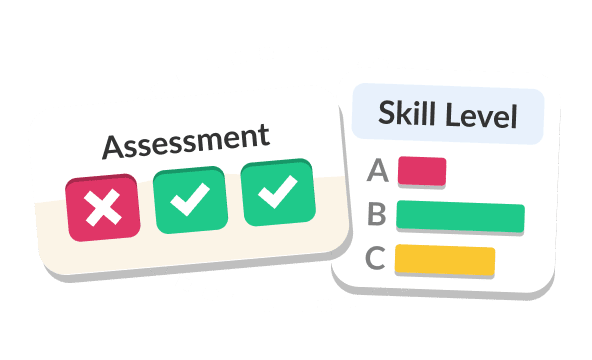
Diagnostic Finds Gaps
Know exactly where your child needs help.
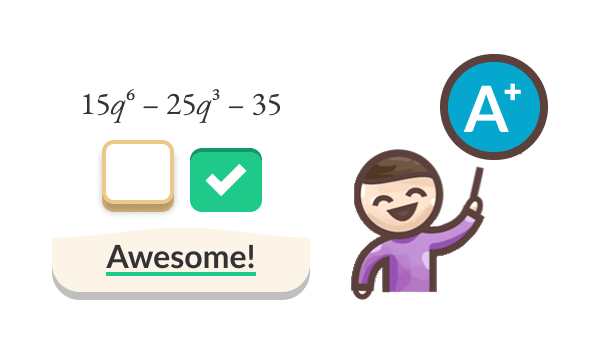
Step-by-Step Videos
Real lessons that teach kids to solve it alone.

Curriculum Aligned
Built to match your state standards.
Try It Now
Test your knowledge
Our approach aligns with the evidence
Exam Scores
Better Recall
Less Anxiety
6th Grade ELA Topics
1. CCSS.ELA-LITERACY.L.6.1.A
2. CCSS.ELA-LITERACY.L.6.1.B
3. CCSS.ELA-LITERACY.L.6.1.C
4. CCSS.ELA-LITERACY.L.6.1.D
5. CCSS.ELA-LITERACY.L.6.1.E
6. CCSS.ELA-LITERACY.L.6.2.A
7. CCSS.ELA-LITERACY.L.6.2.B
8. CCSS.ELA-LITERACY.L.6.3.A
9. CCSS.ELA-LITERACY.L.6.3.B
10. CCSS.ELA-LITERACY.L.6.4.A
11. CCSS.ELA-LITERACY.L.6.4.B
12. CCSS.ELA-LITERACY.L.6.4.C
13. CCSS.ELA-LITERACY.L.6.4.D
14. CCSS.ELA-LITERACY.L.6.5.A
15. CCSS.ELA-LITERACY.L.6.5.B
16. CCSS.ELA-LITERACY.L.6.5.C
17. CCSS.ELA-LITERACY.L.6.6
18. CCSS.ELA-LITERACY.RL.6.1
19. CCSS.ELA-LITERACY.RL.6.2
20. CCSS.ELA-LITERACY.RL.6.3
21. CCSS.ELA-LITERACY.RL.6.4
22. CCSS.ELA-LITERACY.RL.6.5
23. CCSS.ELA-LITERACY.RL.6.6
24. CCSS.ELA-LITERACY.RL.6.7
25. CCSS.ELA-LITERACY.RL.6.9
26. CCSS.ELA-LITERACY.RL.6.10
27. CCSS.ELA-LITERACY.SL.6.1.A
28. CCSS.ELA-LITERACY.SL.6.1.B
29. CCSS.ELA-LITERACY.SL.6.1.C
30. CCSS.ELA-LITERACY.SL.6.1.D
31. CCSS.ELA-LITERACY.SL.6.2
32. CCSS.ELA-LITERACY.SL.6.3
33. CCSS.ELA-LITERACY.SL.6.4
34. CCSS.ELA-LITERACY.SL.6.5
35. CCSS.ELA-LITERACY.SL.6.6
36. CCSS.ELA-LITERACY.W.6.1.A
37. CCSS.ELA-LITERACY.W.6.1.B
38. CCSS.ELA-LITERACY.W.6.1.C
39. CCSS.ELA-LITERACY.W.6.1.D
40. CCSS.ELA-LITERACY.W.6.1.E
41. CCSS.ELA-LITERACY.W.6.2.A
42. CCSS.ELA-LITERACY.W.6.2.B
43. CCSS.ELA-LITERACY.W.6.2.C
44. CCSS.ELA-LITERACY.W.6.2.D
45. CCSS.ELA-LITERACY.W.6.2.E
46. CCSS.ELA-LITERACY.W.6.2.F
47. CCSS.ELA-LITERACY.W.6.3.A
48. CCSS.ELA-LITERACY.W.6.3.B
49. CCSS.ELA-LITERACY.W.6.3.C
50. CCSS.ELA-LITERACY.W.6.3.D
51. CCSS.ELA-LITERACY.W.6.3.E
52. CCSS.ELA-LITERACY.W.6.4
53. CCSS.ELA-LITERACY.W.6.5
54. CCSS.ELA-LITERACY.W.6.6
55. CCSS.ELA-LITERACY.W.6.7
56. CCSS.ELA-LITERACY.W.6.8
57. CCSS.ELA-LITERACY.W.6.9.A
58. CCSS.ELA-LITERACY.W.6.9.B
59. CCSS.ELA-LITERACY.W.6.10
60. CCSS.ELA-LITERACY.RI.6.1
61. CCSS.ELA-LITERACY.RI.6.2
62. CCSS.ELA-LITERACY.RI.6.3
63. CCSS.ELA-LITERACY.RI.6.4
64. CCSS.ELA-LITERACY.RI.6.5
65. CCSS.ELA-LITERACY.RI.6.6
66. CCSS.ELA-LITERACY.RI.6.7
67. CCSS.ELA-LITERACY.RI.6.8
68. CCSS.ELA-LITERACY.RI.6.9
69. CCSS.ELA-LITERACY.RI.6.10
69 Chapters · 115 Topics · 112 Videos
Discover Our Learning Areas
Explore key subjects and start learning with interactive content.

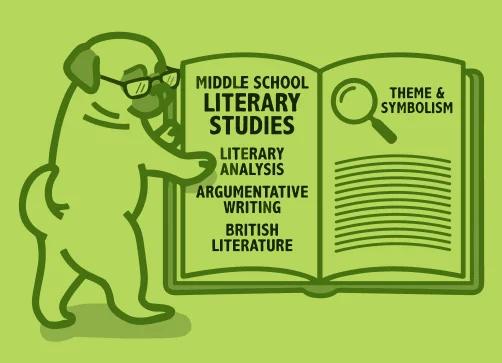
What is 6th Grade English?
6th grade English is the first year of middle school language arts — and it marks a significant leap from elementary reading. Students move from simply understanding stories to analyzing them: identifying themes, examining an author's word choices, interpreting evidence from the text, and responding to what they read with structured thinking. At the same time, grammar becomes more technical, vocabulary grows more complex, and reading passages get longer and denser. For many students, 6th grade is the year English goes from comfortable to genuinely challenging.
What reading skills do 6th graders practice?
Reading in 6th grade covers two main text types: literary (fiction, poetry, drama) and informational (articles, essays, primary sources). Students practice identifying the main idea and supporting details, understanding how an author organizes information, making inferences from textual evidence, and comparing multiple texts on the same topic. Comprehension at this level isn't just about understanding what happened — it's about understanding why an author made the choices they did and what those choices mean for the reader.
StudyPug's 6th Grade English video lessons walk through these comprehension strategies step by step, with certified teachers modeling how to approach a difficult passage, identify the key details, and build an evidence-based response. Adaptive practice then reinforces each strategy with questions that adjust to your child's current skill level — so they build real reading stamina without hitting a wall of frustration.
If your child is in Florida or New York, you can also explore the Florida grade 6 ELA curriculum and New York grade 6 ELA curriculum pages for state-specific topic alignment.
What grammar and vocabulary skills are taught in 6th grade?
6th grade grammar introduces students to dependent and independent clauses, complex and compound-complex sentences, proper punctuation (commas, semicolons, colons in context), pronoun-antecedent agreement, and the consistent use of verb tense. These rules build on the basics from elementary school but require a much more precise understanding — the kind of precision that shows up directly in standardized assessments.
Vocabulary at this level shifts from learning individual word meanings to understanding words in context. Students practice using context clues, recognizing roots and affixes, distinguishing between connotation and denotation, and using academic vocabulary with precision. A strong vocabulary isn't just about knowing more words — it's what enables students to understand complex texts and express ideas clearly.
StudyPug's diagnostic assessment identifies exactly which grammar and vocabulary areas need work, so practice time targets real gaps rather than topics your child already knows. Each lesson is taught by a real certified teacher who explains not just the rule but the reasoning behind it — helping concepts stick rather than just be memorized for a test.
What is literary analysis in 6th grade?
Literary analysis is the skill of reading a text carefully and explaining how it works — not just what happens, but how the author creates meaning. In 6th grade, students practice identifying theme (the central message of a text), analyzing character development, examining point of view and how it shapes the reader's understanding, and explaining how specific word choices or structural decisions affect tone and meaning.
This is often the area where 6th graders hit the biggest wall. Literary analysis requires students to hold multiple ideas in mind simultaneously, use precise academic language, and support every claim with evidence from the text. It's a skill that takes time and guided practice to develop — and one that becomes even more important in 7th and 8th grade. StudyPug's certified teacher videos model literary analysis in real time, showing students how to move from a vague impression of a text to a clear, evidence-backed interpretation.
How is 6th grade English assessed at school?
Most US states assess 6th grade English through a combination of classroom performance (reading responses, grammar quizzes, vocabulary assessments) and standardized state tests aligned to state standards. Standardized tests typically include reading passages followed by multiple-choice and short-response questions, testing comprehension, inference, vocabulary in context, and literary analysis. Some states also include an on-demand writing component.
StudyPug's content is aligned to state standards, so students practice the exact skills that appear in both classroom assessments and standardized testing. The diagnostic assessment at the start of a student's StudyPug journey identifies which tested skills need the most attention — giving students a focused, efficient path to improvement rather than reviewing everything from scratch.
Why StudyPug for 6th Grade English?
Most online learning tools for middle school English fall into one of two categories: passive video libraries where kids watch but don't practice, or generic drill apps with no real instruction. StudyPug combines both — certified teacher video lessons that actually explain the concepts, followed by adaptive practice that adjusts to where your child is right now.
The diagnostic assessment means you don't have to guess where your child needs help. The weekly progress reports mean you can see exactly how reading comprehension, grammar, and vocabulary are improving. And the 30-day money-back guarantee means there's no risk in finding out whether it works for your child.
For parents, the combination of real teacher instruction, gap-targeting diagnostics, and visible weekly progress makes StudyPug a genuinely different experience from tutoring or generic homework help apps. One subscription covers up to 5 children across all grades and subjects — so as your 6th grader grows into 7th grade, the content grows with them.
What you learn in 6th Grade English on StudyPug
StudyPug's 6th Grade English course covers the full range of skills students need at this level:
- Reading comprehension — fiction and nonfiction strategies, main idea, inference, textual evidence
- Literary analysis — theme, character, point of view, author's craft, tone, and word choice
- Grammar — clauses, complex sentences, punctuation rules, pronoun agreement, verb tense
- Vocabulary — context clues, roots and affixes, connotation vs. denotation, academic vocabulary
- Informational text skills — summarizing, comparing sources, identifying author's purpose and structure
All topics are aligned to state standards and taught by certified teachers who present each concept in the clear, step-by-step format that makes the difference between a concept that confuses and one that sticks. After watching a lesson, students move directly into adaptive practice that checks their understanding and builds the skill through repetition — with the difficulty adjusting automatically as they improve.
Using StudyPug for 6th Grade English practice
Getting started is straightforward. When your child signs up, they complete a short diagnostic assessment that maps their current 6th grade English skills. The results show exactly which reading, grammar, and vocabulary areas need attention — and StudyPug builds a recommended practice path from there.
Your child watches a certified teacher lesson on the topic that needs work, then completes adaptive practice questions that reinforce the skill. If they get stuck, they can rewatch the lesson or use Photo Search to snap a homework question and find the relevant lesson instantly. Every session feeds into the progress dashboard, so you can see weekly skill growth across reading comprehension, grammar, and literary analysis without having to ask your child how it's going.
StudyPug is available on any device — laptop, tablet, or phone — so practice fits around your schedule, not the other way around. And with one subscription covering all grades and subjects, it grows with your child from 6th grade through high school.
6th Grade English FAQ
Unsure how StudyPug works? Need help with setting up? Check our frequently asked questions or contact us for help.
What's included in the subscription?
Full access to all 6th Grade English video lessons, practice problems, assessments, and progress tracking. One subscription covers up to 5 children and all grades, subjects, and courses on StudyPug.
Can I sign up free to try it?
Yes! You can sign up free to explore sample lessons and practice materials. When you're ready to subscribe, we offer a 30-day money-back guarantee — if it's not right for your child, we'll refund you.
How much does it cost?
Plans start with one low monthly payment, with annual options for the best value. One plan covers up to 5 children and all subjects. 30-day money-back guarantee. [See all plans →]
What does 6th grade English actually cover?
6th grade English covers reading comprehension of fiction and nonfiction texts, literary analysis (theme, character, point of view), grammar (clauses, sentence structure, punctuation), vocabulary in context, and foundational writing skills. It bridges the gap between elementary reading and the more analytical demands of middle school.
How does the diagnostic assessment work?
When your child starts, a short assessment checks their current reading, grammar, and vocabulary skills. It identifies specific gaps — for example, difficulty with inferencing or run-on sentences — and guides them to the practice topics that need the most work. No guessing what to study next.
Is 6th grade English hard?
6th grade marks a real jump in complexity. Students move from reading stories to analyzing them — identifying themes, author's purpose, and textual evidence. Grammar becomes more precise. Vocabulary expands rapidly. Many students find this transition challenging, especially if foundational reading habits weren't fully built in grades 4–5. StudyPug's adaptive practice meets them at their current level and builds from there without intimidating them.




Written by the StudyPug Team
Last updated June 5, 2026
3 M+
students
★★★★★
4.8 average
K–12
all grades