3rd Grade Math Help — Step-by-Step Video Lessons & Practice
Help your child understand every 3rd grade math topic and build real confidence, one lesson at a time.
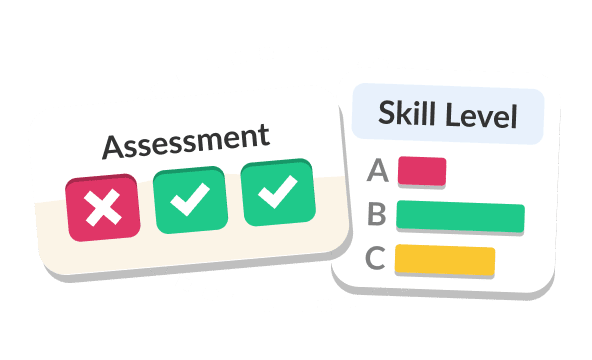
Find Your Weak Spots
See which state standards your child needs.
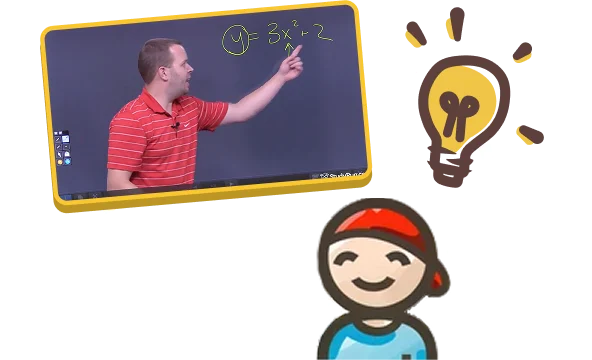
Step-by-Step Videos
Real lessons help your child solve it alone.
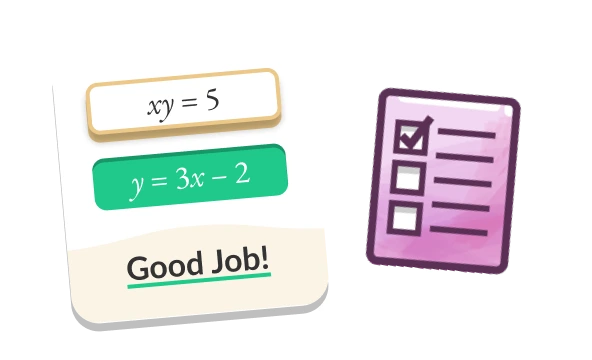
Practice That Adapts
Questions adjust to your child's level.
Try It Now
Test your knowledge
Our approach aligns with the evidence
Exam Scores
Better Recall
Less Anxiety
3rd Grade Math Topics
1. Place Values of Multi-Digits
2. Fraction Concepts
3. Adding Up to 1000
4. Subtracting Up to 1000
5. Multiplication Facts Up to 3 Digits
6. Division Facts Up to 3 Digits
7. Financial Literacy
7 Chapters · 45 Topics · 62 Videos

Ready to practice 3rd Grade Math?
Try practice questions on every 3rd Grade Math topic — with instant feedback and step-by-step video solutions when you get stuck.
Discover Our Learning Areas
Explore key subjects and start learning with interactive content.





What Is 3rd Grade Math?
3rd grade math is the year multiplication and fractions enter the picture for the first time — and it's where many children hit their first real academic challenge. Your child moves beyond simple counting and adding into understanding groups, equal sharing, and the relationship between numbers. Topics span multiplication and division, fractions on number lines and shapes, place value to 1,000, measurement, time, and data. It's a foundational year: the skills built here directly support everything from long division in 4th grade to algebra in middle school.
What Topics Are Covered in 3rd Grade Math?
Third grade math is broader than many parents expect. Here's what your child works through over the year:
Multiplication and division — understanding multiplication as equal groups and arrays, learning multiplication facts through 10×10, and connecting multiplication to division. This is the biggest new territory of the year.
Fractions — recognizing fractions as equal parts of a whole or a set, placing fractions on a number line, and comparing simple fractions. Many children find fractions confusing because the same value can look very different depending on context.
Place value and number sense — reading, writing, and comparing numbers up to 1,000; rounding to the nearest 10 or 100.
Addition and subtraction — fluently adding and subtracting within 1,000 using strategies and understanding of place value.
Measurement and data — measuring lengths, telling time to the nearest minute, understanding mass and liquid volume, and reading bar graphs and pictographs.
Geometry — categorizing shapes by their attributes and understanding area and perimeter.
Why Do So Many Children Struggle with 3rd Grade Math?
Third grade is a gear-change year. The two biggest reasons children hit a wall are multiplication and fractions — and both involve a conceptual leap, not just a new set of facts to memorize.
With multiplication, the challenge is that children need to shift from additive thinking (adding the same number repeatedly) to multiplicative thinking (understanding groups). When a child doesn't truly understand what 7 × 8 means — seven groups of eight — they fall back on repeated addition and can't keep up with fluency expectations.
With fractions, the common struggle is treating the numerator and denominator as two separate counting numbers rather than understanding that 3/4 means three equal parts out of four. A child might say 3/4 is bigger than 2/3 simply because 4 is bigger than 3 — without understanding the size of each piece.
Multi-step word problems add another layer: children must read carefully, choose the right operation, and carry through two or more steps without losing track. If multiplication or fraction understanding is shaky, word problems quickly become overwhelming.
Identifying exactly where the confusion starts — and working on that specific gap — is far more effective than repeating the same lessons from the front. That's why StudyPug begins with a diagnostic.
Why StudyPug for 3rd Grade Math?
StudyPug is built around a simple idea: find where your child is stuck, explain the concept clearly, and give them enough practice to make it stick — without frustration or wasted time.
The diagnostic assessment starts things off by pinpointing exactly which topics need attention. Instead of working through every lesson from the beginning, your child jumps straight to the concepts that will make the biggest difference.
Every topic is covered by certified-teacher video lessons — not AI-generated content. The teachers explain the method behind each concept, not just the steps to follow. When your child understands why multiplication works the way it does, they can solve unfamiliar problems confidently rather than getting stuck the moment a question looks slightly different.
For families with more than one child, the Family Plan covers up to five children under one subscription, each working at their own grade level. The parent dashboard shows each child's progress separately — which topics they've practiced, where they're improving, and where they need more work — so you're always informed without micromanaging every session.
For 3rd grade math specifically, printable worksheets with answer keys are included for screen-free practice. On homework nights when you want to keep your child away from a device, the worksheets give them solid, curriculum-aligned practice they can work through on paper.
StudyPug's lessons align to Common Core State Standards, so everything your child practices on StudyPug directly reinforces what they're being taught at school. There are no mixed messages between the classroom method and what they see on screen.
What Your Child Will Learn — 3rd Grade Math Curriculum Coverage
StudyPug's 3rd grade math content covers the full scope of Common Core–aligned curriculum for this grade. Your child can practice multiplication fact strategies (including arrays, skip-counting, and the distributive property), division as the inverse of multiplication, fraction concepts and comparison, place value and rounding, addition and subtraction with regrouping, area and perimeter, time and measurement, and data interpretation.
Lessons are organized by topic so your child can jump to exactly what they need — whether it's a concept introduced in class this week or something they've been struggling with for months.
If you want to see how the curriculum breaks down for your state, the Florida grade 3 math curriculum and the New York grade 3 math curriculum pages show exactly how 3rd grade standards are structured and what topics are emphasized in each state.
How to Use StudyPug for 3rd Grade Math
Getting started takes just a few minutes. Create an account, add your child's grade and subject, and run the diagnostic assessment. The results tell you — and your child — exactly where to begin, which topics are solid, and which ones need more work.
From there, a typical session looks like this: your child watches a short certified-teacher video on one concept, then works through adaptive practice problems on that same topic. The practice adjusts to their level in real time, giving easier questions to rebuild confidence if they're struggling and harder questions to keep them challenged if they're ready. Sessions of 15–20 minutes a day tend to work best for 3rd graders — short enough to stay focused, frequent enough to build fluency.
On paper-only days, printable worksheets are available in your account — print them out, let your child work through the problems, and check answers with the included answer key.
The parent dashboard updates as your child works, so you can check in whenever you like without sitting beside them. If you see a topic flagged as needing more practice, you can point your child back to it or watch the teacher video together to understand the concept yourself before helping at the kitchen table.
StudyPug is available on any device — laptop, tablet, or phone — so your child can practice wherever works best for your family. There are no contracts, and if for any reason it's not the right fit in the first 30 days, the money-back guarantee means you can request a full refund with no hassle.
3rd Grade Math FAQ
Unsure how StudyPug works? Need help with setting up? Check our frequently asked questions or contact us for help.
What does my child learn in 3rd grade math, and what topics does it cover?
In 3rd grade math, children build on early number skills and step into multiplication and division for the first time. Core topics include multiplication facts and strategies, division as sharing and grouping, understanding fractions (halves, thirds, fourths), place value up to 1,000, addition and subtraction with regrouping, telling time, measuring length and mass, and reading graphs and data. By the end of the year, your child should have solid multiplication fluency and a clear understanding of what fractions mean.
Is 3rd grade math hard, and where do children commonly struggle?
Third grade is often the first real challenge in elementary math because multiplication is genuinely new and abstract. Many children struggle with memorizing multiplication facts under timed pressure, understanding fractions as parts of a whole (not just counting pieces), and solving multi-step word problems. The jump from addition to multiplication thinking — understanding that 4 × 6 means four groups of six — trips up many kids. With clear video explanations and plenty of practice, most children get past these sticking points quickly once they understand the concept behind the procedure.
What should my child know before 3rd grade math, and what comes next?
Coming into 3rd grade, your child should be comfortable with addition and subtraction facts up to 20, basic place value to 100, and simple measurement. If there are gaps there, StudyPug's diagnostic will flag them so you can close them first. After 3rd grade, children move into multi-digit multiplication, long division, equivalent fractions, and decimal concepts in 4th grade — so building strong multiplication fluency and fraction foundations now pays dividends all the way through middle school math.
How does StudyPug 3rd grade math map to what my child learns at school?
StudyPug's 3rd grade math lessons are built around Common Core State Standards, which are adopted across most US states. Topics are organized to match the sequence schools follow — from multiplication and division in the fall through fractions and geometry in the spring. For state-specific curriculum scope, you can explore the Florida grade 3 math curriculum at https://www.studypug.com/curriculum/us/fl/math/grade3/ and the New York grade 3 math curriculum at https://www.studypug.com/curriculum/us/ny/math/grade3/ to see how lessons align to your state's standards.
What is one of the trickiest math concepts in 3rd grade, and how is it taught?
Fractions trip up more 3rd graders than almost any other topic. Children often count the shaded pieces without truly understanding that a fraction represents equal parts of a whole — so they get confused when the same fraction looks different on a number line versus a shape. StudyPug's certified teachers walk through fraction concepts step by step: first building the idea of equal sharing, then showing fractions on shapes, then placing them on a number line, with plenty of practice problems at each stage so the understanding sticks before moving on.
How much math practice should my child do in 3rd grade?
Research and classroom experience both suggest 15–20 minutes of focused daily math practice works better for 3rd graders than longer, less frequent sessions. Short daily practice builds multiplication fluency through repetition without burning kids out. StudyPug's adaptive practice adjusts question difficulty to your child's current level, so each session is productive rather than frustrating. Printable worksheets are also available for screen-free practice on days when device time is limited.




Written by the StudyPug Team
Last updated June 5, 2026
3 M+
students
★★★★★
4.8 average
K–12
all grades