1st Grade Math Help — Step-by-Step Video Lessons & Practice
Help your child understand every topic and build confidence, one lesson at a time.
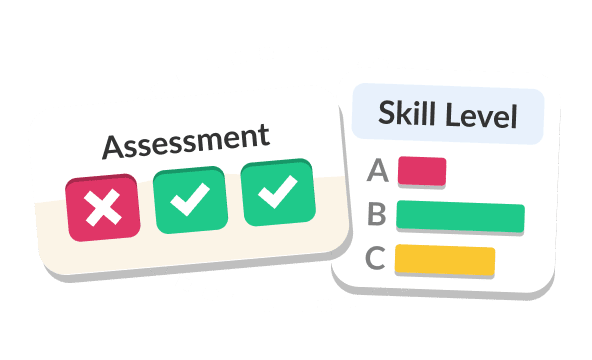
Find Your Weak Spots
Find skill gaps against state standards.
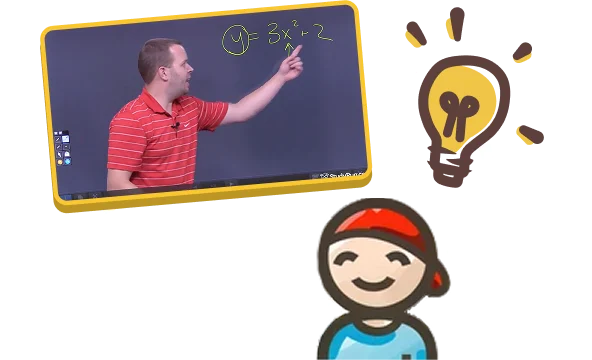
Step-by-Step Videos
Real teaching so your child solves alone.
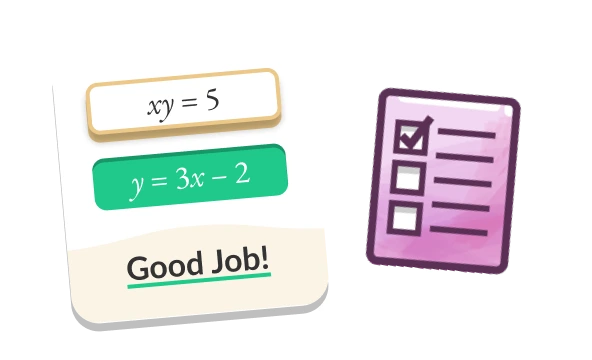
Practice That Adapts
Questions adapt so your child gains confidence.
Try It Now
Test your knowledge
Our approach aligns with the evidence
Exam Scores
Better Recall
Less Anxiety
1st Grade Math Topics
1. Counting and Number Patterns
2. Place Values Up to Tens (99)
3. Adding Up to 20
4. Subtraction Up to 20
5. Financial Literacy
6. Multiplication Facts Up to 10
7 Chapters · 44 Topics · 25 Videos

Ready to practice 1st Grade Math?
Try practice questions on every 1st Grade Math topic — with instant feedback and step-by-step video solutions when you get stuck.
Discover Our Learning Areas
Explore key subjects and start learning with interactive content.








What Is 1st Grade Math?
First grade math is the year children move from counting to truly understanding numbers. Guided by the Common Core State Standards — the framework used by most US states — 1st grade math covers addition and subtraction within 20, place value with tens and ones, counting forward to 120, basic measurement and data, telling time, and identifying shapes. It is the year that number sense is formed, and that foundation directly supports every math skill your child will build in 2nd grade and beyond.
What Do Children Learn in 1st Grade Math?
The 1st grade math curriculum is organized around five core areas. Understanding what each one involves helps parents know what to look for — and where to offer extra support.
Operations and Algebraic Thinking: Children learn to add and subtract within 20 using strategies like counting on, making ten, and using the relationship between addition and subtraction. They solve word problems with unknowns in different positions (for example, 3 + ? = 7).
Number and Operations in Base Ten: This is where place value is introduced. Students learn that two-digit numbers are composed of tens and ones, compare two-digit numbers using >, =, and <, and add within 100 using concrete models.
Measurement and Data: Children measure lengths using non-standard units, order objects by length, and organize data into simple graphs or charts. They also practice telling and writing time to the hour and half-hour.
Geometry: Students identify and describe 2D and 3D shapes — circles, triangles, rectangles, cubes, cylinders — and begin to partition shapes into equal parts.
Fluency Goals: By the end of 1st grade, children are expected to add and subtract within 10 with fluency and demonstrate strategies for problems within 20. Building this automaticity is one of the primary goals of the year.
Is 1st Grade Math Hard? Common Struggles and How to Help
Many children find at least one part of 1st grade math genuinely challenging, and that is completely normal. Here are the most common struggle points parents encounter:
Memorizing addition and subtraction facts: Children often understand the concept but are slow recalling facts under time pressure. Regular short practice sessions — rather than long, infrequent ones — are the most effective remedy.
Place value: Grasping that the digit position changes its value (the '1' in 17 means ten, not one) is a significant conceptual leap. Visual models like tens rods and unit cubes help enormously before moving to abstract numerals.
Word problems: Reading a problem, identifying the operation needed, and setting it up correctly is a multi-step skill. Children who can compute fine often struggle here because the challenge is linguistic as much as mathematical.
Telling time: The relationship between the clock hands and the numbers they represent is not intuitive. Many children need repeated practice with both analog and digital formats.
If your child is struggling in any of these areas, targeted practice — rather than reworking everything — is the fastest path forward. A diagnostic assessment can identify the specific gap so you are not guessing what to work on.
What Comes Before and After 1st Grade Math?
First grade math builds directly on Kindergarten math, where children learn to count to 20, understand what numbers represent, and explore basic addition and subtraction as concepts. If your child is entering 1st grade with shaky Kindergarten foundations — for example, uncertainty about which number is larger, or difficulty counting objects accurately — those gaps are worth addressing early, because place value and addition strategies in Grade 1 depend on them.
After first grade, children move into 2nd grade math, where the numbers get bigger and the expectations grow. Second graders add and subtract within 1,000, work with arrays as an introduction to multiplication, measure in standard units, and read bar graphs and line plots. The fluency with facts and the understanding of place value built in Grade 1 are the direct prerequisites for all of this. StudyPug covers the full K–9 range, so whether your child needs to review Kindergarten concepts or get a head start on Grade 2, it is all in one place.
Why StudyPug for 1st Grade Math Help?
There are plenty of math apps and websites aimed at young children. What makes StudyPug different is that it combines three things most platforms offer separately: a precise diagnostic that finds the gap, certified-teacher video lessons that explain the concept properly, and adaptive practice that responds to your child's level in real time.
Diagnostic Assessment: Before your child practices a single problem, StudyPug's diagnostic identifies exactly where the gap is. This means your child is not grinding through topics they already know — they are spending their practice time where it actually moves the needle.
Certified-Teacher Video Lessons: Every lesson is made by a real, credentialed teacher — not AI-generated content. The videos explain the method behind the math, so your child does not just get the right answer on that problem; they understand how to approach the next one independently. This is real teaching, delivered on demand.
Adaptive Practice: Questions adjust to your child's current level, stepping up as they improve and stepping back when they need more support. This keeps practice in the productive zone — challenging enough to build skill, manageable enough to build confidence.
Printable Worksheets: For Grade 1 Math, StudyPug includes printable worksheets with answer keys — perfect for screen-free practice at the kitchen table or on weekends.
Parent Dashboard: You get a clear view of your child's progress: which topics they have practiced, where they are improving, and where they may need another look. No sitting beside them for every session — you can check in when it suits you.
Family Plan: If you have more than one child, StudyPug's Family Plan covers up to 5 children under a single subscription, across all grades and all subjects. That is real value for families who want consistent academic support without paying for multiple services.
What Your Child Will Learn: 1st Grade Math Curriculum Coverage
StudyPug's 1st grade math content is aligned to the Common Core State Standards, with coverage that matches the specific state standards your child follows at school. Whether your child's school follows the 1st grade math curriculum used in Texas or the Florida grade 1 math curriculum, the lessons map to what is being taught in class.
Topics covered include:
- Addition and subtraction within 20 — strategies, fact families, and word problems
- Place value — tens and ones, comparing and ordering two-digit numbers
- Counting to 120 — forward, backward, and from any given number
- Measurement — comparing lengths, ordering objects, non-standard units
- Telling time — to the hour and half-hour on analog and digital clocks
- Data and graphs — organizing and reading simple picture graphs and tally charts
- Geometry — identifying 2D and 3D shapes, partitioning shapes into halves and quarters
Every topic includes a video lesson, practice problems, and (for most topics) a worked example walkthrough — so your child can watch, try, and check at their own pace.
How to Use StudyPug for 1st Grade Math
Getting started with StudyPug for 1st grade math takes less than five minutes. Here is a simple approach that works well for most families:
Step 1 — Run the Diagnostic: Start with the diagnostic assessment. It quickly identifies which 1st grade math concepts your child has down and which ones need work. This gives you — and your child — a clear starting point rather than working through everything from the beginning.
Step 2 — Watch a Video Lesson: For any topic the diagnostic flags, have your child watch the corresponding certified-teacher video lesson. These are short, focused, and designed for young learners — typically 5–10 minutes. Encourage your child to pause and rewatch any part that does not click the first time.
Step 3 — Practice: After watching, move to the practice problems. The adaptive system will serve questions at the right level, and instant feedback tells your child right away whether they got it right — and shows them the correct method if they did not.
Step 4 — Track Progress: Check the Parent Dashboard to see how your child is moving through the curriculum. Celebrate improvements you can see in the data — small wins compound quickly at this age.
Step 5 — Print a Worksheet: On screen-free days, print a topic worksheet and work through it together or let your child tackle it independently. The answer keys make marking quick and painless.
A consistent 10–15 minutes per day is enough to see meaningful progress in 1st grade math. StudyPug is designed to fit into a busy family's evening — not to take it over. Free practice content is available without a subscription, so you can see the quality before committing. And if you subscribe and change your mind within 30 days, the money-back guarantee means you have nothing to lose.
1st Grade Math FAQ
Unsure how StudyPug works? Need help with setting up? Check our frequently asked questions or contact us for help.
What does my child learn in 1st grade math, and what topics does it cover?
First grade math builds the foundation for all future number work. Children learn addition and subtraction within 20, place value with tens and ones, counting to 120, basic measurement, telling time to the hour and half-hour, and sorting shapes. They also begin understanding the relationship between addition and subtraction. By the end of first grade, students should be able to solve simple word problems and demonstrate fluency with basic addition and subtraction facts — skills that directly underpin 2nd grade math.
Is 1st grade math hard, and where do children commonly struggle?
For many children, first grade math is the first time numbers feel genuinely tricky. The most common struggle points are mastering addition and subtraction facts quickly from memory, understanding place value (knowing that 14 means one ten and four ones, not just '14'), and applying math to word problems where they must decide which operation to use. Some children also find telling time or comparing lengths challenging. These are all areas StudyPug's video lessons and adaptive practice target directly, building fluency step by step.
What should my child know before 1st grade math, and what comes next?
Before starting 1st grade math, children ideally know how to count to 20, recognize numbers, and understand that adding means getting more while taking away means getting less — concepts typically covered in Kindergarten math. After first grade, students move into 2nd grade math where they tackle addition and subtraction within 100, skip counting, basic multiplication concepts, and longer measurement tasks. StudyPug covers both the Kindergarten foundations and the full 2nd grade curriculum, so your child can review gaps or preview what's ahead.
How does StudyPug 1st grade math map to what my child learns at school?
StudyPug's 1st grade math lessons are aligned to the Common Core State Standards followed by most US states, including Texas (TEKS) and Florida (NGSSS) variants. Every topic — from operations and algebraic thinking to number and operations in base ten, measurement, and geometry — maps to what your child's teacher is covering in class. This means the language, methods, and problem types your child sees on StudyPug are consistent with their classroom experience, reducing confusion and reinforcing learning.
What is one of the trickiest 1st grade math concepts, and how is it taught?
Place value is often the trickiest concept in 1st grade math. Understanding that the '1' in '17' represents ten, not one, requires a mental leap many children find hard to make. StudyPug's certified teachers explain place value using clear visual models — tens rods and unit cubes — before moving to abstract numbers. The lesson walks through grouping objects into tens, reading two-digit numbers, and comparing values. This structured, visual approach makes the concept stick, so children don't just memorize — they understand why the system works.
How much math practice should my child do in 1st grade?
Education experts generally recommend 10–15 minutes of focused math practice per day for 1st graders — enough to build fluency without causing fatigue or frustration. Consistency matters more than long sessions. Short daily practice on addition and subtraction facts, place value, and word problems keeps skills fresh and builds confidence over time. StudyPug's adaptive practice sessions are designed for exactly this rhythm: quick, focused, and level-appropriate so your child finishes feeling successful rather than discouraged.





Written by the StudyPug Team
Last updated June 5, 2026
3 M+
students
★★★★★
4.8 average
K–12
all grades