Online Kindergarten Social Studies Help
Adaptive practice that builds your child's social studies skills at their pace

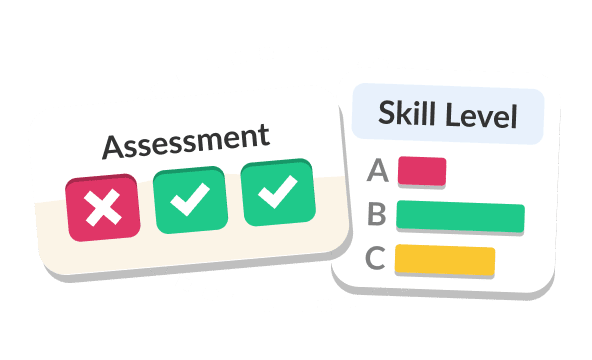
Find Your Weak Spots
See exactly what your child must practice.
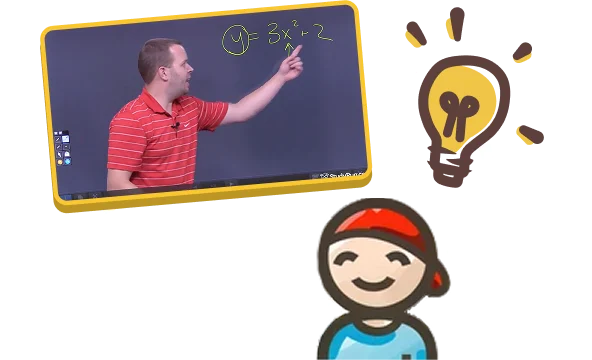
Step-by-Step Videos
Real teaching so your child solves alone.
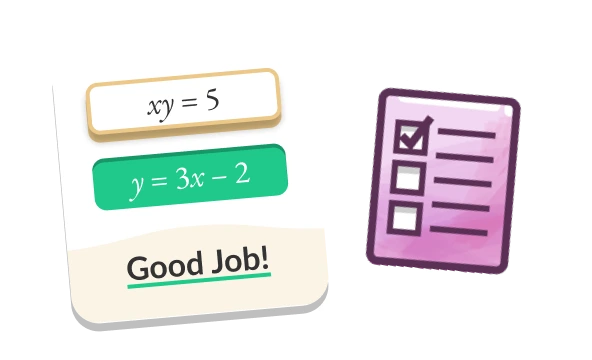
Grows With Them
Questions grow as your child's confidence builds.
Try It Now
Test your knowledge
Our approach aligns with the evidence
Exam Scores
Better Recall
Less Anxiety
Kindergarten Social Studies Topics
1. Classroom and School Rules
2. Authority Figures
3. Rights and Responsibilities
4. American Symbols
5. National Holidays
6. Good Citizenship
7. Land and Water
8. Maps and Globes
9. Direction and Location
10. Natural Resources
11. Weather and Climate
12. Personal Timeline
13. Family Relationships
14. Past and Present
15. People and Communities
16. Cultural Celebrations
17. Needs and Wants
18. Work and Jobs
19. Buying and Selling
20. Types of Resources
21. Saving and Spending
22. Earning Money
23. Community Workers
24. Transportation
25. Citizenship Skills
26. Communication
27. Problem Solving
27 Chapters · 54 Topics · 53 Videos
Discover Our Learning Areas
Explore key subjects and start learning with interactive content.


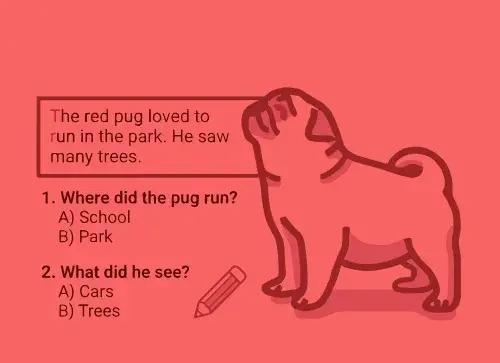



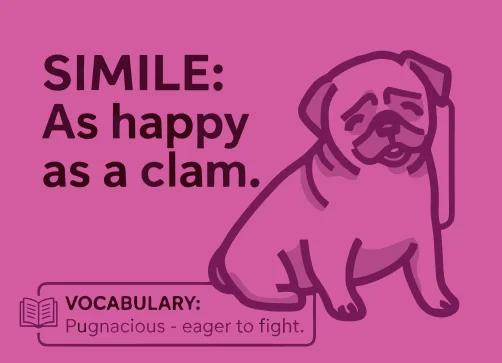
What Is Kindergarten Social Studies?
Kindergarten Social Studies is your child's first guided journey into understanding the world around them. At this grade level, children explore who they are, where they live, and how communities work. They learn about community helpers — the firefighters, teachers, doctors, and bus drivers who keep their neighborhoods running. They begin to read simple maps, recognize national symbols like the American flag, and discover the holidays and traditions that connect people across the country. Kindergarten Social Studies lays the foundation for everything that comes next: geography, history, civics, and a lifelong curiosity about the world.
What Do Kindergartners Learn in Social Studies?
Kindergarten Social Studies covers four broad areas that build on each other throughout the year. First, children explore community and belonging — what makes a neighborhood, what different community helpers do, and how families and schools fit into the larger community. Second, they develop early geography skills, learning to read simple maps, identify basic landforms, and understand directions like near, far, left, and right. Third, they are introduced to national identity through symbols like the flag and the Pledge of Allegiance, and through national holidays such as Independence Day and Thanksgiving. Finally, they explore cultural traditions — how different families celebrate, what different cultures value, and how we share a world with many kinds of people. Each of these areas connects to state social studies standards, so the practice your child does on StudyPug reinforces exactly what their teacher is covering in class.
Is Kindergarten Social Studies Hard for Young Learners?
Kindergarten Social Studies is designed to be age-appropriate, but it can still feel challenging for children who are learning to read, process new concepts, and stay focused for longer stretches. The biggest hurdles tend to be abstract ideas — understanding what a symbol represents, or imagining a map as a picture of a real place. Some children find it hard to connect historical figures or holidays to their own lives. That is where adaptive practice helps most. Instead of presenting all concepts at the same level of difficulty, adaptive practice meets your child exactly where they are. Questions start simple — recognizing a community helper from a picture, choosing the right direction on a map — and become more detailed as your child grows more confident. No child is pushed into frustration; every step builds on the last.
How Is Kindergarten Social Studies Assessed at School?
Kindergarten assessments are typically informal and observational — teachers watch how children respond during class discussions, complete simple matching or sorting activities, and demonstrate understanding through drawing or verbal answers. There are no high-stakes standardized tests at this level, but teachers do track whether children can identify community helpers, read a basic map key, and recognize national symbols. StudyPug's diagnostic assessments mirror this approach: short, low-pressure checks that identify what your child understands and what needs more practice — so their time on the platform is always focused and useful, never random.
What Comes After Kindergarten Social Studies?
After kindergarten, children move into 1st Grade Social Studies, where they build on everything they've learned about community and maps. First grade introduces neighborhoods in more detail, expands geography to include continents and oceans, and explores national symbols with greater depth. The skills developed in kindergarten — map reading, identifying community roles, understanding traditions — become the platform for more complex historical and civic thinking in 2nd and 3rd grade. StudyPug supports this entire journey, so your child can continue with the same adaptive, curriculum-aligned approach as they progress through elementary school.
Why StudyPug for Kindergarten Social Studies?
StudyPug brings together three things that make a real difference for young learners: certified-teacher video lessons, adaptive practice, and progress tracking parents can actually use.
Real teachers, not algorithms. Every video lesson is taught by a certified teacher using clear, friendly language designed for young learners. Your child watches a short lesson, sees the concept explained step by step, and then moves straight into practice — the same way a great tutor would work with them at the kitchen table.
Adaptive practice that never frustrates. The practice questions on StudyPug adjust to your child's level in real time. If they find a topic easy, the questions get more interesting. If they find something hard, the platform slows down and builds up from an easier starting point. Kindergartners never feel lost or bored — they feel challenged in exactly the right way.
Aligned to state standards. Every piece of content on StudyPug is aligned to state social studies standards, so your child is always practicing what their teacher is teaching. Whether your family is in Texas, California, Florida, New York, or anywhere else, the content fits your child's curriculum. You can explore the Florida kindergarten social studies curriculum or the New York kindergarten social studies curriculum to see exactly how the content maps to your state's standards.
Progress tracking for parents. The parent dashboard gives you a clear, weekly summary of which topics your child is working on, where they are improving, and where they might need a little more time. You don't have to guess how your child is doing in social studies — you can see it.
What You Learn: Kindergarten Social Studies Topics
StudyPug's Kindergarten Social Studies course covers all the key topics aligned to state standards, organized to build knowledge progressively:
- Community Helpers — Who helps in our community, what different jobs do, and why we depend on each other
- Maps and Basic Geography — Reading simple maps, understanding directions, identifying landforms and bodies of water
- National Symbols and Holidays — The American flag, Pledge of Allegiance, Independence Day, Thanksgiving, and more
- Families and Traditions — How families are different and similar, and how cultural traditions connect communities
- Neighborhoods and Communities — What makes a community, how people live and work together, and the roles people play
Each topic is taught through certified-teacher video lessons and reinforced through adaptive practice questions that adjust to your child's pace. Your child builds understanding topic by topic, with assessments along the way to make sure no gaps are left behind.
Using StudyPug for Kindergarten Social Studies Practice
Getting started with StudyPug is simple. After signing up, the platform runs a short diagnostic to see where your child is in their social studies knowledge. Based on those results, it recommends where to begin — whether that's community helpers, maps, or national symbols. From there, your child watches a short teacher video, then works through a set of adaptive practice questions. If they do well, the next session gets a little more challenging. If something isn't clicking, the platform loops back and builds the foundation before moving on.
You can use StudyPug for as little as 10–15 minutes a few times a week to see meaningful improvement in classroom confidence and assessment results. The parent dashboard updates weekly, so you always know how your child is progressing. And with Photo Search, your child can snap a picture of any social studies question from their homework and get pointed straight to the right lesson — no digging through menus required.
Kindergarten is the year your child first starts to see themselves as a learner. Give them the best possible start in social studies — one that builds curiosity, grows with them, and connects every lesson back to the world they can see right outside their window.
Kindergarten Social Studies FAQ
Unsure how StudyPug works? Need help with setting up? Check our frequently asked questions or contact us for help.
Can I sign up free to try it?
Yes — sign up free to access sample Kindergarten Social Studies lessons. Subscribe when you're ready, backed by a 30-day money-back guarantee.
How much does it cost?
Plans start with one low monthly payment, with annual options for the best value. One plan covers up to 5 children and all subjects, with a 30-day money-back guarantee.
What's included in the subscription?
Full access to certified-teacher video lessons, diagnostic assessments, adaptive practice, Photo Search, and parent progress reports for Kindergarten Social Studies.
How does adaptive practice work?
Questions start at your child's level and get harder as they improve — no frustration, just steady, confidence-building progress through community, maps, and history topics.
Is it aligned with school curriculum?
Yes! All Kindergarten Social Studies content matches state social studies standards, covering community helpers, basic maps, national symbols, and cultural traditions.
What topics does Kindergarten Social Studies cover?
Kids explore community helpers, basic maps and geography, national symbols, holidays and traditions, and how people live and work together — all tied to state standards.





Written by the StudyPug Team
Last updated June 5, 2026
3 M+
students
★★★★★
4.8 average
K–12
all grades