Online 1st Grade English Help for Your Child
Build phonics, reading, and grammar skills with certified teachers and adaptive practice.
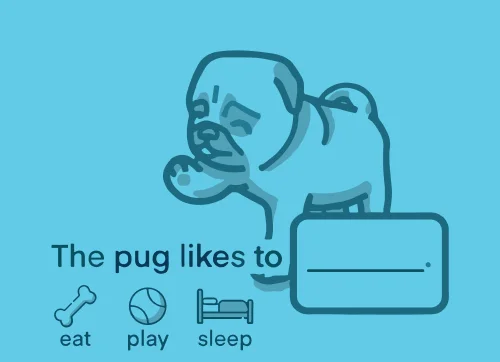
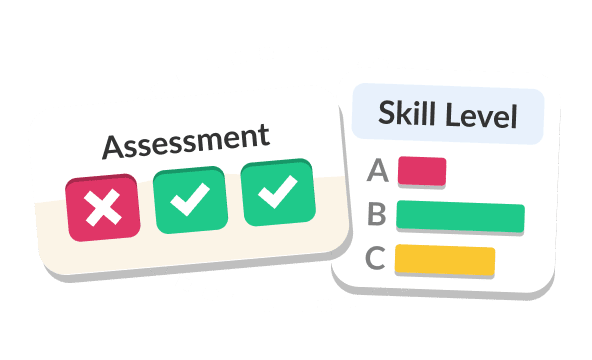
Finds the Gaps
Know exactly where your child needs help.
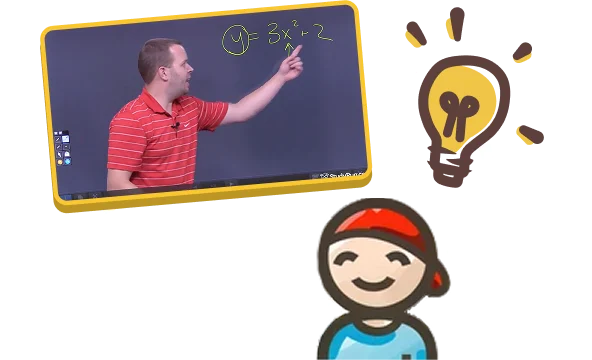
Step-by-Step Video Lessons
Your child learns to solve it alone.
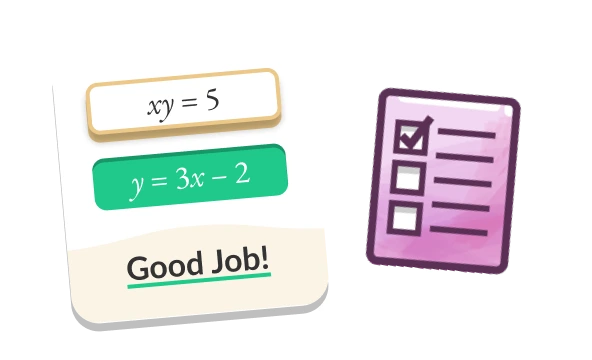
Grows With Them
Questions adjust as your child improves.
Try It Now
Test your knowledge
Our approach aligns with the evidence
Exam Scores
Better Recall
Less Anxiety
1st Grade ELA Topics
1. CCSS.ELA-LITERACY.L.1.1.A
2. CCSS.ELA-LITERACY.L.1.1.B
3. CCSS.ELA-LITERACY.L.1.1.C
4. CCSS.ELA-LITERACY.L.1.1.D
5. CCSS.ELA-LITERACY.L.1.1.E
6. CCSS.ELA-LITERACY.L.1.1.F
7. CCSS.ELA-LITERACY.L.1.1.G
8. CCSS.ELA-LITERACY.L.1.1.H
9. CCSS.ELA-LITERACY.L.1.1.I
10. CCSS.ELA-LITERACY.L.1.1.J
11. CCSS.ELA-LITERACY.L.1.2.A
12. CCSS.ELA-LITERACY.L.1.2.B
13. CCSS.ELA-LITERACY.L.1.2.C
14. CCSS.ELA-LITERACY.L.1.2.D
15. CCSS.ELA-LITERACY.L.1.2.E
16. CCSS.ELA-LITERACY.L.1.4.A
17. CCSS.ELA-LITERACY.L.1.4.B
18. CCSS.ELA-LITERACY.L.1.4.C
19. CCSS.ELA-LITERACY.L.1.5
20. CCSS.ELA-LITERACY.L.1.5.A
21. CCSS.ELA-LITERACY.L.1.5.B
22. CCSS.ELA-LITERACY.L.1.5.C
23. CCSS.ELA-LITERACY.L.1.5.D
24. CCSS.ELA-LITERACY.L.1.6
25. CCSS.ELA-LITERACY.SL.1.1.A
26. CCSS.ELA-LITERACY.SL.1.1.B
27. CCSS.ELA-LITERACY.SL.1.1.C
28. CCSS.ELA-LITERACY.SL.1.2
29. CCSS.ELA-LITERACY.SL.1.3
30. CCSS.ELA-LITERACY.SL.1.4
31. CCSS.ELA-LITERACY.SL.1.5
32. CCSS.ELA-LITERACY.SL.1.6
33. CCSS.ELA-LITERACY.W.1.1
34. CCSS.ELA-LITERACY.W.1.2
35. CCSS.ELA-LITERACY.W.1.3
36. CCSS.ELA-LITERACY.W.1.5
37. CCSS.ELA-LITERACY.W.1.6
38. CCSS.ELA-LITERACY.W.1.7
39. CCSS.ELA-LITERACY.W.1.8
40. CCSS.ELA-LITERACY.RF.1.1.A
41. CCSS.ELA-LITERACY.RF.1.2.A
42. CCSS.ELA-LITERACY.RF.1.2.B
43. CCSS.ELA-LITERACY.RF.1.2.C
44. CCSS.ELA-LITERACY.RF.1.2.D
45. CCSS.ELA-LITERACY.RF.1.3.A
46. CCSS.ELA-LITERACY.RF.1.3.B
47. CCSS.ELA-LITERACY.RF.1.3.C
48. CCSS.ELA-LITERACY.RF.1.3.D
49. CCSS.ELA-LITERACY.RF.1.3.E
50. CCSS.ELA-LITERACY.RF.1.3.F
51. CCSS.ELA-LITERACY.RF.1.3.G
52. CCSS.ELA-LITERACY.RF.1.4.A
53. CCSS.ELA-LITERACY.RF.1.4.B
54. CCSS.ELA-LITERACY.RF.1.4.C
55. CCSS.ELA-LITERACY.RI.1.1
56. CCSS.ELA-LITERACY.RI.1.2
57. CCSS.ELA-LITERACY.RI.1.3
58. CCSS.ELA-LITERACY.RI.1.4
59. CCSS.ELA-LITERACY.RI.1.5
60. CCSS.ELA-LITERACY.RI.1.6
61. CCSS.ELA-LITERACY.RI.1.7
62. CCSS.ELA-LITERACY.RI.1.8
63. CCSS.ELA-LITERACY.RI.1.9
64. CCSS.ELA-LITERACY.RI.1.10
65. CCSS.ELA-LITERACY.RL.1.1
66. CCSS.ELA-LITERACY.RL.1.2
67. CCSS.ELA-LITERACY.RL.1.3
68. CCSS.ELA-LITERACY.RL.1.4
69. CCSS.ELA-LITERACY.RL.1.5
70. CCSS.ELA-LITERACY.RL.1.6
71. CCSS.ELA-LITERACY.RL.1.7
72. CCSS.ELA-LITERACY.RL.1.9
73. CCSS.ELA-LITERACY.RL.1.10
73 Chapters · 118 Topics · 115 Videos
Discover Our Learning Areas
Explore key subjects and start learning with interactive content.


What is 1st Grade English?
First grade English is the foundation year where children move from learning letters to becoming real readers. At this stage, your child builds the core skills that every future year of school depends on: phonics (sounding out words), sight word recognition, reading fluency, basic reading comprehension, sentence structure, vocabulary, and introductory grammar. By the end of 1st grade, most children are expected to read simple books independently and understand what they've read. If those skills aren't solid, every grade after becomes harder — which is why targeted, consistent practice in 1st grade English matters so much.
What phonics skills does a 1st grader need to practice?
Phonics is the engine behind reading. In 1st grade, children learn to decode words by connecting letters and letter combinations to their sounds. Key phonics skills at this level include short and long vowel sounds, consonant blends (like "bl" and "str"), digraphs ("sh", "ch", "th"), and silent letters. Children also build phonemic awareness — the ability to hear, identify, and manipulate individual sounds in spoken words. Without strong phonics, reading becomes guesswork. StudyPug's certified-teacher video lessons break each phonics concept into clear, visual steps so your child can hear and see exactly how sounds connect to letters. Adaptive practice then reinforces each pattern until it sticks, adjusting difficulty based on how your child is doing.
How does reading comprehension develop in 1st grade?
Reading comprehension in 1st grade goes beyond sounding out words — it's about understanding what those words mean together. Children at this level practice identifying the main idea of a short passage, recalling key details, understanding the sequence of events, and making simple inferences. They also begin to distinguish between fiction and nonfiction texts. Many children can decode words fluently but still struggle to answer questions about what they read — this is a comprehension gap, not a reading gap. StudyPug's diagnostic assessment identifies this distinction clearly, so your child gets targeted comprehension practice rather than more phonics drills they don't need. Practice sessions build the habit of active reading, where your child thinks about meaning as they read rather than just pronouncing words.
What grammar and vocabulary skills are covered in 1st grade?
Grammar in 1st grade focuses on the building blocks of sentences. Children learn about nouns, verbs, and adjectives; how to form complete sentences; capitalization and basic punctuation (periods, question marks, exclamation points); and plural nouns. Vocabulary work at this stage includes learning the meaning of new words from context, understanding opposites (antonyms) and similar words (synonyms), and building the everyday academic vocabulary needed to understand classroom instructions and reading passages. StudyPug covers all of these topics through short, clearly explained video lessons and adaptive practice that keeps reinforcing the concepts your child finds trickiest. Because the content aligns to state standards, everything practiced connects directly to what their teacher is covering in class.
Is 1st grade English hard for most children?
First grade is a big leap from kindergarten, and it's completely normal for children to find parts of it challenging. The jump from recognizing letters to reading full sentences is significant. Some children click with phonics quickly but struggle with comprehension; others read smoothly but mix up grammar rules. The most important thing isn't whether your child finds it hard — it's whether they get the right support at their exact level. StudyPug's diagnostic assessment identifies precisely where your child is confident and where gaps exist, so practice time is never wasted on skills they've already got. The adaptive practice then builds from their current level, which means the work is always challenging enough to grow but never so hard it becomes discouraging.
What comes next after 1st grade English, and how does this course prepare them?
Second grade English builds on everything learned in 1st grade, with more complex reading passages, longer words, more sophisticated grammar, and a much greater emphasis on reading comprehension and written expression. Children who enter 2nd grade without solid phonics and comprehension foundations often find themselves falling further behind as the reading demands increase. StudyPug's 1st Grade English course ensures your child finishes the year with the core skills 2nd grade will require: automatic sight word recognition, reliable phonics decoding, basic grammar understanding, and the habit of reading for meaning. Progress tracking gives you visibility into exactly where your child stands throughout the year — not just at report card time.
Why StudyPug for 1st Grade English?
StudyPug is built around one goal for 1st grade English: making sure every child gets practice that matches their actual level. Certified teachers — not AI-generated content — deliver every video lesson, which means your child hears clear, accurate explanations from a real educator. The diagnostic assessment takes the guesswork out of where to start, and the adaptive practice engine adjusts automatically so sessions are always productive. One subscription covers up to 5 children across all grades and subjects, making it practical for families. And if it's not the right fit, the 30-day money-back guarantee means there's no risk. Over 3 million students use StudyPug, and 92% report improved grades — a result built on practice that actually targets what each child needs.
What topics does the 1st Grade English course cover?
The course is fully aligned to state standards and covers all the major strands a 1st grader needs to practice:
- Phonics & Decoding: Short and long vowels, blends, digraphs, and word families
- Sight Words: High-frequency words for fluent reading
- Reading Fluency: Practice reading with accuracy and appropriate pace
- Reading Comprehension: Main idea, key details, sequence, and simple inference
- Vocabulary: Word meaning, synonyms, antonyms, and context clues
- Grammar: Nouns, verbs, adjectives, sentence structure, capitalization, and punctuation
For families who want to see how this content lines up with specific state requirements, you can explore the Florida grade 1 ELA curriculum or the New York grade 1 ELA curriculum to see how StudyPug maps to the standards your child is assessed on.
How to use StudyPug for 1st Grade English practice
Getting started is straightforward. After signing up, your child takes a short diagnostic assessment that identifies which phonics, reading, grammar, and vocabulary skills need the most attention. From there, StudyPug recommends where to begin. Your child watches a certified-teacher video lesson that explains the concept clearly — no dense text, just a real teacher working through it step by step. Then they move into adaptive practice, where questions adjust based on their answers. Sessions can be as short as 10–15 minutes, which is ideal for early elementary attention spans. If your child gets stuck on a question, they can use Photo Search: snap the question and StudyPug surfaces the relevant lesson. You can check the parent dashboard at any time to review weekly progress, see which skills have improved, and identify where more practice would help. The 30-day money-back guarantee means you can get started today with no risk.
1st Grade English FAQ
Unsure how StudyPug works? Need help with setting up? Check our frequently asked questions or contact us for help.
What's included in the subscription?
Full access to all 1st Grade English video lessons, practice problems, assessments, and progress tracking. One subscription covers up to 5 children and all grades, subjects, and courses on StudyPug.
Can I sign up free to try it?
Yes! You can sign up free to explore sample lessons and practice materials. When you're ready to subscribe, we offer a 30-day money-back guarantee — if it's not right for your child, we'll refund you.
How much does it cost?
Plans start with one low monthly payment, with annual options for the best value. One plan covers up to 5 children and all subjects. 30-day money-back guarantee. [See all plans →]
What does 1st Grade English cover?
The course covers phonics, sight words, reading fluency, basic reading comprehension, sentence structure, vocabulary, and introductory grammar — all aligned to state standards.
How does the diagnostic assessment work?
A short assessment identifies which phonics and reading skills your child has mastered and which need more practice, so learning time is focused and never wasted.
How does adaptive practice help my 1st grader?
Practice questions adjust to your child's level — starting where they are and building up gradually. There's no frustration from questions that are too hard, and no boredom from ones that are too easy.



Written by the StudyPug Team
Last updated June 5, 2026
3 M+
students
★★★★★
4.8 average
K–12
all grades