Online 2nd Grade English Help for Your Child
Build phonics, reading, and grammar skills with certified teachers and adaptive practice.
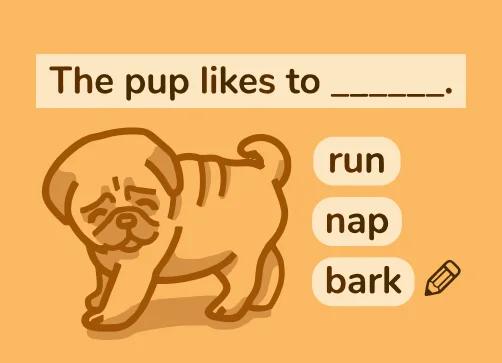
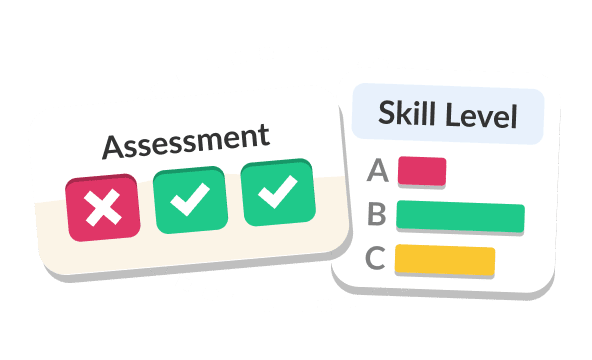
Diagnostic Finds Gaps
Know exactly what your child needs.
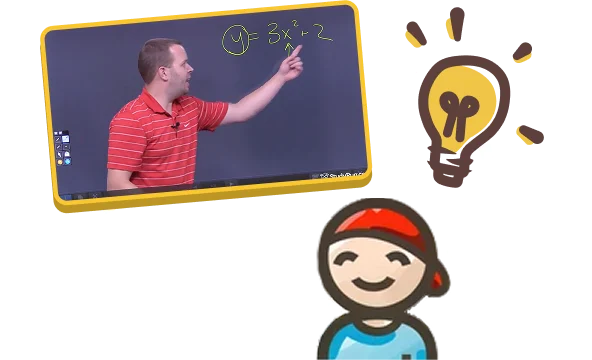
Step-by-Step Videos
Teachers explain steps so kids solve alone.
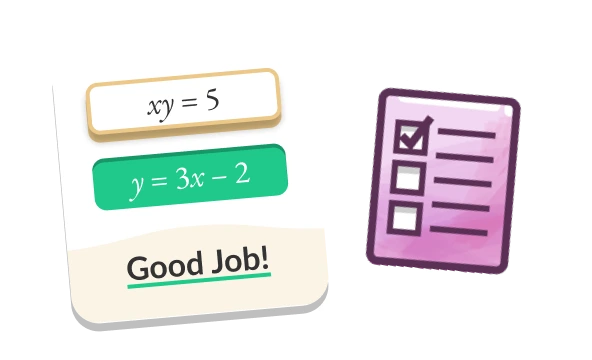
Practice That Adapts
Questions adapt to build your child's confidence.
Try It Now
Test your knowledge
Our approach aligns with the evidence
Exam Scores
Better Recall
Less Anxiety
2nd Grade ELA Topics
1. CCSS.ELA-LITERACY.L.2.1.A
2. CCSS.ELA-LITERACY.L.2.1.B
3. CCSS.ELA-LITERACY.L.2.1.C
4. CCSS.ELA-LITERACY.L.2.1.D
5. CCSS.ELA-LITERACY.L.2.1.E
6. CCSS.ELA-LITERACY.L.2.1.F
7. CCSS.ELA-LITERACY.L.2.2.A
8. CCSS.ELA-LITERACY.L.2.2.B
9. CCSS.ELA-LITERACY.L.2.2.C
10. CCSS.ELA-LITERACY.L.2.2.D
11. CCSS.ELA-LITERACY.L.2.2.E
12. CCSS.ELA-LITERACY.L.2.3.A
13. CCSS.ELA-LITERACY.L.2.4.A
14. CCSS.ELA-LITERACY.L.2.4.B
15. CCSS.ELA-LITERACY.L.2.4.C
16. CCSS.ELA-LITERACY.L.2.4.D
17. CCSS.ELA-LITERACY.L.2.4.E
18. CCSS.ELA-LITERACY.L.2.5.A
19. CCSS.ELA-LITERACY.L.2.5.B
20. CCSS.ELA-LITERACY.L.2.6
21. CCSS.ELA-LITERACY.SL.2.1.A
22. CCSS.ELA-LITERACY.SL.2.1.B
23. CCSS.ELA-LITERACY.SL.2.1.C
24. CCSS.ELA-LITERACY.SL.2.2
25. CCSS.ELA-LITERACY.SL.2.3
26. CCSS.ELA-LITERACY.SL.2.4
27. CCSS.ELA-LITERACY.SL.2.5
28. CCSS.ELA-LITERACY.SL.2.6
29. CCSS.ELA-LITERACY.W.2.1
30. CCSS.ELA-LITERACY.W.2.2
31. CCSS.ELA-LITERACY.W.2.3
32. CCSS.ELA-LITERACY.W.2.5
33. CCSS.ELA-LITERACY.W.2.6
34. CCSS.ELA-LITERACY.W.2.7
35. CCSS.ELA-LITERACY.W.2.8
36. CCSS.ELA-LITERACY.RF.2.3.A
37. CCSS.ELA-LITERACY.RF.2.3.B
38. CCSS.ELA-LITERACY.RF.2.3.C
39. CCSS.ELA-LITERACY.RF.2.3.D
40. CCSS.ELA-LITERACY.RF.2.3.E
41. CCSS.ELA-LITERACY.RF.2.3.F
42. CCSS.ELA-LITERACY.RF.2.4.A
43. CCSS.ELA-LITERACY.RF.2.4.B
44. CCSS.ELA-LITERACY.RF.2.4.C
45. CCSS.ELA-LITERACY.RI.2.1
46. CCSS.ELA-LITERACY.RI.2.2
47. CCSS.ELA-LITERACY.RI.2.3
48. CCSS.ELA-LITERACY.RI.2.4
49. CCSS.ELA-LITERACY.RI.2.5
50. CCSS.ELA-LITERACY.RI.2.6
51. CCSS.ELA-LITERACY.RI.2.7
52. CCSS.ELA-LITERACY.RI.2.8
53. CCSS.ELA-LITERACY.RI.2.9
54. CCSS.ELA-LITERACY.RI.2.10
55. CCSS.ELA-LITERACY.RL.2.1
56. CCSS.ELA-LITERACY.RL.2.2
57. CCSS.ELA-LITERACY.RL.2.3
58. CCSS.ELA-LITERACY.RL.2.4
59. CCSS.ELA-LITERACY.RL.2.5
60. CCSS.ELA-LITERACY.RL.2.6
61. CCSS.ELA-LITERACY.RL.2.7
62. CCSS.ELA-LITERACY.RL.2.9
63. CCSS.ELA-LITERACY.RL.2.10
63 Chapters · 118 Topics · 103 Videos
Discover Our Learning Areas
Explore key subjects and start learning with interactive content.



What Is 2nd Grade English?
2nd grade English is the bridge between learning to read and reading to learn. At this stage, your child moves beyond sounding out individual letters and starts reading whole sentences, short stories, and informational passages with understanding. The core skill areas in 2nd grade English include phonics and word patterns, reading fluency, reading comprehension, vocabulary, basic grammar and sentence structure, and early writing skills like forming complete sentences and short paragraphs.
By the end of 2nd grade, most students are expected to read grade-level texts independently, answer questions about what they read, recognize common spelling patterns, and write simple sentences correctly. If your child is finding any of these areas challenging, targeted practice — starting exactly where they are — is the most effective way to help them get on track.
What Phonics Skills Do 2nd Graders Practice?
Phonics in 2nd grade goes deeper than simple letter-sound matching. Students practice consonant blends and digraphs (like bl, ch, sh), long and short vowel patterns, silent-e words, vowel teams (like ai, ea, oa), and common word endings. They also begin working with compound words and simple prefixes and suffixes.
Strong phonics skills at this stage are the foundation for fluency. When a child can decode words quickly and automatically, they spend less mental energy sounding out letters and more energy understanding what they read. StudyPug's certified-teacher video lessons walk through each phonics pattern step by step, and the adaptive practice follows up with targeted questions that adjust to your child's current skill level — so they practice the patterns they actually need, not the ones they already know.
How Is Reading Comprehension Taught in 2nd Grade?
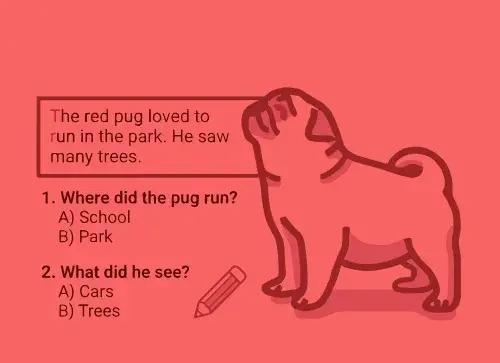
In 2nd grade, reading comprehension practice moves from simple recall ("What happened in the story?") to making inferences, identifying the main idea, and understanding cause and effect. Students read both fiction and nonfiction texts and answer questions that require them to think beyond just what the words say.
Common comprehension skills at this level include identifying story elements (characters, setting, problem, solution), finding the main idea and supporting details in nonfiction passages, making predictions before and during reading, and retelling stories in sequence. Practice sessions that focus on these specific skills — rather than general reading time — help children build comprehension strategies they can apply across all subjects.
What Grammar Does 2nd Grade English Cover?
Grammar in 2nd grade covers the building blocks of correct writing and speaking. Key topics include nouns (common and proper), verbs (past, present, and future tense), adjectives, pronouns, and basic sentence structure (complete sentences versus fragments). Students also practice capitalization rules, punctuation (periods, question marks, exclamation points, commas in a series), and correct spelling of high-frequency words.
Grammar can feel abstract to 7- and 8-year-olds, which is why video lessons that explain rules clearly — with examples a child can follow — make a big difference. StudyPug's certified teachers break grammar concepts into short, focused lessons, and the diagnostic assessments identify which specific grammar rules your child needs more practice with before moving on.
What If My Child Is Reading Below Grade Level?
Reading below grade level in 2nd grade is more common than many parents realize, and it is entirely fixable with the right practice. The key is starting at your child's actual level — not their grade level — and building skills progressively from there.
StudyPug's diagnostic assessment identifies exactly where your child's reading and phonics skills currently stand. If they are still working on 1st grade phonics patterns, the adaptive practice starts there and builds step by step. There is no frustration from questions that are too hard, and no wasted time on skills they already have. The system adjusts as they improve, so practice is always at the right level of challenge.
Many parents also worry about the confidence side of reading struggles. When children experience repeated failure at reading tasks, they start to avoid reading entirely. Practice that starts where they succeed and gradually challenges them more helps rebuild that confidence alongside the skills themselves.
How Does Vocabulary Development Work in 2nd Grade?
Vocabulary in 2nd grade expands rapidly. Students encounter new words in every subject — not just English class — and learning strategies for figuring out unfamiliar words is just as important as memorizing word lists. Key vocabulary skills at this level include using context clues to figure out word meaning, understanding simple synonyms and antonyms, recognizing compound words, and learning grade-appropriate academic vocabulary that appears in reading passages and tests.
Strong vocabulary is directly connected to reading comprehension. Children who know more words understand what they read more easily and answer comprehension questions more accurately. Targeted vocabulary practice — organized by word type and skill level — helps children build a robust word bank without overwhelming them.
Why StudyPug for 2nd Grade English?
StudyPug gives 2nd grade English learners three things that matter most: certified teachers who explain concepts clearly, adaptive practice that starts at your child's actual level, and diagnostic assessments that tell you exactly what to work on next.
Unlike generic reading apps that give your child random practice, StudyPug starts with a short diagnostic to identify skill gaps in phonics, comprehension, grammar, or vocabulary. The system then builds a practice path that challenges your child at the right level — not too easy, not too frustrating. As skills improve, the practice adjusts to keep moving them forward.
The certified-teacher video lessons are a key differentiator. Rather than asking a 2nd grader to figure out a phonics rule from a worksheet or a text explanation, they watch a real teacher walk through the concept step by step. This mirrors how their classroom teacher would explain it, which means home practice reinforces school learning rather than creating confusion.
The parent dashboard gives you a clear view of weekly progress across all skill areas — phonics, fluency, comprehension, grammar, and vocabulary. You can see where your child is improving and where they still need support, without having to wait for a report card to find out.
StudyPug's content is aligned to state standards, so everything your child practices matches what their teacher is covering in class. One subscription covers up to 5 children and includes all subjects and grades — so as your child moves from 2nd grade into 3rd grade and beyond, the same account grows with them.
What Topics Are Covered in 2nd Grade English?
The 2nd Grade English course on StudyPug covers the full range of skills in the 2nd grade English curriculum, including:
- Phonics: consonant blends, digraphs, vowel teams, long and short vowel patterns, silent-e words
- Reading fluency: reading rate, expression, and accuracy with grade-level texts
- Reading comprehension: main idea, story elements, cause and effect, making inferences
- Vocabulary: context clues, synonyms and antonyms, compound words, academic vocabulary
- Grammar: nouns, verbs (tense), adjectives, pronouns, complete sentences, punctuation, capitalization
- Spelling: high-frequency words, common spelling patterns, word families
For families in specific states, you can also explore curriculum-aligned resources for your region. See our Florida grade 2 ELA curriculum guide and our New York grade 2 ELA curriculum guide for state-specific topic breakdowns.
How to Use StudyPug for 2nd Grade English Practice
Getting started is simple. Sign up and your child takes a short diagnostic assessment that identifies their current skill levels in phonics, reading comprehension, grammar, and vocabulary. Based on those results, StudyPug builds a practice path that starts where your child actually is.
Each session combines a short certified-teacher video lesson with focused adaptive practice questions. Sessions are designed to be short enough to fit into a busy after-school schedule — even 15 to 20 minutes of focused practice several times a week builds meaningful skill over time. The adaptive system adjusts difficulty as your child answers questions, so every session is productive regardless of their starting level.
If your child gets stuck on a concept, they can rewatch the video lesson as many times as needed. The Photo Search feature also lets them snap a photo of a homework question to find the right lesson — a helpful tool for those moments when they need a quick pointer in the right direction.
Parents can check the dashboard at any time to see which skills are improving, which still need work, and how much practice time has been logged. The 30-day money-back guarantee means there is no risk in trying it — if StudyPug is not the right fit for your child, you get a full refund.
2nd Grade English FAQ
Unsure how StudyPug works? Need help with setting up? Check our frequently asked questions or contact us for help.
What's included in the subscription?
Full access to all 2nd Grade English video lessons, practice problems, assessments, and progress tracking. One subscription covers up to 5 children and all grades, subjects, and courses on StudyPug.
Can I sign up free to try it?
Yes! You can sign up free to explore sample lessons and practice materials. When you're ready to subscribe, we offer a 30-day money-back guarantee — if it's not right for your child, we'll refund you.
How much does it cost?
Plans start with one low monthly payment, with annual options for the best value. One plan covers up to 5 children and all subjects. 30-day money-back guarantee. [See all plans →]
What does 2nd grade English cover?
2nd grade English builds on foundational phonics and adds reading fluency, vocabulary, basic grammar, sentence structure, and reading comprehension with longer passages. Students also develop early writing skills like forming complete sentences and simple paragraphs.
How does adaptive practice work?
Questions start at your child's current reading and grammar level and get harder as they improve. If they find something easy, the practice challenges them more. If they find it hard, it eases back. No frustration, no wasted time.
Is the content aligned with what they learn in school?
Yes. All 2nd Grade English content is aligned to state standards, so it matches what your child's teacher is covering in class. This means practice at home reinforces — not confuses — school learning.





Written by the StudyPug Team
Last updated June 5, 2026
3 M+
students
★★★★★
4.8 average
K–12
all grades