2nd Grade Math Help — Step-by-Step Video Lessons & Practice
Help your child understand every 2nd grade math topic and build confidence, one lesson at a time.
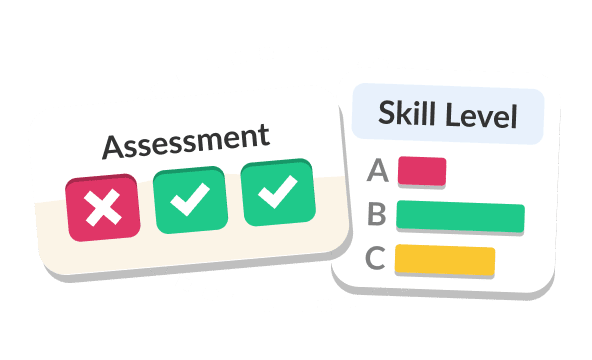
Find Learning Gaps
Know exactly what your child needs next.
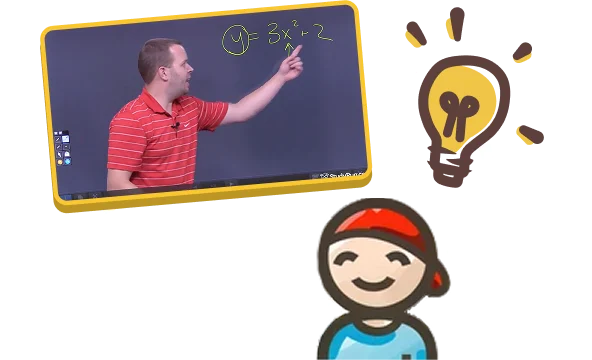
Step-by-Step Video Lessons
Child learns the method not the answer.
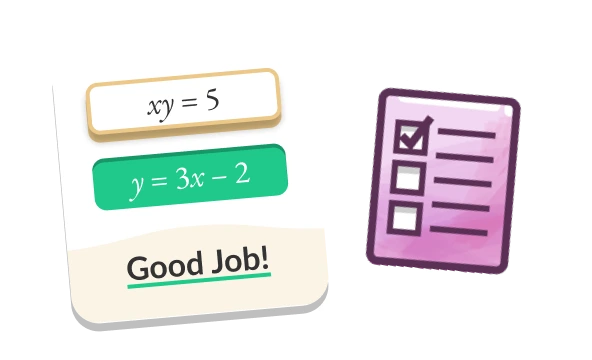
Practice That Adapts
Steady wins for your child not stress.
Try It Now
Test your knowledge
Our approach aligns with the evidence
Exam Scores
Better Recall
Less Anxiety
2nd Grade Math Topics
1. Place Value Up to Hundreds (999)
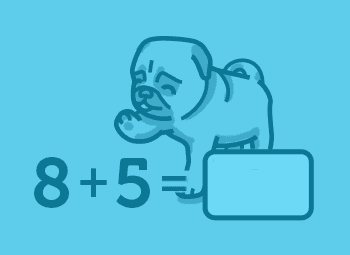
2. Adding Up to 100
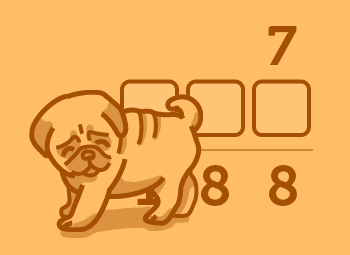
3. Subtracting Up to 100
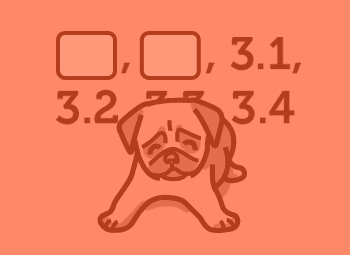
4. Number Patterns
5. Multiplication Facts Up to 2 Digits
6 Chapters · 43 Topics · 42 Videos

Ready to practice 2nd Grade Math?
Try practice questions on every 2nd Grade Math topic — with instant feedback and step-by-step video solutions when you get stuck.
Discover Our Learning Areas
Explore key subjects and start learning with interactive content.










What Is 2nd Grade Math?
2nd grade math is the year when children move from basic counting and simple sums to real number fluency — working with numbers up to 1,000, adding and subtracting two- and three-digit numbers, and beginning to reason about measurement, time, and data. It is a pivotal year because the skills built here — especially place value and regrouping — are the foundation for multiplication, division, and fractions in 3rd grade and beyond. If your child is finding 2nd grade math tricky right now, that is completely normal, and targeted practice with clear explanations is the fastest path forward.
What Topics Are Covered in 2nd Grade Math?
The Common Core State Standards that guide 2nd grade math across most US states group the content into four main areas:
Operations and Algebraic Thinking — solving addition and subtraction word problems, working with equal groups as an introduction to multiplication, and practicing mental math strategies like making ten and doubles.
Number and Operations in Base Ten — understanding hundreds, tens, and ones; comparing three-digit numbers; and adding and subtracting within 1,000 with and without regrouping. This is the heart of 2nd grade math and the area where most children need extra practice.
Measurement and Data — measuring lengths using rulers, estimating, comparing lengths, telling time to the nearest five minutes, and reading simple bar graphs and picture graphs. Coin and dollar-bill recognition is also a key 2nd grade skill.
Geometry — recognizing and drawing shapes with specific attributes, understanding halves, thirds, and fourths, and beginning to partition rectangles into equal squares.
StudyPug covers every one of these areas with dedicated lessons, so there are no gaps between what your child studies at school and what they practice at home.
Is 2nd Grade Math Hard? Common Struggles and How to Help
The biggest jump in 2nd grade math is regrouping — the process of carrying a ten when adding or borrowing a ten when subtracting. Many children can follow the steps but do not yet understand why each step happens, which leads to mistakes on harder problems. The solution is to build understanding first (using place value blocks or drawings) and then practice the written method once the concept is clear.
Other common struggle points include:
Telling time — reading an analog clock to the nearest five minutes requires understanding that the minute hand counts by fives, which is a separate skill from reading numbers on a digital clock.
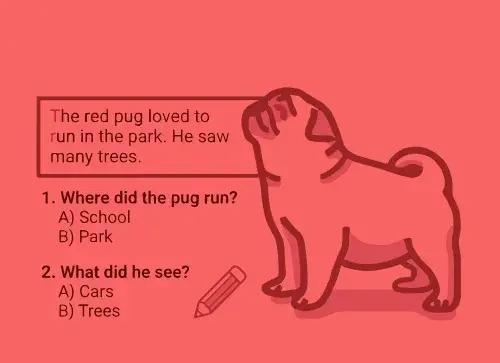
Word problems — 2nd grade word problems often have two steps, which means children must decide what operation to use before they calculate. Practicing key words (altogether, how many more, how many are left) builds that decision-making habit.
Fact fluency — by the end of 2nd grade, children are expected to know addition and subtraction facts within 20 from memory. Daily short practice — even five minutes — builds that automaticity over time.
If your child is hitting any of these walls, a diagnostic assessment that pinpoints the exact gap is far more efficient than working through every topic from scratch. That targeted approach is exactly where StudyPug starts.
Why StudyPug for 2nd Grade Math Help?
StudyPug is built around the idea that children learn best when they understand the method — not just memorize a procedure. Here is what makes it work for 2nd grade math specifically:
Diagnostic Assessment (K onwards). When your child first starts, a quick diagnostic assessment identifies the exact topics where they need support. Parents no longer have to guess whether the problem is regrouping, place value, or something earlier. The diagnostic creates a focused starting point so practice time is never wasted.
Certified-teacher video lessons. Every lesson is taught by a real certified teacher — not generated by software. The teacher explains the concept first (why regrouping works, how place value blocks connect to written numbers) and then walks through examples step by step. Because the method is taught, not just shown, children can apply it to new problems on their own — which is exactly what builds confidence.
Adaptive practice. After watching a lesson, your child practises with questions that adjust automatically to their level. If they get several answers right, the questions step up; if they find a batch tricky, the practice loops back to reinforce. This keeps the challenge in the right zone — not so easy it is boring, not so hard it is discouraging.
Printable worksheets with answer keys (Math K-3). For families who want screen-free practice, StudyPug provides printable 2nd grade math worksheets with full answer keys. These are ideal for reinforcing fact fluency, working through word problems at the kitchen table, or simply giving a child's eyes a break from a screen.
Parent Dashboard. The Parent Dashboard shows you each child's progress at a glance — which topics they have practiced, where improvement is showing, and where a topic still needs work. You do not need to sit with your child every session to stay informed.
Family Plan — up to 5 children, one price. If you have more than one child at any grade level, the Family Plan covers all of them under a single subscription. All grade levels and all subjects are included.
30-day money-back guarantee. There is no risk in starting. If StudyPug is not the right fit within the first 30 days, you receive a full refund.
What Your Child Will Learn: 2nd Grade Math Curriculum Coverage
StudyPug's 2nd grade math content is aligned to the Common Core State Standards used across the United States. Key learning goals include: adding and subtracting within 1,000 using place value strategies and regrouping; understanding the value of digits in the hundreds, tens, and ones positions; solving one- and two-step word problems using addition and subtraction; measuring and estimating lengths in inches and centimeters; telling and writing time to the nearest five minutes; counting and comparing collections of coins and dollars; reading and creating bar graphs and picture graphs; and identifying, drawing, and partitioning shapes.
For state-specific curriculum breakdowns, you can explore the texas math curriculum for Grade 2 or the florida grade 2 math curriculum to see how those state standards align with the topics covered on StudyPug.
How to Use StudyPug for 2nd Grade Math Practice
Getting started takes a few minutes. When your child first logs in, the diagnostic assessment runs through a short set of 2nd grade math questions and identifies the topics that need the most attention. From there, the recommended path guides your child to the right lessons first — so they are not sitting through topics they already know.
A good weekly routine for a 2nd grader looks like this: watch one short video lesson on a new or tricky topic, then complete the adaptive practice questions that follow. On days when a screen break is useful, print a worksheet on the same topic for offline reinforcement. Keep sessions to 15–20 minutes — consistency matters more than length at this age.
Parents can check the Parent Dashboard at any point during the week to see which topics their child has covered and whether the practice scores are trending up. If a topic is still showing as weak after a few sessions, that is a signal to revisit the video lesson together — sometimes watching with a parent and talking through the steps is all it takes for the concept to land.
StudyPug is available on desktop, tablet, and mobile, so your child can practice at home, on a device, or wherever is most convenient. Lessons are available any time, so there is always support ready when homework needs it — whether that is Sunday evening or a weekday afternoon before dinner.
Free practice content is available without a subscription, so your child can try the platform and see how it feels before you commit to a plan. When you are ready to unlock the full lesson library, diagnostic, adaptive practice, and parent dashboard, plans are available by the month or year, and the 30-day money-back guarantee means the first month is completely risk-free.
2nd Grade Math FAQ
Unsure how StudyPug works? Need help with setting up? Check our frequently asked questions or contact us for help.
What does my child learn in 2nd grade math, and what topics does it cover?
In 2nd grade math, children build on the number sense from 1st grade and develop real arithmetic fluency. Core topics include addition and subtraction within 1,000, understanding place value to the hundreds, measuring lengths in standard units, telling time to the nearest five minutes, counting coins and dollar bills, reading bar graphs and picture graphs, and an introduction to rectangular arrays as a foundation for multiplication. By year end, students should be able to add and subtract two- and three-digit numbers fluently and explain the strategies they use.
Is 2nd grade math hard, and where do children commonly struggle?
For most children, 2nd grade math feels like a significant jump because the numbers get bigger and strategies matter more than just counting. The most common struggle points are regrouping (carrying and borrowing) in addition and subtraction, understanding place value beyond tens, and telling time. Children also find word problems tricky because they require reading comprehension alongside math. The good news is that these are all learnable skills — breaking them into small steps and practicing consistently is what makes the difference.
What should my child know before 2nd grade math, and what comes next?
Before starting 2nd grade math, your child should be comfortable adding and subtracting within 20, counting to 120, and understanding basic place value (tens and ones) from 1st grade. Looking ahead, 3rd grade math builds directly on 2nd grade skills — students move into multiplication and division, fractions, and larger-number arithmetic. A strong foundation in place value and regrouping in 2nd grade makes that transition much smoother. StudyPug covers both the 2nd grade topics and links forward to 3rd grade concepts so there are no gaps.
How does StudyPug 2nd grade math map to what my child learns at school?
StudyPug's 2nd grade math lessons are built to align with the Common Core State Standards that most US states follow. Topics like operations and algebraic thinking, number and operations in base ten, measurement and data, and geometry are all covered in the same sequence your child's teacher uses. Whether your child's school follows Texas TEKS, Florida NGSSS, or another state standard, the core 2nd grade math content is closely aligned. You can explore the texas math curriculum or the florida grade 2 math curriculum pages for state-specific details.
What is one of the trickiest 2nd grade math concepts, and how is it taught?
Regrouping — also called carrying and borrowing — is consistently the trickiest concept for 2nd graders. When adding 47 + 38, for example, a child must understand that 7 + 8 = 15, write the 5, and carry the 1 to the tens column. Many children follow the steps without understanding why, which causes errors later. StudyPug's certified teachers explain the concept using place value blocks visually before moving to the written algorithm, so children understand the reasoning behind each step — not just the procedure. That understanding makes the skill stick.
How much math practice should my child do at 2nd grade?
Education research consistently suggests 10–20 minutes of focused math practice per day is ideal for 2nd graders — enough to build fluency without causing burnout. Short, consistent sessions beat long occasional ones. Good targets include daily fact practice (addition and subtraction within 20), one or two multi-step problems, and a short review of any topic the child found difficult that week. StudyPug's adaptive practice adjusts to your child's level automatically, so every session targets the right challenge — not too easy, not too frustrating.





Written by the StudyPug Team
Last updated June 5, 2026
3 M+
students
★★★★★
4.8 average
K–12
all grades