Grade 11 Chemistry Help — Video Lessons & Practice
Get clear explanations for any Chemistry problem and build exam-ready confidence for NCEA Level 2.

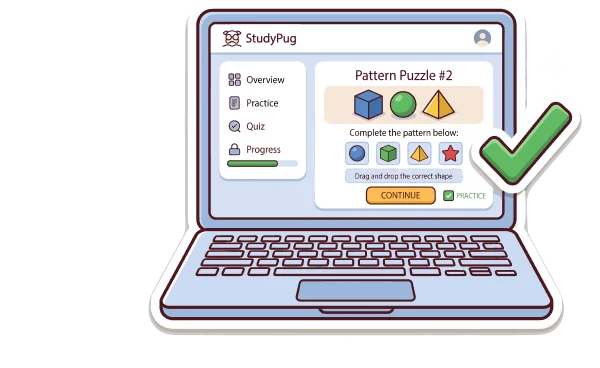
Value vs. Private Tutor
Expert Chemistry help without the price tag.
Multi-Subject
Stuck on chemistry? Switch subjects anytime.
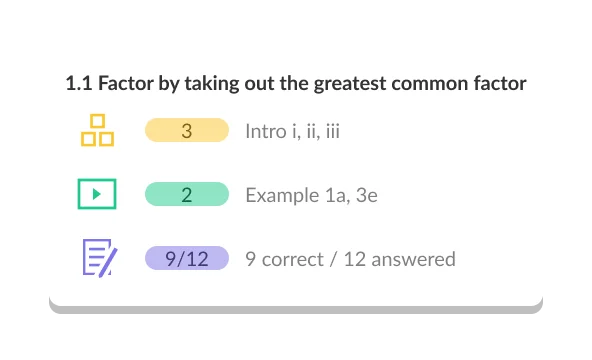
Build Mastery
Move on only when you actually get it.
Chemistry Topics
1. Introduction to Chemistry
2. The Atom
3. The Periodic Table and Elements
4. Compounds and Bonding
5. Chemical Reactions and Groups
6. Stoichiometry
7. Basic Organic Chemistry
8. Solution Chemistry
9. Energetics, Kinetics and Reaction Rate
10. Equilibrium
11. Acid-Base Theory
12. Solubility Equilibria
13 Chapters · 84 Topics · 695 Videos
Discover Our Learning Areas
Explore key subjects and start learning with interactive content.



What is Grade 11 Chemistry?
Grade 11 Chemistry in New Zealand is the NCEA Level 2 Chemistry course taken by Year 12 students. It is the first year of specialised chemistry study, building on the broad science foundation of Year 11 (NCEA Level 1). The course introduces the quantitative and conceptual frameworks that underpin all advanced chemistry — from how atoms bond to form compounds, to calculating exactly how much of a substance is produced in a chemical reaction.
NCEA Level 2 Chemistry is a gateway subject. Students who do well at this level are well-positioned for Year 13 Chemistry (NCEA Level 3), which is a prerequisite for university programmes in medicine, pharmacy, engineering, and the life sciences. It is also increasingly valued by New Zealand employers in the science and technology sectors.
Is Grade 11 Chemistry hard?
Grade 11 Chemistry has a reputation as one of the tougher NCEA Level 2 subjects — and for good reason. Unlike general science, it demands both mathematical precision and the ability to think abstractly about matter at the atomic and molecular level.
Students who find the subject challenging usually hit a wall in one of three areas: stoichiometry and mole calculations (which require multi-step mathematical reasoning), chemical bonding and molecular geometry (which require visualising the invisible), and writing and balancing complex equations. The good news is that all of these are learnable skills. They are not about talent — they are about having the right method explained clearly, then practising enough times that the steps become second nature. That is exactly what Step-by-step certified-teacher video lessons are designed to deliver.
What topics are covered in Grade 11 Chemistry?
NCEA Level 2 Chemistry covers a broad and interconnected set of topics. Here is what you can expect to study across the year:
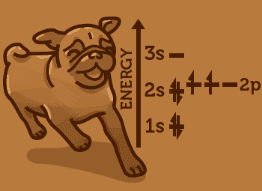
Atomic structure and periodicity. Electron configuration, atomic number, isotopes, and trends across the periodic table including electronegativity, ionisation energy, and atomic radius.
Chemical bonding. Ionic, covalent, and metallic bonding; VSEPR theory and molecular geometry; intermolecular forces including hydrogen bonding, dipole-dipole, and dispersion forces.
Stoichiometry. The mole concept, molar mass, mole ratios in balanced equations, limiting reagents, theoretical and percentage yield, and concentration calculations.
Types of chemical reactions. Synthesis, decomposition, single and double displacement, combustion, and redox reactions — including oxidation states.
Acids and bases. Arrhenius and Brønsted-Lowry definitions, pH, strong versus weak acids and bases, neutralisation, and titrations.
Organic chemistry. Naming and drawing hydrocarbons, functional groups (alcohols, carboxylic acids, aldehydes, ketones, esters), and introductory reaction types (addition, substitution, condensation).
Electrochemistry. Galvanic cells, electrode reactions, standard reduction potentials, and electrolysis.
How is Grade 11 Chemistry assessed through NCEA?
NCEA Level 2 Chemistry uses a mixed internal and external assessment model. Internal assessments are set and marked by your school throughout the year — these often include practical investigations, research reports, and shorter written tasks. External assessments are centrally set and sit in the NZQA November examination window.
Each assessment standard awards a set number of credits, and your overall grade (Not Achieved, Achieved, Merit, or Excellence) is determined per standard. Performing well across both internal and external components gives you the strongest possible NCEA record. Good exam preparation — including working through practice problems that mirror real NCEA exam questions — is one of the most reliable ways to improve your grade.
What comes before and after Grade 11 Chemistry?
Before Grade 11 Chemistry, students should have completed Year 11 Science (NCEA Level 1), which introduces basic atomic theory, chemical reactions, and the language of chemistry. Comfort with algebraic manipulation and unit conversion is also important, since stoichiometry and quantitative chemistry rely heavily on these skills.
After Grade 11 Chemistry, the natural progression is Year 13 Chemistry (NCEA Level 3), which covers equilibrium, thermodynamics, advanced organic chemistry, and spectroscopy. NCEA Level 3 Chemistry is the standard requirement for entry into science-based university programmes in New Zealand, Australia, and the UK. Some students also sit Scholarship Chemistry, which is a nationally competitive exam for top achievers.
Why StudyPug for Grade 11 Chemistry?
StudyPug is built around a simple idea: the best way to improve at Chemistry is to understand the method, not just the answer. Every lesson on StudyPug is created by a certified teacher who walks you through each problem type from first principles — explaining why each step is taken, not just what the answer is. That is the difference between being able to do one problem and being able to do every problem like it.
The platform begins with a diagnostic assessment that identifies precisely which Chemistry topics need attention. Rather than working through the entire course from scratch, you are directed to the areas that will move your grade the most. This is the study-smarter approach — focused, efficient, and personalised.
Adaptive practice then adjusts the difficulty of questions in real time based on your performance. If you are getting stoichiometry problems right consistently, the platform progresses you. If you are making errors in a particular area, it gives you more targeted practice there until you have genuinely consolidated the concept.
All content is aligned to the New Zealand curriculum and NCEA Level 2 standards, so you are always practising topics and question styles that are directly relevant to your assessments — not a generic overseas curriculum.
StudyPug also offers free daily practice content, so you can start practising Chemistry problems right now without a subscription. For full access to all video lessons, adaptive practice, and the diagnostic assessment, a paid subscription is available with a 30-day money-back guarantee.
What you learn with StudyPug — Grade 11 Chemistry curriculum coverage
StudyPug's Grade 11 Chemistry content is organised by topic to match the NCEA Level 2 curriculum. Topics covered include atomic structure and electron configuration, ionic and covalent bonding, VSEPR and molecular geometry, intermolecular forces, stoichiometry and mole calculations, acids and bases, organic chemistry fundamentals, and electrochemistry.
Each topic contains multiple video lessons, worked examples, and practice problem sets. You can work through topics in sequence, or jump directly to the concept you are stuck on — whatever is most useful for where you are in the school year.
Because no validated internal topic-page links are currently available for this course in the StudyPug page feed, we have not linked to individual topic pages here. You can browse the full topic list directly on the StudyPug Grade 11 Chemistry course page.
Using StudyPug for Grade 11 Chemistry
Getting started is straightforward. When you sign up, StudyPug's diagnostic assessment will ask you a set of Chemistry questions and use your responses to build a personalised study plan. This tells you exactly which topics to focus on first — no guessing, no wasted revision time.
From there, you watch the certified-teacher video lesson for your topic. These are short, focused, and designed to explain the concept clearly before walking through worked examples. After watching, you move into practice questions. The adaptive practice system adjusts the difficulty based on how you perform, ensuring you are always working at a level that challenges you without overwhelming you.
StudyPug is available on any device — desktop, tablet, or mobile — so you can fit Chemistry practice into your schedule wherever you are. Whether you are revising the night before a school test or working through a tricky organic chemistry concept on the weekend, the lessons and practice are always available.
If you want to prepare specifically for NCEA externals, the practice questions are built to reflect real exam-style problems based on the NCEA format and standards. Working through these consistently is one of the most effective ways to build the confidence and speed you need on exam day.
New students can access free daily practice content immediately. A paid subscription — backed by a 30-day money-back guarantee — gives you full access to all video lessons, adaptive practice, and diagnostic tools across every subject and grade level on the platform.
Chemistry FAQ
Unsure how StudyPug works? Need help with setting up? Check our frequently asked questions or contact us for help.
What do you learn in Grade 11 Chemistry, and what topics does it cover?
Grade 11 Chemistry (NCEA Level 2) covers the core foundations of chemical science. Key topics include atomic structure and electron configuration, chemical bonding (ionic, covalent, and metallic), stoichiometry and mole calculations, types of chemical reactions, acids and bases, organic chemistry fundamentals, and electrochemistry. Students also develop practical lab skills including writing and balancing equations. These topics build the quantitative and conceptual grounding needed for Year 13 Chemistry and university-level science.
What is the difference between Chemistry and Physics at Year 12?
Chemistry focuses on the composition, structure, and transformation of matter — studying atoms, molecules, reactions, and the energy involved. Physics examines forces, motion, waves, electricity, and the fundamental laws governing the physical universe. Both are quantitative sciences requiring strong maths skills, but Chemistry is more concerned with substances and how they interact, while Physics is more concerned with energy and motion. Many students take both, as they complement each other well at NCEA Level 2 and beyond.
Is Grade 11 Chemistry hard, and where do students struggle most?
Grade 11 Chemistry is considered one of the more challenging NCEA Level 2 subjects because it requires both strong mathematical ability and conceptual reasoning. Students most commonly struggle with stoichiometry and mole calculations (converting between mass, moles, and particles), understanding chemical bonding and molecular geometry, writing balanced ionic and redox equations, and grasping organic chemistry nomenclature. The jump from Year 11 Science to specialised Chemistry can feel steep, but consistent practice and clear video explanations make a significant difference.
What should I take before Grade 11 Chemistry, and what comes after it?
Students should have a solid grounding in Year 11 Science (NCEA Level 1), particularly atomic structure, basic chemical reactions, and introductory algebra. Strong numeracy skills are essential. After completing Grade 11 Chemistry (NCEA Level 2), students can progress to Year 13 Chemistry (NCEA Level 3), which is required for university-level chemistry, pharmacy, medicine, and engineering programmes. NCEA Level 2 Chemistry is also a pathway subject for courses in environmental science and food technology.
Is Grade 11 Chemistry assessed in NCEA, and how is it tested?
Yes. Grade 11 Chemistry is assessed through NCEA Level 2, which combines internal assessments (conducted throughout the year by your school) and external examinations (sat in November). Internal standards include practical investigations and written reports, while external standards cover topics such as bonding, structure, and chemical reactions in timed written exams. Achievement is graded as Not Achieved, Achieved, Merit, or Excellence. Credits from both internal and external standards count toward your NCEA Level 2 qualification.
What is one of the hardest concepts in Grade 11 Chemistry, and how do you tackle it?
Stoichiometry is widely considered the hardest concept in Grade 11 Chemistry. It requires converting between mass, moles, molar mass, and number of particles — all within a balanced equation — under exam conditions. The key is learning a reliable method rather than memorising shortcuts. Start by writing the balanced equation, identify the mole ratio, convert the given quantity to moles, apply the ratio, then convert back to the required unit. Watching a certified-teacher video that walks through this method step by step — and then doing structured practice problems — is the most effective way to build real fluency.




Written by the StudyPug Team
Last updated June 5, 2026
3 M+
students
★★★★★
4.8 average
K–12
all grades