Grade 12 IB Chemistry Help — Video Lessons & Practice
Get clear, step-by-step explanations for every IB Chemistry topic and build exam-ready confidence.
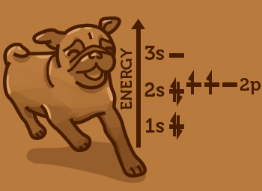
Step-by-Step Video Lessons
Watch once then solve it yourself.
Practice Until Perfect
Master each topic fully before moving on.
Test Prep Included
Practice real IB exam questions for free.
IB Chemistry Topics
1. Stoichiometry
2. Atomic Structure
3. Periodicity and Elements
4. Chemical Bonding
5. Enthalpy and Thermodynamics
6. Kinetics
8. Acid-Base Theory
9. Redox and Electrochemistry
10 Chapters · 55 Topics · 494 Videos
Discover Our Learning Areas
Explore key subjects and start learning with interactive content.



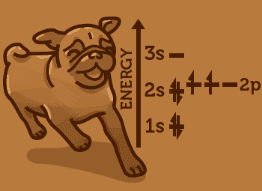
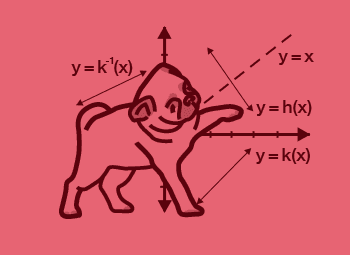
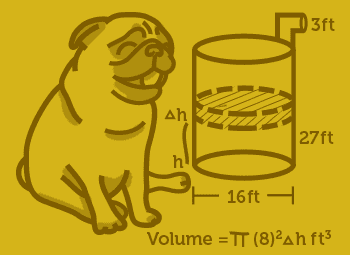
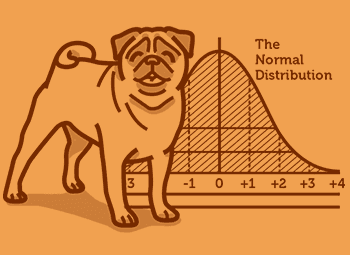
What is IB Chemistry?
IB Chemistry is a two-year science course offered through the International Baccalaureate Diploma Programme (IBDP) for students in Years 12 and 13. It develops rigorous knowledge of chemical principles alongside practical laboratory skills, preparing students for university-level science and for the IB Diploma external examinations. Students choose between Standard Level (SL) and Higher Level (HL), with HL requiring greater depth across all core topics plus additional higher-level material.
What topics are covered in IB Chemistry?
The IB Chemistry curriculum is organised into core topics covered by both SL and HL students, plus additional higher-level topics exclusive to HL. Core areas include:
- Stoichiometry and molar calculations — the mathematical backbone of all chemistry problem-solving
- Atomic structure and periodicity — electron configuration, trends, and the periodic table
- Chemical bonding and structure — ionic, covalent, and metallic bonding; molecular geometry
- Energetics and thermochemistry — enthalpy, Hess's law, and entropy
- Chemical kinetics — reaction rates, activation energy, and the Maxwell-Boltzmann distribution
- Chemical equilibrium — Le Chatelier's principle and equilibrium constant expressions
- Acids and bases — pH calculations, buffer solutions, and titration curves
- Redox processes and electrochemistry — oxidation states, galvanic cells, and electrolysis
- Organic chemistry — functional groups, reaction mechanisms, and nomenclature
- Measurement and data processing — uncertainty, error analysis, and graphical skills
HL students additionally study advanced topics including spectroscopic identification of organic compounds, further organic reaction mechanisms, and more complex equilibrium and electrochemistry applications. An option topic — chosen from Medicinal Chemistry, Biochemistry, Energy, or Materials — completes the HL programme.
Is IB Chemistry harder than regular Year 12 Chemistry?
Most students find IB Chemistry more demanding than NCEA Level 3 Chemistry. The IB course requires a deeper conceptual understanding across a wider range of topics, and the internal assessment demands genuine independent scientific inquiry rather than structured practicals. The external exam format — particularly Paper 2's extended response questions and Paper 3's data analysis — rewards students who can apply knowledge flexibly, not just recall it. That said, many students find the IB curriculum more cohesive and internationally respected, which is a genuine motivation to work through the challenge. Consistent practice with past exam questions is the single most effective preparation strategy.
How is IB Chemistry assessed?
IB Chemistry uses a combination of external and internal assessment. External assessment accounts for 80% of the final grade and comprises three papers:
- Paper 1 — multiple-choice questions covering the core (SL) or core and higher-level topics (HL)
- Paper 2 — short-answer and extended-response questions on core and HL material
- Paper 3 — data analysis questions plus an option topic section
Internal assessment (IA) accounts for 20% of the final grade. This is an individual scientific investigation of approximately 10 pages, designed and carried out independently by the student, then assessed by the teacher and moderated externally by the IB. Time management and clear scientific communication are critical for a strong IA grade.
What are the most common problem areas in IB Chemistry?
Across the IB Chemistry course, four topics consistently cause the most difficulty:
- Equilibrium calculations — setting up ICE tables correctly and interpreting Kc/Kp expressions under varied conditions
- Organic chemistry mechanisms — particularly nucleophilic substitution (SN1/SN2) and electrophilic addition at HL
- Thermodynamics — understanding the relationship between enthalpy, entropy, and Gibbs free energy without conflating them
- Stoichiometry under pressure — multi-step molar calculations in exam conditions where a single arithmetic error cascades
The best way to tackle each of these is to watch a certified teacher work through a full exam-style problem — not just the answer, but every decision along the way — and then practise independently with feedback. That pattern of observe, attempt, and adjust is exactly what StudyPug's video lessons and adaptive practice are built around.
Why StudyPug for IB Chemistry?
IB Chemistry is one of the most content-rich and exam-demanding science courses available to New Zealand students, and generic revision resources rarely match the depth the IB requires. StudyPug is built specifically to close that gap.
Certified-teacher concept videos cover every IB Chemistry topic, taught by qualified teachers who explain the method — not just the final answer. When you understand why each step is taken, you can handle variations of the question in any exam context.
Diagnostic assessment identifies your specific weak topics at the start, so your revision is targeted from session one. Rather than working through content you already understand, you spend time exactly where it will move your grade.
Adaptive practice continuously adjusts the difficulty of problems based on your responses. This means you are always working at the edge of your current ability — the optimal zone for building genuine IB exam readiness.
Lessons are aligned to the IB Diploma curriculum, so every topic you cover in class has a matching StudyPug lesson. Exam-style practice is built into your subscription, helping you feel prepared for Papers 1, 2, and 3. And if you photograph a tricky problem, Photo Search finds the matching lesson instantly.
StudyPug also offers free practice content — no subscription required to get started. And every subscription is backed by a 30-day money-back guarantee, so you can begin with complete confidence.
What you learn — IB Chemistry curriculum coverage
StudyPug covers the full IB Chemistry syllabus as delivered in New Zealand IB schools, including all core topics for SL and all additional higher-level content for HL. Coverage spans the quantitative core (stoichiometry, energetics, kinetics, equilibrium, acids and bases, redox), the structural core (atomic theory, bonding, periodicity), and the organic chemistry strand from functional group identification through to reaction mechanisms. Option topics including Medicinal Chemistry and Biochemistry are also included.
Every topic follows the IB's recommended sequence, and practice problems are written in IB exam-command-term language — describe, explain, deduce, evaluate — so you become fluent in exactly the style the examiner expects.
Note: No validated internal topic-page links are currently available for this course in the StudyPug page feed. Links will be added as topic pages are published.
Using StudyPug for IB Chemistry
Getting started is straightforward. When you join StudyPug, a short diagnostic assessment maps your current IB Chemistry knowledge and highlights the topics most likely to move your grade. From there, your recommended learning path guides you through concept videos and adaptive practice in priority order.
For day-to-day study, use StudyPug alongside your class notes: watch the concept video for a topic before or after your lesson, then work through the practice problems to consolidate. For exam revision, use the exam-style practice sets to simulate Paper 1 and Paper 2 conditions, and use the step-by-step video solutions to diagnose exactly where your working breaks down.
StudyPug works on desktop, tablet, and mobile — so whether you are revising at home or on the bus between school and a study session, your IB Chemistry lessons are always accessible. Free practice content is available without a subscription, and a full subscription unlocks every lesson, every adaptive practice set, and every exam-style resource across all subjects and grade levels — a single plan that covers everything in your IB Diploma, not just chemistry.
Start with the diagnostic today, find out exactly what to focus on, and begin building the IB Chemistry confidence you need for exam day.
IB Chemistry FAQ
Unsure how StudyPug works? Need help with setting up? Check our frequently asked questions or contact us for help.
What do you learn in IB Chemistry, and what topics does it cover?
IB Chemistry covers a broad range of topics across two years. Core content includes stoichiometry, atomic structure, periodicity, chemical bonding, energetics, kinetics, chemical equilibrium, acids and bases, redox processes, and organic chemistry. HL students also study additional depth materials and options such as medicinal chemistry or materials. The course develops both conceptual understanding and practical laboratory skills, preparing you for the IB Diploma external exams (Papers 1, 2, and 3) and internal assessment.
What is the difference between IB Chemistry SL and IB Chemistry HL?
IB Chemistry SL and HL share the same core topics but differ in depth and breadth. HL students study additional higher-level material — roughly 60 additional teaching hours — covering topics such as advanced organic chemistry, spectroscopy, and more complex equilibrium calculations. HL Paper 3 also includes additional higher-level questions beyond the option topic. HL is recommended for students planning to study chemistry, medicine, engineering, or related sciences at university, while SL suits those needing chemistry as a supporting subject.
Is IB Chemistry hard, and where do students struggle most?
IB Chemistry is widely considered one of the more demanding IB science subjects. Students most commonly struggle with stoichiometry and molar calculations, acid-base equilibrium and pH calculations, organic chemistry reaction mechanisms, and thermodynamics (enthalpy and entropy). The internal assessment (IA) also challenges many students because it combines experimental design with scientific writing. Breaking each topic into smaller steps and practising past paper questions regularly are the most effective ways to manage the difficulty and build steady confidence.
What should I know before starting IB Chemistry, and what comes after it?
A solid foundation in NCEA Level 1 or Level 2 Science — particularly chemistry — is the ideal preparation. You should be comfortable with basic atomic structure, chemical equations, and fundamental mathematics including algebra and logarithms. After IB Chemistry, students are well positioned for university-level chemistry, biochemistry, medicine, pharmacy, chemical engineering, or environmental science. The rigorous analytical and laboratory skills developed in IB Chemistry are highly valued by New Zealand universities including the University of Auckland and University of Otago.
Is IB Chemistry on the IB Diploma exams, and how is it assessed?
Yes — IB Chemistry is assessed through the IB Diploma Programme exams administered by the International Baccalaureate Organisation. External assessment consists of Paper 1 (multiple choice), Paper 2 (short answer and extended response covering core and HL material), and Paper 3 (data analysis and an option topic). These are sat in May or November. Internal assessment is a laboratory-based investigation marked by your teacher and moderated externally by the IB, contributing 20% of your final grade. StudyPug's practice is based on real IB exam-style questions.
What is one of the hardest concepts in IB Chemistry, and how do you tackle it?
Chemical equilibrium — especially Le Chatelier's principle and equilibrium constant calculations — is consistently one of the hardest concepts in IB Chemistry. Many students can memorise the rules but struggle to apply them in multi-step exam scenarios. The most effective approach is to first understand why a system shifts (not just that it does), then practise with increasingly complex ICE table calculations. Watching a certified teacher model the full method step by step — including how to interpret data — builds the pattern recognition needed to handle any equilibrium question confidently.




Written by the StudyPug Team
Last updated June 5, 2026
3 M+
students
★★★★★
4.8 average
K–12
all grades