Year 12 Maths Help — Video Lessons & Practice
Get clear explanations for any Year 12 Maths problem and build exam-ready confidence for NCEA Level 2.
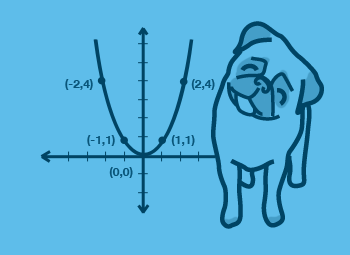
Expert Video Solutions
Watch it solved then solve the next one.
Practice Until Perfect
Practice until it truly clicks.
Test Prep Included
Real exam practice built into your plan.
Try It Now
Test your knowledge
Our approach aligns with the evidence
Exam Scores
Better Recall
Less Anxiety
Year 12 Maths Topics
1. Solving Linear Equations
2. Linear Inequalities
3. Linear Functions
4. Factorising
5. Quadratic Functions
6. Quadratic Equations and Inequalities
7. Solving Simultaneous Equations
8. Simultaneous Equations (Advanced)
9. Inequalities in two variables (Advanced)
10. Imaginary and Complex Numbers
11. Polynomial Functions
12. Radicals
13. Exponents
14. Algebraic Fractions
15. Reciprocal Functions
16. Rational Functions
17. Operations of Functions
18. Transformations of Functions
19. Exponential Functions
20. Logarithmic Functions
21. Applications of Exponential and Logarithmic Functions
22. Introduction to Trigonometry
23. Trigonometric Ratios and Angle Measure
24. Bearings
25. Graphing Trigonometric Functions
26. Trigonometric Identities
28. Surface Area and Volume
29. Sequences and Series
30. Probability
31. Permutations and Combinations
33 Chapters · 245 Topics · 1505 Videos

Ready to practice Year 12 Maths?
Try practice questions on every Year 12 Maths topic — with instant feedback and step-by-step video solutions when you get stuck.
Discover Our Learning Areas
Explore key subjects and start learning with interactive content.


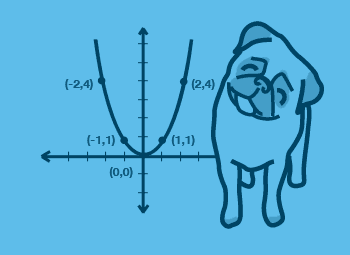
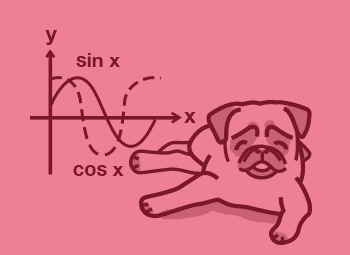
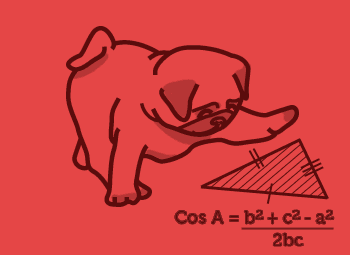

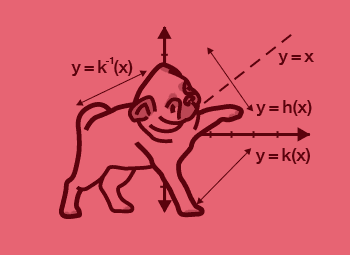




What is Year 12 Maths?
Year 12 Maths is the second year of secondary school mathematics in New Zealand, sitting at NCEA Level 2. It is the bridge between the foundational skills of Year 11 and the demanding abstract content of Year 13. The course develops your ability to work with functions, apply calculus to real-world problems, use trigonometry in non-right-angled triangles, and analyse statistical data — all skills assessed through internal and external NCEA Achievement Standards.
What topics are covered in Year 12 Maths?
Year 12 Maths covers a broad range of topics, and each one builds on Year 11 foundations. Core areas include:
- Algebra and functions: Quadratic and polynomial equations, inequalities, and function notation.
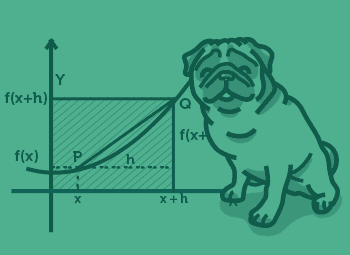
- Calculus: Differentiation rules (chain, product, quotient) and introduction to integration.
- Trigonometry: Sine and cosine rules, radians, and trigonometric graphs.
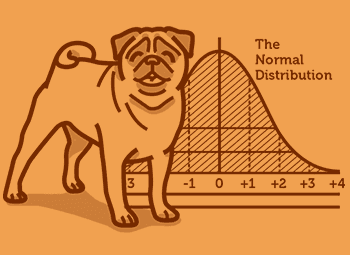
- Statistics and probability: Probability distributions, normal distribution, and data interpretation.
- Coordinate geometry: Conic sections and loci.
Each topic links to specific NCEA Level 2 Achievement Standards, assessed internally by your school or externally by NZQA at the end of the year. Knowing which standard a topic belongs to helps you prioritise your study.
Is Year 12 Maths harder than Year 11?
Yes — and students who underestimate the jump often struggle in the first term. The main difference is that Year 12 requires you to combine skills rather than apply them in isolation. A calculus problem might also demand accurate algebraic manipulation and trigonometric knowledge in the same question. The most reported difficulty areas are:
- Calculus: understanding conceptually what differentiation and integration represent, not just memorising rules.
- Trigonometric identities and equations, which require both algebraic skill and spatial reasoning.
- Statistical reasoning: moving from describing data to drawing valid inferences.
Students who spend time understanding the method — why a technique works, not just how to apply it — consistently find Year 12 Maths more manageable. Targeted practice that adjusts to your level is more efficient than re-reading your notes.
How is Year 12 Maths assessed under NCEA?
NCEA Level 2 Maths uses a standards-based assessment model. Each Achievement Standard is assessed separately, and you receive a grade of Not Achieved, Achieved, Merit, or Excellence for each one. Your overall NCEA Level 2 Maths endorsement (Merit or Excellence) depends on accumulating enough credits at those grade levels across all your standards.
Internal standards are assessed by your teacher through tasks, investigations, or in-class tests during the year. External standards are examined by NZQA at the end of the year — typically covering algebra, calculus, and trigonometry. Because external standards carry more credits and are higher-stakes, exam technique and timed practice with past NZQA papers are critical parts of preparation.
Why use StudyPug for Year 12 Maths?
StudyPug is built around three things that make a real difference for Year 12 Maths students in New Zealand.
Start with a diagnostic. Before you watch a single video, a short diagnostic assessment identifies your specific gaps. Instead of working through everything from scratch, you focus on what actually needs work. For Year 12 Maths, this often means uncovering a Year 11 algebra gap that is silently causing calculus errors.
Learn the method, not just the answer. StudyPug's video lessons are made by certified teachers — not AI-generated content. Every video teaches you how to approach a problem type so you can handle variations on your NCEA internal or external assessment. The goal is understanding, not answer-copying.
Practice that adapts to you. After each video, adaptive practice adjusts its difficulty based on your responses. Get a question wrong and the platform steps back; get several right and it challenges you further. This is a far more efficient use of study time than working through a static textbook exercise set.
All lessons and practice are aligned to the New Zealand curriculum and NCEA Level 2 Achievement Standards. Exam-style practice questions based on real assessment formats are included in every subscription, so you are practising on material that looks like what you will face in your assessments.
What you learn — Year 12 Maths curriculum coverage
StudyPug covers every major strand of Year 12 Maths aligned to NCEA Level 2. Topics include differentiation and its applications, integration, trigonometric functions and equations, quadratic and polynomial algebra, coordinate geometry, the normal distribution, and probability. Each topic is broken into short, focused video lessons so you can target exactly what you need — whether that is a single differentiation rule or the full statistics strand before an internal assessment.
Because no validated curriculum-leaf URLs are available in the current link map for this page, the topic links will appear directly through the StudyPug platform's topic browser once you are signed in. Use the search or the topic list to navigate to the specific Year 12 standard you are working on.
How to use StudyPug for Year 12 Maths
The most effective approach is to use StudyPug alongside your school programme, not as a replacement for it.
Before a new topic: Watch the introductory video lesson to see the method demonstrated clearly before your teacher covers it in class. Coming in with prior exposure means class time deepens understanding rather than introducing ideas for the first time.
When you are stuck: Use Photo Search to photograph a problem you cannot solve. StudyPug will find the matching lesson so you can watch the exact method explained before attempting the problem again yourself.
Before internals and externals: Use the practice tests and exam-style questions. Work under timed conditions, then watch the video solutions for anything you got wrong. This before-and-after loop — attempt, check, learn, retry — is the most efficient way to close gaps before assessment day.
Free practice content is available without a subscription, so you can try the platform before committing. Every paid subscription is backed by a 30-day money-back guarantee — if it is not the right fit, you get a full refund, no questions asked.
Year 12 Maths FAQ
Unsure how StudyPug works? Need help with setting up? Check our frequently asked questions or contact us for help.
What do you learn in Year 12 Maths, and what topics does it cover?
Year 12 Maths in New Zealand (NCEA Level 2) covers algebra, functions and graphs, calculus (differentiation and integration), trigonometry, statistics, and probability. Students work toward Achievement Standards across internal and external assessments. The course builds abstract reasoning and problem-solving skills that are essential for Year 13 Maths and university study. Topics grow significantly in complexity compared to Year 11, requiring a solid grasp of methods and not just procedures.
What is the difference between Year 12 Maths and Year 12 Statistics?
Year 12 Maths focuses on algebraic and calculus-based skills — functions, differentiation, integration, and trigonometry — while Year 12 Statistics centres on data analysis, probability distributions, and statistical inference. Both sit under NCEA Level 2 but lead in different directions: Maths is a prerequisite for calculus-heavy Year 13 courses, whereas Statistics suits students heading toward social sciences, health, or business. Some students take both; check your school's pathway guidance.
Is Year 12 Maths hard, and where do students struggle most?
Year 12 Maths is a significant step up from Year 11. The most common difficulty areas are calculus (especially understanding when and how to differentiate or integrate), manipulating algebraic expressions accurately under exam conditions, and applying trigonometric identities. Students who struggle often lack a confident foundation in Year 11 algebra or co-ordinate geometry. The good news is that with targeted practice and clear explanations of the method — not just the answer — most students can close those gaps.
What should I have covered before Year 12 Maths, and what comes after it?
You should be comfortable with Year 11 Maths (NCEA Level 1): linear equations, quadratics, basic trigonometry, and coordinate geometry. Gaps in these areas will slow you down quickly in Year 12. After Year 12, the natural progression is Year 13 Maths (NCEA Level 3) and, for strong students, Calculus and Statistics as separate subjects at Level 3. Year 13 results feed directly into university entrance, so building a strong Year 12 base matters.
Is Year 12 Maths on the NCEA exams, and how is it assessed?
Yes. Year 12 Maths is assessed through NCEA Level 2 Achievement Standards. Assessment is split between internal standards (portfolio tasks and in-class tests marked by your school) and external standards (end-of-year NZQA exams). Each standard is graded Not Achieved, Achieved, Merit, or Excellence. External standards typically include algebra, calculus, and trigonometry. Strong exam technique and timed practice with past papers are essential for reaching Merit and Excellence.
What is one of the hardest concepts in Year 12 Maths, and how do you tackle it?
Calculus — specifically knowing when to differentiate versus integrate and applying the chain, product, or quotient rules without errors — trips up a lot of Year 12 students. The key is understanding the underlying idea first (rate of change vs. area under a curve), then practising the mechanics repeatedly. Break each rule down into small steps, work through worked examples before attempting independent problems, and check your algebra at each line. Consistent practice with immediate feedback is the fastest route to fluency.





Written by the StudyPug Team
Last updated June 5, 2026
3 M+
students
★★★★★
4.8 average
K–12
all grades