Year 13 Maths Help: Video Lessons & Practice
Work through every topic with clear solutions. Start your free practice test now!
Step-by-Step Video Lessons
Real teaching so you solve problems alone.
Practice Until Perfect
Keep going until it truly clicks.
Test Prep Included
Practice real exam questions for free.
Try It Now
Test your knowledge
Our approach aligns with the evidence
Exam Scores
Better Recall
Less Anxiety
Year 13 Maths Topics
1. Functions
2. Transformations of Functions
3. Quadratic Functions
4. Polynomial Functions
5. Rational Functions
6. Exponential Functions
7. Logarithmic Functions
8. Applications of Exponential and Logarithmic Functions
9. Quadratic Equations and Inequalities
10. Solving Simultaneous Equations
11. Simultaneous Equations (Advanced)
12. Introduction to Trigonometry
13. Trigonometric Ratios and Angle Measure
14. Bearings
15. Graphing Trigonometric Functions
16. Trigonometric Identities
18. Imaginary and Complex Numbers
19. Sequences and Series
20. Probability
22. Limits
23. Derivatives
23 Chapters · 186 Topics · 1015 Videos

Ready to practice Year 13 Maths?
Try practice questions on every Year 13 Maths topic — with instant feedback and step-by-step video solutions when you get stuck.
Discover Our Learning Areas
Explore key subjects and start learning with interactive content.


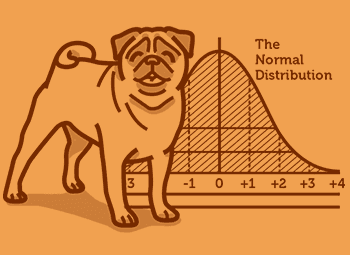
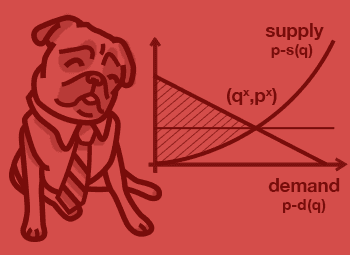
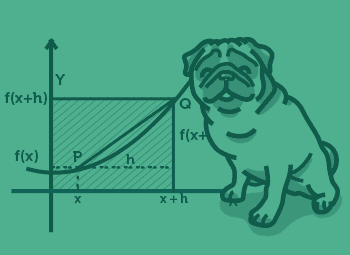
What is Year 13 Maths?
Year 13 Maths is the highest level of secondary school mathematics in New Zealand, aligned with NCEA Level 3. It bridges the gap between school mathematics and university study, covering advanced calculus, statistical inference, complex numbers, and trigonometric functions. Students who achieve well in Year 13 Maths are equipped for degree programmes in engineering, science, commerce, and mathematics — and it is often a direct requirement for university entrance into competitive programmes.
What topics are covered in Year 13 Maths?
The Year 13 Maths curriculum, assessed through NCEA Level 3 Achievement Standards, includes the following core areas:
Calculus: Differentiation and integration are the heart of Year 13 Maths. Students learn to differentiate and integrate polynomial, exponential, logarithmic, and trigonometric functions, and apply these skills to rates of change, optimisation, and area problems.
Algebra and Complex Numbers: Students extend algebraic reasoning to include complex numbers, working with the Argand plane, modulus-argument form, and De Moivre's theorem in some achievement standards.
Trigonometry: Advanced trigonometric identities, equations, and transformations of functions feature prominently, both in standalone standards and woven through the calculus topics.
Statistics and Probability: Statistical inference — including forming and evaluating confidence intervals, conducting hypothesis tests, and interpreting probability distributions — is assessed in both internal and external standards.
Sequences and Series: Arithmetic and geometric sequences, sigma notation, and applications to real-world contexts round out the algebra strand.
Is Year 13 Maths hard?
Year 13 Maths is widely regarded as one of the most challenging NCEA subjects. The jump in difficulty from Year 12 is significant. At Year 12, students are introduced to calculus with relatively straightforward functions. At Year 13, they must apply multiple techniques — chain rule, product rule, integration by substitution — often in combination, under timed exam conditions.
The topics students most commonly struggle with are:
Integration: Knowing which technique to apply to which function type requires pattern recognition built through extensive practice. Students who try to memorise rules without understanding the underlying method tend to freeze in externals.
Statistical inference: Forming a confidence interval is procedurally straightforward, but interpreting it correctly — and understanding what it does and does not mean — is a conceptual hurdle many students underestimate.
Trigonometric identities: Proving identities and solving equations involving compound angles requires fluency with a range of formulae that need to be internalised, not looked up.
The good news is that each of these topics responds well to structured, step-by-step practice. Students who work through Year 13 Maths practice problems methodically and review their mistakes typically see steady improvement toward Merit and Excellence grades.
How is Year 13 Maths graded and assessed under NCEA?
Year 13 Maths is assessed through Achievement Standards under the NCEA framework administered by NZQA. Each standard carries a credit value and is graded at four levels: Not Achieved, Achieved, Merit, or Excellence. Standards are split into:
Internal assessments: Completed during the school year under teacher supervision. These often involve mathematical investigations, modelling tasks, or extended problems. Internal standards are moderated by NZQA to ensure consistency across schools.
External examinations: Sat in November as NZQA national examinations. The key external standards typically cover differentiation, integration, trigonometric methods, and statistical inference. External exams are the primary focus of exam preparation in Terms 3 and 4.
University Entrance requires 14 credits at NCEA Level 3 in an approved subject, and Year 13 Maths is one of the most commonly used. Students aiming for competitive university programmes often target Merit or Excellence endorsements, which require Merit or Excellence grades across a threshold of credits.
Why StudyPug for Year 13 Maths?
StudyPug is built for exactly the kind of focused, efficient study Year 13 Maths demands. Here is what makes it effective:
Certified-teacher video lessons that teach the method: Every lesson is created by experienced, certified teachers — not AI-generated content. The videos do not just show you the answer; they teach you the reasoning and technique behind each step. That means you can adapt what you learn to unfamiliar problems in the NCEA external, not just repeat memorised steps.
Diagnostic assessment: Before you dive into practice, StudyPug's diagnostic assessment identifies precisely which Year 13 Maths topics are your weak points. Instead of revising everything from scratch, you focus your time where the marks are waiting to be recovered.
Adaptive practice: Practice questions adjust automatically to your current level of understanding. As you get more confident with a topic, the difficulty increases — keeping you challenged and building toward the standard needed for Merit and Excellence. If you are finding a topic difficult, the system brings you back to simpler versions until the foundation is solid.
Mock exams and NCEA exam preparation: StudyPug's practice tests and mock exams are structured around NCEA Level 3 assessment standards. You can practise under exam-like conditions, review your answers with worked solutions, and watch the relevant lesson again as many times as you need until the method sticks.
All courses in one subscription: Your StudyPug subscription covers Year 13 Maths alongside Calculus I and II, Linear Algebra, Statistics, Differential Equations, and more — useful if you are preparing for university or want to get ahead. No separate purchases required.
30-day money-back guarantee: StudyPug backs every paid plan with a 30-day money-back guarantee. You can get started with confidence.
What you learn with StudyPug's Year 13 Maths coverage
StudyPug covers the full range of Year 13 Maths topics aligned with NCEA Level 3, including:
- Differentiation: rules for polynomials, exponentials, logarithms, and trigonometric functions; chain rule, product rule, and quotient rule
- Integration: anti-differentiation, integration by substitution, definite integrals, and area under curves
- Trigonometry: compound angle formulae, trigonometric identities, and solving trigonometric equations
- Complex numbers: real and imaginary parts, operations, modulus-argument form
- Statistical inference: confidence intervals, hypothesis testing, and interpreting probability distributions
- Sequences and series: arithmetic and geometric sequences, sum formulae, and applications
Each topic is covered with video lessons, worked examples, and graded practice problems — from foundational understanding through to NCEA Excellence level.
Note: No validated internal topic-page links are available for this page at this time. Links will be added when the sitemap is updated.
How to use StudyPug for Year 13 Maths
Getting the most from StudyPug for Year 13 Maths is straightforward:
Step 1 — Run the diagnostic. Let the diagnostic assessment identify your gaps across calculus, statistics, and algebra. This takes a few minutes and immediately focuses your study plan.
Step 2 — Watch the concept videos. For each weak topic, watch the certified-teacher lesson. Pause and rewind as needed. The goal is to understand the method, not just follow the steps once.
Step 3 — Practice with adaptive questions. Work through the practice problems for that topic. The adaptive system will increase difficulty as you improve, or step back if you need more time on the fundamentals.
Step 4 — Take a practice test. Once you have covered a topic or a set of standards, take a full practice test or mock exam. Review every question you got wrong using the worked solutions and re-watch the relevant video if needed.
Step 5 — Repeat until it sticks. StudyPug is available 24/7 on any device. Return to difficult topics as many times as you need. Consistent short sessions outperform last-minute cramming for NCEA externals every time.
Start your free Year 13 Maths practice today and see exactly where you stand before your next assessment.
Year 13 Maths FAQ
Unsure how StudyPug works? Need help with setting up? Check our frequently asked questions or contact us for help.
What do you learn in Year 13 Maths, and what topics does it cover?
Year 13 Maths in New Zealand, aligned with NCEA Level 3, covers differentiation and integration (calculus), trigonometric functions, complex numbers, statistical inference, probability distributions, and sequences and series. Students work toward Achievement Standards in both internally and externally assessed topics. The course builds the mathematical reasoning and problem-solving skills needed for university-level study in science, engineering, commerce, and related fields.
What is the difference between Year 13 Maths and Year 12 Maths?
Year 12 Maths (NCEA Level 2) introduces core algebra, coordinate geometry, and basic calculus concepts. Year 13 Maths (NCEA Level 3) extends these significantly — calculus becomes central, with differentiation and integration applied to complex functions, and statistics moves into formal inference and probability models. The thinking required at Year 13 is more abstract and proof-oriented, preparing students for university mathematics courses rather than just NCEA achievement.
What are the prerequisites for Year 13 Maths, and what course comes after it?
Strong performance in Year 12 Maths (NCEA Level 2) is the standard prerequisite. Students should be comfortable with algebra, coordinate geometry, and introductory calculus. After Year 13 Maths, students typically progress to university courses such as Calculus I and II, Linear Algebra, Statistics, or Discrete Mathematics, depending on their degree programme. Year 13 Maths with Excellence is often expected for entry into engineering, actuarial, or mathematics majors.
Is Year 13 Maths hard, and where do students struggle most?
Year 13 Maths is considered one of the most demanding NCEA subjects. Students most commonly struggle with calculus — particularly integration techniques, the chain rule, and applying derivatives to real-world problems. Complex numbers and trigonometric identities also trip up many students. Statistical inference, especially forming and interpreting confidence intervals, is another common sticking point. The jump in abstraction from Year 12 catches many students off guard without solid practice and guided explanation.
How is Year 13 Maths assessed — internals, externals, and NCEA?
Year 13 Maths is assessed through a mix of internal Achievement Standards (teacher-marked tasks, investigations, and reports submitted during the year) and external Achievement Standards (end-of-year NZQA examinations). External exams typically cover the core calculus, algebra, and statistics standards. Each standard is graded Not Achieved, Achieved, Merit, or Excellence. University entrance requires a set number of NCEA Level 3 credits, making strong performance in the externals especially important.
What is one of the hardest topics in Year 13 Maths, and how do you approach it?
Integration is widely considered the hardest topic in Year 13 Maths. Students must recognise which technique applies — substitution, integration by parts, or standard results — and apply it accurately under exam conditions. The best approach is to build fluency with differentiation first, since integration reverses it, then work through graded practice problems from simple to complex. Watching step-by-step worked solutions and redoing each problem independently until the method is automatic is the most effective study strategy.




Written by the StudyPug Team
Last updated June 5, 2026
3 M+
students
★★★★★
4.8 average
K–12
all grades