Year 12 Trigonometry Help — Video Lessons & Practice
Get clear explanations for any trigonometry problem and build exam-ready confidence for NCEA Level 2.
Value vs. Private Tutor
Expert teaching minus the tutor price.

Multi-Subject
One subscription covers all geometry help.
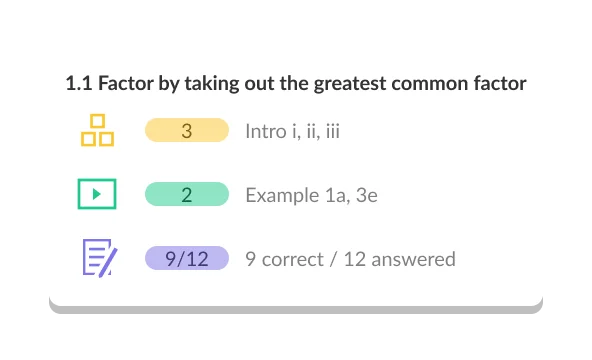
Practice Until Perfect
You practice until it actually clicks.
Try It Now
Test your knowledge
Our approach aligns with the evidence
Exam Scores
Better Recall
Less Anxiety
Trigonometry Topics
1. Right Triangle Trigonometry
2. Trigonometric Ratios and Angle Measure
3. Bearings
4. Graphing Trigonometric Functions
5. Applications of Trigonometric Functions
6. Trigonometric Identities
7. Solving Trigonometric Equations
8. Inverse Trigonometric Functions
9. Imaginary and Complex Numbers
9 Chapters · 60 Topics · 284 Videos
Discover Our Learning Areas
Explore key subjects and start learning with interactive content.



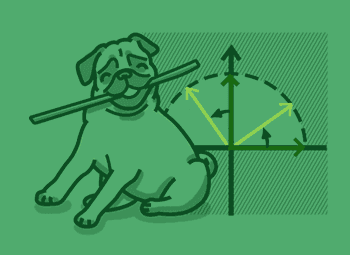
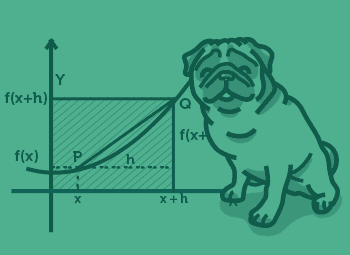
What is Year 12 Trigonometry?
Year 12 Trigonometry is the branch of mathematics that studies the relationships between angles and lengths, extended well beyond basic right-angle triangles into the full unit circle, periodic functions, and algebraic identity work. In New Zealand, it forms a key strand of NCEA Level 2 Mathematics and Statistics, preparing students for Year 13 Calculus and a wide range of science and engineering pathways.
At its core, trigonometry asks: given an angle, what can we know about ratios of lengths — and vice versa? By Year 12, that question gets a much richer answer. You move from memorising SOH-CAH-TOA to understanding why the sine function is periodic, how to model real-world oscillations with sinusoidal graphs, and how to prove that two seemingly different expressions are always equal.
What are the main topics in Year 12 Trigonometry?
The NCEA Level 2 trigonometry strand typically includes the following areas:
The unit circle and radian measure. Understanding angles beyond 90° requires the unit circle. Radians replace degrees as the natural unit of measurement, and fluency in converting between them is essential for everything that follows.
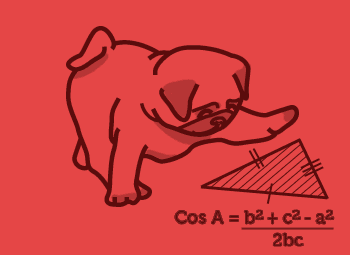
Sine and cosine rules. These extend triangle solving to non-right-angle triangles. The sine rule connects angles to opposite sides; the cosine rule generalises Pythagoras. Both appear frequently in NCEA assessment contexts involving bearings, surveying, and geometry.
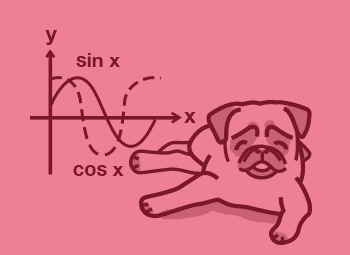
Trigonometric graphs and transformations. Sketching y = a sin(bx + c) + d accurately — identifying amplitude, period, phase shift, and vertical translation — is a major NCEA skill. Students often underestimate how much practice this requires.
Trigonometric identities. Using identities such as sin²θ + cos²θ = 1, tanθ = sinθ/cosθ, and double-angle formulas to simplify expressions and write formal proofs. This is the topic most students find hardest.
Solving trigonometric equations. Finding all solutions in a given domain — not just the principal value — using the unit circle, symmetry, and algebraic manipulation.
Is Year 12 Trigonometry hard?
For most students, yes — it represents a genuine increase in abstraction compared to junior maths. The difficulty is not usually the individual formulas, which can be memorised. The challenge is using them fluently and choosing the right approach for a given problem.
The three areas where students struggle most are:
1. The unit circle. Many students never fully internalise where sine, cosine, and tangent are positive or negative in each quadrant. This creates persistent errors when solving equations or reading graphs.
2. Identity proofs. Students often try invalid techniques — cross-multiplying both sides, moving terms across the equals sign — because they don't have a clear step-by-step method. A structured approach (work one side only; convert to sin and cos; spot the Pythagorean identity) resolves most of these problems.
3. General solutions. Finding all angles that satisfy an equation in a given domain requires both algebraic skill and geometric intuition about the unit circle. Practice with varied examples is the only reliable fix.
The good news: these sticking points are learnable. Clear, method-focused teaching — the kind that shows you exactly how to think through each step — makes a significant difference.
What comes before and after Year 12 Trigonometry?
Before Year 12, you should be secure in right-angle triangle trigonometry from Year 10–11, comfortable with algebraic manipulation (expanding, factoring, rearranging), and familiar with the concept of functions including transformations of graphs. Coordinate geometry and the Pythagorean theorem are also assumed.
After Year 12 Trigonometry, the natural next step is Year 13 Calculus, where you'll differentiate and integrate sine, cosine, and related functions. Trigonometric substitution also appears in more advanced integration. Year 13 Statistics draws less directly on trig, but students who choose a science pathway at university will use trigonometry extensively in physics, engineering, and data-analysis contexts.
How is Trigonometry assessed in NCEA Level 2?
Trigonometry appears in NCEA Level 2 Mathematics and Statistics under Achievement Standard 91259: Apply trigonometric relationships in solving problems (3 credits). Some schools also assess related skills through other standards involving modelling or algebra.
The standard is graded at three levels:
- Achieved: Applying known trigonometric methods correctly in straightforward situations.
- Merit: Selecting and connecting methods; showing relational thinking.
- Excellence: Extended abstract reasoning — generalising, proving, or applying methods in unfamiliar contexts.
Practising with exam-style questions based on real NCEA assessment formats is the most reliable preparation. Understanding what the marking schedule rewards at each grade boundary — not just getting the right answer, but communicating the method clearly — is equally important.
Why StudyPug for Year 12 Trigonometry?
StudyPug is built around a simple idea: you learn more when you understand the method, not just the answer. Every trigonometry lesson on StudyPug is delivered by a certified teacher who walks through each step of the reasoning — not an AI-generated explanation, but a real educator who knows where students get stuck.
The platform opens with a diagnostic assessment that quickly identifies which trigonometry topics you already understand and which ones need work. This means you spend your study time where it matters, not reviewing things you've already mastered.
From there, adaptive practice adjusts the difficulty of problems to match your performance. As you improve, the questions get harder. If you hit a wall, the system routes you back to consolidate the underlying concept. This keeps you in the productive zone — challenged, but not overwhelmed.
All content is aligned to the NCEA Level 2 Mathematics and Statistics curriculum, so you're always studying what's relevant to your actual assessments. The exam-prep materials are based on real NCEA assessment formats, so practising on StudyPug directly prepares you for what you'll face in the exam room.
There are no lock-in contracts. You can cancel anytime, and every subscription is backed by a 30-day money-back guarantee. If you want to see how it works before subscribing, free daily practice problems are available without a subscription — no credit card required.
What you learn — curriculum coverage
StudyPug's Year 12 Trigonometry content covers the full NCEA Level 2 trig strand, including:
- Unit circle, radian measure, and degree–radian conversion
- Exact values of sine, cosine, and tangent for standard angles
- Trigonometric ratios in all four quadrants (CAST rule)
- The sine rule and cosine rule with applications
- Amplitude, period, phase shift, and vertical translation of sinusoidal graphs
- Trigonometric identities: Pythagorean, reciprocal, and compound-angle
- Proving trigonometric identities step by step
- Solving trigonometric equations over a given domain
- Applications: bearings, oscillation models, and real-world problem-solving
Lessons are organised so you can jump directly to the topic you're working on, or follow a structured path from the unit circle through to identity proofs and equation solving.
How to use StudyPug for Year 12 Trigonometry
Most students get the best results by combining three things: watching the concept video first to understand the method, working through the adaptive practice to consolidate it, and then attempting past NCEA-style questions to test exam readiness.
Step 1 — Take the diagnostic. It takes a few minutes and immediately shows you where your trigonometry knowledge has gaps. Start there rather than guessing what to review.
Step 2 — Watch the lesson video. Focus on the method. Pause, rewind, and re-watch the step where the teacher makes the key move. Understanding why a step works matters more than memorising it.
Step 3 — Practise adaptively. Work through the practice problems. If you get something wrong, the explanation shows you the correct method — not just the answer. The difficulty adjusts automatically.
Step 4 — Test yourself. Use the exam-prep practice tests to simulate NCEA assessment conditions. Check your answers against the worked solutions and identify any remaining weak points.
StudyPug is available on any device, so you can study at home, on the bus, or in a free period at school. Everything is in one place — no need to search for worksheets or hunt for textbook solutions. Start with the diagnostic, and let it guide the rest.
Trigonometry FAQ
Unsure how StudyPug works? Need help with setting up? Check our frequently asked questions or contact us for help.
What do you learn in Year 12 Trigonometry, and what topics does it cover?
Year 12 Trigonometry covers the unit circle and radian measure, sine and cosine rules, trigonometric graphs and transformations, trigonometric identities, and solving trig equations. In New Zealand this content appears within the NCEA Level 2 Mathematics and Statistics curriculum, particularly Achievement Standards 91259 (trigonometric relationships) and related algebra standards. You'll move from right-angle triangle basics into broader applications across all quadrants and real-world contexts, building the foundation you'll need for Year 13 Calculus and Statistics.
What is the difference between Trigonometry and Algebra in Year 12 Maths?
Algebra focuses on manipulating expressions, solving equations, and working with polynomials and functions in a general sense. Trigonometry is specifically the study of relationships between angles and side lengths in triangles, extended to periodic functions and the unit circle. In Year 12 NCEA Mathematics, both appear as separate Achievement Standards: algebra covers quadratic and rational functions, while trigonometry deals with sinusoidal models and angle-based equations. The two overlap when you use algebraic techniques — factoring, substitution — to solve trigonometric equations, so strong algebra skills genuinely help in trig.
Is Year 12 Trigonometry hard, and where do students struggle most?
Many students find Year 12 Trigonometry a significant step up from junior maths. The most common sticking points are: switching fluently between degrees and radians, understanding the unit circle and the signs of trig ratios in each quadrant, manipulating trigonometric identities without a clear method, and sketching or transforming sinusoidal graphs accurately. The good news is these difficulties usually trace back to a small number of core concepts. Once the unit circle and the CAST rule become second nature, most other topics follow more easily.
What should I know before Year 12 Trigonometry, and what comes after it?
You should be confident with right-angle triangle trigonometry (SOH-CAH-TOA), basic algebraic manipulation, and coordinate geometry from Year 10–11. A solid understanding of functions — domain, range, transformations — is also very helpful. After Year 12 Trigonometry, you can move into Year 13 Calculus, where you'll differentiate and integrate trigonometric functions, and Year 13 Statistics. Trigonometry also underpins physics and engineering topics, so it's a high-value investment well beyond your NCEA exams.
Is Trigonometry on the NCEA Level 2 exam, and how is it assessed?
Yes — trigonometry is a core component of NCEA Level 2 Mathematics and Statistics. It is assessed primarily through Achievement Standard 91259 (Apply trigonometric relationships in solving problems), which carries 3 credits and is offered as an external or internal assessment depending on your school. Questions range from Achieved (applying standard techniques) through Merit (selecting and connecting methods) to Excellence (extended abstract reasoning). Practising exam-style problems based on real NCEA assessment formats is the most effective way to reach Merit or Excellence.
What is one of the hardest concepts in Year 12 Trigonometry, and how do you tackle it?
Trigonometric identities — especially proving that one expression equals another — trip up most Year 12 students. The key is to always work on one side only, convert everything to sine and cosine first, and look for a Pythagorean identity (sin²θ + cos²θ = 1) to substitute. Many students try to 'cross-multiply' both sides, which is not a valid proof technique. Watch a worked example that shows the full method step-by-step, then practise with progressively harder identities. Seeing the process modelled clearly — not just the answer — is what builds the skill.




Written by the StudyPug Team
Last updated June 5, 2026
3 M+
students
★★★★★
4.8 average
K–12
all grades