Grade 12 AP Chemistry Help — Video Lessons & Practice
Get clear explanations for any AP Chemistry problem and build exam-ready confidence.

Step-by-Step Videos
Real teaching so you solve problems alone.
Practice Until Perfect
Practice until it truly clicks.
Test Prep Included
Practice mimics real exam questions for free.
AP Chemistry Topics
1. Foundation Chemistry
3. Acid-Base Theory
4. Solubility and Precipitation
5. Enthalpy and Thermodynamics
6. Redox and Electrochemistry
7. Kinetics
8. Atomic Structure and Properties
9. Chemical Bonding
10 Chapters · 68 Topics · 583 Videos
Discover Our Learning Areas
Explore key subjects and start learning with interactive content.




What is AP Chemistry?
AP Chemistry is an advanced secondary-school course developed by the College Board that covers chemistry at a first-year university level. Students who complete the course can sit the AP Chemistry Exam — typically in May — and earn university credit if they score sufficiently, saving time and tuition in degree programmes. In New Zealand, AP Chemistry is taken by Year 13 students who want to strengthen international university applications or who seek a more rigorous challenge alongside their NCEA Level 3 studies.
The course is organised around six big ideas: atoms and elements, molecular and ionic compound structure, intermolecular forces, chemical reactions, kinetics and equilibrium, and thermodynamics and electrochemistry. Laboratory investigation and data analysis are integral throughout.
Is AP Chemistry harder than NCEA Level 3 Chemistry?
The two qualifications have different structures and purposes. NCEA Level 3 Chemistry is assessed across multiple internal and external standards across the year, allowing students to accumulate credits incrementally. AP Chemistry culminates in a single three-hour-plus exam that assesses everything at once, with a heavy emphasis on multi-step calculation and written justification.
AP Chemistry typically demands more mathematical depth — particularly in equilibrium, electrochemistry, and thermodynamics — and requires students to connect concepts across units rather than treating them in isolation. Students who are strong at NCEA Level 3 and comfortable with mathematics generally find AP Chemistry challenging but manageable with consistent, structured practice.
What are the most difficult topics in AP Chemistry?
Based on AP exam data and common student experience, the topics where students lose the most marks are:
- Chemical equilibrium — writing equilibrium expressions, solving ICE tables, and applying Le Chatelier's principle to complex scenarios.
- Electrochemistry — calculating standard cell potentials, applying the Nernst equation, and linking cell reactions to thermodynamic quantities.
- Thermodynamics — connecting enthalpy (ΔH), entropy (ΔS), and Gibbs free energy (ΔG) and predicting spontaneity under varying conditions.
- Kinetics — determining rate laws from experimental data and interpreting energy diagrams.
- Acids and bases — buffer calculations, titration curves, and Ka/Kb relationships.
The unifying difficulty across all of these is applying concepts to novel, unfamiliar problems under timed conditions. Watching a worked example and immediately attempting a similar problem is the single most effective study habit for AP Chemistry.
How is the AP Chemistry Exam structured for New Zealand students?
New Zealand students sit the College Board AP Chemistry Exam at authorised international test centres, usually in May. The exam has two sections. Section I contains 60 multiple-choice questions to be completed in 90 minutes, contributing 50% of the final score. Section II contains 7 free-response questions (3 long, 4 short) completed in 105 minutes, also contributing 50%. Free-response questions require clear written reasoning, not just a numerical answer.
AP scores run from 1 to 5. A score of 3 is generally considered passing; scores of 4 or 5 are most likely to earn university credit. Many New Zealand and Australian universities, as well as institutions in the US, Canada, and the UK, have AP credit policies. StudyPug's AP Chemistry content includes practice based on real exam-style questions so every session builds towards exam performance.
What prerequisites and follow-on courses apply to AP Chemistry?
A strong Year 12 Chemistry background (NCEA Level 2 or equivalent) and solid Year 12 Mathematics skills — particularly algebra and logarithms — are the most important prerequisites. Students who are weak in maths often find AP Chemistry disproportionately difficult because calculation is embedded throughout, not confined to a single unit.
After AP Chemistry, students are well-positioned for first-year university Chemistry, Biochemistry, Chemical Engineering, or Pharmacy. The thermodynamics content also provides a head start in AP Physics. Within NCEA, AP Chemistry complements Level 3 Chemistry and Level 3 Physics and can help distinguish an application to competitive university programmes in medicine, dentistry, or engineering.
Why StudyPug for AP Chemistry?
StudyPug is built around the idea that seeing a method explained clearly — then practising it immediately — is how chemistry actually sticks. Every AP Chemistry video lesson is made by a certified teacher, not AI-generated content, and is designed to teach you the reasoning process behind each problem type, not just show you a final answer.
When you start, a diagnostic assessment identifies exactly which topics need your attention. There is no guessing and no wasted time working through material you already understand. From there, adaptive practice adjusts the difficulty of questions to match your current level, so every session is productive whether you are working on stoichiometry fundamentals or multi-step electrochemistry problems.
The AP Chemistry content on StudyPug is aligned to the College Board curriculum, covering all the major units tested on the AP exam. You can access video lessons, step-by-step worked examples, and practice problem sets at any time — 24 hours a day — which is particularly useful during the high-pressure weeks before the May exam sitting. StudyPug also offers a Photo Search feature across all grades and subjects: photograph a problem you are stuck on and find the matching lesson instantly.
Free practice problems are available without a subscription, making it easy to see the approach before committing. Every paid plan is backed by a 30-day money-back guarantee — there is no free trial, but you can subscribe with complete confidence.
What you learn — AP Chemistry curriculum coverage
StudyPug's AP Chemistry content covers all major units in the College Board framework:
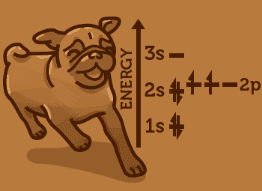
- Atomic structure and properties — electron configuration, periodic trends, photoelectron spectroscopy.
- Molecular and ionic compound structure — Lewis structures, VSEPR theory, molecular geometry, polarity.
- Intermolecular forces and properties — IMFs, solubility, colligative properties, chromatography.
- Chemical reactions — types of reactions, net ionic equations, stoichiometry, limiting reagents.
- Kinetics — rate laws, reaction mechanisms, activation energy, Arrhenius equation.
- Thermodynamics — enthalpy, entropy, Gibbs free energy, Hess's law, calorimetry.
- Equilibrium — Kc, Kp, ICE tables, Le Chatelier's principle, solubility equilibria.
- Acids and bases — pH, Ka, Kb, buffer systems, titration and neutralisation.
- Electrochemistry — galvanic and electrolytic cells, standard reduction potentials, Nernst equation, Faraday's laws.
No validated topic-level URLs are available in the current site map for this course, so direct topic links are omitted here. Use the Browse Topics button above to navigate to specific lesson areas.
Using StudyPug for AP Chemistry — how to get started
The most effective way to use StudyPug for AP Chemistry is to begin with the diagnostic assessment. It takes a short time to complete and produces a personalised focus list — the specific topics where your understanding has gaps. Work through the recommended video lessons for those topics first, pausing to attempt the practice problems immediately after each explanation while the method is fresh.
As the AP Chemistry Exam approaches, shift your sessions toward the full practice sets. Use the exam-style questions to practise writing free-response answers clearly and concisely — AP markers reward explicit reasoning, not just correct numbers. If you encounter a problem type you do not recognise, the Photo Search feature lets you photograph the question and find the matching lesson without hunting through menus.
StudyPug is available on desktop and mobile, so you can fit study sessions around school, sports, and other commitments. Consistent shorter sessions — 30 to 45 minutes of focused video plus practice — build more durable understanding than cramming. Start with the diagnostic today and let it show you exactly where to focus first.
AP Chemistry FAQ
Unsure how StudyPug works? Need help with setting up? Check our frequently asked questions or contact us for help.
What do you learn in AP Chemistry, and what topics does it cover?
AP Chemistry covers atomic structure, chemical bonding, stoichiometry, thermodynamics, kinetics, equilibrium, acids and bases, electrochemistry, and organic chemistry fundamentals. The course develops quantitative reasoning alongside conceptual understanding. Students learn to write and balance equations, apply the laws of thermodynamics, and interpret data from laboratory investigations. By the end, you build a university-level foundation in chemistry that prepares you for further study in science, engineering, or medicine.
What is the difference between AP Chemistry and standard Year 13 Chemistry?
Standard Year 13 NCEA Chemistry (Level 3) is assessed through internal and external standards set by the New Zealand Qualifications Authority. AP Chemistry is a US College Board course that culminates in a single high-stakes exam and can earn university credit. AP Chemistry goes deeper into thermodynamics, kinetics, and electrochemistry, and the mathematical rigour is higher. Some New Zealand students sit AP Chemistry alongside NCEA to strengthen university applications, particularly for institutions in the US, Canada, or for competitive NZ programmes.
Is AP Chemistry hard, and where do students struggle most?
AP Chemistry is considered one of the more demanding AP courses. Students most commonly struggle with chemical equilibrium (especially ICE tables and Le Chatelier's principle), electrochemistry (cell potentials and Nernst equation), and multi-step stoichiometry problems. Thermodynamics — connecting enthalpy, entropy, and Gibbs free energy — is another persistent difficulty. The biggest challenge is not memorising facts but applying concepts to unfamiliar scenarios under exam conditions. Consistent practice with worked examples is the most effective way to bridge that gap.
What should I take before AP Chemistry, and what comes after it?
A solid foundation in Year 11 or Year 12 Chemistry (NCEA Level 1–2) and a concurrent or prior Year 12 Mathematics course are strongly recommended before AP Chemistry. Comfort with algebra and basic logarithms is essential. After AP Chemistry, students are well-prepared for first-year university chemistry, biochemistry, or chemical engineering papers. The course also supports AP Biology and AP Physics, as many concepts — thermodynamics, equilibrium — overlap across sciences.
Is AP Chemistry on the AP exam, and how is it tested?
Yes. AP Chemistry is assessed through the College Board AP Chemistry Exam, which New Zealand students can sit at authorised test centres. The exam is three hours and fifteen minutes long, divided into a multiple-choice section (60 questions, 50% of the score) and a free-response section (7 questions, 50% of the score). Free-response questions require written analysis, calculations, and justification of reasoning. Scores range from 1 to 5; many universities award credit for scores of 3 or above. StudyPug includes practice based on real exam-style AP Chemistry questions.
What is one of the hardest concepts in AP Chemistry, and how do you tackle it?
Chemical equilibrium — particularly solving for equilibrium concentrations using ICE tables and applying the equilibrium constant expression — is where many students lose marks. The key is to practise setting up ICE tables systematically before introducing any numbers, then work through the algebra carefully. Understanding why equilibrium shifts (Le Chatelier's principle) conceptually first makes the mathematics more intuitive. Watching a step-by-step worked example for each equilibrium type, then immediately attempting a similar problem, is the fastest way to make the concept stick.





Written by the StudyPug Team
Last updated June 5, 2026
3 M+
students
★★★★★
4.8 average
K–12
all grades