AP Statistics Help — Video Lessons & Practice
Get clear explanations for any AP Statistics problem and build exam-ready confidence.

Step-by-Step Video Lessons
Real teaching so you solve problems alone.
Build Mastery
Master every topic before the test.

Real Exam Practice
Includes free real AP exam questions.
Try It Now
Test your knowledge
Our approach aligns with the evidence
Exam Scores
Better Recall
Less Anxiety
AP Statistics Topics
1. Basic Concepts
2. Data Representation
3. Data Interpretation
4. Probability
5. Set Theory
6. Discrete Probabilities
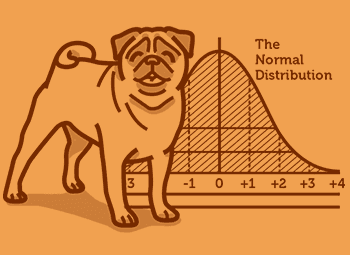
7. Normal Distribution and Z-Scores
8. Confidence Intervals
9. Hypothesis Testing
9 Chapters · 50 Topics · 394 Videos
Discover Our Learning Areas
Explore key subjects and start learning with interactive content.






What Is AP Statistics?
AP Statistics is a college-level mathematics course offered through the College Board that teaches students how to collect, analyse, and draw conclusions from data. It is one of the most widely taken AP courses because its skills apply directly to university study in science, social science, business, and medicine. Unlike algebra or calculus, statistics is built around reasoning under uncertainty — you learn to make decisions based on evidence, not just compute a numerical answer.
The course is structured around four conceptual themes: exploring data, sampling and experimentation, probability, and statistical inference. Each theme builds on the last, culminating in the inferential techniques — hypothesis tests and confidence intervals — that form the heart of the AP exam.
What Topics Does AP Statistics Cover?
The AP Statistics syllabus covers a broad range of interconnected topics. In the exploring data unit you work with graphical displays (dotplots, histograms, boxplots), summary statistics (mean, median, standard deviation, IQR), and comparing distributions. The sampling unit introduces experimental design, observational studies, random sampling methods, and sources of bias.
Probability topics include basic probability rules, conditional probability, independence, discrete and continuous random variables, and the binomial and normal distributions. The inference unit — often the most challenging — covers sampling distributions, the Central Limit Theorem, one-sample and two-sample t-tests, chi-square tests for goodness of fit and independence, and simple linear regression inference. You will also need to write clear, statistically precise justifications for your conclusions, which the AP exam tests explicitly in free-response questions.
Is AP Statistics Difficult for Year 12 Students?
AP Statistics is generally considered more approachable than AP Calculus, but it is still a rigorous university-level course. Most students find the early units on data analysis and probability manageable. The difficulty increases significantly in the inference unit, where you must understand not just how to run a test but why each condition must be checked and how to interpret results in context.
The AP exam's free-response section is where many students lose marks — not because they cannot do the maths, but because their written explanations lack the precision the College Board requires. Successful AP Statistics students practise writing out their reasoning in full, not just circling a final answer. Getting comfortable with that communication style early is the single best investment you can make in your preparation.
Should I Take AP Statistics or AP Calculus?
The right choice depends on your future pathway. AP Calculus is essential if you are heading into engineering, physics, or pure mathematics. AP Statistics is the stronger choice for students aiming at biology, psychology, economics, health sciences, or any field involving research and data analysis. Many students take both over their high school years.
From a workload perspective, AP Statistics demands careful logical reasoning and clear written communication rather than computational fluency. If you find data and real-world problem-solving more intuitive than abstract function analysis, statistics is likely the more natural fit. Both courses carry strong weight on university applications and can earn you college credit with a score of 3 or higher on the AP exam.
How Is AP Statistics Assessed on the AP Exam?
The College Board AP Statistics exam is three hours long and divided into two sections. Section I is 40 multiple-choice questions completed in 90 minutes; it tests your ability to interpret statistical output and apply concepts across all four content areas. Section II is 90 minutes of free response: five shorter questions and one longer investigative task that requires you to integrate ideas from multiple parts of the course.
Scores range from 1 to 5. Most New Zealand schools and universities that accept AP credit require a score of 3 or above, and many competitive institutions prefer a 4 or 5 for introductory statistics credit. The free-response questions are graded on statistical reasoning, correct use of notation, and the quality of your written justifications — so exam preparation must include writing practice, not just problem-solving.
Why StudyPug for AP Statistics Help?
StudyPug is built for exactly the kind of structured, self-directed learning that AP Statistics demands. The platform starts with a diagnostic assessment that maps your current knowledge against the full AP Statistics syllabus — identifying the specific topics where you have gaps so you can focus your study time where it counts most. No more grinding through material you already know.
Every topic is covered by certified-teacher concept videos that teach the method, not just the answer. You will not just watch a worked example — you will understand why each step is taken, so you can apply the same reasoning to any variation that appears on the AP exam. This is the core difference: understanding the method means you can handle unseen problems, which is exactly what the AP exam tests.
As you work through practice, adaptive practice adjusts difficulty to your current performance level. If you are finding chi-square tests straightforward, the platform moves you to harder questions. If sampling distributions are still shaky, it brings you back to targeted reinforcement. The result is efficient, focused preparation rather than passive re-reading.
For AP exam preparation specifically, StudyPug includes exam-style practice questions based on real AP Statistics test formats — the same multiple-choice style and free-response structure you will face on exam day. The 30-day money-back guarantee means you can try the full platform without any financial risk.
What You Learn: AP Statistics Curriculum Coverage
StudyPug's AP Statistics content covers every unit on the College Board syllabus:
- Exploring One-Variable Data — graphical representations, summary statistics, normal distributions
- Exploring Two-Variable Data — scatterplots, correlation, least-squares regression, residuals
- Collecting Data — sampling methods, experimental design, sources of bias
- Probability, Random Variables, and Probability Distributions — basic probability, independence, binomial and geometric distributions
- Sampling Distributions — Central Limit Theorem, sampling distributions of sample means and proportions
- Inference for Categorical Data: Proportions — one-sample and two-sample z-tests and confidence intervals
- Inference for Quantitative Data: Means — one-sample and two-sample t-tests and confidence intervals, paired data
- Inference for Categorical Data: Chi-Square — goodness of fit, independence, and homogeneity tests
- Inference for Quantitative Data: Slopes — t-test and confidence interval for the slope of a regression line
Each unit includes video lessons, adaptive practice problems, and exam-style questions. Because no validated topic-level URLs are currently available in the link map for this page, browse the full topic list directly on StudyPug's AP Statistics course page to navigate to any specific area.
How to Use StudyPug for AP Statistics
The most effective way to use StudyPug is to start with the diagnostic. It takes only a few minutes and produces a personalised study plan that highlights exactly which AP Statistics units need the most attention. From there, watch the concept video for your weakest topic first — pausing and replaying as needed — then move straight into the adaptive practice problems for that topic.
As your understanding builds, use the exam-style practice tests to simulate real AP exam conditions. Time yourself, write out your free-response answers fully, and review the worked video solutions for any question you found difficult. This watch → practise → test loop mirrors the kind of deliberate preparation that translates directly into AP exam performance.
StudyPug is available on any device, so you can fit study sessions around your schedule — whether that is a full revision session at a desk or a quick 15-minute practice set on your phone. The platform tracks your progress automatically, so you always know which topics are solid and which still need work. With the 30-day money-back guarantee, there is no risk in getting started today.
AP Statistics FAQ
Unsure how StudyPug works? Need help with setting up? Check our frequently asked questions or contact us for help.
What do you learn in AP Statistics, and what topics does it cover?
AP Statistics covers four main areas: exploring data (graphical displays, summary statistics), sampling and experimentation (study design, random sampling), probability and simulation, and statistical inference (confidence intervals, hypothesis tests). You will work with one-variable and two-variable data, probability models, sampling distributions, and both t-tests and chi-square tests. By the end of the course you can design studies, analyse real-world data sets, and draw evidence-based conclusions — skills directly tested on the AP exam.
What is the difference between AP Statistics and AP Calculus?
AP Statistics focuses on data collection, probability, and drawing conclusions from real-world data sets. AP Calculus is about limits, derivatives, and integrals — the mathematics of continuous change. Statistics is more about reasoning with uncertainty; calculus is about mathematical analysis of functions. Many students find statistics more immediately applicable to everyday life, while calculus is essential for engineering and physics pathways. Both are rigorous AP-level courses, but they test very different skills and ways of thinking.
Is AP Statistics hard, and where do students struggle most?
AP Statistics is considered one of the more accessible AP courses for students comfortable with logical reasoning, but it is still demanding. Most students struggle with inference: understanding when to use a t-test versus a chi-square test, correctly interpreting p-values, and writing statistically precise conclusions. Probability calculations and the concept of sampling distributions also trip up many students early on. The AP exam rewards careful written explanations — not just correct calculations — so practising how to justify your reasoning in words is critical.
What should I take before AP Statistics, and what comes after it?
A solid foundation in algebra and some exposure to pre-calculus concepts is recommended before taking AP Statistics. You do not need calculus. After AP Statistics, students often progress to college-level introductory statistics or research methods courses. It also serves as strong preparation for fields such as psychology, biology, economics, and business where data analysis is central. Scoring well on the AP exam can earn you college credit, allowing you to skip introductory statistics at university.
Is AP Statistics on the AP exam, and how is it tested?
Yes. The College Board AP Statistics exam is the culminating assessment for this course. It consists of a multiple-choice section (40 questions, 90 minutes) and a free-response section (5 short-answer questions plus one investigative task, 90 minutes). The free-response questions require you to show your reasoning in writing, not just produce a numerical answer. Scores range from 1 to 5; many universities grant credit for scores of 3 or above. The exam tests all four content areas, with heavy emphasis on inference and statistical reasoning.
What is one of the hardest concepts in AP Statistics, and how do you tackle it?
Sampling distributions are consistently the hardest concept for AP Statistics students. The idea that the distribution of a sample statistic (like the sample mean) has its own shape, centre, and spread — separate from the original population — is abstract and counterintuitive. The key is to slow down and visualise: draw diagrams, work through concrete simulation examples, and practise applying the Central Limit Theorem systematically. Once you understand why the standard error formula works, confidence intervals and hypothesis tests click into place much more naturally.





Written by the StudyPug Team
Last updated June 5, 2026
3 M+
students
★★★★★
4.8 average
K–12
all grades