1st Grade Science Help for Your Child
Adaptive practice and diagnostic assessments build strong science foundations in life cycles, habitats, and more.
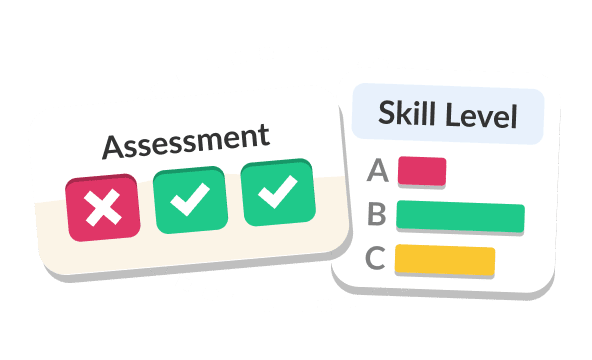
Find Your Weak Spots
See exactly which standards need practice.
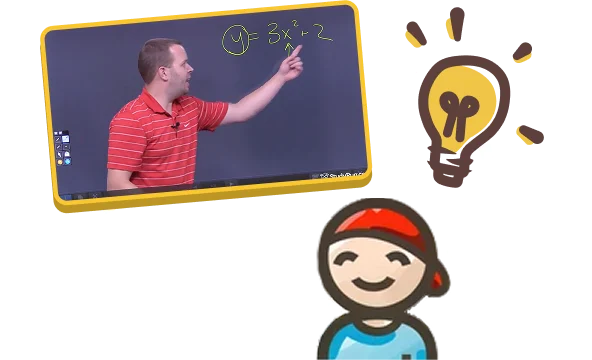
Step-by-Step Video Lessons
Your child learns why not just answers.
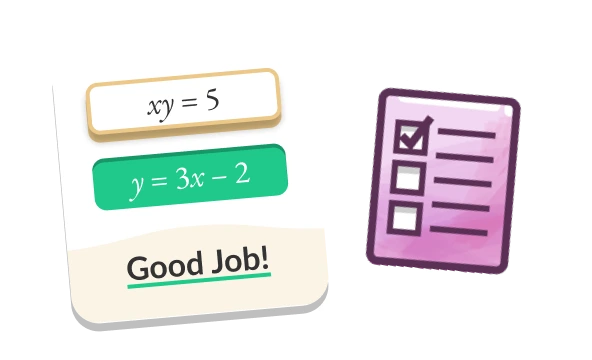
Grows With Them
Questions grow with your child's confidence.
Try It Now
Test your knowledge
Our approach aligns with the evidence
Exam Scores
Better Recall
Less Anxiety
1st Grade Science Topics
1. STEM Skills
2. Engineering Design
3. Classification
4. Survival Needs
5. Life Cycles
6. Plants
7. Animals
8. Properties
9. Changes
10. Motion
11. Light and Sound
13. Weather
14. Natural Resources
15. Local Ecosystems
16. Tools
17 Chapters · 36 Topics · 33 Videos
Discover Our Learning Areas
Explore key subjects and start learning with interactive content.


What Is 1st Grade Science?
1st Grade Science introduces children to the living world, the physical world, and the Earth around them. At this stage, your child begins exploring how living things grow and change, what animals and plants need to survive, and how forces like pushes and pulls affect everyday objects. They also discover the basics of light and sound — two topics that spark natural curiosity in young learners. These early science experiences lay the foundation for everything that comes later in elementary and middle school science. Building strong habits of observation, asking questions, and testing ideas starts here in Grade 1.
What Does My Child Learn in 1st Grade Science?
Your child covers three broad areas in 1st Grade Science: life science, physical science, and earth science fundamentals. In life science, they study life cycles — how animals are born, grow, reproduce, and die — and explore the habitats where different animals and plants live. They learn what living things need to survive: food, water, shelter, and air. In physical science, pushes and pulls introduce the concept of forces, while light and sound open up the world of energy. Your child learns that light travels in straight lines and that sounds are made by vibrations. These hands-on, observable concepts make 1st Grade Science a wonderful entry point into scientific thinking.
Is 1st Grade Science Hard for Young Children?
Most children find 1st Grade Science genuinely exciting because it connects directly to animals, plants, and things they experience every day. That said, some concepts can be confusing. Understanding why a butterfly goes through metamorphosis, or explaining the difference between a push and a pull in precise terms, can challenge young learners. Children who struggle in science at this stage often have small gaps in vocabulary or prior exposure rather than any fundamental difficulty with the subject. Targeted practice that meets your child at their current level — and adapts as they improve — makes a significant difference in building both understanding and confidence.
How Is Science Assessed in 1st Grade?
In 1st Grade, science assessment is generally informal and observation-based. Teachers evaluate understanding through classroom discussions, science journals, hands-on activities, and short quizzes based on state science standards. Your child may be asked to draw and label a life cycle, sort living and non-living things, or describe what happens when a force is applied to an object. Understanding these assessment formats helps parents support their children at home. Regular practice with the same types of questions used in the classroom builds the familiarity and confidence children need to perform well when assessed at school.
What Science Topics Should My Child Know After 1st Grade?
By the end of 1st Grade, your child should be able to describe the life cycles of several common animals, identify what plants and animals need to survive in their habitats, explain in simple terms how pushes and pulls change the motion of objects, and describe basic properties of light and sound. These skills feed directly into 2nd Grade Science, where your child will build on life cycles to study animal adaptations, expand their understanding of forces and motion, and explore states of matter. A strong 1st Grade Science foundation prevents gaps from forming as the topics become more complex in later grades.
Why StudyPug for 1st Grade Science Help?
StudyPug is built around the idea that every child learns at a different pace and has different gaps. Rather than working through the same material as everyone else, your child starts with a diagnostic assessment that identifies exactly which 1st Grade Science concepts need attention. From there, adaptive practice adjusts to their level — giving more practice on harder concepts and moving quickly through topics they already know. Step-by-step video lessons from certified teachers explain the method clearly, so your child hears science explained the right way, not just through a worksheet. The quiz replay feature means your child can retake any quiz as many times as needed, building real understanding rather than guessing. And because all content is aligned to state science standards, everything your child practices connects directly to what their teacher is covering in class.
Parents stay informed through the progress dashboard, which shows completed sessions, quiz scores, and which topics still need work. There is no guessing about where your child stands — you see measurable progress week over week. StudyPug also offers free practice content so you can try the approach before committing, with a 30-day money-back guarantee on any paid plan.
What Your Child Will Learn: 1st Grade Science Topics
StudyPug's 1st Grade Science content covers all core topics aligned to state science standards, including:
- Life cycles — how animals and plants grow, change, and reproduce
- Needs of living things — food, water, shelter, and air for plants and animals
- Habitats — where animals live and why different environments suit different creatures
- Pushes and pulls — how forces change the speed and direction of objects
- Light — how light travels, sources of light, and basic properties
- Sound — vibrations, loud and soft sounds, and how sound travels
These topics are supported by state curriculum guides across the US. For example, you can explore how these concepts are structured in your state by reviewing the Florida grade 1 science curriculum or the New York grade 1 science curriculum. Each of these pages maps the grade-level expectations in detail so you can see exactly how StudyPug content aligns to your child's school requirements.
How to Use StudyPug for 1st Grade Science
Getting started is straightforward. Once your child has an account, the diagnostic assessment takes about ten to fifteen minutes and covers the key 1st Grade Science concepts. Results show you immediately which areas are strong and which need more practice. From there, your child can follow their personalized practice path or explore any topic directly. For 1st Grade students, fifteen to twenty minutes of daily practice works best — short enough to hold attention, consistent enough to build real progress over time. Encourage your child to use quiz replay whenever they get something wrong: the ability to retry until they succeed builds confidence and genuine understanding. Check the parent dashboard regularly to see how your child is progressing across life science, physical science, and earth science topics. If you notice a topic where scores are stalling, that is a signal to spend a few extra sessions there before moving on. Science skills build on each other — a child who feels solid in 1st Grade is ready to tackle the more complex topics waiting in 2nd Grade and beyond.
1st Grade Science FAQ
Unsure how StudyPug works? Need help with setting up? Check our frequently asked questions or contact us for help.
How will StudyPug help my child with 1st Grade Science?
A quick diagnostic assessment identifies exactly where your child needs support, then adaptive practice builds their 1st Grade Science skills step by step — covering life cycles, habitats, pushes and pulls, and light and sound at the right pace for their level.
Does this match what my child learns in school science?
Yes. All 1st Grade Science content follows state science standards exactly. Whether your child's class is studying habitats, animal needs, or basic forces, the practice aligns with what their teacher is covering in the classroom.
What science topics are covered in 1st Grade?
StudyPug covers all core 1st Grade Science topics including life cycles, needs of living things, habitats, pushes and pulls, light, and sound. These are the foundational concepts your child will build on throughout elementary school science.
How does the diagnostic assessment work?
A short diagnostic assessment tests your child across key 1st Grade Science concepts. It identifies their strengths and any knowledge gaps, then creates a targeted practice path so time is spent on what actually needs work — not topics they already know.
Is 1st Grade Science hard for most children?
Most children find 1st Grade Science engaging because it connects to the world around them. However, some concepts like understanding life cycles or the difference between pushes and pulls can be tricky. Consistent targeted practice makes these concepts click more reliably.
How quickly will my child improve in science?
Parents typically see better science comprehension and classroom confidence within four to six weeks of regular daily practice. Consistency matters most — even fifteen to twenty minutes each day builds strong science understanding over time.




Written by the StudyPug Team
Last updated June 5, 2026
3 M+
students
★★★★★
4.8 average
K–12
all grades