Grade 12 Trigonometry Help — Video Lessons & Practice
Get clear explanations for any trigonometry problem and build exam-ready confidence for your GCE A-Level.
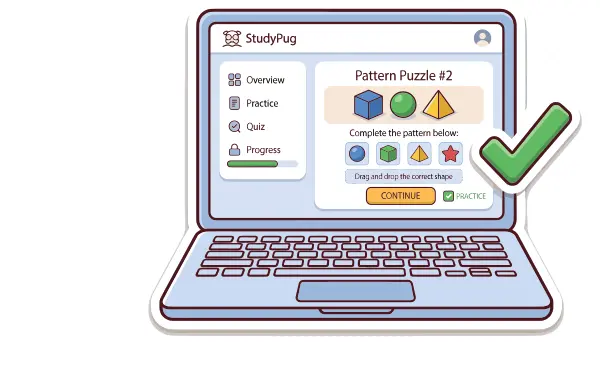
Value vs. Private Tutor
Expert Singapore curriculum help minus the cost.
Multi-Subject
Struggling with sine but algebra is fine.
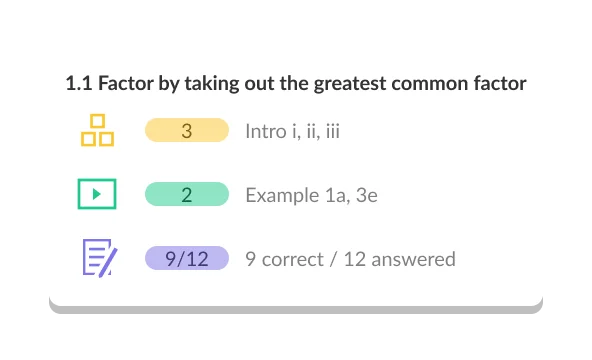
Practice Until Perfect
Practice until it clicks before test day.
Try It Now
Test your knowledge
Our approach aligns with the evidence
Exam Scores
Better Recall
Less Anxiety
Trigonometry Topics
1. Right Triangle Trigonometry
2. Trigonometric Ratios and Angle Measure
3. Bearings
4. Graphing Trigonometric Functions
5. Applications of Trigonometric Functions
6. Trigonometric Identities
7. Solving Trigonometric Equations
8. Inverse Trigonometric Functions
9. Imaginary and Complex Numbers
9 Chapters · 60 Topics · 284 Videos
Discover Our Learning Areas
Explore key subjects and start learning with interactive content.

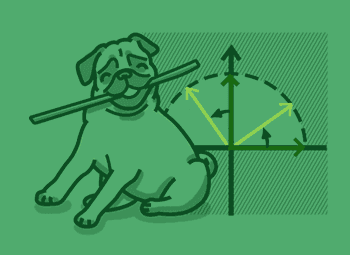
What is Grade 12 Trigonometry?
Grade 12 Trigonometry is the study of periodic functions, angle relationships, and mathematical identities that describe how angles and distances relate in triangles and on the unit circle. In Singapore, this subject sits within the H1 and H2 Mathematics syllabuses of the Singapore–Cambridge GCE A-Level framework. It is not a standalone A-Level subject but a major pure-mathematics strand examined in Paper 1. Mastery of trigonometry at this level means you can prove complex identities, solve equations over restricted domains, sketch and interpret transformed trig graphs, and apply the sine rule and cosine rule to real-world problems under timed exam conditions.
What topics are covered in Grade 12 Trigonometry?
The Singapore–Cambridge A-Level syllabus requires students to work across several interconnected trigonometry areas. Core topics include:
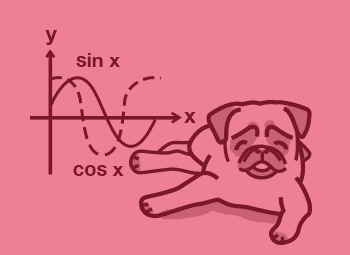
- Trigonometric functions and graphs — sine, cosine, tangent and their reciprocals; amplitude, period, phase shift, and vertical translation
- Trigonometric identities — Pythagorean identities, compound angle formulae, double angle formulae, and sum-to-product conversions
- Trigonometric equations — solving equations in degrees and radians over a given interval, including general solutions
- Radian measure — converting between degrees and radians, arc length, sector area
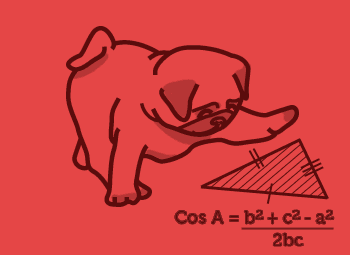
- Sine rule and cosine rule — with applications to non-right-angled triangles and contextual problems
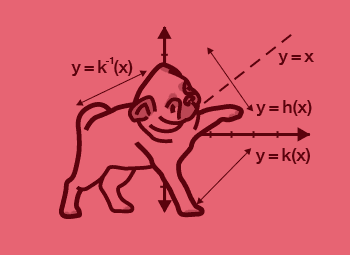
- Inverse trigonometric functions — domain restrictions, graphs, and their use in solving equations
These topics form a connected system. Weakness in one area — for example radian measure — typically produces errors across equation-solving and graph-transformation questions.
Is Grade 12 Trigonometry hard?
Trigonometry at A-Level is challenging, but most of the difficulty is concentrated in a small number of areas. Proving trigonometric identities is consistently the hardest topic: students often try to manipulate both sides of an equation simultaneously, which is not valid mathematical reasoning. The correct approach is to transform one side only, typically the more complex side, using known identities until it equals the other.
A second common struggle is solving trigonometric equations correctly over a specified interval. Students frequently find one solution and stop, or apply reference angles in the wrong quadrant. A clear diagram of the ASTC (All-Students-Take-Calculus) rule and systematic substitution of general solutions prevents most of these errors.
Radian fluency is the third hurdle. Students who are still automatically thinking in degrees tend to make unit errors in exam questions that mix arc length, sector area, and equations. Regular timed practice in radians alone closes this gap quickly.
With the right method taught clearly and enough adaptive practice to consolidate it, Grade 12 Trigonometry is very passable. The goal is not memorising more formulae — it is understanding the structure behind each identity so you can reconstruct them under pressure.
How is Trigonometry examined at the GCE A-Level in Singapore?
Trigonometry appears as a pure mathematics component in the Singapore–Cambridge GCE A-Level H2 Mathematics Paper 1 (3 hours) and, in applied contexts, sometimes in Paper 2. Questions range from short structured proofs (show that…) to longer multi-part problems that combine trig with calculus — for example, finding the turning points of a trigonometric function using differentiation, or integrating a trig expression derived from an identity.
H1 Mathematics includes a lighter trigonometry component, focusing on the graphs and basic equations rather than the full identity-proof repertoire required at H2.
StudyPug's practice problems are based on GCE A-Level exam question styles, which means the difficulty, question structure, and expected working format match what you will see in your actual paper. Practising in exam format — not just textbook exercises — is one of the most effective ways to improve your mark.
What comes before and after Grade 12 Trigonometry?
Before tackling A-Level Trigonometry you need a solid O-Level or Secondary 3–4 foundation: SOHCAHTOA, basic angle properties, Pythagoras' theorem, and introductory work with the sine and cosine functions. Algebraic fluency is critical — manipulating fractions, surds, and factorising expressions quickly all feature heavily inside identity proofs and equation solving.
After Grade 12 Trigonometry, the immediate next step is H2 Calculus, where trigonometric differentiation and integration are examined. University mathematics and engineering courses use trigonometry extensively — in Fourier analysis, signal processing, complex numbers (Euler's formula), and mechanics. Students aiming for NUS, NTU, or SMU engineering and science programmes will encounter these applications in their first year.
Why use StudyPug for Grade 12 Trigonometry?
StudyPug is designed around three ideas that matter most for A-Level preparation: knowing exactly where your gaps are, learning the method (not just the answer), and practising enough to make it automatic.
Diagnostic Assessment. When you start, a quick diagnostic maps exactly which trigonometry topics need attention. Instead of re-reading everything, you spend your revision time on the sections where you are actually losing marks. For a student three weeks from an A-Level exam, this alone changes the outcome.
Certified-teacher concept videos. Every video is made by a certified teacher who explains the reasoning behind each step — not just the procedure. For trigonometric identity proofs, this means understanding why you choose a particular identity at a particular moment, not just copying steps. You learn how to solve it, so you can handle any variant the examiner sets.
Adaptive practice. After watching a lesson, practice questions adjust to your level automatically. If you are getting identity proofs right, the system moves you to harder multi-step proofs. If you stall on radian equations, it loops you back with different examples until the concept is solid. This mirrors what a good tutor does — without the scheduling and the hourly rate.
GCE A-Level exam-style tests. StudyPug's practice tests are built around real A-Level exam question styles, so you practise in the format that counts. Recognising question types and knowing which tool to apply — compound angle formula, double angle, R-formula — is a skill that comes from exam-format repetition.
Singapore–Cambridge curriculum alignment. Lessons map directly to the H1 and H2 Mathematics syllabuses. You will not find yourself watching content that is slightly off-syllabus or uses a different notation convention to your school.
30-day money-back guarantee. If StudyPug does not work for you within the first 30 days, you get your money back. There is no free trial, but there is free daily practice content you can try before committing.
What you learn — curriculum coverage
StudyPug's Grade 12 Trigonometry coverage is built to the Singapore–Cambridge GCE A-Level H2 Mathematics specification. Every examinable area is covered with at least one certified-teacher concept video, worked examples, and adaptive practice problems.
Topic areas covered include: trigonometric functions (sin, cos, tan, cosec, sec, cot) and their graphs; amplitude, period, phase shift, and graph transformations; Pythagorean, compound angle, and double angle identities; sum-to-product and product-to-sum formulae; the R-formula for expressions of the form a sin x + b cos x; trigonometric equations and their general solutions; radian measure, arc length, and sector area; inverse trigonometric functions and their restricted domains; and the sine and cosine rules with contextual applications.
Because no validated internal topic-page URLs are available for the Singapore Trigonometry course in the current page feed, specific topic links are omitted here. Navigate to the StudyPug topic list on this page to browse and jump directly to any subtopic.
How to use StudyPug for Grade 12 Trigonometry
The most effective study sequence has four stages.
Step 1 — Run the diagnostic. Log in and take the short diagnostic assessment for Trigonometry. It takes around ten minutes and produces a priority list of topics. Start there, not at chapter one.
Step 2 — Watch the concept video. For each flagged topic, watch the certified-teacher video once through without pausing. Get the full picture of the method first. Then rewatch difficult steps with the pause button.
Step 3 — Do the adaptive practice. Work through the practice problems immediately after the video while the method is fresh. The adaptive engine will adjust difficulty as you progress. Aim for three consecutive correct answers on each question type before moving on.
Step 4 — Take a practice test. Once you have covered your diagnostic gaps, sit a full GCE A-Level style practice test under timed conditions. Review every question you got wrong using the video solution, not just the mark scheme. This is where exam fluency is built.
If you need to look up a concept mid-homework, use Photo Search — take a photo of the problem and StudyPug finds the matching lesson video. Available across all grades and subjects, it is a fast way to get back on track without scrolling through topic lists.
StudyPug is available on desktop and mobile, so revision fits around school, CCA commitments, and the irregular hours that A-Level prep tends to produce. Start with free practice today to see how the method-focused approach works, then unlock the full library when you are ready.
Trigonometry FAQ
Unsure how StudyPug works? Need help with setting up? Check our frequently asked questions or contact us for help.
What do you learn in Grade 12 Trigonometry, and what topics does it cover?
Grade 12 Trigonometry builds on secondary-level foundations and covers trigonometric identities and equations, the sine and cosine rules, radian measure, trigonometric functions and their graphs, inverse trig functions, and applications such as solving triangles and modelling periodic phenomena. In Singapore, this material is central to the H1 and H2 Mathematics syllabuses and forms a significant portion of the GCE A-Level paper. Students develop both procedural fluency and conceptual understanding needed for rigorous exam work.
What is the difference between Trigonometry and Calculus at Grade 12 level?
Trigonometry focuses on the relationships between angles and sides in triangles, periodic functions, and identities. Calculus — covered in H2 Mathematics — deals with rates of change (differentiation) and accumulation (integration). The two subjects are deeply linked: differentiation of trigonometric functions appears in Calculus, so strong trigonometry skills are a direct prerequisite. Students who struggle with trig identities and graphs typically find the calculus chapters harder. Trigonometry is the foundation; Calculus is where it gets applied at speed under exam conditions.
Is Grade 12 Trigonometry hard, and where do students struggle most?
Most students find trigonometry manageable once the core ideas click, but certain areas consistently cause difficulty. Proving trigonometric identities is the most common struggle — students often try to work both sides simultaneously rather than transforming one side only. Solving trig equations over a given interval and correctly reading the general solution is another frequent error. Radian measure confuses students who still think in degrees automatically. StudyPug's certified-teacher videos teach the method step by step, and the diagnostic assessment identifies exactly which of these gaps applies to you so you can fix them efficiently.
What should I know before taking Grade 12 Trigonometry, and what comes after?
You should be comfortable with SOHCAHTOA, Pythagoras' theorem, basic angle properties, and introductory sine and cosine work from O-Level or Secondary 3–4 Mathematics. Algebra fluency — especially manipulating fractions and surds — is essential. After Grade 12 Trigonometry, the natural progression is into H2 Calculus (where you differentiate and integrate trig functions), Further Mathematics if you are pursuing it, and university-level courses in physics, engineering, and pure mathematics where trigonometry underpins signal analysis, mechanics, and complex numbers.
Is Trigonometry tested on the GCE A-Level, and how is it examined?
Yes. Trigonometry is a core component of the Singapore–Cambridge GCE A-Level H1 and H2 Mathematics papers. It appears in Paper 1 (pure mathematics) and may appear in Paper 2. Question types include proving identities, solving trig equations over a specified domain, sketching and transforming trig graphs, and applying the sine and cosine rules in contextual problems. Questions regularly require multi-step working and clear notation. StudyPug's practice tests are based on real A-Level exam question styles so you build familiarity with exactly how trigonometry is tested.
What is one of the hardest concepts in Grade 12 Trigonometry, and how do you tackle it?
Proving trigonometric identities is consistently the topic students find hardest. The key strategy is to choose the more complicated side and transform it using known identities — Pythagorean, double angle, sum-to-product — until it matches the other side. Never move terms across the equals sign. Work in terms of sine and cosine when stuck, and factorise early if you spot a common factor. StudyPug has dedicated certified-teacher videos that walk through multi-step proofs slowly, showing exactly which identity to apply at each step and why, so you can reproduce the logic independently under exam conditions.




Written by the StudyPug Team
Last updated June 5, 2026
3 M+
students
★★★★★
4.8 average
K–12
all grades