Calculus 2 Help: Video Lessons & Practice
Step-by-step solutions for every topic — from integration techniques to infinite series. Free practice included. 30-day money-back guarantee.
Value vs. Private Tutor
Expert Calculus 2 help minus the price tag.

Multi-Subject
One subscription unlocks every subject.
Practice Until Perfect
Practice until you master it fully.
Try It Now
Test your knowledge
Our approach aligns with the evidence
Exam Scores
Better Recall
Less Anxiety
Calculus 2 Topics
1. Integrals
2. Integration Techniques
3. Integration Applications
4. Differential Equations
5. Sequence and Series
6. Parametric Equations and Polar Coordinates
6 Chapters · 49 Topics · 346 Videos
Discover Our Learning Areas
Explore key subjects and start learning with interactive content.
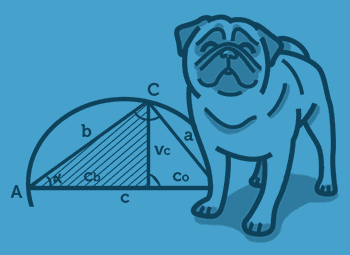

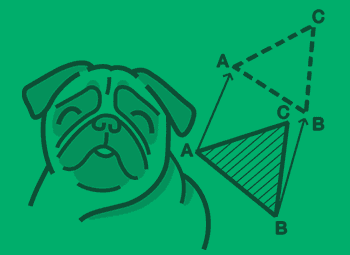
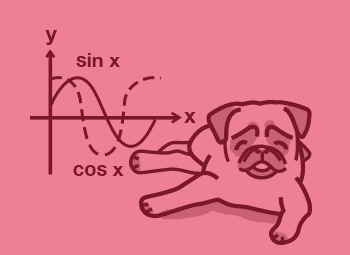
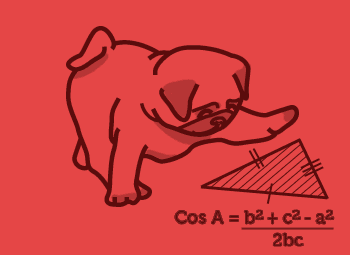
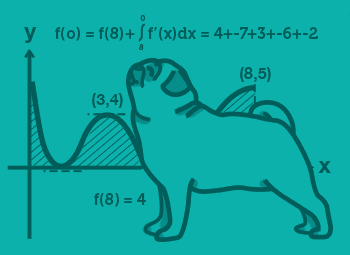
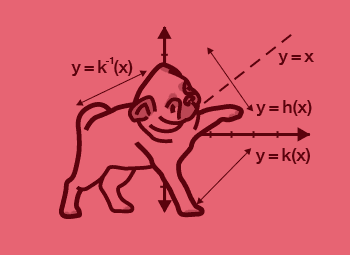

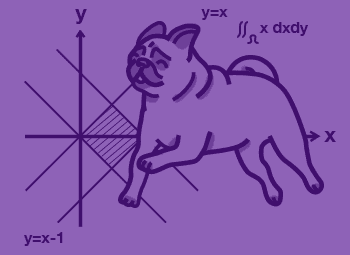



What is Calculus 2?
Calculus 2 is the second course in the standard university calculus sequence, and it is where single-variable mathematics becomes significantly more demanding. While Calculus 1 introduces limits, derivatives, and the basics of integration, Calculus 2 deepens the integration story and opens up entirely new mathematical territory — infinite series, parametric systems, and polar coordinates. In Singapore universities such as NUS, NTU, SMU, SUTD, and SIT, Calculus 2 (or its equivalent module) is a core requirement for Engineering, Mathematics, Physics, Data Science, and Computer Science programmes.
The course is demanding because of its breadth: students must become fluent in half a dozen distinct integration strategies, learn to test infinite series for convergence using multiple criteria, and switch comfortably between rectangular, parametric, and polar coordinate systems. Understanding the why behind each technique — not just executing the procedure — is what separates students who do well from those who are caught out on exam day.
Is Calculus 2 harder than Calculus 1?
For most students, yes. Calculus 1 has a single conceptual spine: the limit underpins both the derivative and the integral. Calculus 2 does not have one unifying thread in the same way — it is a collection of related but distinct topics, each with its own rules and edge cases.
Integration techniques are the first wall students hit. In Calculus 1, substitution covers most problems. In Calculus 2 you must recognise when to use integration by parts, trigonometric substitution, partial fraction decomposition, or reduction formulas — and choosing the wrong technique wastes significant time under exam conditions. Then comes series: you need to know the Ratio Test, Root Test, Integral Test, Comparison Test, Limit Comparison Test, and Alternating Series Test, and have intuition for which to reach for first. Many students find this section the hardest of the entire first two years of university mathematics.
The good news is that every technique is learnable with the right instruction and enough focused practice. The students who struggle least are those who practise topic by topic, understand the reasoning, and use tools — like StudyPug's diagnostic — to focus their time where it counts most.
What topics does Calculus 2 cover?
A full Calculus 2 course typically covers the following areas, though the exact order and depth varies by university and module:
Integration techniques: Review of substitution; integration by parts; trigonometric integrals and trigonometric substitution; partial fraction decomposition; improper integrals (both infinite limits and discontinuous integrands). This section is the computational backbone of the course.
Applications of integration: Arc length of curves; surface area of solids of revolution; volumes using the disk, washer, and shell methods; work and fluid pressure problems. These topics test whether you can set up an integral from a real situation — not just evaluate one already written for you.
Sequences and infinite series: Convergence and divergence of sequences; geometric and p-series; the Divergence Test, Integral Test, Comparison Tests, Ratio Test, and Root Test; alternating series and absolute versus conditional convergence. Representing functions as power series; finding radii and intervals of convergence.
Taylor and Maclaurin series: Constructing Taylor series from scratch; common series for e^x, sin x, cos x, ln(1+x), and 1/(1-x); using series to approximate integrals and limits. This section bridges series theory with practical calculation.
Parametric equations and polar coordinates: Derivatives and arc length in parametric form; converting between polar and rectangular coordinates; areas and arc lengths in polar coordinates; conic sections in polar form. Students who are not comfortable with coordinate-system thinking find this section challenging.
Introduction to differential equations (in some modules): Separable differential equations; first-order linear ODEs; direction fields; basic population and growth models. Coverage depends on the specific university module.
How do students struggle in Calculus 2 — and how do you get past it?
The three most common Calculus 2 failure points are: choosing the wrong integration technique, running out of time on series convergence questions, and making algebraic errors under pressure. All three are solvable with targeted practice.
For integration technique selection, the fix is pattern recognition. Work through enough varied examples — not just the same template — until you can look at an integral and immediately see which structure it has. StudyPug's certified-teacher videos walk you through the reasoning process, not just the algebra, so you build that recognition naturally.
For series convergence, build a decision tree. Factorial in the expression? Try Ratio Test first. Terms are positive with a clear comparison to a p-series or geometric series? Try Comparison or Limit Comparison. Alternating signs? Apply the Alternating Series Test. Practising this decision process — not just computing — is what makes the difference on exam day.
For algebraic errors, the only cure is slowing down on the setup and checking intermediate steps. StudyPug's step-by-step solutions show exactly where each line comes from, which is invaluable for identifying where your own working goes wrong.
Why StudyPug for Calculus 2?
StudyPug is built for exactly the kind of independent, exam-focused study that Calculus 2 demands. Here is what makes it the right tool for university mathematics students in Singapore.
Diagnostic assessment: Before you watch a single video, StudyPug's diagnostic identifies your specific weak points — whether that is improper integrals, series tests, or polar coordinates. You get a clear picture of where to focus, not a generic syllabus to work through from the beginning.
Certified-teacher concept videos: Every Calculus 2 lesson is taught by a real, experienced mathematics instructor — not AI-generated content. The lessons teach the method: why partial fractions work, why the Ratio Test tells you about convergence, why you switch to polar coordinates for certain integrals. Understanding the reasoning means you are prepared for the next course, not just the current exam.
Adaptive practice: As you work through practice problems, the difficulty adjusts to your responses. You are always working at the productive edge of your ability — challenged enough to grow, but not so overwhelmed that you stall. This is how skills build steadily toward midterm and final examination confidence.
Mock exams and practice tests: StudyPug includes full practice tests modelled on the format and difficulty of university midterms and finals. These are the best preparation for the time-pressure and question variety of actual GCE and university module assessments in Singapore.
One subscription, full coverage: Your StudyPug subscription gives you access to Calculus 1, Calculus 2, Calculus 3, Linear Algebra, Differential Equations, Statistics, and the full library. You are not paying per course. Whether you are reviewing Calculus 1 material or getting ahead in Calculus 3, everything is included.
30-day money-back guarantee: If StudyPug is not the right fit, you can request a full refund within 30 days. No questions, no penalty.
What you learn in Calculus 2 — topic coverage
StudyPug covers every topic in a standard university Calculus 2 curriculum. Core areas include:
- Integration by parts, trigonometric integrals, trigonometric substitution, partial fractions
- Improper integrals — both infinite-limit and discontinuous-integrand types
- Applications: volumes of revolution, arc length, surface area
- Sequences and series — convergence tests (Ratio, Root, Integral, Comparison, Alternating Series)
- Power series, radius of convergence, interval of convergence
- Taylor series and Maclaurin series — construction and application
- Parametric equations — derivatives, arc length, and area
- Polar coordinates — area, arc length, and conic sections
- Introduction to differential equations (separable and first-order linear)
No validated internal topic links are available in the current MAP for this page — see the O15 note. Topic pages, when live, will be linked here once sitemap-validated.
How to use StudyPug for Calculus 2
The most effective approach combines the diagnostic, concept videos, and practice in a structured rhythm. Start with the diagnostic assessment — it takes a short time and tells you exactly which Calculus 2 topics need work. Then watch the concept video for that topic: pay attention to the method, not just the arithmetic. Work through the practice problems immediately after, while the technique is fresh. If you get something wrong, go back to the video — you can watch it as many times as you need.
In the weeks leading up to a midterm or final, switch to the mock exam mode. These full-length practice tests simulate real exam conditions: mixed question types, time pressure, and topics drawn from across the module. Working through mock exams helps you identify remaining gaps and builds the time-management habits that often determine grades at university level.
StudyPug works on any device, so you can review integration techniques between lectures, watch a series convergence lesson on the bus, or run through polar coordinate problems the evening before an exam. The flexibility is designed for a university schedule where study time is fragmented and every session needs to count.
Start your free Calculus 2 practice now — no commitment required. If you decide to subscribe, the 30-day money-back guarantee means there is no risk. Work through every topic with clear, step-by-step solutions and build the skills you need for your midterms, your finals, and the courses that come next.
Calculus 2 FAQ
Unsure how StudyPug works? Need help with setting up? Check our frequently asked questions or contact us for help.
What do you learn in Calculus 2, and what topics does it cover?
Calculus 2 builds directly on Calculus 1 by going deeper into integration and extending your toolkit to new mathematical structures. Core topics include advanced integration techniques (substitution, integration by parts, partial fractions, trigonometric integrals), improper integrals, applications of integration (arc length, surface area, volumes of revolution), infinite sequences and series, convergence tests, power series, Taylor and Maclaurin series, parametric equations, polar coordinates, and an introduction to differential equations. It is a broad course that demands both computational fluency and conceptual understanding.
What is the difference between Calculus 2 and Calculus 3?
Calculus 2 focuses primarily on single-variable integration, infinite series, and introductory parametric and polar systems. Calculus 3 — often called Multivariable Calculus — extends these ideas into multiple dimensions, covering partial derivatives, multiple integrals, vector calculus, line and surface integrals, and theorems such as Green's, Stokes', and the Divergence Theorem. In short, Calculus 2 deepens your mastery of one-variable tools, while Calculus 3 applies similar ideas to two- and three-dimensional spaces. A strong Calculus 2 foundation, especially in sequences and series, is essential for success in Calculus 3.
What are the prerequisites for Calculus 2, and what course comes after it?
The standard prerequisite is Calculus 1 (or its equivalent), where you should be comfortable with limits, derivatives, basic integration, and the Fundamental Theorem of Calculus. Strong algebraic manipulation and trigonometry skills are also important — many integration techniques rely on them heavily. After Calculus 2, most students proceed to Calculus 3 (Multivariable Calculus) or, in some programmes, Linear Algebra and Differential Equations, both of which are also fully covered under a single StudyPug subscription.
Is Calculus 2 hard, and where do students struggle most?
Calculus 2 is widely regarded as one of the most challenging first-year university mathematics courses. The volume of integration techniques alone — each requiring its own recognition strategy — is a common source of difficulty. Students frequently struggle with knowing which technique to apply when, testing series for convergence (there are multiple tests with overlapping conditions), and working through Taylor series proofs under exam time pressure. Polar and parametric coordinates also trip up students who are not fully comfortable with coordinate-system switching. Consistent practice and understanding the reasoning behind each method — not just the steps — is the key to getting through.
How is Calculus 2 assessed — midterms, finals, and assignments?
In Singapore universities (NUS, NTU, SMU, SUTD, SIT), Calculus 2 is typically assessed through a combination of continuous assessment and a final examination. Continuous assessment usually comprises two midterm tests, weekly or biweekly problem sets or online quizzes, and occasionally lab or tutorial participation. The final examination is held at the end of semester and generally carries the largest single weighting — often 50–60% of the overall grade. Some modules also include a class test or a written assignment. Checking your specific module's assessment breakdown on the course outline is always recommended.
What is one of the hardest topics in Calculus 2, and how do you approach it?
Series convergence is consistently the topic students find hardest in Calculus 2. You must learn and correctly apply multiple tests — Ratio Test, Root Test, Comparison and Limit Comparison, Integral Test, Alternating Series Test — and know when each is appropriate. The recommended approach is to start by memorising the conditions for each test, then practise recognising the series type before applying any algebra. Work through many varied examples: some series look similar but require different tests. Building a decision-tree habit ('if the series has a factorial, try the Ratio Test first') speeds up both understanding and exam performance significantly.





Written by the StudyPug Team
Last updated June 5, 2026
3 M+
students
★★★★★
4.8 average
K–12
all grades