Grade 12 College Algebra Help — Video Lessons & Practice
Get clear explanations for any College Algebra problem and build exam-ready confidence.
Value vs. Private Tutor
Expert instruction without the price tag.

Multi-Subject
Switch subjects anytime with one plan.
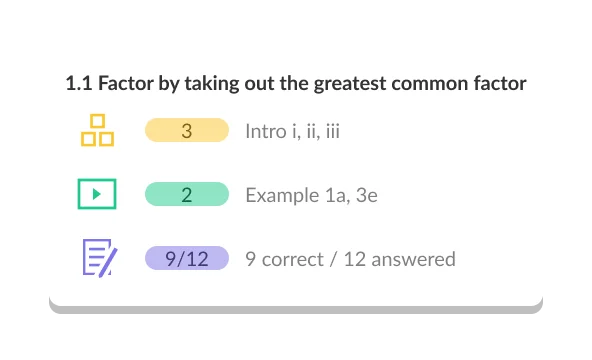
Practice Until Perfect
Keep practicing until every step clicks.
Try It Now
Test your knowledge
Our approach aligns with the evidence
Exam Scores
Better Recall
Less Anxiety
College Algebra Topics
1. Surface Area and Volume
2. Rational Numbers
3. Powers and Exponents
4. Number System and Radicals
5. Radicals
6. Exponents
7. Operations of Polynomials
8. Factorising Polynomial Expressions
9. Introduction to Relations and Functions
10. Linear Functions
11. Absolute Value Functions
12. Linear Equations
13. Solving Linear Systems
14. Linear Inequalities
15. Inequalities in Two Variables
16. Factorising Quadratic Equations
17. Quadratic Functions
18. Quadratic Equations and Inequalities
19. Graphing Rational Functions
20. Functions
21. Direct and Inverse Variation
22. Piecewise Functions
23. Transformations of Functions
24. Exponential Functions
25. Logarithmic Functions
26. Applications of Exponential and Logarithmic Functions
27. Sequences and Series
28 Chapters · 215 Topics · 1321 Videos
Discover Our Learning Areas
Explore key subjects and start learning with interactive content.
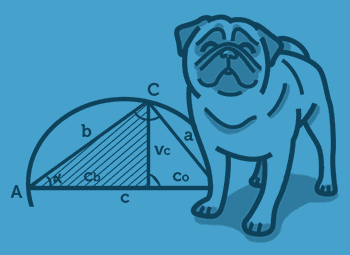


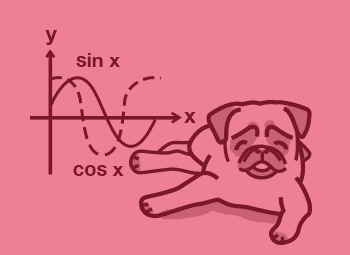
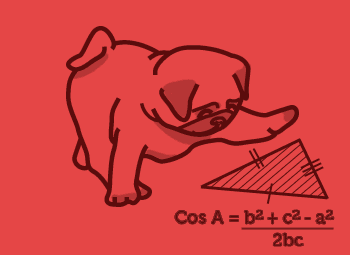

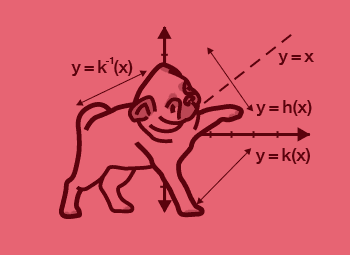







What Is College Algebra?
College Algebra is an advanced mathematics course that bridges secondary school algebra and university-level mathematics. It develops rigorous fluency with functions, polynomial and rational expressions, exponential and logarithmic relationships, systems of equations, and introductory matrix methods. For Grade 12 students in Singapore, College Algebra topics underpin the GCE A-Level Mathematics (H1/H2) syllabus and provide the analytical foundation for further study in calculus, statistics, data science, and engineering.
The course is both a capstone of secondary mathematics and a launchpad for tertiary study. Every concept you encounter — from function transformations to logarithmic equations — reappears in more advanced forms at university. Getting a solid, methodical understanding now pays dividends for years.
Is College Algebra Hard?
College Algebra is challenging but entirely learnable with the right approach. Most students find the algebraic manipulation straightforward in early chapters, but struggle when concepts compound. Rational functions and their asymptotic behaviour, exponential and logarithmic equation solving, and 3×3 systems of equations are the three areas that consistently cause the most difficulty among GCE candidates in Singapore.
The root cause is almost always the same: students learn to recognise a problem type without fully understanding the underlying method. When the exam presents a variation, they get stuck. StudyPug's certified-teacher videos address this directly — each lesson teaches the method step by step so you can adapt it to any variation you meet on the GCE paper.
What Topics Does College Algebra Cover?
A comprehensive College Algebra course covers the following core areas:
- Functions and Graphs — domain, range, transformations, inverse functions, and piecewise functions
- Polynomial and Rational Functions — factoring, long division, remainder theorem, asymptotes, and graphing
- Systems of Equations — substitution, elimination, Gaussian elimination, and matrix methods
- Exponential and Logarithmic Functions — properties of logarithms, change of base, exponential growth and decay
- Conic Sections — circles, ellipses, parabolas, and hyperbolas
- Sequences and Series — arithmetic and geometric sequences, sigma notation, and the binomial theorem
- Introductory Matrices — operations, determinants, and matrix equations
All of these topics appear within the GCE A-Level and O-Level Additional Mathematics syllabuses, and StudyPug's content is structured to match the Singapore curriculum coverage precisely.
What Is the Difference Between College Algebra and Pre-Calculus?
College Algebra concentrates on algebraic structures and symbolic reasoning. You learn to work fluently with functions, solve complex equations, and model real-world situations algebraically. Pre-Calculus then takes that algebraic fluency and adds trigonometry, vectors, and an introduction to limits — the formal tools needed to begin calculus. In Singapore's educational context, College Algebra competency is the essential prerequisite for H2 Mathematics, just as Pre-Calculus feeds into calculus-based university courses abroad.
If you can solve polynomial equations, manipulate logarithms confidently, and analyse function behaviour, you have the College Algebra foundation that Pre-Calculus and H2 Mathematics both require.
How Is College Algebra Tested on the GCE Exam?
In Singapore, GCE O-Level Additional Mathematics and GCE A-Level Mathematics (H1/H2) both embed College Algebra topics extensively. The O-Level exam tests polynomial functions, logarithms, and the binomial theorem. The A-Level H2 paper adds functions, complex numbers, and matrices. Exam questions require full written working — method marks are awarded even when an answer is incorrect, so understanding the process is as important as arriving at the right number.
Practice with exam-style questions that mirror GCE format and marking schemes is the most direct route to exam readiness. StudyPug's practice bank is built on GCE exam-style questions so every session prepares you for the real paper.
What Comes Before and After College Algebra?
Students should be comfortable with O-Level Elementary Mathematics before tackling College Algebra — specifically linear and quadratic equations, indices and surds, coordinate geometry, and basic set notation. O-Level Additional Mathematics is the direct prerequisite for GCE A-Level work.
After College Algebra, the natural progression is H2 Mathematics (calculus, statistics, and discrete mathematics), university-level linear algebra, and introductory real analysis. College Algebra is not an endpoint — it is the foundation on which all quantitative university study is built.
Why StudyPug for College Algebra Help in Singapore?
StudyPug is designed specifically for students who need to understand the method, not just see the answer. Here is what sets the platform apart for College Algebra practice and revision in Singapore.
Diagnostic Assessment — Study Smarter, Not Harder
Before you watch a single video, StudyPug's diagnostic assessment identifies exactly which College Algebra topics need attention. Instead of working through content you already understand, you focus immediately on the gaps that will cost you marks on the GCE exam. Students consistently report that this alone saves hours of unfocused revision every week.
Certified-Teacher Videos That Teach the Method
Every College Algebra video on StudyPug is created by a certified teacher — not generated by AI. Each lesson breaks a concept down into clear, logical steps and explains the reasoning behind each one. When you understand why a method works, you can apply it to any variation the GCE examiners might put in front of you. That transfer of understanding is the difference between memorising examples and genuinely knowing College Algebra.
Adaptive Practice That Grows With You
Once you have watched a lesson, adaptive practice challenges you at exactly the right difficulty level. As your accuracy improves, the difficulty increases to keep pushing your understanding. This ensures you are always working at the productive edge of your ability — not bored by easy questions or overwhelmed by problems you are not yet ready for.
GCE-Aligned Content for Singapore Students
StudyPug's College Algebra content is aligned to the Singapore GCE syllabus. Every topic you are expected to know for your O-Level Additional Mathematics or A-Level Mathematics paper is covered, and the practice questions are based on real GCE exam-style problems. There is no need to filter out irrelevant material or wonder whether a topic will appear on your paper.
Free Practice and 30-Day Money-Back Guarantee
You can access free College Algebra practice problems on StudyPug without a subscription — a genuine, no-obligation starting point. If you choose a full subscription and are not satisfied within the first 30 days, StudyPug's money-back guarantee means you can request a full refund. That is the only guarantee StudyPug makes — and it means you can start learning with complete confidence.
What You Learn in College Algebra on StudyPug
StudyPug's College Algebra content covers every major topic in the GCE Singapore curriculum. Below is an overview of the primary learning areas available on the platform.
Functions and Their Behaviour
You will build a thorough understanding of function notation, domain and range, transformations (shifts, stretches, reflections), composite functions, and inverse functions. These concepts underpin every subsequent College Algebra topic and appear on both O-Level and A-Level GCE papers.
Polynomial and Rational Expressions
Lessons cover factoring strategies, polynomial long division, the factor and remainder theorems, partial fractions, and graphing rational functions including asymptote analysis. The step-by-step video format is particularly effective for long-division and partial-fraction problems, where a single misstep early in the working cascades into a wrong answer.
Exponential and Logarithmic Functions
You will learn the laws of logarithms, the change-of-base formula, and systematic strategies for solving exponential and logarithmic equations. Modelling applications — population growth, radioactive decay, compound interest — are covered in the context of GCE exam-style problem scenarios.
Systems of Equations and Matrices
From two-variable linear systems through 3×3 elimination and matrix methods (Gaussian elimination, inverse matrices), StudyPug's lessons build the technique progressively so each new method feels like a natural extension of what you already know.
Sequences, Series, and the Binomial Theorem
Arithmetic and geometric sequences, sigma notation, convergence of geometric series, and the binomial theorem — with full worked examples in the GCE exam format — are all included. These topics appear reliably on GCE papers and reward students who have practised the method systematically.
Note: No external curriculum topic URLs are linked in this section — no validated internal links exist in the MAP for this page. All College Algebra topics above are accessible directly via the StudyPug platform.
How to Use StudyPug for College Algebra
Getting the most from StudyPug takes only a few minutes to set up, and the platform is designed to fit around your existing school schedule.
Step 1 — Take the Diagnostic Assessment
Start with the diagnostic. It takes less than fifteen minutes and produces a personalised list of College Algebra topics ranked by how urgently they need attention. This is your study roadmap — follow it rather than working through topics in textbook order, and you will use your revision time far more efficiently.
Step 2 — Watch the Concept Video
For each topic the diagnostic flags, watch the corresponding certified-teacher video. Pause, rewind, and rewatch any step that needs clarification — you have unlimited access. Focus on understanding the method, not just copying the worked example, because the GCE exam will present the concept in a different context.
Step 3 — Practise with Adaptive Questions
After the video, move directly into adaptive practice. The platform serves questions at your current level and adjusts as you answer. If you miss a question, a worked solution explains exactly where the method diverged from the correct approach. Repeat until you are consistently accurate before moving to the next topic.
Step 4 — Test Yourself with GCE-Style Practice Tests
Once you have covered several topics, sit a practice test under timed conditions. StudyPug's practice tests are based on real GCE exam-style questions, so the experience closely mirrors your actual paper. Review every question — including the ones you got right — to solidify your understanding of the method rather than just the answer.
Step 5 — Use Photo Search for Homework Problems
If you encounter a College Algebra problem in your homework or textbook that you cannot make progress on, use StudyPug's Photo Search feature. Photograph the problem and Photo Search finds matching lessons on the platform so you can watch the method being worked through before attempting the question yourself.
StudyPug is available on desktop and mobile, so you can practise College Algebra at home, on the bus, or during a free period at school. The 30-day money-back guarantee means you can begin today without any financial risk. Start your diagnostic now and find out exactly where to focus your College Algebra revision.
College Algebra FAQ
Unsure how StudyPug works? Need help with setting up? Check our frequently asked questions or contact us for help.
What do you learn in College Algebra, and what topics does it cover?
College Algebra builds on secondary mathematics to develop fluency with functions, polynomial and rational expressions, systems of equations, exponential and logarithmic functions, and conic sections. You also work through sequences, series, and introductory matrix algebra. The course develops the analytical reasoning and algebraic manipulation skills essential for further study in calculus, statistics, and engineering — forming a thorough foundation for GCE A-Level Mathematics and beyond.
What is the difference between College Algebra and Pre-Calculus?
College Algebra focuses on algebraic structures — functions, polynomials, rational expressions, and systems of equations — and develops fluency with symbolic manipulation. Pre-Calculus extends that foundation by adding trigonometry and a deeper treatment of limits and continuity to prepare students for calculus. Think of College Algebra as the language of mathematics, and Pre-Calculus as the bridge that connects that language to the study of change and motion.
Is College Algebra hard, and where do students struggle most?
College Algebra is manageable with consistent practice, but many students find specific areas genuinely challenging. Rational functions and their asymptotes trip up students who rush the algebra. Exponential and logarithmic equations require careful property application. Systems of equations — especially 3×3 systems solved by elimination or matrices — demand methodical working. The good news is that every difficulty has a clear technique; once you understand the method, not just the answer, the topic becomes approachable.
What should I take before College Algebra, and what comes after it?
A solid grasp of secondary algebra — solving linear and quadratic equations, working with indices, and basic coordinate geometry — is the recommended foundation before College Algebra. After completing the course, students are well placed to study Pre-Calculus, Calculus, Statistics, or Discrete Mathematics. In the Singapore context, College Algebra competency supports progression to H2 Mathematics and Higher Mathematics at the A-Level stage.
Is College Algebra on the GCE exam, and how is it tested?
In Singapore, College Algebra topics are embedded within the GCE O-Level Additional Mathematics and GCE A-Level Mathematics (H1/H2) syllabuses rather than appearing as a standalone paper. Functions, polynomials, equations, and graphs all feature prominently. Exam questions test both procedural skill and conceptual understanding — you must show full working. StudyPug's practice questions are based on real GCE exam-style problems, helping you familiarise yourself with the question format and marking expectations.
What is one of the hardest concepts in College Algebra, and how do you tackle it?
Logarithms and exponential functions consistently challenge students because they require switching fluently between exponential and logarithmic forms, applying the change-of-base rule, and solving equations that mix both. The most effective approach is to build the concept from the definition — understanding that a logarithm is simply an exponent — before practising the properties systematically. StudyPug's certified-teacher videos walk through each property step by step, showing exactly how to set up and solve every equation type so you can replicate the method independently.





Written by the StudyPug Team
Last updated June 5, 2026
3 M+
students
★★★★★
4.8 average
K–12
all grades