AP Calculus AB Help — Video Lessons & Practice
Get clear, step-by-step explanations for every AP Calculus AB topic and build exam-ready confidence.
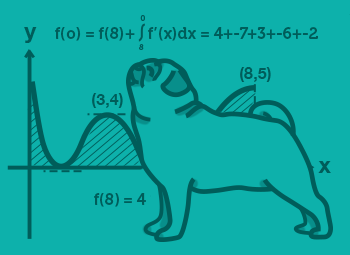
Step-by-Step Video Lessons
Watch once and solve the next one alone.
Unlimited Practice
Practice until it clicks not until done.
Real Exam Practice
Free practice with real AP exam questions.
Try It Now
Test your knowledge
Our approach aligns with the evidence
Exam Scores
Better Recall
Less Anxiety
AP Calculus AB Topics
1. Limits & Continuity
2. Derivatives
3. Derivative Applications
4. Integrals
5. Integration techniques
6. Integral Applications
7 Chapters · 44 Topics · 313 Videos
Discover Our Learning Areas
Explore key subjects and start learning with interactive content.
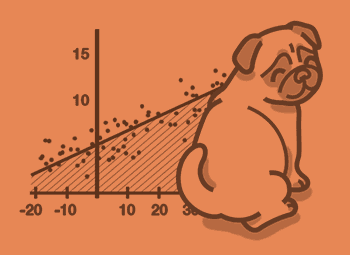
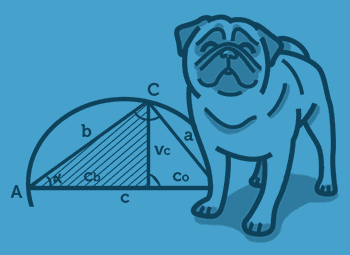

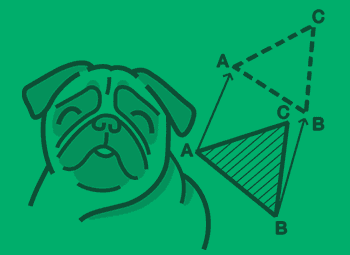
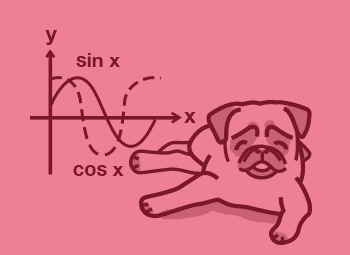



What is AP Calculus AB?
AP Calculus AB is a College Board Advanced Placement course that introduces students to single-variable calculus at the university level. It covers three major pillars — limits and continuity, differential calculus, and integral calculus — and concludes with the Fundamental Theorem of Calculus that ties them together. Successful completion earns students a score on the AP exam (1–5), and a score of 3 or higher is widely accepted by universities worldwide for credit or advanced standing in mathematics.
In Singapore, students pursuing US university pathways or international school programmes often take AP Calculus AB in Grade 12 as a rigorous, globally recognised qualification alongside or instead of A-Level H2 Mathematics.
What topics are covered in AP Calculus AB?
The AP Calculus AB syllabus is structured around five core units:
Limits and Continuity — You learn how functions behave as inputs approach a value, how to evaluate limits algebraically and graphically, and what it means for a function to be continuous. Limits are the language of calculus and everything else builds on them.
Differentiation — This unit covers the definition of the derivative, basic differentiation rules (power, product, quotient), the chain rule, implicit differentiation, and higher-order derivatives. Students also study related rates and linearisation.
Applications of Derivatives — You apply derivatives to find critical points, intervals of increase and decrease, concavity, and to sketch curves. Optimisation problems — finding maxima and minima in real-world contexts — are a major AP exam focus.
Integration — Starting from Riemann sums and the definite integral as area under a curve, you progress to antiderivatives, the Fundamental Theorem of Calculus, and integration by substitution.
Differential Equations and Applications of Integration — You solve basic separable differential equations, interpret slope fields, and apply integration to find areas between curves and average values of functions.
Is AP Calculus AB hard?
AP Calculus AB is widely regarded as one of the more challenging AP courses, but not because the content is obscure — it is because calculus requires a genuine shift in mathematical thinking. Where algebra asks "what is the value?", calculus asks "how fast is it changing?" and "what is the accumulated total?" That conceptual leap trips up students who try to memorise steps without understanding the reasoning behind them.
The topics students find hardest tend to be related rates (translating a word problem into a differentiable relationship), implicit differentiation, and setting up definite integrals correctly. Students who do best are those who work through plenty of practice problems, watch solutions explained step by step, and focus on understanding the method — not just the final answer.
How is AP Calculus AB graded and tested?
The AP Calculus AB exam is administered by the College Board each May. The exam runs 3 hours 15 minutes and has two sections:
Section I — Multiple Choice (105 minutes, 45 questions): Part A (30 questions, no calculator) and Part B (15 questions, graphing calculator permitted). This section tests conceptual understanding and procedural fluency across all five units.
Section II — Free Response (90 minutes, 6 questions): Part A (2 questions, calculator permitted) and Part B (4 questions, no calculator). Free-response questions require full written solutions; partial credit is awarded for correct reasoning even if the final answer is wrong.
Scores are on a 1–5 scale. Most universities accept a 3 as qualifying for credit; selective institutions typically require a 4 or 5. Because the exam tests methods and reasoning — not just numerical answers — exam prep that focuses on step-by-step problem solving pays off more than rote memorisation.
What makes AP Calculus AB different from pre-calculus and from AP Calculus BC?
Pre-Calculus builds the algebraic and trigonometric tools you need: functions, transformations, trigonometric identities, and an introduction to limits. AP Calculus AB is where those tools are used to study change and accumulation. If you are comfortable with Pre-Calculus, you have the foundations for AB.
AP Calculus BC extends AB significantly, adding parametric and polar curves, sequences and series (including Taylor and Maclaurin series), and more advanced integration techniques such as integration by parts and partial fractions. AP Calculus AB is the natural stepping stone to BC, and many students take AB in Grade 12 while planning to continue into university-level Calculus 2.
Why StudyPug for AP Calculus AB?
StudyPug is built around the way students actually learn calculus: by seeing a problem worked out clearly, understanding why each step follows from the last, and then practising until the method feels natural.
Start with a diagnostic, not guesswork. Before you watch a single video, StudyPug's diagnostic assessment identifies exactly which AP Calculus AB topics need attention. Instead of reviewing everything from scratch, you focus where it matters most. That is what "study smarter, not harder" looks like in practice.
Certified-teacher videos that teach the method. Every AP Calculus AB lesson on StudyPug is made by certified teachers — not AI-generated content. The videos are designed to teach you how to solve the problem, not just show you the answer. That distinction matters enormously when the AP exam puts a novel related-rates scenario in front of you: you need the method, not a memorised result.
Adaptive practice that keeps pace with you. After watching a lesson, you practise. StudyPug's adaptive practice adjusts problem difficulty based on your performance — harder when you are getting it right, supporting you when you are not. Over time, your weak spots become strengths.
AP exam prep included. Practice questions on StudyPug are based on real AP Calculus AB exam-style problems. The curriculum coverage maps directly to what the College Board tests, so you know exactly where you stand as the exam date approaches.
Free practice, no risk. Free practice content is available without a subscription so you can try problems before committing. When you do subscribe, a 30-day money-back guarantee means there is no financial risk. There is no free trial of the full subscription — but the money-back guarantee is the real safety net.
What you learn: AP Calculus AB curriculum coverage
StudyPug's AP Calculus AB content covers every major topic in the College Board syllabus:
- Limits: evaluating limits graphically, numerically, and algebraically; squeeze theorem; continuity and types of discontinuity; limits at infinity
- Derivatives: definition via the limit; power, product, quotient, and chain rules; implicit differentiation; derivatives of trigonometric, exponential, and logarithmic functions
- Applications of derivatives: related rates; mean value theorem; curve sketching (critical points, concavity, inflection points); optimisation problems; L'Hôpital's rule
- Integrals: Riemann sums; the Fundamental Theorem of Calculus (Parts 1 and 2); antiderivatives; definite and indefinite integrals; integration by substitution
- Differential equations: slope fields; separable differential equations; exponential growth and decay models
- Applications of integration: area between curves; average value of a function; accumulated change
Because no validated internal topic URLs are available for this page in the current sitemap, links to individual topic pages are omitted here — use the Browse Topics button above to navigate to specific lessons directly on StudyPug.
Using StudyPug for AP Calculus AB
The most effective StudyPug workflow for AP Calculus AB has three stages.
Stage 1 — Diagnose. Take the diagnostic assessment when you first arrive. It takes a few minutes and maps your current knowledge against the AP Calculus AB syllabus. The result is a personalised study path that tells you exactly where to start — whether that is brushing up on limit laws or diving straight into integration techniques.
Stage 2 — Learn with video lessons. Work through your recommended lessons in order. Each video is concise, focused on one concept, and taught by a certified teacher. Pause, rewind, and rewatch as many times as you need — something a classroom does not always allow. Pay attention to how each step is explained, not just what the answer is.
Stage 3 — Practise adaptively. After each lesson, do the practice problems. Adaptive practice means the system notices where you are still making errors and keeps targeting those areas. As your AP exam date approaches, shift to full practice tests to build timing and exam stamina. Because StudyPug's practice questions are based on the style of real AP exam questions, the transition from practice to the actual test is smooth.
StudyPug is accessible on desktop and mobile, so you can fit a lesson into a commute, a lunch break, or a late-night study session before a test. The 30-day money-back guarantee means you can start your subscription, work through your first units, and verify that it is the right fit — completely risk-free.
AP Calculus AB FAQ
Unsure how StudyPug works? Need help with setting up? Check our frequently asked questions or contact us for help.
What do you learn in AP Calculus AB, and what topics does it cover?
AP Calculus AB covers the foundations of single-variable calculus. You study limits and continuity, differentiation (including the chain rule, implicit differentiation, and related rates), applications of derivatives (optimisation, curve sketching), integration (Riemann sums, the Fundamental Theorem of Calculus, substitution), and differential equations. The course is equivalent to a first-semester university calculus course and prepares you for the College Board AP exam.
What is the difference between AP Calculus AB and AP Calculus BC?
AP Calculus AB covers roughly one semester of university calculus: limits, derivatives, and basic integrals. AP Calculus BC covers all of AB plus additional topics including parametric and polar equations, sequences and series, and more advanced integration techniques — equivalent to two university semesters. Students who want a strong foundation often take AB first; ambitious students with a solid AB-level grasp may move straight to BC.
Is AP Calculus AB hard, and where do students struggle most?
AP Calculus AB is considered one of the more demanding AP courses because it introduces genuinely new mathematical thinking, not just harder arithmetic. Students most often struggle with the chain rule, related rates word problems, understanding the Fundamental Theorem of Calculus, and setting up definite integrals correctly. Consistent practice with worked examples — seeing the method step by step — is the fastest way through these sticking points.
What should I take before AP Calculus AB, and what comes after it?
You should be comfortable with Pre-Calculus, including functions, trigonometry, and algebra, before starting AP Calculus AB. Many students also take Pre-Calc in Grade 11 then move to AB in Grade 12. After AP Calculus AB, the natural next step is AP Calculus BC or first-year university calculus (Calculus 2), where you will build on integration and series topics.
Is AP Calculus AB on the AP exam, and how is it tested?
Yes. The College Board AP Calculus AB exam is a 3-hour 15-minute test split into two sections. Section I has 45 multiple-choice questions (30 without a calculator, 15 with). Section II has 6 free-response questions (2 with a calculator, 4 without). Scores run from 1–5; a score of 3 or above is generally accepted for university credit. The exam tests limits, derivatives, integrals, and the Fundamental Theorem of Calculus.
What is one of the hardest concepts in AP Calculus AB, and how do you tackle it?
Related rates is consistently rated the hardest AP Calculus AB topic. You have to translate a word problem into an equation relating two changing quantities, differentiate implicitly with respect to time, then substitute known values. The key is a three-step approach: draw and label the diagram, write the relationship equation before you differentiate, and only substitute numbers after you have the derivative. Watching worked examples that show each step — not just the answer — builds the pattern recognition you need.





Written by the StudyPug Team
Last updated June 5, 2026
3 M+
students
★★★★★
4.8 average
K–12
all grades