Statistics Help: Video Lessons & Practice
Work through every topic with clear solutions. Start your free practice test now!

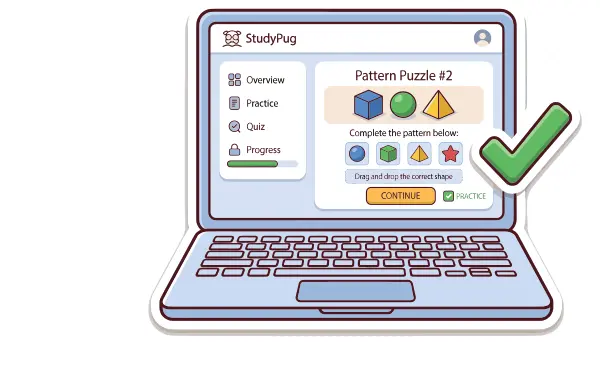
Value vs. Private Tutor
Get expert statistics help without tutoring costs.

Multi-Subject
Switch subjects anytime with Singapore curriculum.
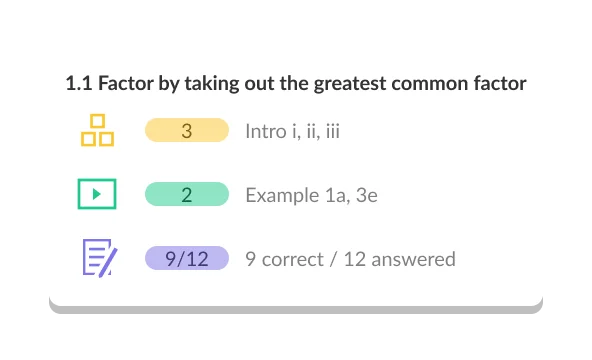
Practice Until Perfect
Practice until it truly clicks.
Try It Now
Test your knowledge
Our approach aligns with the evidence
Exam Scores
Better Recall
Less Anxiety
Statistics Topics
1. Basic Concepts
2. Data Representation
3. Data Interpretation
4. Discrete Probabilities
5. Normal Distribution and Z-score
6. Confidence Intervals
7. Combinatorics
8. Probability
9. Set Theory
10. Hypothesis Testing
10 Chapters · 62 Topics · 516 Videos
Discover Our Learning Areas
Explore key subjects and start learning with interactive content.
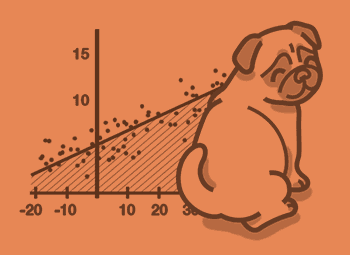






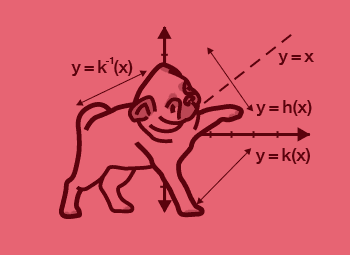









What Is University Statistics?
University Statistics is the study of collecting, organising, analysing, interpreting, and presenting data. It gives you the mathematical tools to make sense of uncertainty — turning raw numbers into decisions grounded in evidence. At Singapore universities, Statistics is a core module for students in Mathematics, Data Science, Business, Economics, Life Sciences, Psychology, and Engineering. If you handle data in any form, Statistics is the foundation.
The course bridges pure mathematics and real-world application. You learn why a sample can represent a population, how to test a claim using data, and how to model relationships between variables. These skills carry directly into postgraduate study, research, and professional roles across every quantitative field.
Is University Statistics Hard?
Statistics is challenging because it asks you to think in two ways at once: mathematically and conceptually. You need to apply formulas correctly, but also understand what the answer means in context. Most students find the early topics — mean, standard deviation, basic probability — manageable. Difficulty climbs sharply when hypothesis testing and regression appear.
The most common stumbling blocks are: understanding what a p-value actually tells you (not the probability the null hypothesis is true), distinguishing a Type I from a Type II error without getting confused under exam pressure, and setting up a regression model correctly. The students who do well practise consistently with worked problems — not just reviewing notes — and revisit tricky concepts through video explanations until the logic sticks.
StudyPug's Statistics help is built around this reality. Step-by-step video lessons from certified teachers walk through every method clearly, and the adaptive practice system keeps drilling the exact concepts where you need it most.
What Is the Difference Between Descriptive and Inferential Statistics?
Descriptive Statistics summarises what you observe in a dataset — mean, median, variance, standard deviation, and graphical displays like histograms and box plots. It tells you what your data looks like, nothing more.
Inferential Statistics goes further: it uses a sample to draw conclusions about a larger population. This is where hypothesis tests, confidence intervals, and regression analysis live. The distinction matters because almost every interesting real-world Statistics question is inferential — you rarely have the full population; you have a sample, and you need to reason carefully about what it means.
University courses in Singapore move quickly from descriptive into inferential territory. Building a rock-solid foundation in distributions and probability before tackling inference makes a significant difference to how much the later material makes sense.
How Do You Approach Hypothesis Testing?
Hypothesis testing is the technique most students identify as the hardest part of university Statistics — and the part that carries the most exam marks. The key is to learn the framework before the formulas. Every hypothesis test follows the same structure: state the null and alternative hypotheses, select the appropriate test (z-test, t-test, chi-square, F-test), calculate the test statistic, compare it to the critical value or find the p-value, and then state your conclusion in plain language.
Where students go wrong is jumping to the formula without understanding which test applies and why. Practise identifying the test from the problem description — the type of data, whether you're comparing means or proportions, the sample size — and the rest becomes a calculation exercise. StudyPug's Statistics practice problems give you many varied contexts so that pattern recognition becomes second nature before your final examination.
What Topics Come After Introductory Statistics?
After introductory Statistics, students at Singapore universities typically progress to Regression Analysis (simple and multiple), Applied Statistics, and — depending on your programme — Econometrics, Biostatistics, or Multivariate Analysis. Postgraduate programmes may introduce Bayesian Statistics, Time Series Analysis, or Stochastic Processes.
The transition to these advanced courses is much smoother when your foundations are solid. If you feel uncertain about confidence intervals or linear regression from your introductory course, that uncertainty compounds in follow-on modules. Using Statistics practice tests and worked video solutions to consolidate your Year 1 or Year 2 content pays dividends throughout your degree.
Why StudyPug for Statistics Help?
StudyPug is built for university students who want to understand Statistics deeply — not just pass the next quiz. Here is what makes it different.
Certified-teacher concept videos. Every Statistics lesson is recorded by an experienced, certified instructor who teaches the method step-by-step. The goal is always understanding the reasoning — why this test, why this formula, what this answer means — so you are prepared for the next course, not just the current exam. These are not AI-generated explainers; they are taught lessons.
Diagnostic Assessment. Before you spend hours reviewing material you already know, StudyPug's diagnostic identifies exactly which Statistics topics are your weakest. You get a targeted study path from the start — efficient preparation for midterms and final examinations.
Adaptive Practice. As you work through Statistics practice problems, the difficulty adjusts to your current performance level. You are always working at the right challenge — building skills without getting stuck or bored.
Full course depth in one subscription. One StudyPug subscription covers Statistics alongside Calculus I–III, Linear Algebra, Differential Equations, and every other course in the library. No extra fees per topic. Study across your full semester load in one place.
Exam prep built in. Mock exams and practice tests aligned to midterm and final examination formats help you arrive on exam day having already worked under realistic conditions. Watch video solutions as many times as you need until a technique clicks.
30-day money-back guarantee. This is the only guarantee StudyPug makes — and it is a real one. If you subscribe and decide StudyPug is not right for you within 30 days, you get a full refund, no questions asked.
What You Learn: Statistics Course Coverage
StudyPug's Statistics content covers the full university syllabus. Key topic areas include:
- Descriptive Statistics: measures of central tendency and spread, frequency distributions, graphical summaries.
- Probability: rules of probability, conditional probability, Bayes' theorem, independence.
- Probability Distributions: discrete distributions (binomial, Poisson, geometric), continuous distributions (normal, t, chi-square, F), and the Central Limit Theorem.
- Sampling and Estimation: sampling methods, point estimates, confidence intervals for means and proportions.
- Hypothesis Testing: one-sample and two-sample tests, z-tests, t-tests, tests for proportions, chi-square tests of independence and goodness-of-fit, ANOVA.
- Regression and Correlation: simple linear regression, least squares estimation, coefficient of determination, multiple regression introduction.
- Non-parametric Methods: rank-based tests for courses that require them.
No validated internal topic URLs are available for this page in the current site map. Browse topics directly from the Statistics course page to find the specific lesson you need.
Using StudyPug for Your Statistics Course
The most effective way to use StudyPug for Statistics is to start with the Diagnostic Assessment. It takes a short time and gives you a personalised study map — you know immediately which topics to tackle first instead of reviewing everything from scratch.
From there, work through the certified-teacher video lessons for your priority topics. Watch each lesson actively: pause, replay the step you did not follow, and try the practice problem before looking at the solution. Understanding the method on a fresh problem — not just recognising it — is what prepares you for exam questions you have never seen before.
Use the Adaptive Practice regularly between study sessions. Short, frequent practice sessions on Statistics problems are more effective than one long session the night before an exam. The system adjusts difficulty automatically, so you spend your time at the level that builds your skill fastest.
In the final weeks before your midterm or final examination, shift to mock exams and past-paper practice. Work through Statistics practice tests under timed conditions, then use the video solutions to understand every question you got wrong. This combination — adaptive daily practice plus timed mock exams — is the most reliable preparation for university Statistics assessments at Singapore institutions.
Free daily practice content is available without a subscription. When you are ready to access full video lessons, mock exams, and the complete adaptive system, a paid plan gives you everything — Statistics and every other course — for one price, with a 30-day money-back guarantee.
Statistics FAQ
Unsure how StudyPug works? Need help with setting up? Check our frequently asked questions or contact us for help.
What do you learn in university Statistics, and what topics does it cover?
University Statistics covers descriptive statistics, probability theory, probability distributions (normal, binomial, Poisson), sampling methods, confidence intervals, hypothesis testing, chi-square tests, ANOVA, linear regression, and correlation. Many courses also touch on non-parametric methods and introduce statistical software. The goal is to give you tools to collect, analyse, and draw conclusions from data — skills applied across business, science, social science, and engineering fields.
What is the difference between Statistics and Probability Theory?
Statistics focuses on collecting, summarising, and interpreting real data to draw inferences about populations. Probability Theory is the mathematical foundation that models random events and uncertainty. In practice, Statistics uses probability to quantify how confident you can be in a conclusion. You study both together at university — probability first gives you the theoretical grounding, and Statistics applies it to real-world datasets and decision-making.
What are the prerequisites for university Statistics, and what course comes after it?
Most university Statistics courses require A-Level Mathematics or an equivalent pre-calculus/calculus background. Some programmes require introductory calculus (integration and differentiation). After introductory Statistics, students typically progress to Regression Analysis, Applied Statistics, Econometrics, Biostatistics, or Multivariate Analysis, depending on their major. A strong grasp of the fundamentals — distributions, hypothesis testing — makes every follow-on course significantly easier to handle.
Is university Statistics hard, and where do students struggle most?
Statistics is consistently ranked among the more challenging university modules because it combines mathematical rigour with conceptual reasoning. Students struggle most with hypothesis testing (choosing the right test and interpreting p-values), understanding the difference between confidence intervals and probability statements, and applying regression correctly. The abstract nature of probability distributions also trips many up early on. Consistent practice on worked examples — not just reading theory — is the most reliable way to build confidence.
How is university Statistics assessed — midterms, finals, and assignments?
At Singapore universities, Statistics is typically assessed through a combination of continuous assessment (CA) and a final examination. CA often includes assignments, lab reports (using software like R or SPSS), and a midterm test. The final examination, usually accounting for 50–60% of your grade, covers the full syllabus. Some modules include a group data-analysis project. Understanding how marks are distributed helps you prioritise: exam practice on hypothesis testing and regression is usually the highest-yield study focus.
What is one of the hardest topics in Statistics, and how do you approach it?
Hypothesis testing is the topic most students find hardest — and the most important to get right. The challenge is understanding the logic: you assume the null hypothesis is true, then calculate how unlikely your data would be under that assumption. Approach it by learning the framework first (state hypotheses → choose test → calculate test statistic → compare to critical value or p-value → conclude), then practise with many different contexts — means, proportions, variances — until the structure feels automatic. Step-by-step worked examples are essential here.





Written by the StudyPug Team
Last updated June 5, 2026
3 M+
students
★★★★★
4.8 average
K–12
all grades