H1 Maths Help — Video Lessons & Practice
Get clear explanations for any H1 Maths problem and build GCE A-Level exam-ready confidence.
Step-by-Step Video Lessons
Learn the method to solve it yourself.
Unlimited Practice
Keep practicing until it truly sticks.
Test Prep Included
Practice real exam questions for free.
Try It Now
Test your knowledge
Our approach aligns with the evidence
Exam Scores
Better Recall
Less Anxiety
Higher 1 Maths Topics
1. Solving Linear Equations
2. Linear Inequalities
3. Factorising Quadratic Equations
4. Quadratic Functions
5. Quadratic Equations and Inequalities
6. Introduction to Relations and Functions
7. Linear Functions
8. Linear equations (Advanced)
9. Solving Simultaneous Equations
10. Imaginary and Complex Numbers
11. Operations of polynomials
12. Radicals
13. Radical Functions
14. Algebraic Fractions
15. Reciprocal Functions
16. Rational Functions
17. Operations of Functions
18. Transformations of Functions
19. Exponential Functions
20. Applications of Exponential Functions
21. Logarithmic Functions
23. Introduction to Trigonometry
24. Trigonometry
25. Bearings
26. Graphing Trigonometric Functions
27. Trigonometric Identities
29. Derivatives
30. Probability
32. Introduction to Matrices
33. Determinants and Inverses of Matrices
33 Chapters · 234 Topics · 1514 Videos

Ready to practice Higher 1 Maths?
Try practice questions on every Higher 1 Maths topic — with instant feedback and step-by-step video solutions when you get stuck.
Discover Our Learning Areas
Explore key subjects and start learning with interactive content.






What is H1 Maths?
H1 Maths is a one-unit GCE A-Level subject offered by the Singapore-Cambridge examination system. It provides Junior College students with a focused mathematical toolkit covering functions and graphs, calculus, and probability and statistics. Unlike H2 Maths, which is broader and more intensive, H1 Maths is designed for students who need rigorous quantitative skills to support degree programmes in economics, the social sciences, life sciences, or business — without the full depth of a mathematics major pathway.
The course is examined by the Singapore Examinations and Assessment Board (SEAB) through a single three-hour paper sat at the end of JC2. It contributes one academic unit toward the GCE A-Level certificate and is taken alongside H2 subjects in a student's subject combination.
What topics are covered in H1 Maths?
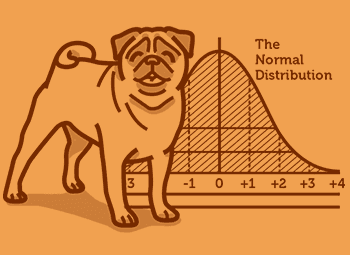
The H1 Maths syllabus (SEAB 8865) is structured around three content areas. Functions and Graphs introduces polynomial, rational, exponential, and logarithmic functions, along with graph transformations and curve sketching. Calculus covers differentiation — including the chain, product, and quotient rules — and integration, with applications to finding areas under curves and solving real-world rate-of-change problems. Probability and Statistics is the largest strand: it includes permutations and combinations, probability rules, binomial and normal distributions, sampling concepts, and hypothesis testing using the z-test.
Mastery of all three strands is essential, as the A-Level paper draws questions from each area and expects students to apply concepts in unfamiliar contexts.
Is H1 Maths hard compared to O-Level Maths?
For most students, H1 Maths represents a genuine step up in difficulty and abstraction from O-Level. Students from an Additional Mathematics background will find the calculus strand more familiar, but the depth of application required — particularly in integration and statistics — goes considerably further. Students who took only E-Maths at O-Level face a steeper initial curve.
The most commonly reported struggles are integration (especially choosing the right technique and applying it to area problems), the normal distribution (understanding standardisation and reading z-tables accurately), and hypothesis testing (where marks depend on both correct calculation and precise interpretation in context). Consistent practice with exam-style questions and a clear, structured method for each topic type are the most effective ways to build the fluency that A-Level marking schemes reward.
How is H1 Maths graded and what exam should I prepare for?
H1 Maths is graded on the standard Singapore GCE A-Level scale: A, B, C, D, E, S (sub-pass), and U (ungraded). The single paper is marked out of 100 and contributes one unit to the overall A-Level score used for university admissions (the rank point system used by NUS, NTU, SMU, and SUTD).
Exam preparation should be based on official SEAB past papers, which are the most accurate representation of the question style, difficulty, and marking approach. Practice with exam-style questions — especially those requiring written method steps and contextual conclusions in statistics — is critical, because marks are awarded for working as well as final answers. StudyPug's practice bank is built around exam-style problems aligned to the SEAB H1 Maths syllabus, so every session you complete is directly relevant to the paper you will sit.
What comes before and after H1 Maths?
The recommended entry point for H1 Maths is O-Level Additional Mathematics (A-Math). Students with a strong A-Math foundation — particularly in functions, trigonometry, and introductory differentiation — will find the JC1 transition significantly smoother. Those entering with only E-Maths will need to close some prerequisite gaps early in JC1, particularly around algebraic manipulation and the concept of a function.
After completing H1 Maths, the skills and habits of mathematical reasoning you develop transfer directly into university-level quantitative subjects: introductory statistics for social scientists, econometrics, biostatistics, research methods in psychology, and quantitative business analysis. Many university modules in Singapore assume comfort with the normal distribution and hypothesis testing — the exact topics covered at the end of H1 Maths.
Why StudyPug for H1 Maths?
StudyPug is built for students who want to understand the method — not just copy an answer. Every H1 Maths video lesson is made by a certified teacher who walks through each step of the working, explaining the reasoning behind each move. This is the approach that actually transfers to exam questions you have not seen before, which is exactly what the GCE A-Level tests.
The platform begins with a diagnostic assessment that identifies precisely which topics in your H1 Maths syllabus need attention. This means you spend your revision time where it will make the most difference, rather than working through material you already understand. Adaptive practice then adjusts the difficulty of questions to your current level, gradually building you toward the standard expected in the A-Level paper.
Lessons are aligned to the Singapore GCE A-Level H1 Maths syllabus (SEAB 8865), so there is no mismatch between what you study on StudyPug and what appears in the exam. You also get access to free practice content daily — no subscription needed to start practising. When you are ready for full access, every plan comes with a 30-day money-back guarantee.
What you learn — H1 Maths curriculum coverage
The StudyPug H1 Maths course covers the full SEAB 8865 syllabus across its three strands:
- Functions and Graphs: domain and range, graph transformations (translations, reflections, scaling), polynomial and rational functions, exponential and logarithmic functions, curve sketching, and the relationship between a function and its graph.
- Calculus: rules of differentiation (chain, product, quotient), stationary points and their nature, increasing and decreasing functions, integration as the reverse of differentiation, definite integrals, area under and between curves, and applied rate-of-change problems.
- Probability and Statistics: basic probability rules, permutations and combinations, discrete random variables, binomial distribution, normal distribution and standardisation, sampling and estimation, and hypothesis testing using the z-test.
Each topic is broken into focused lessons so you can target exactly what you need. If hypothesis testing is your weak point, go straight to that chapter. If you need to consolidate integration before attempting past-paper Section A questions, the videos are there whenever you need them.
Note: No validated internal topic-page links are available in the current sitemap for this course. Links will be added when topic pages are confirmed in the SP_PageFeed.
How to use StudyPug for H1 Maths revision
The most effective workflow for JC students preparing for the GCE A-Level is straightforward. Start with the diagnostic assessment to get a clear picture of where you stand across functions, calculus, and statistics. This takes around 15–20 minutes and immediately highlights your priority topics.
For each priority topic, watch the certified-teacher concept video first. Pause when you need to, rewind the step that confused you, and take notes on the method — not just the final answer. Then move to the adaptive practice questions for that topic. The platform adjusts difficulty as you go, so you are always working at a level that challenges you without overwhelming you.
In the weeks before your A-Level paper, use StudyPug's practice tests to simulate exam conditions. Time yourself, attempt every question, then review the video solutions for any question you dropped marks on. This review step — watching the method worked out clearly after attempting it yourself — is one of the most efficient ways to close the gap between understanding a concept and executing it reliably under exam pressure.
StudyPug is available on mobile and desktop, so you can fit a focused 30-minute session into any gap in your JC timetable — after school, between lectures, or during study hall. The 30-day money-back guarantee means you can begin with full access and no financial risk.
Higher 1 Maths FAQ
Unsure how StudyPug works? Need help with setting up? Check our frequently asked questions or contact us for help.
What do you learn in H1 Maths, and what topics does it cover?
H1 Maths (GCE A-Level, Singapore) covers three main strands: Functions and Graphs, Calculus (differentiation and integration), and Probability and Statistics. You will work with techniques such as curve sketching, definite integrals for area, binomial and normal distributions, sampling, and hypothesis testing. The course is designed to equip students with analytical tools applicable across the sciences, economics, and social sciences at university level.
What is the difference between H1 Maths and H2 Maths?
H1 Maths is a one-unit GCE A-Level subject focused on key topics — functions, calculus, and statistics — while H2 Maths is a two-unit subject that goes significantly deeper, adding complex numbers, vectors, differential equations, and more advanced probability. H2 is typically taken by students intending to pursue mathematics-heavy degrees. H1 is designed for students who need a rigorous but more focused mathematical foundation alongside other disciplines.
Is H1 Maths hard, and where do students struggle most?
H1 Maths is considered demanding by many JC students, particularly those coming from E-Maths at O-Level. The two biggest stumbling blocks are calculus — especially integration techniques and applying definite integrals — and hypothesis testing in statistics. Students often struggle because the reasoning expected at A-Level is more abstract than at secondary level. Breaking each method into clear steps and practising regularly with exam-style questions makes a significant difference.
What should I study before H1 Maths, and what comes after it?
A strong O-Level Additional Mathematics background is the ideal preparation for H1 Maths, particularly familiarity with functions, trigonometry, and basic differentiation. Students taking only E-Maths at O-Level will need to bridge several gaps in the first weeks of JC. After H1 Maths, the skills transfer naturally to university modules in quantitative methods, statistics, and data analysis — making it a solid foundation for economics, business, psychology, and the life sciences.
Is H1 Maths on the GCE A-Level, and how is it tested?
Yes. H1 Maths is examined under the Singapore-Cambridge GCE A-Level. It is assessed through a single three-hour written paper worth 100 marks, divided into two sections: Section A (Pure Mathematics — functions and calculus) and Section B (Statistics). All questions are compulsory. The paper tests both procedural fluency and conceptual understanding, with marks allocated to method as well as final answers. Past papers from the Singapore Examinations and Assessment Board (SEAB) are the best exam-prep resource.
What is one of the hardest concepts in H1 Maths, and how do you tackle it?
Hypothesis testing is widely considered the toughest topic in H1 Maths statistics. Students must correctly identify the null and alternative hypotheses, choose the right test, calculate the test statistic, find the p-value or critical value, and then interpret the result in context — all under exam pressure. The best approach is to follow a strict structured layout for every practice question: state hypotheses → define the distribution → calculate → compare → conclude in context. Doing this repeatedly until it becomes automatic is the most reliable strategy.





Written by the StudyPug Team
Last updated June 5, 2026
3 M+
students
★★★★★
4.8 average
K–12
all grades