Grade 12 IB Chemistry Help — Video Lessons & Practice
Get clear, step-by-step explanations for every IB Chemistry topic and build exam-ready confidence.
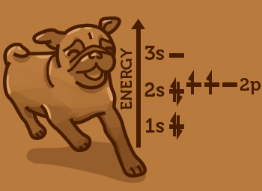
Step-by-Step Video Lessons
Watch once and solve the next one alone.
Practice Until Perfect
Don't move on until you get it.
Test Prep Included
Real exam questions built into plan.
IB Chemistry Topics
1. Stoichiometry
2. Atomic Structure
3. Periodicity and Elements
4. Chemical Bonding
5. Enthalpy and Thermodynamics
6. Kinetics
8. Acid-Base Theory
9. Redox and Electrochemistry
10 Chapters · 55 Topics · 494 Videos
Discover Our Learning Areas
Explore key subjects and start learning with interactive content.
What is IB Chemistry?
IB Chemistry is a rigorous two-year science course offered as part of the International Baccalaureate Diploma Programme at Standard Level (SL) and Higher Level (HL). It builds a deep, conceptual understanding of matter, reactions, and energy — preparing students for university-level science programmes in chemistry, medicine, pharmacy, engineering, and related fields. In Singapore, IB Chemistry is offered at international schools and a small number of government-aided institutions, and its internationally recognised qualification is respected by universities worldwide.
What topics are covered in IB Chemistry?
IB Chemistry is organised into a set of core topics studied by all students plus Additional Higher Level (AHL) content for HL candidates. Core topics include stoichiometric relationships, atomic structure, periodicity, chemical bonding and structure, energetics and thermochemistry, chemical kinetics, equilibrium, acids and bases, redox processes, and organic chemistry. HL students go further into thermodynamics, electrochemistry, spectroscopic identification of organic compounds, and additional organic mechanisms. Both SL and HL students complete an Internal Assessment — an individual investigation worth 20% of the final grade — which develops scientific inquiry and data-analysis skills assessed separately from written exams.
Is IB Chemistry harder than O-Level or A-Level Chemistry?
IB Chemistry occupies a similar academic level to A-Level Chemistry but with a different assessment structure and emphasis. Where A-Level rewards depth in a smaller number of topics, IB Chemistry requires breadth across a wide syllabus alongside the Internal Assessment and the Theory of Knowledge (TOK) component of the broader Diploma. Students transitioning from O-Level Pure Chemistry or Combined Science find the jump to IB substantial — particularly in the level of mathematical reasoning required for thermodynamics and equilibrium calculations, and the expectation that students apply concepts to novel, unfamiliar data rather than simply recall learned facts. Consistent practice with past Paper 2 and Paper 3 questions is the single most effective preparation strategy.
What are the most common IB Chemistry struggles, and how do you overcome them?
Three topics generate the most difficulty for IB Chemistry students: stoichiometry and mole calculations, organic reaction mechanisms, and thermodynamics. Stoichiometry problems trip students up because a single unit error cascades through multi-step calculations. The fix is to write out full dimensional analysis for every step rather than doing parts mentally. Organic mechanisms require students to track electron movement precisely — drawing curly arrows correctly and recognising nucleophiles and electrophiles. Thermodynamics, including Gibbs free energy and entropy, demands that students hold three interacting variables in mind simultaneously. For each of these areas, working through fully worked examples and then practising unguided problems until the method becomes automatic is the most reliable route to improvement.
Why StudyPug for IB Chemistry?
StudyPug is built around the idea that understanding the method matters more than seeing the answer. Every IB Chemistry video lesson is made by a certified teacher — not AI-generated — and walks through each problem type step by step, so you build the technique needed to handle similar questions in the actual IB exam. Before you start revising, StudyPug's diagnostic assessment identifies exactly which topics you are weakest on, so you spend your study time where it will have the most impact rather than re-covering material you already know. As you practise, the adaptive practice system adjusts the difficulty of questions to match your current level, keeping you challenged without overwhelming you. The curriculum coverage maps directly to the IB Diploma Programme Chemistry syllabus for both SL and HL, and practice questions are based on real IB exam-style questions — so what you practise closely resembles what you will face on exam day. StudyPug is accessible on any device, any time, which means you can watch a video explanation the night before a test or run through practice problems on the bus. Every subscription is backed by a 30-day money-back guarantee.
What you learn — IB Chemistry curriculum coverage
StudyPug covers the complete IB Chemistry SL and HL curriculum, including all core topics and AHL content. Key areas include: stoichiometric relationships (molar mass, empirical and molecular formulae, titrations, limiting reagents); atomic structure and periodicity (electron configuration, periodic trends, ionisation energy); chemical bonding and structure (ionic, covalent, metallic bonding; VSEPR theory; hybridisation at HL); energetics and thermochemistry (enthalpy cycles, Hess's Law, bond enthalpies; entropy and Gibbs free energy at HL); chemical kinetics (rate expressions, activation energy, Arrhenius equation at HL); chemical equilibrium (Le Chatelier's principle, equilibrium constant expressions); acids and bases (pH calculations, buffer solutions, acid–base titration curves); redox and electrochemistry (standard electrode potentials, electrolytic cells at HL); and organic chemistry (functional group reactions, reaction mechanisms, spectroscopic analysis at HL). Internal Assessment support — including how to structure a research question and analyse data — is also covered.
Using StudyPug for IB Chemistry
The most effective way to use StudyPug for IB Chemistry is to start with the diagnostic assessment. It takes only a few minutes and immediately shows you which topics in the SL or HL syllabus need the most attention. From there, work through the certified-teacher video lessons for your weak topics — each video teaches you the method behind the concept, not just the worked answer, so you can apply it independently. After each video, move directly into adaptive practice questions. The system adjusts difficulty based on your responses, so you are always working at the right level of challenge. As your IB exams approach, use StudyPug's IB exam-style practice tests to simulate Paper 1, Paper 2, and Paper 3 conditions. Review any questions you got wrong using the step-by-step video solutions to understand exactly where your reasoning broke down. You can also use Photo Search to photograph a textbook problem or a past-paper question and find the matching StudyPug lesson immediately — useful when you are working through revision and hit an unfamiliar question type. StudyPug works on desktop, tablet, and mobile, so your revision is never tied to one device.
IB Chemistry FAQ
Unsure how StudyPug works? Need help with setting up? Check our frequently asked questions or contact us for help.
What do you learn in IB Chemistry, and what topics does it cover?
IB Chemistry covers stoichiometry, atomic structure, periodicity, bonding, energetics, kinetics, equilibrium, acids and bases, redox and electrochemistry, and organic chemistry. HL students also study additional depth topics such as spectroscopy and advanced organics. The course develops both conceptual understanding and practical lab skills, preparing students for university-level science. The IB Diploma Programme Chemistry curriculum is assessed through Paper 1 (multiple choice), Paper 2 (structured questions), Paper 3 (data analysis and options), and an Internal Assessment lab report.
What is the difference between IB Chemistry SL and IB Chemistry HL?
IB Chemistry SL and HL share a common core of topics but HL requires roughly 60 additional teaching hours and covers additional depth material — including more advanced organic chemistry, spectroscopic techniques, and extra sub-topics within each core unit. HL students sit the same Paper 1 and Paper 2 structure but with harder questions and a separate Paper 3 section. Most university science and engineering programmes recommend or require HL Chemistry, while SL fulfils the Group 4 science requirement for the IB Diploma more broadly.
Is IB Chemistry hard, and where do students struggle most?
IB Chemistry is considered one of the more demanding IB subjects. Students most often struggle with stoichiometric calculations (moles, concentration, titrations), reaction mechanisms in organic chemistry, thermodynamics and entropy, and interpreting equilibrium expressions. The jump from O-Level or IGCSE Chemistry to IB standard is significant because the IB emphasises applying concepts to unfamiliar data rather than recalling definitions. Building a solid method for each calculation type and practising past Paper 2 questions regularly are the most effective ways to improve.
What should I take before IB Chemistry, and what comes after it?
Students should have a strong foundation from O-Level Combined or Pure Chemistry (or IGCSE equivalent) before taking IB Chemistry. Solid algebra and basic logarithm skills from mathematics also help considerably. After IB Chemistry, students are well-prepared for university courses in chemistry, biochemistry, pharmacy, medicine, chemical engineering, and materials science. A score of 5 or above in HL Chemistry is typically required for direct entry into science-based degree programmes at universities in Singapore and internationally.
Is IB Chemistry on the GCE and IB Diploma exams, and how is it tested?
IB Chemistry is examined through the IB Diploma Programme exams administered by the International Baccalaureate Organisation, not the Singapore-Cambridge GCE. Assessment comprises Paper 1 (30 multiple-choice questions for SL, 40 for HL), Paper 2 (structured and extended-response questions), Paper 3 (data-based and options questions), and an Internal Assessment (lab investigation worth 20% of the final grade). Exams are graded on a 1–7 scale, with 4 considered a passing grade and 6–7 considered distinction level.
What is one of the hardest concepts in IB Chemistry, and how do you tackle it?
Entropy and Gibbs free energy (ΔG = ΔH − TΔS) is consistently one of the hardest IB Chemistry concepts because students must connect three different variables and apply them to predict spontaneity under different conditions. The key is to tackle each term separately first: understand enthalpy change, then entropy change, then how temperature shifts the outcome. Practise calculating ΔG at different temperatures and identifying what sign combination makes a reaction spontaneous. Working through past Paper 2 thermodynamics questions with mark schemes builds the exam technique needed to score full marks.




Written by the StudyPug Team
Last updated June 5, 2026
3 M+
students
★★★★★
4.8 average
K–12
all grades