Year 7 Maths Help — Step-by-Step Video Lessons & Practice
Help your child build confidence and understand every Year 7 maths topic, one clear lesson at a time.
Expert Video Solutions
Real teachers help you solve the next one.
Build Mastery
You actually get it before moving on.
Test Prep Included
Practice real exam questions year-round.
Try It Now
Test your knowledge
Our approach aligns with the evidence
Exam Scores
Better Recall
Less Anxiety
Year 7 Maths Topics
1. Numbers and Relations
2. Number Theory
3. Adding and Subtracting Integers
4. Operations with decimals
5. Adding and Subtracting Fractions
6. Multiplying and Dividing Fractions
7. Introduction to Ratios, Rates and Percentages
8. Measuring Systems
9. Coordinates, Quadrants, and Transformations
10. Patterns and Solving Equations
11. Linear Equations
12. Angles, Lines, and Transversals
13. Symmetry and Surface Area
14. Properties of Triangles
15. Scale Factors and Similarity
16. Introduction to 3-Dimensional Figures
17. Data and Graphs
19 Chapters · 84 Topics · 729 Videos

Ready to practice Year 7 Maths?
Try practice questions on every Year 7 Maths topic — with instant feedback and step-by-step video solutions when you get stuck.
Discover Our Learning Areas
Explore key subjects and start learning with interactive content.
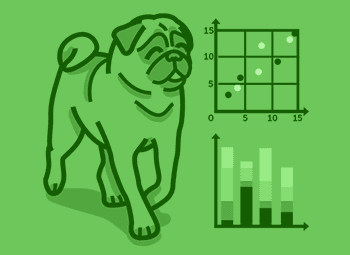
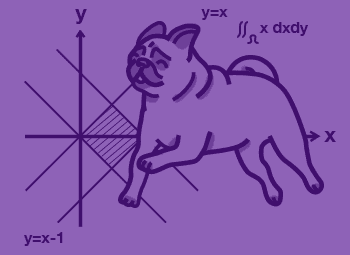
What Is Year 7 Maths in New Zealand?
Year 7 maths is the first year of intermediate school in New Zealand, and it marks an important shift in how children engage with mathematics. Students move away from purely concrete, number-based thinking and begin working with abstract ideas — variables, algebraic expressions, proportional reasoning — for the first time. The New Zealand curriculum organises Year 7 maths across three main strands: Number and Algebra, Geometry and Measurement, and Statistics. Together these strands give children a broad, connected understanding of mathematics that builds directly toward secondary school. It is a year that rewards solid foundations and a growth mindset, and the right support at this stage pays dividends all the way through to NCEA.
What Do Children Typically Find Difficult in Year 7 Maths?
Year 7 is where many children hit their first real wall in maths. The move to intermediate school often means larger class sizes and less individual attention, so gaps that were manageable in primary school can become real obstacles. The topics that cause the most difficulty are typically fractions and ratio — especially when applied to word problems — early algebra, and working with negative numbers. Fractions trip students up because they require a shift from thinking about whole things to thinking about parts, and ratio problems demand the same proportional thinking applied to comparisons. Algebra adds another layer: children must accept that a letter can stand in for a number, and that you can manipulate equations without knowing the answer yet. For most students, these are not signs of being bad at maths — they are predictable pinch points that clear, stepped teaching can resolve.
How Is Year 7 Maths Assessed in New Zealand?
At Year 7, formal NCEA assessment has not yet begun — that starts in Year 11. Instead, progress is monitored through classroom assessments, teacher observation, and end-of-term or end-of-year reports. Schools use the New Zealand curriculum achievement objectives for Level 4 (which spans Years 7–8) as the benchmark. Teachers assess whether students can apply number strategies, work with patterns and relationships, reason geometrically, and interpret statistical data. If your child's report flags concerns in any of these areas, that is useful information — it usually points to a specific strand where a targeted intervention, rather than general revision, will have the most impact.
What Are the Key Topics Covered in Year 7 Maths?
The Year 7 maths curriculum in New Zealand covers a broad range of topics that build on each other through the year. Here is what your child will typically work through:
- Fractions, decimals and percentages — converting between forms, adding and subtracting fractions with different denominators, and applying percentages to real-world situations.
- Ratios and proportional reasoning — comparing quantities, solving ratio problems, and understanding scale.
- Introduction to algebra — writing and simplifying expressions, solving one- and two-step equations, and understanding what a variable represents.
- Geometry — calculating area and perimeter of composite shapes, working with angles on a line and in triangles, and exploring properties of 2D and 3D shapes.
- Measurement — converting between units, calculating volume, and applying measurement in context.
- Statistics and probability — collecting and displaying data in various formats, calculating mean, median and mode, and understanding basic probability.
- Number operations — extending understanding of integers including negative numbers, order of operations, and mental and written strategies for all four operations.
Each of these areas connects to the others, and students who understand the connections — for example, how percentages and ratios relate — tend to find Year 7 maths much more manageable overall.
Why StudyPug for Year 7 Maths?
StudyPug is built around three things that make a real difference at Year 7: finding gaps quickly, teaching the method clearly, and building confidence through the right kind of practice.
The diagnostic assessment does the detective work for you. Rather than working through every topic from the beginning, your child takes a short diagnostic that identifies exactly where the gaps are. You know within minutes where to focus — and where your child is already doing well.
The video lessons are made by certified teachers, not AI, and they focus on the method — the thinking behind each step — rather than just showing the answer. That distinction matters because Year 7 maths tests the same underlying ideas in many different contexts. When your child understands why a process works, they can apply it to problems they have never seen before.
Adaptive practice rounds out the experience: questions adjust to your child's current level, getting harder as they improve and stepping back when they need more support. That means every practice session is productive rather than frustrating. The parent dashboard lets you see exactly what your child has covered, how they are improving, and where they still need attention — all in one place.
The Family Plan means that if you have more than one child, they can all access StudyPug under one subscription — different year levels, different subjects, one price. And every plan comes with a 30-day money-back guarantee, so there is no risk in trying it.
What Your Child Will Learn with StudyPug Year 7 Maths
StudyPug's Year 7 maths content covers the full New Zealand curriculum — Number and Algebra, Geometry and Measurement, and Statistics — with every topic broken into short, focused lessons. Your child will practise fractions, decimals and percentages; work through ratio and proportion problems; build algebraic thinking from the ground up; explore geometry and measurement; and develop statistical literacy. Free daily practice content is available from day one, so your child can start building skills before you commit to a subscription. Because there are no validated topic URLs in the page feed for this region at this time, we recommend exploring the full topic list directly on the StudyPug Year 7 Maths page.
How to Use StudyPug for Year 7 Maths
Getting started is straightforward. Start with the diagnostic assessment — it takes only a few minutes and gives you a clear picture of where your child is right now. From there, let your child work through the video lessons for the topics flagged by the diagnostic, watching at their own pace and rewinding whenever something is unclear. After each lesson, the adaptive practice locks in the concept and builds fluency. Check the parent dashboard weekly to see progress across topics. Most families find that 20–30 minutes four or five times a week produces steady, visible improvement — and that consistency, more than any single session, is what makes the difference over a term.
If your child gets stuck on a specific problem type, Photo Search lets them photograph a question and find the matching lesson instantly — available on all devices, including the StudyPug mobile app, for all Year 7 maths topics.
Year 7 Maths FAQ
Unsure how StudyPug works? Need help with setting up? Check our frequently asked questions or contact us for help.
What does my child learn in Year 7 maths, and what topics does it cover?
In Year 7 maths, children build on primary school foundations and move into more abstract thinking. Key topics include fractions, decimals and percentages; ratios and proportions; introduction to algebra and expressions; geometry including area, perimeter and angles; statistics and probability; and number operations with integers and negative numbers. The NZ curriculum at this level focuses on developing mathematical reasoning and connecting concepts across strands, so children learn not just procedures but how to think mathematically.
Is Year 7 maths hard, and where do children commonly struggle?
Year 7 is a significant step up for many children because abstract thinking becomes central for the first time. The most common struggle points are fractions and ratio — particularly when applied to real-world problems — followed closely by early algebra, where children must shift from thinking about specific numbers to working with variables. Negative numbers also trip many students up. The jump from primary to intermediate school can mean less one-on-one support, so gaps that went unnoticed can widen quickly. Identifying those specific gaps early is the most effective way to help.
What should my child know before Year 7 maths, and what comes after?
Before Year 7, children should be confident with the four operations (addition, subtraction, multiplication, division), basic fractions and decimals, simple measurement and shape, and reading data from graphs. If any of those feel shaky, Year 7 will feel harder than it needs to. After Year 7, students move into Year 8 maths where algebra deepens, proportional reasoning extends, and preparation for secondary school mathematics begins — so a solid Year 7 foundation is genuinely important for what comes next.
How does StudyPug maths map to what my child learns at school in New Zealand?
StudyPug's Year 7 maths content is aligned to the New Zealand curriculum, covering the same strands — Number and Algebra, Geometry and Measurement, and Statistics — that your child's teacher is delivering in class. Every lesson is organised so it reinforces school work rather than contradicting it. When your child's class moves to a new unit, the corresponding StudyPug lessons and practice problems are already there, covering the same approach their teacher uses.
What is one of the trickiest maths concepts in Year 7, and how is it taught?
Algebra is consistently the concept that causes the most anxiety at Year 7 — specifically the shift from arithmetic ('what is 3 + 4?') to working with unknowns ('solve 2x + 3 = 11'). StudyPug's certified teachers break this down into very small steps: first building an intuitive understanding of what a variable represents, then moving to simple one-step equations before introducing two-step problems. Each concept video teaches the method — not just the answer — so your child can apply the same thinking to any similar problem they encounter in class or on a test.
How much maths practice should my child do at Year 7?
For most Year 7 students, 20–30 minutes of focused maths practice four to five times a week is more effective than a long session once a week. Consistency matters more than volume at this age. Short daily practice builds fluency and keeps concepts fresh. StudyPug's adaptive practice adjusts to your child's level automatically, so every session targets the areas that need the most work — meaning that 20 minutes is genuinely productive rather than spent repeating what they already know.




Written by the StudyPug Team
Last updated June 5, 2026
3 M+
students
★★★★★
4.8 average
K–12
all grades