Year 5 Maths Help — Step-by-Step Video Lessons & Practice
Help your child understand every maths topic and build confidence, one lesson at a time.
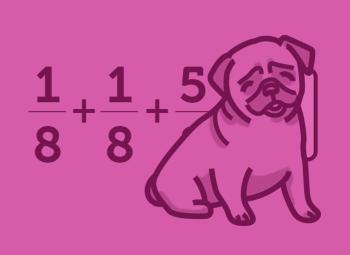
Step-by-Step Videos
Learn the method to solve the next alone.
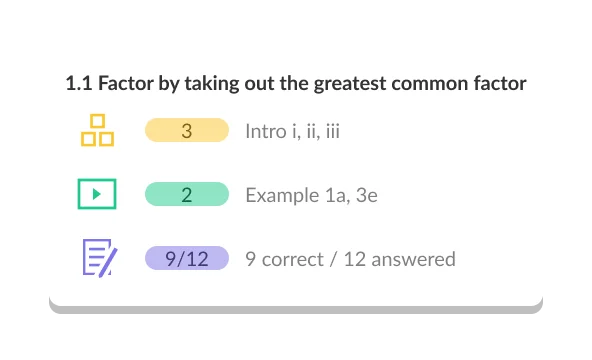
Practice Until Perfect
Keep going until it truly clicks.
Real Exam Practice
Real NZ exam questions included in plan.
Try It Now
Test your knowledge
Our approach aligns with the evidence
Exam Scores
Better Recall
Less Anxiety
Year 5 Maths Topics
2. Representing Numbers
3. Patterns
4. Adding and Subtracting Integers
5. Multiplying and Dividing Integers
6. Arithmetic Properties
7. Factors and Multiples
8. Introduction to Fractions
9. Adding and Subtracting Fractions
10. Multiplying Fractions
11. Decimals
12. Estimation
14. Time
15. Angles and Lines
16. Polygons
17. Introduction to 3D Shapes
18. Data Management
19. Statistics
19 Chapters · 76 Topics · 1247 Videos

Ready to practice Year 5 Maths?
Try practice questions on every Year 5 Maths topic — with instant feedback and step-by-step video solutions when you get stuck.
Discover Our Learning Areas
Explore key subjects and start learning with interactive content.








What is Year 5 Maths?
Year 5 maths is the stage of primary school learning where children in New Zealand consolidate their number skills and begin working with significantly larger numbers, more complex fractions and decimals, and a wider range of measurement and geometry concepts. It sits within the New Zealand national curriculum's mathematics and statistics learning area and covers the strands of Number and Algebra, Geometry and Measurement, and Statistics. By the end of Year 5, most children are expected to work confidently with whole numbers up to at least 1,000,000, understand place value to multiple decimal places, apply multiplication and division strategies fluently, and interpret data from a variety of graphs and tables.
What topics are covered in Year 5 maths in New Zealand?
Year 5 maths in New Zealand is broad and builds directly on the foundations of Years 3 and 4. The main areas your child will encounter include:
Number and place value: Reading, writing and comparing numbers up to 1,000,000. Understanding the value of each digit and how numbers are composed and decomposed helps children estimate and calculate accurately.
Multiplication and division: Moving beyond simple times-table recall, Year 5 students learn written and mental strategies for multiplying two-digit and three-digit numbers, as well as dividing with remainders. This is often a significant step up from Year 4.
Fractions and decimals: Comparing and ordering fractions with different denominators, adding and subtracting fractions, and connecting fractions to decimals and simple percentages. This strand is where many Year 5 children need the most support.
Geometry and measurement: Calculating area and perimeter of rectangles, understanding angles, reading maps and grids, and converting between units of length, mass, and capacity.
Statistics: Reading, interpreting and creating bar graphs, pictographs, and simple pie charts. Children also begin thinking about the likelihood of events.
Is Year 5 maths hard? Where do children commonly struggle?
Year 5 is widely recognised as the year where maths begins to feel genuinely challenging for many children. The curriculum broadens considerably and the numbers get much bigger, which can feel overwhelming without a solid foundation.
The topics that cause the most difficulty are typically fractions with unlike denominators, long multiplication, understanding decimals beyond tenths, and interpreting complex data displays. Children who struggled with times tables in Year 4 often find Year 5 multiplication and division significantly harder because those facts underpin so many other calculations.
The key to getting past these sticking points is targeted practice on the specific skill — not more of the same general maths work. A short diagnostic assessment that identifies exactly which concept is causing difficulty can save weeks of inefficient studying and rebuild confidence far more quickly.
What comes before and after Year 5 maths?
Coming into Year 5, children should have a working knowledge of multiplication and division facts up to 10, place value to at least 10,000, simple fraction recognition (halves, quarters, thirds), and the ability to add and subtract four-digit numbers with and without regrouping. If any of these foundations have gaps, Year 5 work becomes much harder — and those gaps are worth addressing early.
After Year 5, children move into Year 6 maths, which introduces proportional reasoning, negative numbers, more sophisticated use of algebra, and a deeper engagement with statistics and probability. The habits built in Year 5 — regular practice, understanding the method rather than just memorising procedures — directly support success at Year 6 and beyond.
Why StudyPug for Year 5 maths?
StudyPug is built specifically to give children the kind of clear, patient explanation they need when they're stuck — and to give parents visibility into whether their child is actually improving.
Real teaching from certified teachers. Every video lesson on StudyPug is made by a qualified, certified teacher. They explain each Year 5 maths concept step by step, walking through the method so your child understands why it works — not just what button to press. This means your child can solve similar problems independently, not just follow along.
Diagnostic assessment that finds the gaps. Rather than guessing where your child needs help, StudyPug's diagnostic assessment identifies exactly which Year 5 maths skills need attention. Parents tell us this is one of the most immediately useful features — within minutes, you know where to focus.
Adaptive practice that builds confidence step by step. Once the gaps are identified, adaptive practice questions adjust to your child's current level. Questions get a little harder as they improve, and easier when they need to consolidate — so every practice session builds genuine progress rather than frustration.
Curriculum-aligned to New Zealand. StudyPug lessons follow the New Zealand national curriculum, covering Number and Algebra, Geometry and Measurement, and Statistics in the same sequence and language your child encounters at school. There's no confusion between what StudyPug teaches and what their teacher expects.
Family Plan — all your children, one price. The StudyPug Family Plan covers up to five children at a single price, across all year levels and subjects. Whether you have a child in Year 2 and another in Year 5, both are covered — and the parent dashboard shows you each child's progress separately.
Printable worksheets for screen-free practice. For Year 5 maths, StudyPug provides printable worksheets with answer keys — ideal for kitchen-table practice away from screens.
What will your child learn with StudyPug Year 5 maths?
StudyPug's Year 5 maths content covers every strand of the New Zealand curriculum. Your child will get video lessons, practice problems and adaptive exercises on:
- Place value and whole numbers up to 1,000,000
- Multiplication strategies — from times tables to two- and three-digit multiplication
- Division with and without remainders
- Fractions — comparing, ordering, adding and subtracting with unlike denominators
- Decimals — reading, writing, comparing and calculating
- Basic percentages and their connection to fractions and decimals
- Area and perimeter of rectangles and composite shapes
- Angles — identifying, estimating and measuring
- Geometry — symmetry, transformations and coordinates on a grid
- Measurement — length, mass, capacity and time conversions
- Statistics — reading and creating graphs, and discussing likelihood
Because no validated internal topic-page links are available in the current site map for this course, links to individual topic pages have been omitted here. Your child's full topic list is available directly within the StudyPug platform once you get started.
How to use StudyPug for Year 5 maths
Getting started with StudyPug takes less than five minutes. Here's how most families use it effectively:
Step 1 — Run the diagnostic. Start with the Year 5 maths diagnostic assessment. It quickly identifies which topics your child is confident in and which ones need work. You'll have a clear, prioritised focus right away.
Step 2 — Watch the video lesson. For any topic your child finds difficult, the certified-teacher video explains the concept from the beginning. Encourage your child to watch actively — pausing to work through each step themselves.
Step 3 — Practise with adaptive questions. After watching, the adaptive practice reinforces the method with problems that adjust to your child's level. Instant feedback shows them exactly where they went right or wrong.
Step 4 — Check progress on the parent dashboard. Log in to the parent dashboard to see which topics your child has covered, how many practice problems they have completed, and where their marks are trending. Short, regular sessions of 15 to 20 minutes four times a week tend to produce the clearest improvement in Year 5 maths.
Step 5 — Add screen-free practice with worksheets. For consolidation, print out the Year 5 maths worksheets and have your child work through them at the table. The included answer keys mean you can check their work together, turning it into a brief but valuable conversation about their thinking.
StudyPug is available on desktop, tablet and mobile — so your child can access their lessons and practice wherever works best for your family. Every paid subscription is backed by a 30-day money-back guarantee, so you can get started today with complete confidence.
Year 5 Maths FAQ
Unsure how StudyPug works? Need help with setting up? Check our frequently asked questions or contact us for help.
What does my child learn in Year 5 maths, and what topics does it cover?
In Year 5, children build on their earlier maths foundation by working with larger whole numbers, place value up to at least 1,000,000, multiplication and division strategies, fractions and decimals, basic percentages, area and perimeter, time, and data interpretation through graphs and tables. They also begin exploring factors, multiples and simple algebra patterns. StudyPug covers every one of these topics with video lessons and practice problems matched to the New Zealand maths curriculum, so your child gets support on exactly what their teacher is covering in class.
Is Year 5 maths hard, and where do children commonly struggle?
Year 5 maths introduces a noticeable jump in complexity. The most common sticking points are multiplying and dividing larger numbers, adding and subtracting fractions with different denominators, understanding decimals to two places, and reading data from more complex graphs. Many children also find place value trickier as numbers grow beyond the thousands. The good news is that these struggles are very normal and very fixable — short, focused video lessons that teach the method (not just the answer) help children move past these blocks quickly and build lasting understanding.
What should my child know before Year 5 maths, and what comes next?
Coming into Year 5, children should be confident with basic multiplication and division facts up to 10, adding and subtracting three- and four-digit numbers, and simple fractions such as halves, quarters and thirds. A solid understanding of place value to at least 10,000 also helps. After Year 5, children move into Year 6 maths where they encounter proportional reasoning, negative numbers, more complex fractions, and an introduction to algebra. StudyPug supports both consolidating Year 4 gaps and previewing Year 6 material — so your child is always prepared for the next step.
How does StudyPug maths map to what my child learns at school in New Zealand?
StudyPug lessons are aligned to the New Zealand national curriculum and its Number, Algebra, Geometry, Measurement and Statistics strands. Every Year 5 topic — from whole-number operations and fractions through to data and measurement — is covered in the same order and language your child hears in class. Whether their school uses a traditional or inquiry-based approach, the video lessons explain the core concepts clearly so that what they see on StudyPug reinforces rather than conflicts with what their teacher presents.
What is one of the trickiest maths concepts in Year 5, and how is it taught?
Adding and subtracting fractions with unlike denominators is consistently one of Year 5's most challenging topics. Children often confuse the denominators and try to add them directly (for example, writing 1/3 + 1/4 = 2/7). StudyPug's certified-teacher video lessons walk through the concept step by step — first explaining why a common denominator is needed, then showing the method with visual models, then applying it to practice problems of increasing difficulty. Because the video teaches the method rather than just giving the answer, children learn how to handle any fraction pair they encounter.
How much maths practice should my child do at Year 5?
For Year 5 students, around 15 to 20 minutes of focused maths practice four to five times a week tends to produce steady, visible improvement. Short, regular sessions are more effective than occasional long study blocks. StudyPug's adaptive practice adjusts the difficulty to your child's level automatically, so every session is productive — not too easy, not frustrating. The parent dashboard shows you completion and progress data per session, making it easy to spot when your child needs a little extra encouragement on a particular topic.





Written by the StudyPug Team
Last updated June 5, 2026
3 M+
students
★★★★★
4.8 average
K–12
all grades