Year 10 Geometry Help — Video Lessons & Practice
Get clear explanations for any Geometry problem and build exam-ready confidence.
Value vs. Private Tutor
Expert geometry help without the price tag.

Multi-Subject
Every subject covered when you need it.
Practice Until Perfect
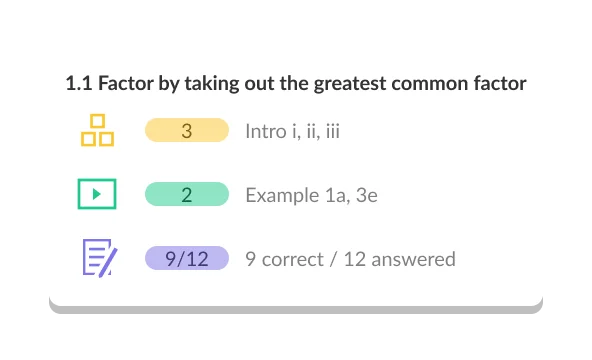
Practice geometry until it clicks.
Try It Now
Test your knowledge
Our approach aligns with the evidence
Exam Scores
Better Recall
Less Anxiety
Geometry Topics
1. Measuring Systems
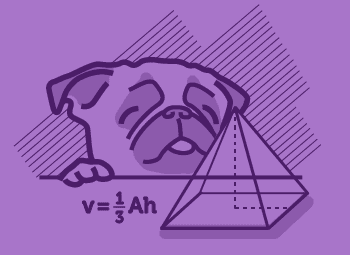
2. Surface Area and Volume
3. Points, Lines, Segments, Midpoints and Chords
4. Circles, plane and coordinate
5. Triangles and special triangles
6. Angles and trigonometry
7. Sine Rule and Cosine Rule
8. Bearings
9. Transformations
10. Similarity
11. 2D figures and 3D figures
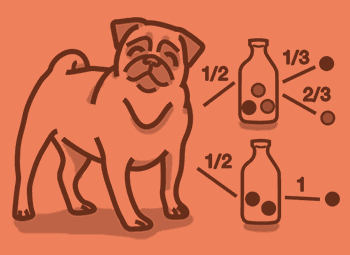
12. Probability
13. Logic
15. Set Theory
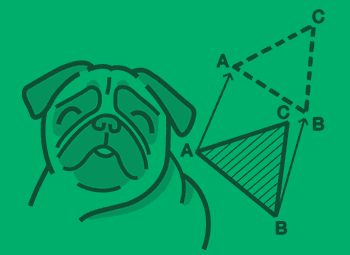
16. Vectors
17 Chapters · 88 Topics · 766 Videos
Discover Our Learning Areas
Explore key subjects and start learning with interactive content.




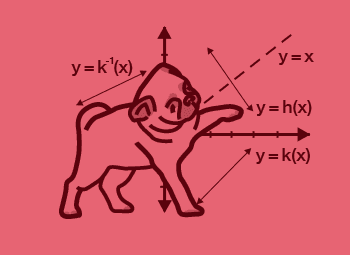
What is Year 10 Geometry?
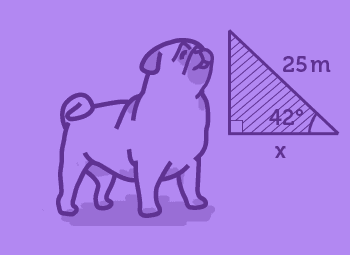
Year 10 Geometry is the study of shapes, space, measurement, and spatial reasoning. It is a core strand of New Zealand Mathematics at Year 10 and forms direct preparation for NCEA Level 1 Achievement Standards assessed in Year 11. In this course you work with angle relationships, triangles, coordinate geometry, transformations, and trigonometry — building the geometric reasoning skills that underpin all further mathematics study.
What topics are covered in Year 10 Geometry?
Year 10 Geometry in New Zealand covers a wide range of interconnected topics. Angle relationships — including angles on a straight line, vertically opposite angles, alternate and co-interior angles formed by parallel lines — are fundamental. You will work extensively with triangles: classifying them, applying angle sum rules, and using Pythagoras' theorem for right-angled triangles. Basic trigonometry (SOH-CAH-TOA) introduces sine, cosine, and tangent ratios for finding unknown sides and angles. Coordinate geometry develops your ability to work with gradients, midpoints, and distance on the Cartesian plane. Transformations — reflection, rotation, translation, and enlargement — round out the spatial strand, and geometric reasoning with written proofs runs through the whole course.
Is Year 10 Geometry hard?
Year 10 Geometry sits at a level where most concepts are learnable with solid practice, but several areas demand genuine care. Trigonometry is consistently where students lose marks: the challenge is not the arithmetic but knowing which ratio to use and correctly labelling opposite, adjacent, and hypotenuse relative to the angle you are working with. Geometric proofs require precise written reasoning and a logical sequence of statements — a skill that takes time to develop. Coordinate geometry catches students who confuse the gradient formula with the distance formula. Each of these stumbling blocks responds well to watching a worked example, then attempting similar problems with immediate feedback. That combination — see the method, practise it, get corrective feedback — is what moves students from stuck to confident.
How does Year 10 Geometry connect to NCEA?
Year 10 is the preparation year for NCEA Level 1 Mathematics, which is typically sat in Year 11. The Geometry work you do in Year 10 maps directly onto NCEA Level 1 Achievement Standards, including AS91031 (applying geometric reasoning in solving problems) and AS91032 (applying right-angled triangles in solving measurement problems). Both standards are valued in the NCEA credit system and assessed through a combination of internal school assessments during the year and an external examination in November. Grades are awarded as Not Achieved, Achieved, Merit, or Excellence. Building strong Geometry skills in Year 10 means you enter NCEA Level 1 with genuine confidence rather than playing catch-up.
What are the hardest Geometry concepts at Year 10, and how do you approach them?
Beyond trigonometry, students often find circle geometry properties challenging when they first appear, geometric proofs requiring formal reasoning difficult to structure, and coordinate geometry problems that blend gradient, midpoint, and distance calculations in a single question demanding. The most effective approach across all of these is the same: start with a clear worked example that shows the reasoning process, not just the arithmetic steps. Once you understand why each step follows, you can adapt the method to different problem setups. Practising a variety of problem types — not just repeating identical questions — builds the flexible thinking that NCEA assessments reward.
Why StudyPug for Year 10 Geometry?
StudyPug is built around the way students actually learn: start with a diagnosis of what you need, watch a lesson that teaches you the method, then practise until it sticks.
The diagnostic assessment at the start identifies exactly which Geometry topics need attention. You are not pointed at a generic playlist — you get a personalised study path based on your actual gaps. That means every minute you spend studying is productive.
The video lessons are made by certified teachers, not generated by AI. Each lesson is designed to teach the method behind the problem, not just the answer. For Geometry, that means you see how to decide which trigonometric ratio applies, how to structure a proof step by step, and how to set up a coordinate geometry problem before any numbers are touched. When you understand the method, you can handle similar problems on your NCEA assessments without needing to memorise every variation.
Adaptive practice adjusts difficulty as you improve. The system responds to your performance, keeping questions at the right level to keep you progressing — not so easy that nothing is reinforced, not so hard that you stall. This approach helps you build real fluency across all Geometry topics.
All content is aligned to the New Zealand curriculum and the NCEA framework, so what you study on StudyPug is what your teacher and your assessments expect. There is no mismatch between the platform and your actual coursework.
Free daily practice problems let you get started without any commitment. When you are ready for full access — all video lessons, full adaptive practice, and NCEA exam-style preparation — every subscription is backed by a 30-day money-back guarantee.
What you learn — Year 10 Geometry curriculum coverage
StudyPug covers the full Year 10 Geometry curriculum for New Zealand students. Core topics include:
- Angle relationships: straight lines, vertically opposite angles, parallel lines (alternate, co-interior, corresponding angles)
- Triangle properties: angle sum, exterior angles, classification
- Pythagoras' theorem: finding unknown sides, identifying right-angled triangles, real-world applications
- Trigonometry: SOH-CAH-TOA, finding unknown sides and angles in right-angled triangles
- Coordinate geometry: gradient, midpoint, distance formula, equations of lines
- Transformations: reflection, rotation, translation, enlargement, combined transformations
- Geometric reasoning and proofs: formal written justification of geometric relationships
- Measurement: area, perimeter, and volume applications in geometric contexts
Every topic is broken into short, focused video lessons so you can find exactly what you need without sitting through material you already know.
Using StudyPug for Year 10 Geometry
Getting started is straightforward. Take the short diagnostic assessment first — it takes only a few minutes and immediately produces a personalised recommendation for which Geometry topics to focus on. From there, watch the relevant certified-teacher video lessons for your priority topics. Each video teaches the method step by step; pause, rewind, and rewatch as many times as you need. Then move into adaptive practice for that topic. The system adjusts difficulty based on your answers, and detailed worked solutions are available for every practice question so you understand exactly where your reasoning went right or wrong.
You can use StudyPug on any device, at any time — before school, after dinner, or the night before an assessment. If you want to search for a specific problem type by taking a photo of a question, Photo Search finds the matching lesson instantly across all Geometry topics.
For NCEA preparation, practice tests based on real exam-style questions let you rehearse under assessment conditions. Work through the practice test, review your results, and watch the video solution for any question you found difficult. That loop — attempt, review, learn — is the fastest path to Excellence.
Free practice content is available to all users with no subscription required. Full access to all video lessons and adaptive practice comes with a subscription, and every plan includes a 30-day money-back guarantee. There is no long-term risk in getting started today.
Geometry FAQ
Unsure how StudyPug works? Need help with setting up? Check our frequently asked questions or contact us for help.
What do you learn in Year 10 Geometry, and what topics does it cover?
Year 10 Geometry in New Zealand covers a broad range of spatial and measurement concepts. You'll study properties of shapes, angle relationships (including parallel lines and transversals), Pythagoras' theorem, basic trigonometry (sine, cosine, tangent), coordinate geometry, transformations (reflection, rotation, translation, enlargement), and geometric reasoning with proofs. These topics build the foundation for NCEA Level 1 Mathematics and are assessed through internal and external standards across the year.
What is the difference between Geometry and Algebra at Year 10?
Geometry focuses on shapes, space, measurement, and spatial reasoning — think angles, triangles, coordinates, and transformations. Algebra focuses on symbolic manipulation, equations, and functions — think solving for x, linear equations, and quadratic expressions. In Year 10 they are taught as distinct strands within Mathematics, though they often connect: coordinate geometry uses algebraic methods, and trigonometry blends both. Many students find Geometry more visual and intuitive, while others prefer the structured rules of Algebra.
Is Year 10 Geometry hard, and where do students struggle most?
Year 10 Geometry is manageable but has a few genuine stumbling blocks. Trigonometry — deciding when to use sine, cosine, or tangent and then setting up the ratio correctly — catches out many students. Geometric proofs and reasoning also require a different kind of thinking: precise, logical, and written formally. Coordinate geometry confuses students who mix up gradient and distance formulas. The good news is that these topics follow clear rules, and watching worked examples step by step makes a big difference.
What should I know before Year 10 Geometry, and what comes after it?
Before Year 10 Geometry you should be comfortable with basic shape properties, area and perimeter formulas, Pythagoras' theorem from Year 9, and plotting points on a coordinate plane. Coming out of Year 10, you'll move into NCEA Level 1 Mathematics (Year 11), where Geometry extends into more formal proofs, circle geometry, and deeper trigonometry. Doing well in Year 10 sets you up strongly for NCEA Level 1 and beyond into Level 2 and Level 3.
Is Geometry on the NCEA, and how is it assessed?
Yes, Geometry is a core part of NCEA Level 1 Mathematics. In Year 10 you are preparing for NCEA Level 1 Achievement Standards such as AS91031 (applying geometric reasoning) and AS91032 (applying right-angled triangles), which cover geometric proofs, Pythagoras, and trigonometry. These standards are assessed through a mix of internal school assessments throughout the year and an external examination in November. Results are graded as Not Achieved, Achieved, Merit, or Excellence.
What is one of the hardest concepts in Year 10 Geometry, and how do you tackle it?
Trigonometry — specifically choosing the correct ratio and solving for unknown sides or angles — is consistently the most challenging Year 10 Geometry concept. The key is to label the triangle clearly (opposite, adjacent, hypotenuse relative to your angle) before writing any ratio. Practise SOH-CAH-TOA with many different triangle orientations until the labelling becomes automatic. Once you can set up the equation confidently, solving it is straightforward. Worked video examples that show the reasoning process step by step are the fastest way to build that muscle.




Written by the StudyPug Team
Last updated June 5, 2026
3 M+
students
★★★★★
4.8 average
K–12
all grades