AP Calculus AB Help — Video Lessons & Practice
Get clear, step-by-step explanations for every AP Calculus AB topic and build exam-ready confidence.
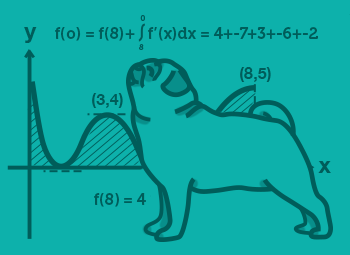
Step-by-Step Video Lessons
Learn the method and solve problems alone.
Unlimited Practice
Keep practicing until it truly clicks.

Real Exam Practice
Practice real AP exam questions for free.
Try It Now
Test your knowledge
Our approach aligns with the evidence
Exam Scores
Better Recall
Less Anxiety
AP Calculus AB Topics
1. Limits & Continuity
2. Derivatives
3. Derivative Applications
4. Integrals
5. Integration techniques
6. Integral Applications
7 Chapters · 44 Topics · 313 Videos
Discover Our Learning Areas
Explore key subjects and start learning with interactive content.





What is AP Calculus AB?
AP Calculus AB is a college-level mathematics course and exam offered through the College Board's Advanced Placement programme. It introduces students to differential and integral calculus — the mathematical study of change and accumulation — and is roughly equivalent to a first-semester university calculus course. Students who earn a qualifying score on the AP exam can receive university credit, potentially saving time and money in their degree. For Australian students enrolled in AP programmes at international or independent schools, it also provides a rigorous mathematical foundation that complements ATAR Mathematics subjects.
What topics are covered in AP Calculus AB?
AP Calculus AB is structured around three major areas. The first is limits and continuity — the foundational idea that makes all of calculus work, including understanding what happens to a function as it approaches a value. The second is differential calculus: computing derivatives using rules such as the power rule, product rule, quotient rule, and chain rule; applying derivatives to find rates of change, slopes of tangent lines, and maximum and minimum values; and tackling applied problems like related rates and optimisation. The third is integral calculus: understanding antiderivatives, evaluating definite integrals, applying the Fundamental Theorem of Calculus, and using integration to find area under a curve and solve basic differential equations. Each of these areas connects directly to the AP exam's multiple-choice and free-response sections.
Is AP Calculus AB hard?
AP Calculus AB is widely considered one of the more challenging AP courses, particularly for students who find the leap from algebraic thinking to conceptual, limit-based reasoning difficult. The course demands fluency in precalculus skills — functions, trigonometry, and exponential and logarithmic behaviour — before any calculus content begins. Students who arrive with gaps in these foundations often struggle early. Among the topics students find hardest are related rates (which require setting up equations for multiple changing quantities and differentiating implicitly with respect to time), implicit differentiation, and integration by substitution. The free-response section of the AP exam adds another layer of challenge because it requires clear written justification, not just a correct answer. Consistent practice and method-focused learning — understanding why each step works — makes the difference between students who perform well and those who memorise procedures only to forget them under exam pressure.
What are the prerequisites for AP Calculus AB, and what comes after it?
Before starting AP Calculus AB, students should be confident in Precalculus topics: polynomial, rational, exponential, logarithmic, and trigonometric functions; function transformations; and algebraic manipulation. Most students complete Precalculus or Algebra 2 and Trigonometry in the year before AP Calculus AB. Weak algebra skills are one of the most common causes of difficulty in calculus, so it is worth spending time reinforcing them. After completing AP Calculus AB, the natural next step is AP Calculus BC, which covers all AB content plus sequences and series, parametric equations, polar coordinates, and additional integration techniques. Beyond the AP level, university calculus sequences include Calculus II (integration techniques and series) and Calculus III (multivariable calculus), both of which are essential for students studying engineering, physics, computer science, or mathematics.
How does AP Calculus AB relate to the ATAR in Australia?
AP Calculus AB is a US College Board qualification and is not a standard ATAR subject. In Australian schools, the closest equivalents are Mathematical Methods and Specialist Mathematics, both of which are ATAR-contributing subjects covering calculus, functions, and statistics at a senior secondary level. Australian students may encounter AP Calculus AB if they attend an international school that offers the AP programme alongside or instead of the ATAR. In those settings, students can sit the AP exam to earn US college credit while still working toward their ATAR. The AP Calculus AB exam is a 3-hour, 15-minute test comprising multiple-choice questions and free-response questions, split between calculator and non-calculator sections, based on real exam-style questions designed to mirror university entrance standards.
What is the hardest concept in AP Calculus AB and how do you approach it?
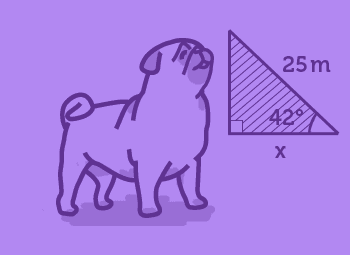
Related rates consistently ranks as the most difficult topic for AP Calculus AB students, and for good reason: it demands that you hold a geometric or physical scenario in mind, translate it into an equation relating two or more changing quantities, and then differentiate that equation implicitly with respect to time. Many students can perform the differentiation correctly once the equation is set up but struggle with the setup itself. The most effective approach is to slow down before differentiating. Draw a clear diagram, label every quantity that is changing, identify which rate you are given and which you are looking for, and write the relationship between the quantities explicitly before touching any calculus. Practising a range of classic problem types — a ladder sliding down a wall, water draining from a conical tank, the shadow of a moving person — builds the pattern recognition that makes related rates feel routine rather than overwhelming. Once related rates are solid, the rest of the applied-derivative topics become significantly more approachable.
Why StudyPug for AP Calculus AB?
StudyPug is built for students who need more than a textbook explanation. Every AP Calculus AB lesson is taught by a certified teacher in a clear, step-by-step video format — not an AI-generated summary, but a real educator walking through the method so you understand how to approach any problem, not just the example in front of you. That distinction matters in AP Calculus AB, where the exam rewards method and justification over rote answers.
Before you watch a single video, a diagnostic assessment maps exactly which calculus topics you need to work on. Rather than reviewing everything from the beginning, you focus on the gaps that are actually costing you marks. From there, adaptive practice problems adjust their difficulty to match your performance, keeping you in the zone where learning happens fastest — challenged but not overwhelmed.
All content is aligned to the AP Calculus AB curriculum and practice is based on real exam-style questions, so every session you complete is directly relevant to what you will face on test day. Whether you are working through limits for the first time, drilling integration by substitution, or building confidence for the free-response section, StudyPug has the material ready whenever you need it — day or night.
StudyPug also offers free practice problems with no subscription required, so you can test your understanding before committing. If you choose a paid plan, it is backed by a 30-day money-back guarantee.
What you learn — AP Calculus AB curriculum coverage
AP Calculus AB is organised into units that build progressively toward the full calculus toolkit tested on the AP exam. The course opens with a thorough treatment of limits and continuity, including one-sided limits, limits at infinity, and the conditions for continuity at a point. From there, differentiation rules are introduced systematically: power, product, quotient, and chain rules, followed by implicit differentiation and derivatives of trigonometric, exponential, and logarithmic functions. Applications of derivatives form a major unit: analysing function behaviour with the first and second derivative tests, solving optimisation problems, and setting up related-rates equations. The second half of the course moves into integral calculus: Riemann sums and their connection to the definite integral, the Fundamental Theorem of Calculus (both parts), u-substitution, and applications of integration including net area, area between curves, and average value of a function. The course closes with an introduction to differential equations, separation of variables, and slope fields.
Note: No validated internal topic-page links are currently available in the site map for this course. Links will be added once topic pages are confirmed in the feed.
How to use StudyPug for AP Calculus AB
The most effective way to use StudyPug for AP Calculus AB is to start with the diagnostic assessment. It takes a short time to complete and produces a clear picture of which units are solid and which need attention. Use that result to build your study plan rather than working through the course in order from the beginning.
For each topic you need to improve, watch the certified-teacher video lesson first. Pause when the teacher works through an example and try the next step yourself before continuing — this active approach is far more effective than passive watching. Then move into the adaptive practice set for that topic. The questions will adjust to your level; when you get something wrong, go back to the video to understand why before continuing.
In the weeks before your AP exam, shift your focus to exam-style practice. Work through multi-part free-response questions under timed conditions, then check your work against the step-by-step solutions. Pay close attention to how answers are justified in writing — the AP exam awards marks for reasoning, not just correct final values. Use StudyPug on any device, whenever a study window opens, to keep your practice consistent right through to exam day.
AP Calculus AB FAQ
Unsure how StudyPug works? Need help with setting up? Check our frequently asked questions or contact us for help.
What do you learn in AP Calculus AB, and what topics does it cover?
AP Calculus AB covers the foundational concepts of single-variable calculus. You study limits and continuity, differentiation and its applications (including the chain rule, implicit differentiation, and related rates), and integral calculus (definite and indefinite integrals, the Fundamental Theorem of Calculus, and area under a curve). You also explore differential equations and basic slope fields. It is roughly equivalent to a first-semester university calculus course and builds the analytical thinking skills used across science, engineering, and economics.
What is the difference between AP Calculus AB and AP Calculus BC?
AP Calculus AB covers differential and integral calculus at an introductory university level — limits, derivatives, integrals, and their applications. AP Calculus BC covers all of AB plus additional topics: parametric and polar equations, vector functions, sequences and series, and advanced integration techniques. A strong AB result earns college credit for one semester of calculus; BC typically earns credit for two semesters. Students comfortable with AB material who want a deeper mathematical challenge usually go on to BC.
Is AP Calculus AB hard, and where do students struggle most?
AP Calculus AB is considered one of the more demanding AP courses. Most students find the conceptual shift to limits the first hurdle — understanding why a limit exists, not just computing one. Related rates and implicit differentiation trip up many students because they require holding multiple variables in mind at once. Integration by substitution is another common sticking point. With consistent practice and clear method-focused explanations, these areas become manageable. Students who keep up with problem practice throughout the year tend to perform much better on the exam.
What should I take before AP Calculus AB, and what comes after it?
You should have strong algebra and precalculus skills before starting AP Calculus AB — comfort with functions, trigonometry, and exponential and logarithmic functions is essential. Most students complete Precalculus or a year of Algebra 2 and Trigonometry first. After AB, the natural progression is AP Calculus BC, which builds directly on AB content. From there, university-level Calculus II and Calculus III (multivariable calculus) follow. Students pursuing engineering, physics, or mathematics will use these foundations throughout their degree.
Is AP Calculus AB on the ATAR, and how is it tested?
AP Calculus AB is an American College Board exam, not an ATAR-assessed subject. In Australia, students typically study the equivalent content through Mathematical Methods (a Year 11–12 ATAR subject available in most states). The AP exam itself is a 3-hour, 15-minute test split into multiple-choice and free-response sections, with a calculator-permitted portion and a no-calculator portion. Australian students enrolled in AP programs at international or independent schools may still sit the AP exam to earn US college credit alongside their ATAR results.
What is one of the hardest concepts in AP Calculus AB, and how do you tackle it?
Related rates is widely regarded as the toughest topic in AP Calculus AB. The challenge is setting up the equation correctly — identifying all changing quantities, writing the relationship between them, and then differentiating implicitly with respect to time. The best approach is to draw a diagram for every problem, clearly label what is changing and what is constant at the specific instant given, and write out the relationship before touching any derivatives. Practising a variety of problem types — ladders, water tanks, shadows — builds the pattern recognition that makes related rates click.





Written by the StudyPug Team
Last updated June 5, 2026
3 M+
students
★★★★★
4.8 average
K–12
all grades