Year 11 General Maths Help — Video Lessons & Practice
Get clear explanations for any General Maths problem and build exam-ready confidence for the ATAR.
Step-by-Step Videos
See each step to solve problems yourself.
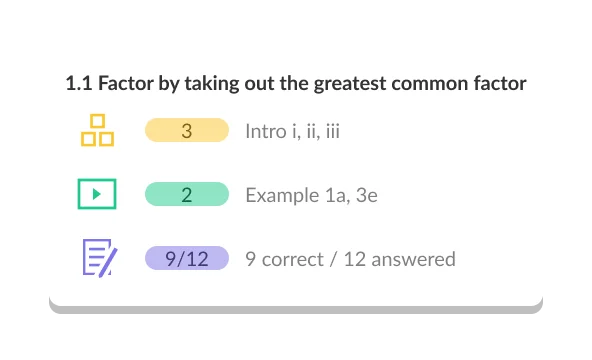
Unlimited Practice
Keep practising until it truly clicks.
Real Exam Practice
Includes free real exam practice questions.
Try It Now
Test your knowledge
Our approach aligns with the evidence
Exam Scores
Better Recall
Less Anxiety
General Maths Topics
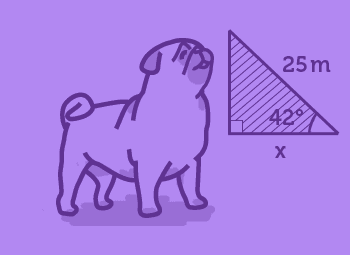
1. Pythagorean Theorem
2. Surface Area and Volume
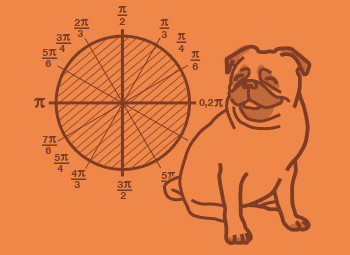
3. Circles
4. Scale Factors and Similarity
5. Trigonometry
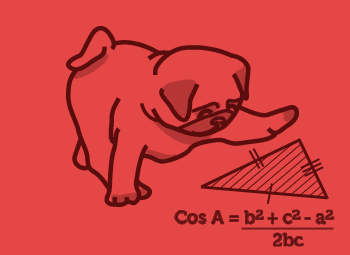
6. Sine Rule and Cosine Rule
7. Bearings
8. Linear Functions
9. Simultaneous Equations
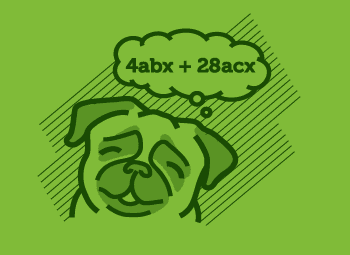
10. Operations with Algebraic Expressions
11. Reciprocal Functions
12. Statistics
13. Bivariate Data
14. Sequences
15. Introduction to Matrices
16 Chapters · 101 Topics · 722 Videos

Ready to practice General Maths?
Try practice questions on every General Maths topic — with instant feedback and step-by-step video solutions when you get stuck.
Discover Our Learning Areas
Explore key subjects and start learning with interactive content.





What is Year 11 General Maths?
Year 11 General Maths is a practical, applied mathematics course designed for Australian students who want strong, usable maths skills without the calculus focus of Mathematical Methods. It covers statistics and probability, financial mathematics, measurement and geometry, algebraic skills, and networks and matrices — topics built around real-world problem solving. The course is an approved ATAR subject pathway in most states and territories, making it a genuine option for students planning university entry across a broad range of degree programs.
What topics are covered in Year 11 General Maths?
The course is built around five main strands. Financial mathematics covers simple and compound interest, depreciation, loans, and budgeting — all with direct real-life applications. Statistics and probability explores data collection, displays, summary statistics, and probability calculations. Measurement and geometry focuses on area, volume, surface area, and applications of trigonometry. Algebraic skills introduce linear equations, graphing, and modelling. Networks and matrices round out the course with path problems, spanning trees, and matrix arithmetic. Each strand builds on Year 10 content and extends toward the Year 12 General Mathematics units.
Is Year 11 General Maths hard?
Compared to Mathematical Methods, General Maths is considered more manageable — but that doesn't mean it's easy. Students consistently find financial mathematics the most demanding topic, particularly compound interest and loan repayment schedules where a small error in formula set-up produces a completely wrong answer. Statistics is another common sticking point, especially calculating and interpreting standard deviation and constructing data displays accurately. Networks can feel abstract at first for students who haven't encountered graph theory before. The good news is that these are all learnable skills: a clear explanation of the method, followed by structured practice, is the most reliable path through each difficult topic.
How does General Maths compare to Mathematical Methods?
General Maths and Mathematical Methods are both Year 11–12 ATAR mathematics courses, but they serve different student goals. General Maths emphasises applied reasoning — using mathematics to solve practical problems in finance, measurement, and data — and requires a solid but non-calculus algebraic toolkit. Mathematical Methods introduces differential and integral calculus and is a prerequisite for engineering, science, and many mathematics-heavy university programs. Students who are uncertain which path to take should consider their planned university degree: many business, health, education, and social science programs accept General Mathematics as a prerequisite, while pure STEM pathways typically require Methods or Specialist Mathematics.
What comes before and after Year 11 General Maths?
Students entering Year 11 General Maths are expected to have completed Year 10 Mathematics with competence in algebra, percentages, basic geometry, and data interpretation. A comfort with linear equations and graphing makes the transition noticeably smoother. After completing Year 11 General Maths, almost all students continue to Year 12 General Mathematics, which deepens each of the five topic strands and introduces some new applications. The Year 12 course concludes with an external exam set by the relevant state authority — NESA in New South Wales, VCAA in Victoria, SCSA in Western Australia, and so on — and the scaled score contributes directly to the ATAR.
How is General Maths tested in the ATAR?
Year 12 General Mathematics (the follow-on to Year 11) is assessed through a combination of school-based assessment tasks — which may include tests, assignments, and investigations — and a final external written examination. The external exam is set and marked by the state curriculum authority and typically includes both multiple-choice and extended-response questions. Students are usually permitted a CAS calculator and a formula sheet, but they still need to understand which formula to apply and how to interpret the result. Practising ATAR-style questions during Year 11 builds exactly the exam technique that pays off in Year 12.
Why StudyPug for Year 11 General Maths?
StudyPug is built around the way high school students actually learn maths — by watching a method explained clearly, then practising it until it becomes automatic. Every General Maths video lesson is made by certified teachers, not generated by AI, and each one teaches the method behind the problem rather than just showing the answer. That distinction matters at Year 11: the ATAR tests whether you can apply a method to an unfamiliar question, not whether you remember a worked example.
The platform starts with a short diagnostic assessment that maps your current knowledge across all General Maths topic areas and identifies the specific gaps holding you back. Instead of working through every topic from the beginning, you go straight to what you actually need. Adaptive practice problems then adjust in difficulty as you improve, so every session is pitched at exactly the right level — challenging enough to build skill, accessible enough to build confidence.
ATAR exam-style questions are built into your subscription, giving you realistic practice with the format and difficulty of the actual external exam. And because the lessons are available on any device at any time, you can get help with a homework problem at 10pm on a Sunday just as easily as during study hall.
What you learn — General Maths curriculum coverage
StudyPug's Year 11 General Maths content is aligned to the Australian curriculum framework and covers all five core topic strands in full:
- Financial Mathematics: Simple interest, compound interest, depreciation, loan repayments, and personal budgeting — with step-by-step formula application for every question type.
- Statistics and Probability: Data collection and sampling, frequency tables, histograms, box plots, mean, median, mode, standard deviation, and probability calculations including two-way tables and Venn diagrams.
- Measurement and Geometry: Perimeter, area, and volume of standard and composite shapes; surface area; right-triangle trigonometry; and applications of similarity and scale.
- Algebraic Skills: Linear equations and inequalities, graphing linear relationships, simultaneous equations, and linear modelling of real-world situations.
- Networks and Matrices: Graph terminology, adjacency matrices, shortest path algorithms, minimum spanning trees, and basic matrix operations.
Each topic is broken into short, focused video lessons so you can target exactly the concept you're working on without sitting through content you already understand.
Using StudyPug for Year 11 General Maths
Getting started is straightforward. When you create your account, the diagnostic assessment runs through a set of General Maths questions and builds a picture of where you're strong and where you need support. From there, the platform recommends a starting point — whether that's reinforcing a Year 10 concept that's appearing in your Year 11 work, or diving straight into financial mathematics because your first assessment is coming up.
Each topic page includes a certified-teacher video, a full set of worked examples, and a bank of adaptive practice problems. Work through the video first to understand the method, then tackle the practice problems. If you get stuck, the worked solution shows you exactly where the reasoning goes — not just the final number, but the step-by-step logic.
For exam preparation, the ATAR-style practice questions replicate the format of the external exam, including multi-part extended-response questions that require you to show working. Use these in the weeks before your school assessments and again before the Year 12 external exam to build both speed and accuracy.
StudyPug is available on desktop, tablet, and mobile, so your General Maths help is always with you — whether you're studying at home, on the bus, or in a free period at school. All subscriptions include a 30-day money-back guarantee, and you can cancel at any time with no lock-in contract.
General Maths FAQ
Unsure how StudyPug works? Need help with setting up? Check our frequently asked questions or contact us for help.
What do you learn in Year 11 General Maths, and what topics does it cover?
Year 11 General Maths covers practical mathematical skills across five core areas: statistics and probability, financial mathematics, measurement and geometry, networks and matrices, and algebraic skills. Students explore data analysis, loans and interest, area and volume, and linear equations. The course is designed for students who want a strong foundation in applied maths and is recognised as a pathway toward the ATAR in most Australian states, including through the Year 12 General Mathematics units.
What is the difference between General Maths and Mathematical Methods?
General Maths focuses on applied, real-world mathematics — financial calculations, statistics, measurement, and networks — using accessible algebraic techniques. Mathematical Methods is a more abstract, calculus-based course covering functions, derivatives, and integrals. Methods is typically required for STEM degrees, while General Maths suits students heading into business, health, social sciences, or trades. Both count toward the ATAR, but they have different scaled score ranges and university prerequisite implications.
Is General Maths hard, and where do students struggle most?
General Maths is considered more accessible than Mathematical Methods, but it still demands consistent effort. The topics students find hardest are financial mathematics (compound interest, loans, and depreciation), statistics (interpreting data displays and calculating standard deviation), and networks (shortest path and minimum spanning trees). Many students underestimate the volume of formula application required. Building a habit of working through practice problems after each video lesson makes a significant difference.
What should I know before starting Year 11 General Maths, and what comes after?
A solid Year 10 foundation in basic algebra, percentages, and data interpretation is the main prerequisite. Students who are comfortable with linear equations and reading graphs tend to settle into the course well. After Year 11 General Maths, most students continue to Year 12 General Mathematics, which extends the same topic areas at greater depth. The Year 12 course contributes to the ATAR and can support entry into a wide range of university programs in business, education, and health sciences.
Is General Maths assessed in the ATAR, and how is it examined?
Yes. Year 12 General Mathematics contributes to the ATAR in all Australian states and territories. Assessment typically combines school-based exams and assignments throughout the year with a final external written exam. The external exam is set by each state's curriculum authority (for example, NESA in NSW, VCAA in Victoria, SCSA in Western Australia). Questions test both knowledge recall and problem-solving across all topic areas, so practising ATAR-style questions during Year 11 gives you a head start.
What is one of the hardest concepts in General Maths, and how do you tackle it?
Financial mathematics — specifically compound interest and loan repayment calculations — trips up a large number of Year 11 students. The formulas look straightforward but mistakes creep in when identifying the correct values for principal, rate, and time period. The most effective approach is to work through the formula step-by-step, substituting values before calculating, and checking whether your answer is reasonable. Watching a worked video that models this process — and then practising five or six similar problems — is the fastest way to build accuracy.




Written by the StudyPug Team
Last updated June 5, 2026
3 M+
students
★★★★★
4.8 average
K–12
all grades