IB Chemistry Help — Video Lessons & Practice
Get clear, step-by-step explanations for every IB Chemistry topic and build exam-ready confidence.
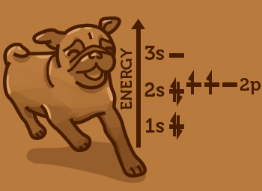
Step-by-Step Video Lessons
Watch each answer to solve the next alone.
Practice Until Perfect
Keep practicing until it clicks.
Test Prep Included
Practice real included IB exam questions.
IB Chemistry Topics
1. Stoichiometry
2. Atomic Structure
3. Periodicity and Elements
4. Chemical Bonding
5. Enthalpy and Thermodynamics
6. Kinetics
8. Acid-Base Theory
9. Redox and Electrochemistry
10 Chapters · 55 Topics · 494 Videos
Discover Our Learning Areas
Explore key subjects and start learning with interactive content.




What is IB Chemistry?
IB Chemistry is a two-year science course offered as part of the International Baccalaureate Diploma Programme at Standard Level (SL) and Higher Level (HL). It develops students' understanding of the physical and chemical world through a blend of theoretical study, mathematical problem-solving, and hands-on laboratory investigation. Assessed internationally on a 1–7 scale, IB Chemistry is recognised by universities across Australia and worldwide as strong preparation for science, medicine, engineering, and related fields.
What topics are covered in IB Chemistry?
The IB Chemistry syllabus is organised into a core set of topics studied by all students, with additional HL-only material adding greater depth. Core topics include stoichiometric relationships, atomic structure, periodicity, chemical bonding and structure, energetics and thermochemistry, chemical kinetics, equilibrium, acids and bases, redox processes, and organic chemistry. Higher Level students extend these areas and study topics such as advanced organic mechanisms, spectroscopy, and further electrochemistry. All students also complete an internally assessed Individual Investigation worth 20% of the final mark, developing skills in experimental design, data analysis, and scientific communication.
Is IB Chemistry harder than other IB sciences?
IB Chemistry is widely regarded as one of the more mathematically rigorous IB science options. Compared to IB Biology, it places greater emphasis on quantitative calculations — mole calculations, equilibrium constants, enthalpy changes, and electrochemical cell potentials — alongside conceptual understanding. Compared to IB Physics, the mathematical demands are similar but the content shifts from mechanics and waves to chemical systems and reactions. Most students find that consistent practice with worked problems, rather than passive reading of notes, is the key to performing well. The topics that cause the most difficulty tend to be stoichiometry, chemical equilibrium, and organic reaction mechanisms.
How is IB Chemistry examined, and what do Australian students need to know?
IB Chemistry is examined through the IB Diploma external assessments. Standard Level students sit Paper 1 (a multiple-choice paper on core topics) and Paper 2 (short-answer and extended-response questions). Higher Level students sit these two papers plus Paper 3, which includes data-based questions and optional topic material. The internal assessment — the Individual Investigation — is marked by teachers and moderated by the IB, contributing 20% of the overall grade. In Australia, the IB Diploma operates alongside the ATAR system; many universities accept IB scores directly through published ATAR equivalencies, making strong IB Chemistry results genuinely valuable for competitive course entry.
What are the hardest concepts in IB Chemistry, and how do you approach them?
Several topics consistently challenge students across both SL and HL:
Chemical Equilibrium: Understanding Le Chatelier's Principle is conceptually straightforward, but applying it to unfamiliar systems under exam conditions is where students lose marks. The ICE table method is the most reliable tool for equilibrium calculations — practise it until it becomes automatic.
Stoichiometry and Mole Calculations: These underpin almost every other topic in IB Chemistry. Students who struggle here often find that difficulties cascade into energetics, kinetics, and acid-base calculations. Revisiting mole-to-mole ratios and limiting reagent problems early pays dividends across the whole course.
Organic Chemistry Mechanisms: HL students in particular find nucleophilic substitution, elimination, and addition reactions demanding because they require understanding electron movement, not just memorising products. Drawing curly-arrow mechanisms step by step in practice is the most effective preparation.
Electrochemistry and Redox: Balancing half-equations and calculating standard electrode potentials under timed conditions is a common stumbling block. A consistent method — always identify oxidation states first, then balance atoms and charges systematically — makes these questions manageable.
Why use StudyPug for IB Chemistry?
StudyPug is built around the needs of students who want to understand IB Chemistry deeply, not just copy answers. Every lesson is taught by certified teachers who walk through each concept step by step, showing you the reasoning and method so you can apply it to any exam question — including ones you have never seen before. This is especially important in IB Chemistry, where Paper 2 and Paper 3 questions are designed to test understanding and application, not recall.
The platform starts with a diagnostic assessment that quickly identifies the exact topics where you need to focus. Rather than working through every chapter from the beginning, you spend your revision time where it counts most. As you practise, the adaptive system adjusts the difficulty to match your current level — harder problems when you are ready for them, more support when you need it.
For Australian IB students balancing the demands of the Diploma Programme — Extended Essay, Theory of Knowledge, CAS, and multiple subject examinations — this kind of efficient, targeted study makes a real difference. StudyPug's IB Chemistry content is aligned to the IB Diploma Programme syllabus, so the lessons you watch and the practice problems you complete directly reflect what the IB examiners assess.
What you learn: IB Chemistry curriculum coverage
StudyPug covers the full IB Chemistry SL and HL syllabus. Key areas include:
- Stoichiometric Relationships — mole concept, limiting reagents, yield calculations, concentration
- Atomic Structure and Periodicity — electron configuration, periodic trends, ionisation energy
- Chemical Bonding and Structure — ionic, covalent, and metallic bonding; VSEPR theory; molecular polarity
- Energetics and Thermochemistry — enthalpy changes, Hess's Law, Born-Haber cycles (HL)
- Chemical Kinetics — rate expressions, activation energy, Arrhenius equation (HL)
- Chemical Equilibrium — equilibrium law, ICE tables, Le Chatelier's Principle
- Acids and Bases — pH calculations, buffer solutions, titration curves
- Redox and Electrochemistry — half-equations, electrochemical cells, standard electrode potentials
- Organic Chemistry — functional groups, reaction mechanisms, spectroscopy (HL)
- Measurement and Data Processing — uncertainties, graphical analysis, error propagation
Because no validated topic-level URLs are currently available in the internal link map for this course, all curriculum areas above are accessible directly through the StudyPug IB Chemistry course page and its topic navigation.
Using StudyPug for IB Chemistry revision
The most effective way to use StudyPug for IB Chemistry is to start with the diagnostic assessment before your first study session. It takes only a few minutes and immediately shows you which topics are secure and which need work — giving your revision a clear direction from day one.
From there, use the certified-teacher video lessons as your primary explanation tool. When a concept from class is unclear, search for it on StudyPug and watch the step-by-step walkthrough before returning to your textbook or past papers. This order — video first, then practice — builds the mental model you need to transfer knowledge to exam questions.
Use the adaptive practice problems after each video to consolidate understanding. The system will push difficulty upward as you improve, which mirrors the progression in IB exam papers from accessible SL-style questions to demanding HL data-response problems.
In the weeks before your IB Diploma examinations, shift to exam-style practice tests. These are structured around the Paper 1, Paper 2, and Paper 3 format so you build familiarity with question style, mark-scheme language, and time management. Many students find that the combination of understanding the method (from video lessons) and practising under exam conditions (from the test prep content) is what finally makes IB Chemistry feel achievable — rather than overwhelming.
StudyPug is available on any device, so you can study between classes, on the bus, or late at night when a homework problem is not making sense. The 30-day money-back guarantee means you can start without any financial risk and see whether the platform works for your IB Chemistry revision before committing long-term.
IB Chemistry FAQ
Unsure how StudyPug works? Need help with setting up? Check our frequently asked questions or contact us for help.
What do you learn in IB Chemistry, and what topics does it cover?
IB Chemistry is a rigorous two-year Diploma Programme course covering stoichiometry, atomic structure, chemical bonding, energetics, kinetics, equilibrium, acids and bases, redox reactions, organic chemistry, and measurement and data processing. Higher Level students also study additional depth topics such as spectroscopy and further organic chemistry. The course combines theoretical understanding with practical lab skills assessed through an Individual Investigation.
What is the difference between IB Chemistry and IB Biology?
IB Chemistry focuses on the composition, structure, and reactions of matter — from mole calculations and thermodynamics to organic synthesis. IB Biology centres on living systems, genetics, ecology, and cellular processes. Chemistry is generally more mathematically demanding, with a strong emphasis on quantitative problem-solving and equation manipulation, while Biology requires broader factual recall and data analysis of biological phenomena. Many students take both; each builds different analytical skills valued in science degrees.
Is IB Chemistry hard, and where do students struggle most?
IB Chemistry is widely considered one of the more demanding IB subjects, particularly at Higher Level. Students most commonly struggle with stoichiometry and mole calculations, equilibrium and Le Chatelier's Principle, electrochemistry and redox half-equations, and the mechanisms in organic chemistry. The combination of conceptual depth, mathematical rigour, and lab assessment makes it challenging. Breaking each topic into small, sequential steps — as StudyPug's lessons do — is the most effective approach for building solid understanding.
What should I study before IB Chemistry, and what comes after it?
A solid foundation in Year 10 or IGCSE-level chemistry and mathematics is important before starting IB Chemistry. Within the IB Diploma, Mathematics Analysis and Approaches (even at Standard Level) supports quantitative chemistry strongly. After IB Chemistry, students are well-prepared for university-level chemistry, biochemistry, pharmacy, chemical engineering, medicine, and environmental science degrees. The skills in experimental design from the Individual Investigation also translate directly into university research methods.
Is IB Chemistry on the IB Diploma exam, and how is it assessed?
Yes — IB Chemistry is assessed through the IB Diploma external examinations. Standard Level students sit Paper 1 (multiple choice) and Paper 2 (short answer and extended response). Higher Level students additionally sit Paper 3 (data-based questions and options). Internal assessment counts for 20% of the final mark and consists of a self-directed Individual Investigation. Scores are reported on the IB 1–7 scale, and grade boundaries are set internationally each session by the IB.
What is one of the hardest concepts in IB Chemistry, and how do you tackle it?
Chemical equilibrium — including Le Chatelier's Principle and the equilibrium constant expression — consistently trips students up. The key is understanding that equilibrium is dynamic, not static, and that changes in concentration, pressure, or temperature shift the position predictably. Start by mastering the ICE table method for calculating equilibrium concentrations, then practise applying Le Chatelier's Principle to unfamiliar scenarios. Working through exam-style questions step by step, rather than just reading theory, is what builds the pattern recognition examiners reward.




Written by the StudyPug Team
Last updated June 5, 2026
3 M+
students
★★★★★
4.8 average
K–12
all grades