Macroeconomics Help: Video Lessons & Practice
Step-by-step concept videos, adaptive practice, and mock exams — everything you need to grasp GDP, inflation, and beyond.
Value vs. Private Tutor
Get expert Macroeconomics help affordably.

Multi-Subject
Switch subjects anytime not just Macroeconomics.
Build Mastery
Master concepts before moving forward.
Macroeconomics Topics
1. Measuring GDP
2. Jobs and Inflation
3. Understanding Economic Growth
4. Finance and Loans
5. Money and Banks
6. The Exchange Rate
7. Aggregate Supply and Demand
8. The Keynesian Model
9. Inflation and Unemployment
9 Chapters · 36 Topics · 118 Videos
Discover Our Learning Areas
Explore key subjects and start learning with interactive content.













What is Macroeconomics?
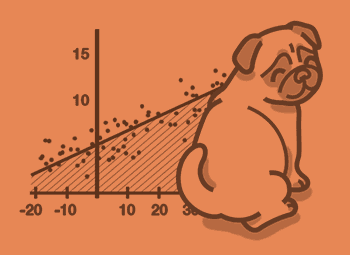
Macroeconomics is the branch of economics that studies how entire economies function. Rather than examining a single firm or market, it analyses economy-wide phenomena: total output, national income, the general price level, employment, and the policies governments and central banks use to influence them. If you are searching for macroeconomics help in Singapore — whether you are preparing for the GCE A-Level Economics paper or working through a university module — understanding the big-picture frameworks is the foundation for everything that follows.
At its core, macroeconomics asks three enduring questions: What determines how much an economy produces? What drives the price level and inflation? And what policies can move an economy closer to full employment and stable growth? The answers draw on models such as Aggregate Demand and Aggregate Supply (AD-AS), the Keynesian income-expenditure model, and open-economy frameworks that connect exchange rates to trade balances.
How does Macroeconomics differ from Microeconomics?
Microeconomics zooms in: it studies how individuals, households, and firms make decisions and how markets coordinate those decisions through prices. Macroeconomics zooms out: it treats the economy as a single system and measures aggregates — GDP, the Consumer Price Index, and the unemployment rate. A microeconomist might ask why the price of hawker-centre chicken rice rose; a macroeconomist asks why Singapore's overall inflation rate changed and what the Monetary Authority of Singapore (MAS) should do about it.
The two fields are deeply connected. Micro behaviour drives macro outcomes — household spending decisions aggregate into total consumption; firm hiring decisions aggregate into the employment rate. Strong macroeconomics students build their analysis on solid microeconomic foundations, which is why most Singapore economics programmes at JC and university level teach both in tandem.
Is Macroeconomics hard, and which topics trip students up?
Macroeconomics is manageable with the right approach, but several topics consistently challenge students. The AD-AS diagram looks deceptively simple until you need to trace the short-run and long-run effects of a supply shock simultaneously. The Balance of Payments (BOP) requires you to track three accounts at once and then connect movements in each account to exchange-rate changes and policy responses — all while applying the Marshall-Lerner condition and the J-curve effect.
Essay questions in GCE A-Level Economics demand structured, evaluative arguments: you must present two sides, weigh trade-offs, and reach a reasoned conclusion. Students who struggle typically practise problems in isolation without revisiting the underlying model. Watching a certified-teacher lesson that explains the method — not just the answer — before attempting practice problems is the approach that builds durable understanding rather than surface pattern-matching.
What does GCE A-Level Economics cover in the Macroeconomics component?
The Singapore Examinations and Assessment Board (SEAB) GCE A-Level H2 Economics syllabus divides into three broad components: markets and their failures (microeconomics), the national economy (macroeconomics), and the international economy. The macroeconomics strand covers:
- National income and GDP measurement
- Aggregate Demand and Aggregate Supply — short-run and long-run analysis
- Unemployment: types, causes, and policies
- Inflation and deflation: causes, consequences, and the trade-off with unemployment
- Fiscal policy: government spending, taxation, and the multiplier
- Monetary policy: interest rates, money supply, and the role of the MAS
- Supply-side policies
- Balance of Payments and exchange-rate systems
- Economic growth and development
H2 Economics is assessed through Paper 1 (data-response) and Paper 2 (essays), both of which demand applied analysis. University-level macroeconomics modules in Singapore — at NUS, NTU, SMU, and SUSS — extend these foundations into IS-LM, Mundell-Fleming, growth models, and econometric applications.
What comes after Macroeconomics, and why do foundations matter?
Getting macroeconomics right is not just about this semester's grade — it is an investment in every subsequent economics course. After introductory or A-Level Macroeconomics, students typically progress to: Monetary Economics (deep dives into central banking and interest-rate transmission), International Economics (trade theory, exchange-rate regimes, and capital flows), Development Economics (growth theory applied to lower-income economies), and Econometrics (using data to test macroeconomic models). Each of these courses assumes fluency in the core macro frameworks. Students who revisit shaky foundations early — through targeted practice and concept-video review — consistently find advanced courses more approachable.
Why StudyPug for Macroeconomics help?
StudyPug is built around three things that make a genuine difference in economics study:
Certified-teacher concept videos. Every macroeconomics lesson is recorded by an experienced, certified teacher who walks you through the method step by step — not an AI voiceover, and not a slide dump. You learn why the AD curve slopes downward, not just that it does, which means you can adapt your knowledge to any exam question the SEAB or your university sets. Watch each video as many times as you need until the model genuinely clicks.
Diagnostic assessment + adaptive practice. When you begin, a short diagnostic assessment maps exactly which macroeconomics topics you already understand and which ones are holding you back — so you spend study time on what actually matters, not topics you have already covered. As you practise, the system adjusts question difficulty to match your current level, keeping you in the productive zone between too easy and too frustrating.
Exam-aligned mock tests. Practice tests and mock exams are structured to reflect the GCE A-Level Economics paper format and university midterm/final styles used in Singapore. Working through timed mock exams is the single most reliable way to build the exam technique — structured paragraphing, diagram accuracy, and evaluative conclusions — that markers reward.
All of this is available in one subscription that also covers Microeconomics, Calculus, Statistics, Linear Algebra, and every other course on the platform. Free daily practice content lets you get started right now without any commitment. And if you subscribe and decide it is not the right fit within 30 days, the money-back guarantee means you risk nothing.
What you will learn in Macroeconomics — course coverage
A complete macroeconomics course on StudyPug covers the full scope of Singapore GCE and university syllabuses, including:
- National Income Accounting: GDP by expenditure, income, and output methods; real vs nominal GDP; limitations of GDP as a welfare measure.
- Aggregate Demand and Aggregate Supply: components of AD; short-run vs long-run AS; price-level and output determination; shifts and policy effects.
- Unemployment: cyclical, structural, frictional, and seasonal unemployment; natural rate; demand-side and supply-side policies.
- Inflation: demand-pull vs cost-push; Consumer Price Index; inflationary and deflationary spirals; the Phillips curve trade-off.
- Fiscal and Monetary Policy: expansionary and contractionary policy; the Keynesian multiplier; MAS exchange-rate–based monetary policy; limitations and policy lags.
- Balance of Payments: current account, capital account, and financial account; BOP equilibrium and disequilibrium; adjustment mechanisms.
- Exchange Rates: determination of exchange rates; fixed vs floating regimes; Marshall-Lerner condition; J-curve effect; Singapore's managed float.
- Economic Growth and Development: actual vs potential growth; sources of growth; sustainable development; policies for long-run growth.
Because no validated internal topic-page URLs are currently available for this course in the SP_PageFeed, links to individual topic pages are omitted here. Browse all available topics directly from the Macroeconomics course page on StudyPug.
How to use StudyPug for Macroeconomics
The most effective workflow is straightforward. Start with the diagnostic assessment — it takes around ten minutes and produces a prioritised list of topics to tackle first. Then watch the certified-teacher concept video for your first priority topic; pause, take notes on the method (not just the conclusion), and replay any section that is unclear. Next, move into adaptive practice for that topic: the platform will start you at the right difficulty and adjust as you improve. When you are satisfied with a topic, move to the next item on your diagnostic list.
For exam preparation, shift to mock exams and timed practice tests at least three weeks before your GCE paper or university final. Work through full past-style papers under timed conditions, then review your errors by rewatching the relevant concept video. This review-and-practice loop, repeated across all high-weight topics, is the approach that consistently produces grade improvement. Free practice content is available to start right now — no subscription required to take your first steps.
Macroeconomics FAQ
Unsure how StudyPug works? Need help with setting up? Check our frequently asked questions or contact us for help.
What do you learn in Macroeconomics, and what topics does it cover?
Macroeconomics is the study of economies as a whole. Core topics include national income accounting, GDP measurement, economic growth, unemployment, inflation, fiscal policy, monetary policy, the balance of payments, exchange rates, and aggregate demand and supply models. At GCE A-Level and university level in Singapore, you will also study open-economy models and government policy evaluation. By the end of the course you should be able to analyse macroeconomic data, construct policy arguments, and evaluate trade-offs between objectives such as growth and price stability.
What is the difference between Macroeconomics and Microeconomics?
Microeconomics studies the decisions of individual consumers, firms, and markets — focusing on price determination, supply and demand, market structures, and market failures. Macroeconomics steps back to examine the entire economy: national output, aggregate price levels, unemployment rates, and government policy. While microeconomics asks why a single good's price rises, macroeconomics asks why a country's inflation rate rises. The two are complementary — micro provides the building blocks that macro aggregates. Most economics programmes in Singapore cover both, often in parallel courses.
What are the prerequisites for Macroeconomics, and what course comes after it?
A solid foundation in basic economics or introductory economics principles is the typical prerequisite — either H1/H2 Economics at the GCE A-Level or an introductory economics module at university. You should be comfortable with supply-and-demand analysis, opportunity cost, and basic graphical reasoning. After Macroeconomics, students commonly progress to International Economics, Development Economics, Monetary Economics, or Econometrics. These advanced courses build on macro models and require quantitative skills, so strengthening your macroeconomics fundamentals now pays dividends throughout your degree.
Is Macroeconomics hard, and where do students struggle most?
Many students find Macroeconomics moderately challenging. The abstract nature of economy-wide models — such as the AS-AD framework and the IS-LM model — can be difficult to visualise at first. Students most commonly struggle with: interpreting macroeconomic data and diagrams correctly; distinguishing short-run from long-run effects of policy; evaluating conflicting policy trade-offs in essays; and understanding open-economy concepts like exchange-rate transmission mechanisms. Consistent practice with data-response questions and structured essay writing, alongside re-watching concept videos until each model is clear, is the most effective approach.
How is Macroeconomics assessed — papers, midterms, and finals?
In Singapore, GCE A-Level Economics (H1/H2) is assessed through written papers set by the Singapore Examinations and Assessment Board (SEAB). H2 Economics typically includes a data-response paper and an essay paper, both requiring analytical and evaluative skills. At university level, assessment usually consists of continuous assessment (class participation, assignments, case studies) worth roughly 40–60%, plus a final examination. Midterm tests, graded problem sets, and essay assignments are common throughout the semester. Practising past-year SEAB papers and timed mock exams is essential preparation.
What is one of the hardest topics in Macroeconomics, and how do you approach it?
The Balance of Payments (BOP) and exchange-rate adjustment mechanism is consistently one of the toughest macroeconomics topics. Students must simultaneously track current account, capital account, and financial account flows, then connect them to exchange-rate movements and policy responses — all while applying the Marshall-Lerner condition and J-curve effect. The best approach is to build the concept in layers: first understand the BOP structure, then practise drawing the connections between a currency depreciation and export competitiveness, and finally apply the full chain to policy evaluation essay questions. Repeated diagram practice accelerates mastery significantly.





Written by the StudyPug Team
Last updated June 5, 2026
3 M+
students
★★★★★
4.8 average
K–12
all grades