Differential Equations Help: Video Lessons & Practice
Work through every topic with clear solutions. Start your free practice test now!
Value vs. Private Tutor
Expert differential equations help without high cost.

Multi-Subject
Master multiple subjects with one plan.

Practice Until Perfect
You practice until you master each topic.
Try It Now
Test your knowledge
Our approach aligns with the evidence
Exam Scores
Better Recall
Less Anxiety
Differential Equations Topics
1. Introduction to Differential Equations
2. First Order Differential Equations
3. Second Order Differential Equations
4. Laplace Transforms
4 Chapters · 26 Topics · 151 Videos
Discover Our Learning Areas
Explore key subjects and start learning with interactive content.





What is Differential Equations?
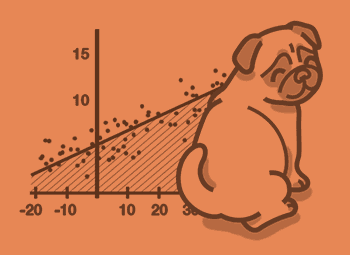
Differential Equations is the branch of mathematics that studies equations containing an unknown function and one or more of its derivatives. These equations describe how quantities change over time or space — from the cooling of a hot drink to the oscillation of a bridge — and form the mathematical backbone of engineering, physics, biology, and economics. In Singapore, the course is taught as a core university module in engineering and mathematics programmes at NUS, NTU, SMU, and SUTD, and is introduced at pre-university level through the GCE A-Level H2 Further Mathematics syllabus.
A typical university Differential Equations course covers first-order equations, higher-order linear equations, systems of ODEs, Laplace transforms, and series solutions. Students who build a solid foundation here are well prepared for advanced courses in Partial Differential Equations, Numerical Analysis, and Control Systems.
What types of differential equations will I encounter at university?
University Differential Equations courses in Singapore typically group problems into three broad families. First-order ODEs include separable equations, linear equations solved with an integrating factor, exact equations, and special cases such as Bernoulli and homogeneous equations. Second-order linear ODEs — both homogeneous and non-homogeneous — are solved using the characteristic equation, undetermined coefficients, or variation of parameters. Systems of ODEs use eigenvalues and eigenvectors from Linear Algebra to find general solutions and are essential for modelling interacting populations or coupled circuits.
Beyond these core families, most modules introduce the Laplace transform as a powerful algebraic method for solving initial-value problems, and some courses end with power series solutions around ordinary and regular singular points (the Frobenius method). Each type demands a distinct solution strategy, which is why choosing the right method before you start working is a key exam skill.
How does Differential Equations connect to Calculus and Linear Algebra?
Differential Equations sits at the intersection of the two courses that precede it. From Calculus you bring integration techniques — integration by parts, partial fractions, trigonometric substitution — because solving a first-order separable ODE is fundamentally an integration problem. You also rely on the series expansion techniques from Calculus II when constructing power series solutions.
From Linear Algebra you bring matrix diagonalisation and the eigenvalue problem. When you encounter a system of ODEs written as x' = Ax, you find eigenvalues and eigenvectors of the matrix A to construct the general solution. If Linear Algebra felt abstract during your first year, Differential Equations gives it immediate, concrete application. Students who revisit their Linear Algebra while studying ODEs often find both subjects become clearer simultaneously.
Why is the Laplace transform so important in Differential Equations?
The Laplace transform converts a differential equation — with its derivatives and initial conditions — into an algebraic equation in the s-domain. You solve that algebraic equation, then invert back to the time domain using a table of standard transforms and partial fraction decomposition. This technique is especially powerful for non-homogeneous equations with discontinuous or impulsive forcing functions (step functions and Dirac delta), which arise constantly in engineering applications such as circuit analysis and mechanical vibrations.
Exam questions on the Laplace transform tend to reward students who know their transform table fluently and can carry out partial fraction decomposition quickly and accurately. The most common errors are sign mistakes when applying the shift theorem and incorrect inversion of complex partial fractions. Working through a large bank of practice problems — with full step-by-step solutions to check against — is the most efficient way to eliminate these errors before your final examination.
Is Differential Equations hard, and what trips students up most?
Yes — Differential Equations consistently ranks among the most difficult first-year university mathematics modules in Singapore. The core difficulty is not any single concept but the sheer variety of equation types, each requiring a different solution method. Students who approach every ODE the same way quickly run into trouble.
The four biggest sticking points are: (1) identifying the correct solution method quickly under exam conditions; (2) applying the Laplace transform and its inverse without algebraic errors; (3) constructing and interpreting the general solution to a system of ODEs from eigenvalues; and (4) applying initial or boundary conditions correctly to pin down the particular solution. The students who improve most rapidly are those who practise problem identification — looking at an equation and immediately recognising its type — rather than just memorising procedures.
How is Differential Equations examined in Singapore?
At NUS, NTU, SMU, SUTD, and SIT, a typical Differential Equations module is assessed through weekly assignments or tutorials (participation and graded work), a mid-semester test or examination (commonly worth 20–30% of the final grade), and a final examination (typically 40–60%). Some programmes include an online quiz component or short project. Examination questions are closed-book or open-formula-sheet and test both procedural skill — carry out the method — and conceptual understanding — explain what the solution represents or verify it satisfies given conditions.
For pre-university students, the GCE A-Level H2 Further Mathematics paper assesses introductory first-order ODEs and provides good preparation for the university module. StudyPug's practice tests and mock exams are structured to mirror the style and difficulty of both the university mid-semester and final examination formats.
Why use StudyPug for Differential Equations?
There is no shortage of Differential Equations textbooks, and your university lectures are taught by qualified professors. So why do students across NUS, NTU, and SUTD turn to StudyPug? The answer comes down to three things that a lecture hall and a textbook alone cannot provide.
A certified-teacher diagnostic that tells you what to study first. Rather than working through every topic from page one, StudyPug's diagnostic assessment identifies precisely which ODE techniques are costing you marks. You spend your limited study time on the gaps that matter — not on topics you already understand.
Concept videos that teach the method, not just the answer. Our certified teachers explain why you choose the integrating factor here, why the characteristic equation takes this form, and what the eigenvalue solution actually represents — so the knowledge transfers to unseen exam questions, not just the worked example in front of you. These are not AI-generated explanations; they are lessons built by experienced mathematics instructors.
Adaptive practice that responds to your performance. Every practice session adjusts to where you are. Struggle with variation of parameters? The system gives you more problems at the right level. Confident with separable equations? It moves you on. You build genuine competence, not just familiarity with a handful of template problems.
Add the 30-day money-back guarantee and a single subscription that covers Differential Equations, Calculus I–III, Linear Algebra, and Statistics all at once, and StudyPug is one of the most cost-effective study tools available to university students in Singapore.
What you learn in Differential Equations — course coverage
A full university Differential Equations course covers the following major topic areas:
- First-Order ODEs: separable equations, linear equations and integrating factors, exact equations, Bernoulli equations, and applications (population models, Newton's law of cooling, mixing problems)
- Second-Order Linear ODEs: homogeneous equations with constant coefficients (characteristic equation, real and complex roots, repeated roots), non-homogeneous equations via undetermined coefficients and variation of parameters, free and forced oscillations
- Higher-Order Linear ODEs: extension of second-order methods, Cauchy–Euler equations
- Systems of First-Order ODEs: matrix formulation, eigenvalue method for real and complex eigenvalues, repeated eigenvalues, phase plane analysis
- Laplace Transforms: definition and standard transforms, linearity, the shift theorems, transforms of derivatives, inverse transforms, partial fractions, solving IVPs, step functions, impulse functions (Dirac delta), convolution
- Series Solutions: power series about ordinary points, Frobenius method about regular singular points, Bessel's equation (introduction)
- Introduction to Partial Differential Equations (some modules): heat equation, wave equation, separation of variables, Fourier series
StudyPug covers all of these topics through dedicated lesson videos and practice problem sets. Because all content is included in one subscription, you can move between Differential Equations and the prerequisite Calculus or Linear Algebra topics whenever you need a refresher — without paying extra.
How to use StudyPug to improve your Differential Equations results
Step 1 — Take the diagnostic. Before your next tutorial or assignment, spend ten minutes on StudyPug's diagnostic assessment. It identifies which topic areas need the most attention and builds a personalised study path for you. This is how students stop wasting time reviewing things they already know.
Step 2 — Watch the concept video first. For each weak topic the diagnostic surfaces, watch the certified-teacher video lesson before attempting practice problems. The videos teach the underlying method — not just the steps — so you can adapt your approach when exam questions are phrased differently from what you have seen before.
Step 3 — Work through adaptive practice problems. After watching, do the practice problem set. The adaptive system adjusts difficulty based on your responses, so you are always working at the level that produces the fastest improvement. Aim to complete at least one full topic practice set before each tutorial.
Step 4 — Use mock exams before your mid-semester and final. StudyPug's practice tests are structured to match the format and difficulty of Singapore university examinations. Sit them under timed conditions, then review every question you got wrong using the step-by-step video solutions. This closes the loop between knowing a method and being able to execute it cleanly under exam pressure.
Step 5 — Revisit freely until it clicks. Every lesson and solution is available to watch as many times as you need. There is no penalty for rewatching. Many students report that a topic that felt opaque after lecture became clear after watching the StudyPug explanation a second or third time with a pen in hand.
Whether you are preparing for a GCE A-Level H2 Further Mathematics paper or sitting your NUS/NTU university final, StudyPug's full coverage of Differential Equations — backed by certified-teacher videos, adaptive practice, and a 30-day money-back guarantee — gives you a structured, efficient path to better results.
Differential Equations FAQ
Unsure how StudyPug works? Need help with setting up? Check our frequently asked questions or contact us for help.
What do you learn in Differential Equations, and what topics does it cover?
Differential Equations is a university-level mathematics course that studies equations relating a function to its derivatives. Core topics include first-order ODEs (separable, linear, exact, and Bernoulli equations), second-order linear ODEs with constant coefficients, systems of differential equations, Laplace transforms, series solutions, and an introduction to partial differential equations. The course builds directly on Calculus I and II and is essential for engineering, physics, and applied mathematics programmes.
What is the difference between Differential Equations and Linear Algebra?
Differential Equations focuses on equations involving unknown functions and their derivatives, modelling dynamic systems such as population growth or electrical circuits. Linear Algebra studies vector spaces, matrices, and linear transformations. The two courses intersect significantly — eigenvalues and eigenvectors from Linear Algebra are used to solve systems of differential equations — but each has a distinct focus. Many universities require both before advanced applied mathematics or engineering courses.
What are the prerequisites for Differential Equations, and what course comes after it?
The standard prerequisite is a solid grounding in Calculus II, including integration techniques, sequences, and series. Some programmes also require or co-require Calculus III. After completing Differential Equations, students typically progress to Partial Differential Equations, Numerical Methods, or Advanced Engineering Mathematics, depending on their major. A strong foundation here is critical — the techniques appear repeatedly in thermodynamics, control systems, and mathematical modelling.
Is Differential Equations hard, and where do students struggle most?
Differential Equations is widely considered one of the more challenging first-year university mathematics courses. Students most commonly struggle with choosing the correct solution method for a given equation, applying the Laplace transform and its inverse correctly, setting up and interpreting systems of ODEs using eigenvalues, and handling variation of parameters. The course demands fluency with integration and algebra. Consistent practice with step-by-step worked examples — not just reading theory — is the most reliable way to build competence.
How is Differential Equations assessed at university in Singapore?
At Singapore universities such as NUS, NTU, SMU, and SUTD, Differential Equations is typically assessed through a combination of graded assignments or tutorials, a mid-semester examination (worth roughly 20–30%), and a final examination (worth 40–60%). Some modules include a component test or project. The GCE A-Level H2 Further Mathematics syllabus also covers introductory ODEs for pre-university students. Exam questions test method selection, algebraic manipulation, and interpretation of solutions in applied contexts.
What is one of the hardest topics in Differential Equations, and how do you approach it?
The Laplace transform is consistently rated the most challenging topic. Students must memorise a table of transforms, apply properties such as the shift theorem and convolution, handle initial-value problems by transforming to the s-domain, then invert correctly — all while managing complex partial fractions. The best approach is to start with straightforward transforms of standard functions, work through a structured set of practice problems that increase in complexity, and use step-by-step video explanations to see exactly where each algebraic manipulation comes from before attempting exam-style questions independently.




Written by the StudyPug Team
Last updated June 5, 2026
3 M+
students
★★★★★
4.8 average
K–12
all grades