Grade 12 Trigonometry Help — Video Lessons & Practice
Get clear explanations for any trig problem and build exam-ready confidence.
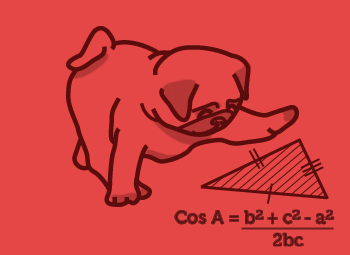
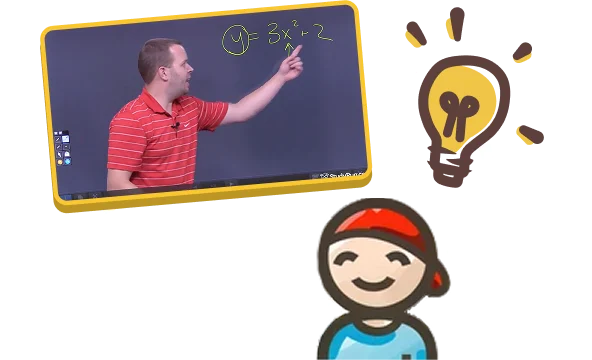
Certified-Teacher Concept Videos
Learn the method, not just the answer. Step-by-step trig lessons from certified teachers show you exactly how to solve problems so you can handle anything on the test.
Diagnostic Assessment + Adaptive Practice
A quick diagnostic pinpoints exactly which trig topics need work. Then practice adjusts to your level so every session builds real understanding — no wasted time.

SAT, ACT & AP Exam Prep Included
Trig shows up on the SAT, ACT, and AP Precalculus. Practice with exam-style questions based on real tests — all included in your subscription.
Try It Now
Test your knowledge
Our approach aligns with the evidence
Exam Scores
Better Recall
Less Anxiety
Trigonometry Topics
1. Right Triangle Trigonometry
2. Trigonometric Ratios and Angle Measure
3. Bearings
4. Graphing Trigonometric Functions
5. Applications of Trigonometric Functions
6. Trigonometric Identities
7. Solving Trigonometric Equations
8. Inverse Trigonometric Functions
9. Imaginary and Complex Numbers
9 Chapters · 60 Topics · 284 Videos
Discover Our Learning Areas
Explore key subjects and start learning with interactive content.




What Is Trigonometry?
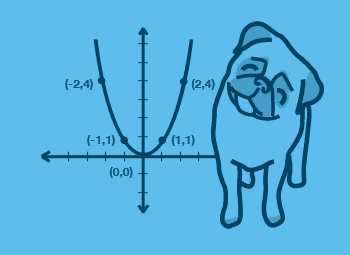
Trigonometry is the branch of mathematics that studies the relationships between the angles and side lengths of triangles, then extends those relationships into functions that model periodic, wave-like behaviour. At the Grade 12 level in the United States, Trigonometry typically sits just before or alongside Precalculus and forms a critical bridge into Calculus. If you have ever wondered how engineers model sound waves, how GPS calculates your position, or how architects compute roof angles, you are looking at trigonometry in action.
The subject is built on a small number of core ideas — the unit circle, the six trig ratios, and a set of identities — but those ideas show up in nearly every advanced math and science course you will take after high school. Getting a solid handle on Trig now pays dividends in Calculus, Physics, and beyond.
What Topics Are Covered in Grade 12 Trigonometry?
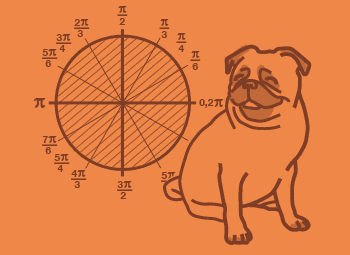
A typical US Grade 12 Trigonometry course moves through several connected units. It usually opens with angle measure — converting between degrees and radians and placing angles in standard position — then builds the unit circle, which is the foundation for everything else. From the unit circle, you define sine, cosine, tangent, and their reciprocal functions (cosecant, secant, cotangent), and learn how to evaluate them at key angles without a calculator.
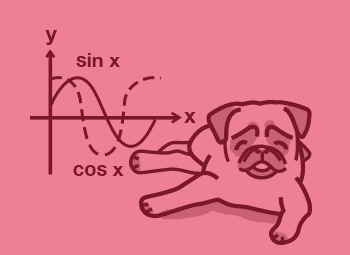
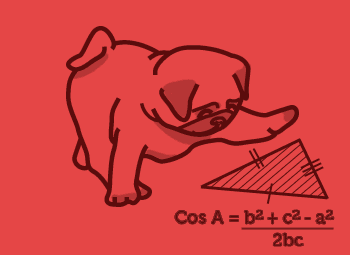
The course then covers graphing: sketching and transforming y = sin x, y = cos x, and y = tan x by changing amplitude, period, phase shift, and vertical shift. Trig identities come next — Pythagorean identities, sum-and-difference formulas, double-angle and half-angle formulas — followed by solving trig equations both analytically and on restricted domains. The Law of Sines and Law of Cosines extend trig from right triangles to oblique (non-right) triangles. Many courses close with inverse trig functions and an introduction to polar coordinates or vectors.
Is Trigonometry Hard for Most Students?
Trig has a reputation as a difficult course, but the challenges are concentrated in a handful of topics rather than spread evenly across the whole subject. The unit circle is the biggest early hurdle — students who take the time to truly understand it (rather than just memorise a chart) find the rest of the course significantly easier. The second major sticking point is trig identities, especially proofs, where there is no step-by-step algorithm to follow and students need to develop pattern recognition over time.
Other common difficulty areas include keeping radian and degree conversions straight, identifying amplitude versus period when reading or writing a sinusoidal equation, and knowing which form of the Law of Sines or Cosines to apply. The good news: all of these are learnable. They respond well to worked examples that show the reasoning, not just the steps, and to targeted practice that builds the specific skill causing trouble. That is exactly what StudyPug's diagnostic and adaptive system is designed to address.
What Do I Need Before Trigonometry, and Where Does It Lead?
The key prerequisite is Algebra 2. You should be comfortable with function notation, solving equations (including quadratics), factoring, working with exponents, and basic transformations of graphs. Familiarity with the coordinate plane and right-triangle geometry (the Pythagorean theorem, basic angle relationships) also matters. Students who are shaky on Algebra 2 often find the early trig identity work particularly difficult, so it is worth shoring up those foundations first.
After Trigonometry, the standard path leads to Precalculus (if you have not already taken it as a combined course) and then to Calculus — either regular Calculus or AP Calculus AB/BC. Trig is woven into Calculus at every level: derivatives and integrals of trig functions, the unit circle in complex numbers, and trigonometric substitution in integration. A strong Trig foundation is not optional for Calculus success — it is essential.
How Is Trigonometry Tested on the SAT, ACT, and AP Exams?
Trig is a meaningful portion of both major US college-entrance exams. On the SAT (College Board Digital SAT), trigonometry questions appear in the Advanced Math domain. You can expect right-triangle trig ratios, the unit circle, radian measure, and trig identities. The ACT Math section typically includes six to eight trig questions covering sine, cosine, tangent, inverse functions, and basic trig equations — questions that are straightforward if you know the unit circle cold.
AP Precalculus (College Board), which many Grade 12 students take alongside or just after a Trigonometry course, is heavily trig-focused. Unit 3 of AP Precalculus covers trigonometric and polar functions in depth. StudyPug's subscription includes exam-style practice problems based on real SAT, ACT, and AP question formats — all included at no extra cost — so you can connect your classroom learning directly to the tests that matter for college admissions and credit.
What Is the Hardest Part of Trigonometry, and How Do You Get Through It?
Proving trig identities consistently ranks as the hardest skill in a Trigonometry course. The challenge is strategic rather than mechanical: you pick one side of the identity and transform it to match the other, but the correct path is rarely obvious at the start. Many students stall because they try to work both sides at once or wait for a formula to apply directly.
The most reliable approach is a short checklist: (1) work on the more complex side only; (2) convert everything to sine and cosine to simplify your options; (3) look for a Pythagorean identity substitution; (4) factor where possible. Watching step-by-step worked proofs is particularly important here — seeing the reasoning unfold in real time builds the intuition you need far faster than reading a static solution. Once you have seen enough proofs worked through completely, you begin to recognize the patterns and the process becomes much less intimidating.
Why StudyPug for Grade 12 Trigonometry?
StudyPug is built around the cycle that actually produces grade improvement: diagnose what you do not know, learn it from a certified teacher who teaches the method, practise adaptively until it sticks, then verify with exam-style problems. Each step of that cycle is built into the platform.
The diagnostic assessment is the starting point. Rather than working through the entire course from the beginning, you take a short diagnostic that identifies your specific gaps — whether that is the unit circle, graphing sinusoids, or trig identities — and builds a focused study plan around them. This is the "study smarter, not harder" principle made practical.
The certified-teacher video lessons teach you how to think through a problem, not just what the answer is. Every lesson is made by a certified teacher, not generated by software. The goal is that after watching a lesson, you can solve a similar problem on your own — which is what you need to do on a test.
Adaptive practice adjusts difficulty in real time based on how you are performing. If you nail three unit circle questions in a row, the system moves you to harder problems. If you slip on trig identities, it gives you more targeted practice in that area. You stay in a productive challenge zone throughout.
For US Grade 12 students specifically, the curriculum coverage maps to US state standards and includes exam-style practice based on real SAT, ACT, and AP question formats. There are no add-ons to purchase — SAT/ACT/AP Trig prep is part of the standard subscription. And if StudyPug turns out not to be the right fit, the 30-day money-back guarantee means you have nothing to lose by trying it.
What You Learn: Trigonometry Curriculum Coverage
StudyPug's Trigonometry content covers all the major units of a US Grade 12 Trig course, aligned to common state standards. Here is a summary of the core coverage areas:
- Angle Measure & the Unit Circle — degrees, radians, arc length, the unit circle at key angles (0°, 30°, 45°, 60°, 90°, and their equivalents), coterminal angles, and reference angles.
- The Six Trig Functions — definitions of sin, cos, tan, csc, sec, cot; evaluating at special angles; understanding even/odd function behaviour; reciprocal and quotient identities.
- Graphing Trig Functions — amplitude, period, frequency, phase shift, and vertical shift for sine, cosine, and tangent; writing equations from graphs; sinusoidal modelling.
- Trig Identities — Pythagorean identities; sum, difference, double-angle, and half-angle formulas; simplifying expressions; proving identities.
- Inverse Trig Functions — definitions and restricted domains of arcsin, arccos, arctan; evaluating and composing inverse trig expressions.
- Solving Trig Equations — solving on restricted domains and over all real numbers; using identities to simplify before solving; general solutions.
- Law of Sines & Law of Cosines — applying to oblique triangles; the ambiguous case (SSA); area formulas.
- Polar Coordinates & Vectors (where included) — converting between rectangular and polar form; basic operations with vectors.
No validated internal curriculum-leaf URLs are available in the current MAP for this course — topic links will be surfaced through the on-page topic module.
How to Use StudyPug for Trigonometry Help
The most effective way to use StudyPug for Trigonometry is to let the diagnostic drive your study plan rather than working through every topic in order. Start with the diagnostic assessment: it takes about ten to fifteen minutes and tells you exactly which topics are causing problems. Then watch the certified-teacher concept video for that topic — pay attention to the method, not just the steps — and move straight into adaptive practice while the lesson is fresh.
When a test or quiz is coming up, use the exam-style practice sets to simulate test conditions. Work through the problems on your own first, then watch the video solution for any problem you got wrong. This loop — attempt, check, understand — is the fastest way to close gaps before an exam.
For SAT or ACT prep, filter by the SAT/ACT tag in the practice library to focus specifically on the question formats and difficulty levels those exams use. Trig is a high-yield area on both tests; a few focused sessions on the unit circle and trig identities can meaningfully improve your math section score.
StudyPug is available on desktop and mobile, so you can fit a practice session into a study hall period, a commute, or the hour before bed. The 30-day money-back guarantee means you can explore the full platform without risk. Free daily practice problems are always available — no subscription required to get started with real trig questions today.
Trigonometry FAQ
Unsure how StudyPug works? Need help with setting up? Check our frequently asked questions or contact us for help.
What do you learn in Trigonometry, and what topics does it cover?
Trigonometry explores the relationships between angles and sides of triangles, then extends those ideas to functions and graphs. Core topics include the unit circle, radian and degree measure, sine, cosine, and tangent functions, trig identities (Pythagorean, sum-and-difference, double-angle), inverse trig functions, the Law of Sines and Cosines, graphing sinusoidal functions, and solving trig equations. Most US Grade 12 Trigonometry courses also introduce polar coordinates and basic applications in physics and engineering contexts.
What is the difference between Trigonometry and Precalculus?
Trigonometry focuses specifically on angle-function relationships — the unit circle, trig ratios, identities, and graphing periodic functions. Precalculus is broader: it includes trig as one major unit but also covers polynomial and rational functions, exponential and logarithmic functions, conic sections, sequences, and an introduction to limits. Many US high schools teach Trigonometry as a standalone Grade 12 course or blend it into Precalculus. If you are taking a standalone Trig course, your work here feeds directly into Calculus and AP courses.
Is Trigonometry hard, and where do students struggle most?
Trigonometry has a reputation for being tricky, but the difficulty usually comes from a few specific sticking points. The unit circle is the biggest — students who memorize it well rarely struggle later. After that, the most common struggles are keeping track of trig identities, understanding radian measure versus degrees, and visualizing transformations when graphing sinusoidal functions (amplitude, period, phase shift). The good news is these are all learnable with the right step-by-step explanations and targeted practice rather than just re-reading notes.
What should I take before Trigonometry, and what comes after it?
You should be comfortable with Algebra 2 — especially function notation, transformations, and solving equations — before starting Trig. A solid handle on the coordinate plane and basic geometry (angle types, the Pythagorean theorem) also helps a lot. After Trigonometry, the natural next steps are Precalculus (if you haven't taken it) and then Calculus or AP Calculus AB/BC. Trig concepts appear constantly in Calculus — derivatives and integrals of trig functions are major topics — so a strong Trig foundation pays off.
Is Trigonometry on the SAT or ACT, and how is it tested?
Yes — both the SAT and ACT include trigonometry. The SAT (College Board) tests trig in its Advanced Math section: expect questions on trig ratios in right triangles, the unit circle, radian measure, and trig identities. The ACT Math section includes trig questions covering sine, cosine, tangent, and their inverses, as well as basic trig equations. AP Precalculus (College Board) is heavily trig-focused and is a strong choice if you want college credit. StudyPug's subscription includes practice based on real exam-style problems for SAT, ACT, and AP — no extra purchase needed.
What is one of the hardest concepts in Trigonometry, and how do you tackle it?
Proving trig identities is where most students hit a wall. Unlike solving equations, you can only work on one side at a time and need to 'see' which identity substitution moves you forward — there's no single algorithm. The best approach: start with the more complicated side, convert everything to sine and cosine first, look for Pythagorean identity substitutions, and simplify step by step. Watching worked proofs — not just reading them — is key, because seeing the reasoning in real time helps you build the pattern recognition you need on a test.