Grade 3 Math Help — Step-by-Step Video Lessons & Practice
Help your child understand every grade 3 math topic and build real confidence, one lesson at a time.
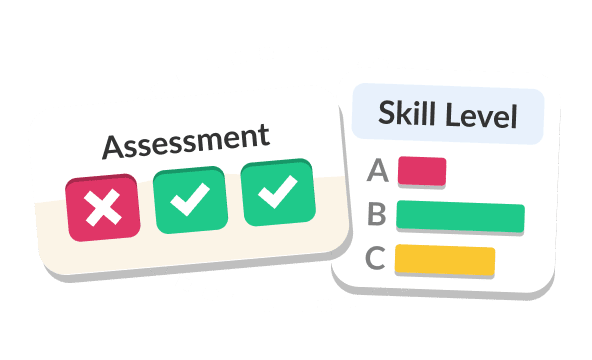
Find Learning Gaps
See exactly where your child needs help.
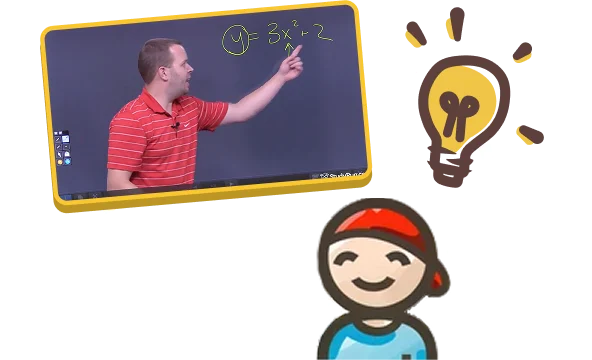
Step-by-Step Video Lessons
Your child sees each step until it clicks.
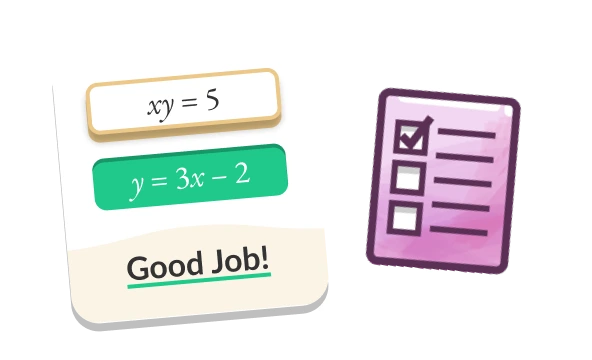
Adaptive Practice
Practice grows with your child's growth.
Try It Now
Test your knowledge
Our approach aligns with the evidence
Exam Scores
Better Recall
Less Anxiety
Grade 3 Math Topics
1. Place Values of Multi-Digits
2. Fraction Concepts
3. Adding Up to 1000
4. Subtracting Up to 1000
5. Multiplication Facts Up to 3 Digits
6. Division Facts Up to 3 Digits
7. Financial Literacy
Discover Our Learning Areas
Explore key subjects and start learning with interactive content.



What Is Grade 3 Math?
Grade 3 math is the year Canadian students move beyond basic counting and simple addition into the foundational ideas that underpin all future mathematics. Children begin working with multiplication and division, explore fractions for the first time, deepen their understanding of place value to 1,000, and start measuring the world around them. It is a pivotal year — strong Grade 3 number sense shapes how confidently a child approaches math all the way through high school.
What Topics Does Grade 3 Math Cover?
Grade 3 math typically covers the following strands across Canadian provincial curricula:
- Number sense and numeration: Place value to 1,000, rounding, comparing and ordering numbers, skip-counting.
- Multiplication and division: Understanding multiplication as repeated addition, learning times tables (2s through 10s), and introduction to basic division.
- Fractions: Recognising and naming halves, thirds, and quarters; comparing simple fractions using models.
- Addition and subtraction: Two- and three-digit operations with regrouping; mental math strategies.
- Measurement: Length (cm, m), mass (g, kg), capacity (mL, L), elapsed time, and temperature.
- Geometry: Properties of 2D shapes and 3D figures; lines of symmetry; location and movement on a grid.
- Data management: Reading and creating pictographs and bar graphs; collecting and organising data.
- Patterning and algebra: Identifying, extending, and creating patterns; introduction to simple equations.
Every one of these topics has a dedicated lesson on StudyPug, aligned to what your child's teacher is covering in class.
Is Grade 3 Math Hard? Common Struggles and How to Help
Grade 3 is often the first year parents hear "I hate math" — and there is a reason for that. The jump from Grade 2 to Grade 3 is steeper than it looks. Here are the most common struggle points and what parents can do:
- Multiplication tables: Moving from skip-counting to automatic recall takes repeated, varied practice over weeks. Flash cards alone rarely work. Children need to see multiplication as a concept (rows and columns, groups of objects) before drilling facts.
- Fractions: Many children confuse the top and bottom numbers or don't grasp why the parts must be equal. Visual models — fraction bars, pie diagrams, folding paper — help make the abstract concrete.
- Word problems: Grade 3 word problems require children to read carefully, identify the operation, and execute it — three steps that each need practice. Reading the problem aloud and drawing a picture of the situation both help.
- Measurement: Converting between units (centimetres to metres, grams to kilograms) is tricky when children haven't had enough hands-on experience with real objects.
The good news: none of these gaps are permanent. Targeted practice that starts from where the child actually is — not where the curriculum expects them to be — closes them quickly.
Why StudyPug for Grade 3 Math?
StudyPug is built around one idea: find exactly where the child needs help, then teach it properly. Here is how that works in practice for Grade 3 math:
Diagnostic assessment from day one. Before your child watches a single lesson, a short diagnostic identifies their specific gaps — whether that is multiplication facts, fraction concepts, or place value. You and your child know exactly where to focus, rather than working through topics they already understand.
Certified teachers who explain the method. Every video lesson on StudyPug is made by a real certified teacher — not AI-generated. Grade 3 math teachers walk through each concept step by step, explaining the reasoning behind the method so your child can solve similar problems independently. This is real teaching, not just showing the answer.
Adaptive practice that builds confidence. After watching a lesson, your child practises with questions that adjust to their level. If they find multiplication easy, the questions get more challenging; if they're finding fractions tricky, the system slows down and scaffolds from simpler examples. Confidence grows because the practice is always just right — neither too easy nor frustrating.
Printable worksheets with answer keys. For Grade 3 math, StudyPug provides printable worksheets so your child can practise away from the screen. Each worksheet comes with a full answer key, meaning you can check work together without needing to be a math expert yourself. Screen-free practice is particularly valuable for younger children.
Parent dashboard for real visibility. The StudyPug parent dashboard shows each child's progress topic by topic. You can see at a glance which multiplication tables your child has practised, how they're doing with fractions, and where the next focus area should be — without having to sit beside them during every session.
Family Plan — one subscription, up to five children. If you have more than one child, the StudyPug Family Plan covers up to five children across all grades and subjects for a single price. A Grade 3 student and a Grade 7 sibling can both use the platform simultaneously, each with their own progress profile.
What Your Child Will Learn: Grade 3 Math Curriculum Coverage
StudyPug's Grade 3 math lessons are mapped to Canadian provincial curricula. Whether your child's school follows the Ontario, BC, Alberta, or another provincial curriculum, the topics on StudyPug match what is being taught in the classroom. Key curriculum strands covered include multiplication and division foundations, fraction concepts, place value to 1,000, measurement, geometry, data management, and patterning.
For a detailed look at how Grade 3 math is structured in your province, explore the grade 3 math curriculum bc and the alberta grade 3 math curriculum — both provide strand-by-strand topic breakdowns aligned to provincial expectations.
On StudyPug, every topic within these curriculum strands has its own video lesson and practice set. Your child is never left without a resource for something their teacher has assigned.
Using StudyPug for Grade 3 Math: Getting Started
Getting started with StudyPug for Grade 3 math takes less than five minutes. Here is a simple way to begin:
- Run the diagnostic. Let your child complete the short diagnostic assessment. It identifies their starting point across Grade 3 math topics and creates a focused practice plan.
- Watch a lesson together the first time. Sit beside your child for the first video lesson on their weakest topic. Seeing how the certified teacher explains the concept helps you support them between sessions.
- Build a short daily habit. Fifteen to twenty minutes of daily practice — videos plus adaptive questions — is more effective than long weekend sessions. Use the printable worksheets on days when screen time is limited.
- Check the parent dashboard weekly. Once a week, review the dashboard to see which topics have improved and which need more attention. Celebrate specific wins — "you've got your 5 times table!" — to keep motivation high.
- Use Photo Search when your child is stuck on a specific problem. If your child has a homework problem they can't get past, StudyPug's Photo Search feature lets them find a matching lesson instantly — just take a photo of the problem and it surfaces the relevant video.
StudyPug is backed by a 30-day money-back guarantee. If it isn't the right fit for your child, you can request a full refund within 30 days — no questions asked. Free practice content is also available before subscribing, so your child can explore Grade 3 math lessons right away at no cost.
Grade 3 Math FAQ
Unsure how StudyPug works? Need help with setting up? Check our frequently asked questions or contact us for help.
What does my child learn in Grade 3 math, and what topics does it cover?
Grade 3 math builds on early number sense and introduces several key ideas. Children learn multiplication and division concepts, work with fractions (halves, thirds, quarters), explore two- and three-digit addition and subtraction, measure length, mass, and capacity, tell time, and read simple graphs and data. Geometry topics include identifying 2D and 3D shapes and their properties. By the end of Grade 3, children are expected to understand place value to 1,000 and apply basic multiplication facts fluently.
Is Grade 3 math hard, and where do children commonly struggle?
Grade 3 is often where math feels like a bigger jump. Multiplication tables are the most common stumbling block — children need to move from repeated addition to automatic recall, which takes time and varied practice. Fractions trip up many kids because the concept of equal parts feels abstract at first. Word problems also become more complex, requiring children to choose the right operation. Consistent short practice sessions and seeing the concept explained clearly — not just memorised — make the biggest difference at this stage.
What should my child know before Grade 3 math, and what comes next?
Before Grade 3, children should be comfortable adding and subtracting to 100, skip-counting by 2s, 5s, and 10s, and recognising basic shapes. These skills are the foundation for multiplication and fractions. After Grade 3, children move into Grade 4 math, which introduces long multiplication, multi-digit division, decimal concepts, and more complex fractions. Building solid Grade 3 number sense — especially times tables and place value — makes the Grade 4 transition significantly smoother.
How does StudyPug Grade 3 math map to what my child learns at school?
StudyPug lessons are aligned to provincial math curricula across Canada — including Ontario, British Columbia, and Alberta expectations. Every topic your child covers in class has a matching lesson on StudyPug, so practice directly supports what their teacher is teaching. You can explore how Grade 3 math is structured province by province: see the grade 3 math curriculum bc and the alberta grade 3 math curriculum for detailed topic breakdowns by strand.
What is one of the trickiest math concepts in Grade 3, and how is it taught?
Understanding fractions as equal parts of a whole is consistently one of the trickiest Grade 3 concepts. Children often confuse the numerator and denominator or don't see why the parts must be equal. On StudyPug, certified teachers explain fractions visually — using area models and number lines — before moving to abstract notation. The lesson teaches the reasoning behind fractions, not just the rule, so children can work out unfamiliar fraction problems on their own rather than guessing.
How much math practice should my child do in Grade 3?
For Grade 3, educational guidance generally suggests 15–20 minutes of focused math practice per day is more effective than longer, infrequent sessions. Short daily practice helps cement multiplication facts and keeps new concepts fresh. On StudyPug, the adaptive practice system adjusts question difficulty to your child's level, so even 15 minutes of targeted practice builds real skills. Use the printable worksheets for screen-free weekend sessions, and check the parent dashboard to see which topics are ready for review.