Grade 1 Math Help — Step-by-Step Video Lessons & Practice
Help your child understand every grade 1 math topic and build confidence, one lesson at a time
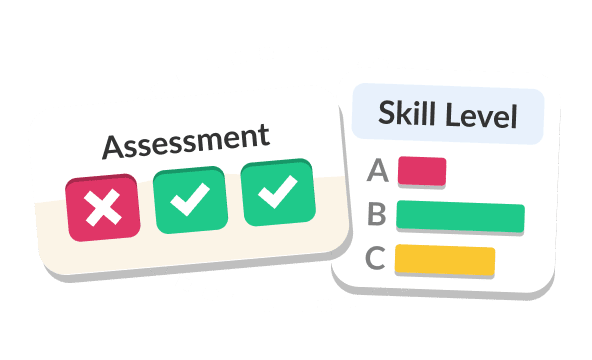
Find Your Weak Spots
See where your child needs help most.
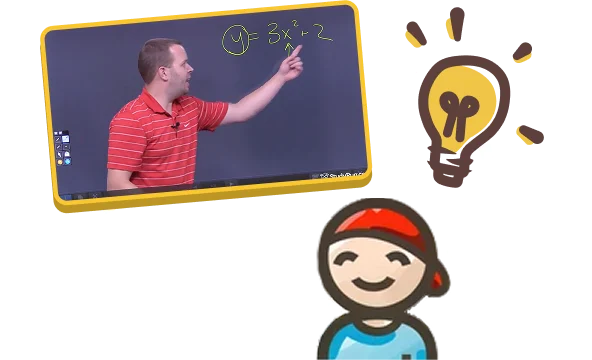
Step-by-Step Videos
Your child learns and solves problems alone.
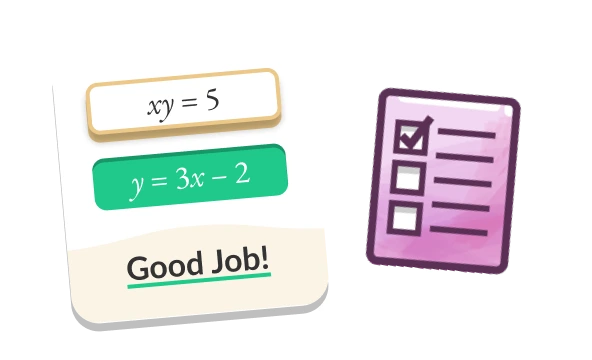
Grows With Them
Questions adapt to build your child's confidence.
Try It Now
Test your knowledge
Our approach aligns with the evidence
Exam Scores
Better Recall
Less Anxiety
Grade 1 Math Topics
1. Counting and Number Patterns
2. Place Values Up to Tens (99)
3. Adding Up to 20
4. Subtraction Up to 20
5. Financial Literacy
6. Multiplication Facts Up to 10
7 Chapters · 44 Topics · 25 Videos

Ready to practice Grade 1 Math?
Try practice questions on every Grade 1 Math topic — with instant feedback and step-by-step video solutions when you get stuck.
Discover Our Learning Areas
Explore key subjects and start learning with interactive content.






What Is Grade 1 Math?
Grade 1 math is the first full year of structured mathematics in Canadian elementary school. It moves children from the counting and number recognition they explored in kindergarten into real arithmetic — adding, subtracting, comparing quantities, and beginning to understand place value. By the end of the year, a child who has covered the curriculum confidently can count to 100 and beyond, recall addition and subtraction facts within 20, describe basic shapes, and read a simple graph. These skills form the bedrock of every math topic your child will meet in Grade 2 and beyond.
What Topics Does Grade 1 Math Cover?
The Grade 1 math curriculum in Canadian provinces typically spans five key strands.
Number and place value is the heart of the year. Children learn to read, write, and represent numbers up to 100, understand that two-digit numbers are made up of tens and ones, and practise counting forwards and backwards from any starting number.
Addition and subtraction builds from counting strategies into knowing facts automatically. Children practise adding and subtracting within 20, learn to represent equations with symbols, and begin solving simple word problems.
Measurement introduces length, height, weight, and time. Children compare objects directly ('this pencil is longer than that one'), use non-standard units, and begin reading analogue clocks to the hour and half-hour.
Geometry and spatial sense covers identifying, sorting, and describing 2D shapes (circles, squares, triangles, rectangles) and 3D objects (spheres, cubes, cones, cylinders) by their attributes.
Data and probability gives children early experience collecting information, sorting it into categories, and reading pictographs and tally charts.
Is Grade 1 Math Hard? Common Struggles and How to Help
For most children, Grade 1 math feels manageable at first and then becomes more demanding once place value and multi-step word problems arrive. The three areas parents most often ask about are:
Place value confusion. A child who counts well can still be confused by what the digits in '14' mean. They need to see and touch tens and ones — base-ten blocks, drawings, and repeated examples — before the idea clicks.
Subtraction as the inverse of addition. Adding feels natural; taking away can feel like a completely different skill. Children benefit from seeing both operations side by side: if 6 + 4 = 10, then 10 − 4 = 6.
Word problems. Even children who know their number facts can freeze when a problem is wrapped in words. The skill here is reading carefully to identify what is known and what is being asked — a habit best built early through regular, gentle practice.
Short, consistent practice sessions do more for Grade 1 students than long occasional study. Ten to fifteen minutes a day keeps concepts fresh and builds the automaticity children need for Grade 2.
Why StudyPug for Grade 1 Math Help?
StudyPug is built around one goal: making sure your child actually understands each concept, not just gets through the worksheet. Here is what makes it work for Grade 1 families in Canada.
A diagnostic that shows you exactly where to start. Rather than guessing which topics need attention, your child takes a short diagnostic assessment when they join. It pinpoints the specific Grade 1 math concepts they have not yet grasped, so every practice minute is spent where it counts.
Certified-teacher video lessons that teach the method. Every topic is explained by a real, certified teacher in a short, friendly video. The lesson does not just show the answer — it walks through the reasoning, step by step, so your child learns how to approach similar problems on their own. These videos are not AI-generated; they are made by teachers who know how children learn.
Adaptive practice that grows with your child. Once your child has watched a lesson, they practise with questions that adjust to their level. If they find something easy, the difficulty increases to keep them challenged. If they find something hard, the system eases back and builds confidence before moving on.
Printable worksheets for screen-free practice. For Grade 1 math, StudyPug provides printable worksheets with full answer keys — ideal for kitchen-table practice away from a screen. (Worksheets are available for Math, Grades K–3.)
A Parent Dashboard so you always know how things are going. Log in to see which topics your child has completed, where they are improving, and where they may need a second look. No more vague 'fine' answers when you ask how school is going.
Family Plan — one price, up to five children. If you have more than one child at school, the Family Plan means every child is covered across all grade levels and subjects — not just Grade 1 math — for a single subscription price.
What Your Child Will Learn — Grade 1 Math Curriculum Coverage
StudyPug's Grade 1 math content is fully aligned to Canadian provincial curricula. Whether your child is following the Ontario Grade 1 math curriculum or the BC curriculum Grade 1 math topics, the lessons on StudyPug match what is taught in their classroom.
Core topics covered include:
- Counting and number sense to 100
- Reading and writing numbers
- Place value — tens and ones
- Addition facts within 20
- Subtraction facts within 20
- Simple addition and subtraction word problems
- Comparing and ordering numbers
- Measurement — length, height, weight, and time
- 2D shapes and 3D objects
- Sorting, patterning, and data
Each topic is broken into short, focused lessons so your child never feels overwhelmed by a wall of new material.
How to Use StudyPug for Grade 1 Math
Getting started is straightforward. When your child joins, they complete the short diagnostic so StudyPug knows where to focus. From there, a typical session looks like this:
Watch a short video. The certified teacher explains the concept in a few minutes. Your child can pause, rewind, and rewatch as many times as needed — something a classroom lesson does not always allow.
Practise with guided questions. Immediately after the video, your child answers practice questions with instant feedback. If they get something wrong, they see a clear explanation — not just a red cross.
Print a worksheet for offline reinforcement. For Grade 1 math topics, printable worksheets let you bring the practice away from the screen. Use them at the kitchen table, in the car, or as a quick warm-up before school.
Check the Parent Dashboard. After each session, log in to see your child's progress. The dashboard shows completion, accuracy, and any topics flagged for review — giving you a clear picture of where they are growing and where they might need a little extra encouragement.
StudyPug is available on desktop, tablet, and mobile, so your child can use it on whatever device your family has at home. Every plan is backed by a 30-day money-back guarantee — the only guarantee StudyPug makes — so you can get started with confidence today.
Grade 1 Math FAQ
Unsure how StudyPug works? Need help with setting up? Check our frequently asked questions or contact us for help.
What does my child learn in Grade 1 Math, and what topics does it cover?
Grade 1 math builds foundational number sense and early arithmetic. Your child will count, read, and write numbers to 100 or beyond, practise addition and subtraction within 20, explore place value (tens and ones), work with basic measurement and length, sort and categorize 2D and 3D shapes, and read simple graphs. In most Canadian provinces these topics follow the provincial mathematics curriculum, giving children a concrete understanding of numbers they will use every school year going forward.
Is Grade 1 Math hard, and where do children commonly struggle?
Grade 1 math is foundational, but several concepts trip children up. Addition and subtraction facts within 20 require memorization alongside understanding, and many children confuse the two operations when word problems are involved. Place value — understanding that '14' means one ten and four ones — is another common sticking point. Counting on from a number (rather than always starting at one) and reading simple clocks or rulers can also be challenging. Early, focused practice on these areas prevents gaps from building up in later grades.
What should my child know before Grade 1 Math, and what comes next?
Before Grade 1, children benefit from recognizing numbers 0–10, counting objects reliably, and understanding simple concepts like 'more' and 'less' from kindergarten math. In Grade 1 they formalize these ideas and extend them. What comes next in Grade 2 math includes addition and subtraction within 100, an introduction to multiplication concepts, extended place value, and more complex measurement. Solid Grade 1 foundations — especially number facts and place value — make the Grade 2 jump much smoother.
How does StudyPug Grade 1 Math map to what my child learns at school?
StudyPug's Grade 1 math content is aligned to Canadian provincial curricula, including the Ontario mathematics curriculum and the BC curriculum. Lessons cover the same strands — number, measurement, geometry, data, and financial literacy where applicable — so what your child practises on StudyPug matches exactly what their teacher is covering in class. You can explore the Ontario Grade 1 math curriculum and the BC curriculum Grade 1 math topics through StudyPug's curriculum pages to see the topic-by-topic match.
What is one of the trickiest Grade 1 Math concepts, and how is it taught on StudyPug?
Place value is one of the most important — and often misunderstood — Grade 1 math concepts. Understanding that the digit '1' in '14' represents ten, not one, requires both visual models and repeated practice. On StudyPug, a certified teacher walks through place value step by step using base-ten visuals, concrete examples, and guided practice problems. The video teaches the method, not just the answer, so your child can apply the same reasoning to any two-digit number they encounter on a test or worksheet.
How much Math practice should my child do at Grade 1?
Most educational guidelines suggest 10–15 minutes of focused math practice per day is ideal for Grade 1 students — short enough to keep engagement high but consistent enough to build automaticity with number facts. StudyPug's adaptive practice adjusts to your child's current level, giving easier problems to build confidence and harder ones as they improve. A short daily session on StudyPug, combined with the printable math worksheets available for Grade 1, covers both screen-based and offline practice effectively.



Written by the StudyPug Team
Last updated June 5, 2026
3 M+
students
★★★★★
4.8 average
K–12
all grades