Online Grade 4 Social Studies Help
Assessments find gaps; adaptive practice builds provincial history and geography skills
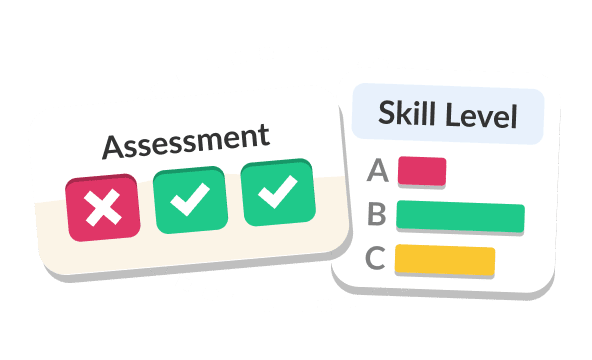
Find Your Weak Spots
Find exactly what your child needs to practice.
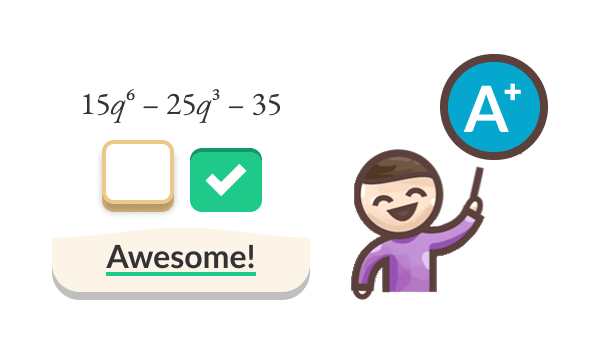
Step-by-Step Video Lessons
Real lessons help your child solve solo.

Matches School Work
Matches your child's provincial curriculum.
Try It Now
Test your knowledge
Our approach aligns with the evidence
Exam Scores
Better Recall
Less Anxiety
Grade 4 Social Studies Topics
1. Governance Types
2. Decision Making
3. Indigenous Governance
4. Modern Structures
5. Individual Rights
6. Collective Rights
7. Responsibilities
8. Public Interest
9. Climate Zones
10. Landforms
11. Water Systems
12. Natural Life
13. Settlement Patterns
14. Resource Use
15. Environmental Impact
16. Sustainability
17. Belief Origins
18. Core Teachings
19. Cultural Impact
20. Indigenous Beliefs
21. Trade Routes
22. Cultural Diffusion
23. Contact Effects
24. Modern Exchange
25. Early Settlement
26. Transportation
27. Population Growth
28. Modern Canada
29. Physical Regions
30. Cultural Regions
31. Economic Regions
32. Political Regions
33. Chronology
34. Cause and Effect
35. Historical Evidence
36. Perspectives
37. Local History
38. National Heritage
39. Cultural Legacy
40. Preservation
40 Chapters · 40 Topics · 25 Videos
Discover Our Learning Areas
Explore key subjects and start learning with interactive content.






What is Grade 4 Social Studies?
Grade 4 Social Studies introduces children to the history, geography, and cultures of their province and Canada as a whole. At this stage, students move beyond their local community and begin exploring the broader Canadian story — from Indigenous peoples and early settlements to provincial regions, natural resources, and the foundations of governance. It is a pivotal year where children start connecting where they live to the larger world around them, building the critical-thinking and map-reading skills they will carry into middle school and beyond.
What do Grade 4 students learn in Social Studies?
The Grade 4 Social Studies curriculum covers several interconnected areas. In provincial history, students learn about the development of their province, key historical events, and the people who shaped it. In geography, they study Canada's major regions, landforms, bodies of water, and natural resources using maps and physical globes. A significant focus is placed on Indigenous peoples and cultures — students learn about the traditions, governance structures, and contributions of First Nations, Métis, and Inuit communities. Many provinces also introduce basic concepts of early governance and how decisions are made at local and provincial levels. Together, these strands give Grade 4 learners a well-rounded foundation for the more detailed Canadian and world history they will encounter in Grades 5 through 8.
Is Grade 4 Social Studies hard for most children?
Many parents worry that the jump from community-focused learning in Grade 3 to provincial and national topics in Grade 4 will be overwhelming. The truth is that most children find the content engaging once it is presented clearly — but the volume of new names, places, and dates can feel like a lot at once. Common sticking points include remembering Indigenous cultural groups and their regions, reading and interpreting maps accurately, and keeping track of historical timelines. The good news is that consistent, focused practice on these specific areas — rather than trying to review everything at once — is what moves the needle. Diagnostic assessments that pinpoint exactly which topics need work, followed by adaptive practice that builds from where your child actually is, make steady progress very achievable.
How is Grade 4 Social Studies assessed at school?
In most Canadian provinces, Grade 4 Social Studies is assessed through a mix of in-class quizzes, map activities, research projects, and teacher-led observations. Provincial assessments vary: Ontario uses ongoing classroom evaluation aligned to the provincial Social Studies curriculum expectations, while British Columbia assesses through core competency reports and topic-specific tasks tied to the BC curriculum framework. Across provinces, students are expected to demonstrate understanding of key concepts — not just recall of facts — so building genuine comprehension through practice is more effective than rote memorization alone.
What comes after Grade 4 Social Studies?
Grade 5 Social Studies deepens the Canadian focus — students explore Canadian history from early Indigenous societies through to Confederation and beyond, alongside a more detailed study of Canadian geography and government structures. The skills built in Grade 4 (map reading, understanding historical sequence, recognizing cultural perspectives) form the direct foundation for Grade 5 success. Gaps left unaddressed in Grade 4 — particularly around geographic literacy and understanding Indigenous history — tend to surface again in Grade 5, when the content moves faster and expectations for independent analysis increase.
How does Grade 4 Social Studies connect to real life?
One of the most effective ways to help children engage with Grade 4 Social Studies is to connect abstract concepts to things they already know. Learning about provincial regions becomes more meaningful when your child can locate your home province on a map and identify its major landforms. Understanding Indigenous peoples becomes richer when students see these communities as living, contemporary cultures — not just historical figures. Parents who talk about current events, visit local museums, or explore provincial parks give their children a natural bridge between classroom content and lived experience. StudyPug's certified-teacher video lessons are designed with this in mind — real teachers explain concepts in plain language, using relatable examples before guiding students into practice.
Why StudyPug for Grade 4 Social Studies?
StudyPug combines three things that make a measurable difference for Grade 4 Social Studies learners: certified-teacher video lessons, diagnostic assessments, and adaptive practice — all aligned to provincial curriculum standards.
Certified-teacher video lessons cover every Grade 4 Social Studies topic. Unlike passive reading, video lessons let children hear and see concepts explained by real teachers, building understanding before they attempt practice questions.
Diagnostic assessments take the guesswork out of studying. Instead of reviewing everything from scratch, your child takes a short assessment that identifies exactly which topics — provincial history, map skills, Indigenous cultures, or governance basics — need the most attention. Practice is then focused precisely where it matters.
Adaptive practice adjusts question difficulty in real time based on your child's performance. Questions are never so easy they become boring, and never so hard they become discouraging. Knowledge builds progressively, one step at a time.
Parents stay informed through a clear progress dashboard that shows weekly growth across all Grade 4 Social Studies topics. And for those moments when a homework question has your child completely stuck, Photo Search lets them snap a picture to find the right lesson instantly.
All content is aligned to provincial curriculum standards. You can explore the grade 4 social studies ontario curriculum guide or the british columbia grade 4 social studies curriculum to see how StudyPug's topics map to what your child's teacher is covering in class.
What Grade 4 Social Studies topics does StudyPug cover?
StudyPug's Grade 4 Social Studies course covers the full range of provincial curriculum topics, including:
- Provincial history — key events, settlers, and the development of your province over time
- Regions of Canada — landforms, climate zones, natural resources, and how regions differ
- Indigenous peoples and cultures — First Nations, Métis, and Inuit communities, their traditions, governance, and contributions to Canadian identity
- Map skills and geography — reading physical and political maps, using a compass rose, identifying major rivers, lakes, and mountain ranges
- Early governance — how communities make decisions, the role of local and provincial governments, and the concept of rules and responsibilities
- Economic basics — natural resources, how goods are produced and traded, and how regions depend on one another
Each topic is broken into focused lessons so your child can tackle one concept at a time without feeling overwhelmed by the full scope of the curriculum.
How to use StudyPug for Grade 4 Social Studies
Getting started is straightforward. After signing up, your child takes a short diagnostic assessment that maps their current Grade 4 Social Studies knowledge. Based on the results, StudyPug surfaces the topics where practice will have the greatest impact. From there, a typical study session looks like this:
- Watch the video lesson — a certified teacher explains the concept in plain, grade-appropriate language (5–10 minutes).
- Practice with adaptive questions — questions start at your child's current level and increase in difficulty as answers improve.
- Review progress — the parent dashboard shows which topics were practiced and how performance changed.
- Repeat on weak areas — assessments can be retaken to confirm that a topic has been genuinely understood, not just memorized for one session.
Even 15–20 minutes of focused practice three or four times a week builds meaningful Grade 4 Social Studies knowledge over a school term. The key is consistency and targeting the right topics — which is exactly what StudyPug's diagnostic and adaptive system is designed to support. Get started today and give your child the focused, curriculum-aligned practice they need to feel confident in Grade 4 Social Studies class.
Grade 4 Social Studies FAQ
Unsure how StudyPug works? Need help with setting up? Check our frequently asked questions or contact us for help.
Can I sign up free to try it?
Yes — sign up free to access sample Grade 4 Social Studies lessons and practice. Subscribe when you're ready, backed by a 30-day money-back guarantee.
How much does it cost?
Plans start with one low monthly payment, with annual options for the best value. One plan covers up to 5 children and all subjects. 30-day money-back guarantee.
What's included in the subscription?
Full access to certified-teacher video lessons, diagnostic assessments, adaptive practice, Photo Search, and parent progress reports for Grade 4 Social Studies.
How does adaptive practice work?
Practice questions start at your child's current level and gradually increase in difficulty as their Grade 4 social studies knowledge grows — no frustration, just steady progress.
How do assessments help my Grade 4 student?
Quick diagnostic assessments identify exactly which Grade 4 topics — like provincial history, geography, or Indigenous peoples — need more practice, so your child's time is focused where it matters most.
Is the content aligned with the provincial curriculum?
Yes! All Grade 4 Social Studies content is aligned with provincial curriculum standards, covering the topics your child's teacher is teaching in class. See the Ontario and BC curriculum guides for details.





Written by the StudyPug Team
Last updated June 5, 2026
3 M+
students
★★★★★
4.8 average
K–12
all grades