Grade 8 Pre-Algebra Help — Step-by-Step Video Lessons & Practice
Help your child understand every pre-algebra topic and build confidence, one lesson at a time.
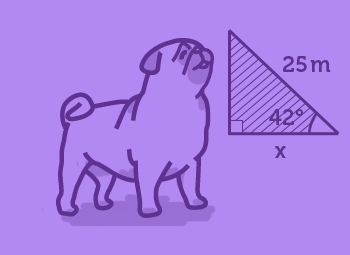
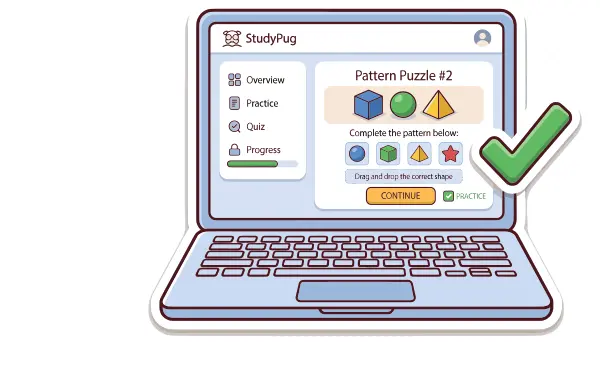
Value vs. Private Tutor
Affordable pre-algebra help without tutors.
Multi-Subject
One subscription unlocks all subjects.
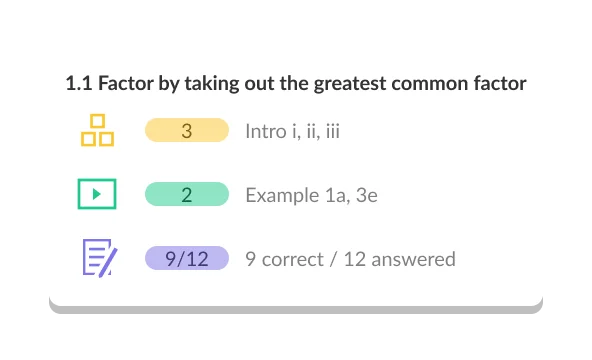
Unlimited Practice
Practice until it truly clicks not ends.
Try It Now
Test your knowledge
Our approach aligns with the evidence
Exam Scores
Better Recall
Less Anxiety
Pre-Algebra Topics
1. Integers
2. Factors and multiples
3. Decimals
4. Fractions
5. Ratios, rates, and proportions
6. Measuring Systems
7. Applying mathematical reasoning
8. Radicals
9. Exponents and Scientific Notation
10. Pythagorean Theorem
11. Surface Area of 3-Dimensional Shapes
12. Volume of 3-Dimensional Shapes
13. Function and Linear Relationships
14. Linear Equations
15. Linear Functions
16. Probability
17. Symmetry and Tessellations
18 Chapters · 77 Topics · 661 Videos
Discover Our Learning Areas
Explore key subjects and start learning with interactive content.










What Is Grade 8 Pre-Algebra?
Grade 8 pre-algebra is the critical bridge between the arithmetic your child learned in elementary school and the formal algebra they will study in high school. It introduces variables, expressions, and equations — teaching students to think about numbers in a more general, flexible way. Across Canadian provincial curricula, grade 8 pre-algebra lays the groundwork for every math course that follows. If your child gets a solid handle on these concepts now, grade 9 algebra and beyond become significantly more manageable.
What Topics Are Covered in Grade 8 Pre-Algebra?
Grade 8 pre-algebra covers a focused set of topics that build on each other throughout the year. Your child will work through:
- Integer operations — adding, subtracting, multiplying, and dividing positive and negative numbers
- Order of operations — applying BEDMAS correctly across multi-step expressions
- Variables and expressions — writing, simplifying, and evaluating algebraic expressions
- One- and two-step equations — solving for an unknown using inverse operations
- Inequalities — understanding and representing basic algebraic inequalities
- Proportional reasoning — ratios, rates, and percentage relationships
- Introduction to graphing — plotting points and understanding the coordinate plane
These topics are consistent across Ontario, British Columbia, Alberta, and other Canadian provincial curricula, though the order and emphasis may vary slightly by province.
Is Grade 8 Pre-Algebra Hard?
For many students, grade 8 pre-algebra is the first time math feels genuinely difficult. The shift from working with concrete numbers to abstract variables and equations is a big conceptual jump. Students who breezed through grade 7 arithmetic sometimes find themselves suddenly confused — not because they lack ability, but because the thinking required is genuinely different.
The most common trouble spots are negative integers (especially in multi-step operations), setting up equations from word problems, and keeping track of inverse operations when solving two-step equations. Proportional reasoning — applying ratios and rates in context — also trips students up when the numbers are less straightforward.
The good news is that pre-algebra responds well to clear explanation. When a student sees the method laid out step by step — not just the answer, but the reasoning behind each move — the concepts tend to click relatively quickly. That is why video-based instruction is particularly effective at this grade level.
Why StudyPug for Grade 8 Pre-Algebra?
StudyPug is built specifically to help students at this stage — and to give parents the visibility and tools they need to support their child's learning.
It starts with a diagnostic assessment that identifies exactly where your child needs to focus in pre-algebra. There is no guessing about which topics to tackle first; the diagnostic maps their current understanding and points them straight to the gaps.
From there, certified teachers walk through every concept in step-by-step video lessons. These are not automated or AI-generated — they are real teachers explaining the method clearly and patiently. The goal is not just to get the right answer on one problem; it is to teach the approach so your child can handle any similar question they encounter.
Adaptive practice then reinforces what they have learned. Questions adjust to your child's level as they work, keeping practice challenging but achievable — building genuine confidence rather than frustration.
For parents, the parent dashboard shows each child's progress across topics, so you can see exactly where they are improving and where they might need a little more time. If you have more than one child, the Family Plan covers up to 5 children across all grade levels and subjects under one price.
All plans are backed by a 30-day money-back guarantee. Your child can also access free practice content to get started right away — no commitment required to explore.
What Your Child Will Learn in Grade 8 Pre-Algebra
By the end of the year, a student who has worked through grade 8 pre-algebra thoroughly should be able to:
- Perform all four operations with integers and rational numbers confidently
- Simplify and evaluate algebraic expressions with one or more variables
- Solve one- and two-step equations and check their solutions
- Represent and solve basic inequalities
- Apply proportional reasoning to real-world problems involving rates, ratios, and percentages
- Plot and interpret points on a coordinate plane
These skills form the direct foundation for grade 9 academic or applied math in every Canadian province. Students who feel confident here arrive in high school ready to engage with more demanding algebra rather than playing catch-up.
StudyPug's lesson library covers every one of these areas, mapped to Canadian provincial curriculum expectations. Because no validated topic-level URLs are available for this course at this time, we recommend browsing the full topic list directly from the course page to find the specific lessons that match your child's current unit.
Using StudyPug for Grade 8 Pre-Algebra
Getting started is straightforward. After signing up, your child takes the diagnostic — a short assessment that takes about 10 minutes and immediately identifies which pre-algebra topics are solid and which need attention. This means their first study session is already targeted, not generic.
A typical session on StudyPug works in a simple loop: watch a short certified-teacher video on the topic, then complete a set of adaptive practice problems. The practice adjusts as your child works — if they are getting questions right, the difficulty increases gradually; if they are struggling, the system steps back to reinforce the foundation before moving forward.
StudyPug works on any device — desktop, tablet, or mobile — so your child can fit in a session after school, before a test, or during a study break. The parent dashboard updates in real time, giving you a clear view of which topics have been covered and how your child is progressing through the grade 8 pre-algebra curriculum.
For families with more than one child, the Family Plan means every child in the household has full access — each with their own profile and progress tracking — at no extra cost per child. It is one of the most practical ways to support multiple kids through different grade levels simultaneously.
If you have any questions about whether StudyPug is the right fit, the 30-day money-back guarantee means you can get started without financial risk. There is no free trial, but the guarantee gives your family a full month to see real results before making a longer-term commitment.
Pre-Algebra FAQ
Unsure how StudyPug works? Need help with setting up? Check our frequently asked questions or contact us for help.
What does my child learn in Grade 8 pre-algebra, and what topics does it cover?
Grade 8 pre-algebra in Canada builds the foundation for all future algebra and high-school math. Your child will work with integers, rational numbers, variables, expressions, and one- and two-step equations. They will also explore the order of operations, basic inequalities, proportional reasoning, and an introduction to graphing on a coordinate plane. These topics are taught across Canadian provincial curricula as the essential bridge between arithmetic and formal algebra in grade 9 and beyond.
Is Grade 8 pre-algebra hard, and where do children commonly struggle?
Pre-algebra is often the point where students first feel real difficulty with math. The jump from working with known numbers to using variables and solving for unknowns trips many grade 8 students up. Common struggle areas include understanding negative integers, applying the order of operations consistently, setting up equations from word problems, and grasping proportional relationships. The abstract nature of the content is new for most students, which is why clear, step-by-step explanation — not just repeated practice — makes such a difference at this stage.
What should my child know before Grade 8 pre-algebra, and what comes next?
A solid understanding of grade 7 arithmetic is the key prerequisite: fractions, decimals, percentages, ratios, and basic integer operations. Students who are comfortable with those topics transition into pre-algebra much more smoothly. Once pre-algebra is complete, students move into formal grade 9 algebra — linear equations, systems of equations, slope, and polynomial expressions — which builds directly on every pre-algebra concept. Strengthening pre-algebra now sets your child up for success all the way through high-school math.
How does StudyPug pre-algebra map to what they learn at school?
StudyPug's grade 8 pre-algebra lessons are aligned to Canadian provincial curricula, including Ontario and British Columbia expectations. Every topic your child's teacher covers in the classroom — from integer operations and solving equations to proportional reasoning and graphing — has a corresponding lesson on StudyPug. This means your child is never studying something off-topic; every video and practice problem directly supports what is happening in their classroom right now.
What is one of the trickiest pre-algebra concepts at Grade 8, and how is it taught?
Solving two-step equations is consistently the concept students find most challenging in grade 8 pre-algebra. It requires understanding the idea of 'undoing' operations in the correct order using inverse operations — a genuinely abstract idea for students encountering it for the first time. On StudyPug, a certified teacher walks through this concept step by step: first explaining what an equation means, then showing exactly how to isolate the variable using real examples. Students then practise with adaptive questions that adjust to their level, reinforcing the method until it becomes automatic.
How much pre-algebra practice should my child do at Grade 8?
Most educational guidance suggests 20–30 minutes of focused math practice per school night for grade 8 students. Consistency matters more than marathon sessions — short, regular practice helps concepts stay fresh and builds fluency over time. A good routine might be reviewing one video lesson, then completing a short set of practice problems on that topic. StudyPug's adaptive practice system adjusts to your child's current level, so each session is productive without being overwhelming, even on busy nights.





Written by the StudyPug Team
Last updated June 5, 2026
3 M+
students
★★★★★
4.8 average
K–12
all grades