Grade 10 Geometry Help — Video Lessons & Practice
Get clear, step-by-step geometry explanations and build exam-ready confidence for every topic in your course.
Value vs. Private Tutor
Get expert Geometry help for free.

Multi-Subject
Struggling? Switch subjects anytime.
Practice Until Perfect
Practice until you truly master it.
Try It Now
Test your knowledge
Our approach aligns with the evidence
Exam Scores
Better Recall
Less Anxiety
Geometry Topics
1. Measuring Systems
2. Surface Area and Volume
3. Points, Lines, Segments, Midpoints and Chords
4. Circles, plane and coordinate
5. Triangles and special triangles
6. Angles and trigonometry
7. Sine Rule and Cosine Rule
8. Bearings
9. Transformations
10. Similarity
11. 2D figures and 3D figures
12. Probability
13. Logic
15. Set Theory
16. Vectors
17 Chapters · 88 Topics · 766 Videos
Discover Our Learning Areas
Explore key subjects and start learning with interactive content.
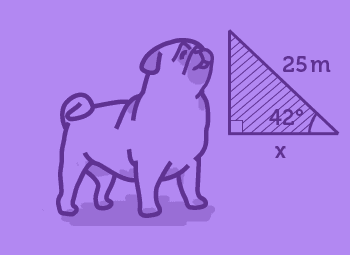
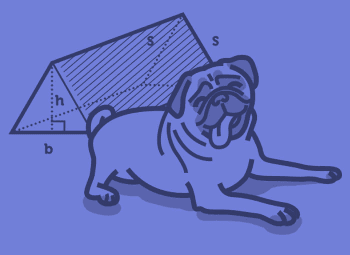


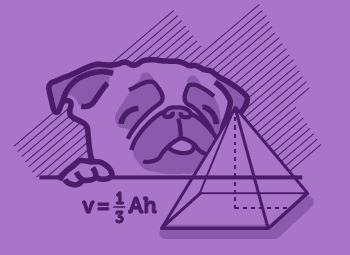







What is Grade 10 Geometry?
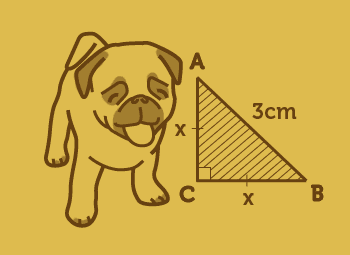
Grade 10 Geometry is the study of shapes, space, and the logical relationships between them. It builds directly on Grade 9 math and forms the foundation for all senior-level mathematics in Canada. Students develop the ability to reason clearly about angles, triangles, circles, and coordinate systems — skills that matter in physics, engineering, architecture, and everyday problem-solving.
What topics are covered in Grade 10 Geometry?
The course covers a broad range of interconnected topics. In Ontario the content sits within the MPM2D (Principles of Mathematics) course; in British Columbia it is part of Foundations of Mathematics and Pre-calculus 10.
Core topic areas include:
- Triangle properties: congruence, similarity, and the Pythagorean theorem applied to multi-step problems.
- Trigonometric ratios: sine, cosine, and tangent ratios — finding missing sides and angles in right triangles.
- Circle theorems: central angles, inscribed angles, tangents, chords, and cyclic quadrilaterals.
- Coordinate geometry: distance formula, midpoint formula, slope, equations of lines, and the relationship between algebra and geometry.
- Transformations: reflections, rotations, translations, and dilations on the coordinate plane.
Each of these areas appears on school-based assessments and provincial evaluations, so strong topic-by-topic understanding matters throughout the year.
Is Grade 10 Geometry hard?
Geometry is visual and often clicks faster than algebra for students who think spatially. That said, several sections create consistent difficulty. Proof-writing — constructing a step-by-step logical argument for why two triangles are congruent or why an angle equals a certain value — requires a different kind of thinking than solving an equation. Circle theorems present a memorisation and pattern-recognition challenge: there are many related theorems, and selecting the right one for a given diagram takes practice. Trigonometric ratios are a third area where students often need more than one exposure before the process feels automatic.
The most effective strategy is to watch a clear explanation of the method first — understanding why the rule works, not just the formula — then practise with varied problems until the pattern is automatic. Students who work through geometry this way consistently find that their confidence transfers to the rest of the course.
How is Grade 10 Geometry assessed in Canada?
Assessment varies by province, but the principles are consistent. In Ontario, MPM2D students complete unit tests, a culminating task, and a final examination. The EQAO Grade 9 Math Assessment (now administered in Grade 9 under the revised curriculum) covers geometry and measurement concepts that feed directly into Grade 10 work. In British Columbia, Foundations of Mathematics and Pre-calculus 10 is assessed through school-based exams that test geometric reasoning, trigonometry, and coordinate geometry. Across provinces, geometry questions ask students to apply theorems, justify their reasoning in writing, and solve multi-step problems — making regular practice with exam-style questions an essential part of preparation.
What comes before and after Grade 10 Geometry?
The prerequisite is a solid Grade 9 math foundation: basic angle relationships, an introduction to the Pythagorean theorem, linear equations, and plotting on the coordinate plane. Students who enter Grade 10 with weak Grade 9 skills often find the early geometry units manageable but hit a wall when the course demands more sophisticated algebraic manipulation alongside geometric reasoning.
After Grade 10 Geometry, the main pathways in Canada are Grade 11 Functions (MCR3U in Ontario) and Pre-calculus 11 in BC. Both courses expand trigonometry significantly — moving from right-triangle ratios to the unit circle, radian measure, and trigonometric identities. The spatial and logical reasoning built in Grade 10 Geometry is directly exercised in those courses. Strong geometry preparation also supports Grade 11 and 12 Physics, particularly in topics involving vectors and optics.
Why StudyPug for Grade 10 Geometry?
StudyPug is built around three things that make a measurable difference for Grade 10 geometry students in Canada.
Certified-teacher video lessons that teach the method. Every geometry lesson is recorded by a certified teacher — not AI-generated — and structured to show you how to think through a problem, not just what the answer is. When you watch a circle-theorem explanation on StudyPug, the instructor walks through how to identify the relevant theorem from the diagram, how to set up the calculation, and how to write a clear justification. That method-focused approach is what helps you handle similar problems on your actual test.
Diagnostic assessment that finds your exact gaps. Before you spend time on topics you already know, a short diagnostic identifies precisely where your geometry understanding breaks down. You get a focused study path, not a list of every topic in the course. Students who use the diagnostic consistently report that their study sessions feel more productive — they are working on what they actually need.
Canadian curriculum alignment. Geometry content on StudyPug is mapped to Ontario (MPM2D) and British Columbia (Foundations of Mathematics and Pre-calculus 10) provincial curricula, as well as other Canadian provincial standards. When your teacher covers circle theorems this week, the matching StudyPug lesson is there waiting — same vocabulary, same theorem names, same problem types. No mismatch between what you study and what gets tested.
Together these features mean that a Grade 10 student in Canada can open StudyPug, find out exactly what to work on, watch a clear explanation, and practise until the concept sticks — all without needing a private tutor or waiting until the next class.
What you learn — Grade 10 Geometry curriculum coverage
StudyPug covers the complete Grade 10 Geometry curriculum for Canadian students. Key learning areas include:
- Properties of triangles: congruence criteria (SSS, SAS, ASA, AAS), similarity ratios, and multi-step Pythagorean problems
- Trigonometric ratios: setting up and solving sine, cosine, and tangent equations in right triangles; finding angles with inverse trig functions
- Circle theorems: central angle theorem, inscribed angle theorem, tangent-radius relationships, chord properties, and cyclic quadrilateral properties
- Coordinate geometry: distance formula, midpoint formula, slope calculations, parallel and perpendicular lines, and equations of circles
- Geometric proofs: constructing two-column and paragraph proofs; reasoning about congruence and similarity
- Transformations: identifying and applying reflections, rotations, translations, and dilations
All topics are covered with video lessons, worked examples, and practice problems. Because no validated topic-level URLs are currently available in our internal link index for this course, you can explore all geometry topics directly from the StudyPug Grade 10 Geometry course page.
Using StudyPug for Grade 10 Geometry
Getting started is straightforward. When you open your StudyPug account, take the short geometry diagnostic. It takes a few minutes and immediately shows you which topics — maybe circle theorems, maybe trig ratios — need the most attention. From there, click into any topic, watch the certified-teacher video lesson, and then work through the adaptive practice problems. The practice difficulty adjusts as you go: if you get several questions right, the next ones are a step harder; if you are struggling, you get more scaffolded problems first.
You can also use StudyPug as a direct homework companion. Stuck on a specific problem type tonight? Search for the topic, watch the relevant lesson, and come back to your homework. Many students find that one focused video session is enough to unblock a full homework set.
For exam preparation, work through the practice problem sets for each unit and use the Photo Search feature — take a photo of a geometry problem and find the matching lesson instantly. This is available across all grades and subjects on StudyPug.
StudyPug is available on any device, any time. Whether you have twenty minutes before school or a full study session the night before your geometry test, the platform works around your schedule. All lessons, practice problems, and the diagnostic are included in your subscription, backed by a 30-day money-back guarantee.
Geometry FAQ
Unsure how StudyPug works? Need help with setting up? Check our frequently asked questions or contact us for help.
What do you learn in Grade 10 Geometry, and what topics does it cover?
Grade 10 Geometry covers the foundations of two-dimensional and coordinate geometry. You study properties of triangles, similar and congruent figures, the Pythagorean theorem, circle theorems, angle relationships, and an introduction to trigonometric ratios (sine, cosine, tangent). You also work with transformations and coordinate geometry — plotting, finding distances, midpoints, and slopes. By the end, you have the spatial reasoning and algebraic skills needed for Grade 11 math and beyond.
What is the difference between Geometry and Algebra in Grade 10?
Algebra focuses on working with variables, equations, and functions — answering questions like 'What is x?' Geometry focuses on shapes, space, measurements, and logical reasoning — answering questions like 'Why is this triangle congruent?' In Grade 10 they overlap: coordinate geometry uses algebra to describe geometric shapes on a grid. Students who struggle with one often find the other more natural, so building strength in geometry can actually boost overall math confidence.
Is Grade 10 Geometry hard, and where do students struggle most?
Many students find Geometry more approachable than Algebra because it is visual, but the proof-writing and circle-theorem sections often cause the most difficulty. Remembering which theorem applies to a given situation — and writing a clear, logical justification — trips up a lot of Grade 10 students. Trigonometric ratios are another common sticking point. The good news: these topics become much clearer once you see each theorem demonstrated step by step and then practise applying it to different problem types.
What should I take before Grade 10 Geometry, and what comes after it?
You need a solid Grade 9 math background — especially working with linear equations, the Pythagorean theorem at an introductory level, and basic angle relationships. After Grade 10 Geometry you move into Grade 11 functions and pre-calculus, where trigonometry expands significantly. Strong geometry skills also support Physics and other sciences. Students who put in the work in Grade 10 find the transition to Grade 11 math noticeably smoother.
Is Geometry on the Ontario provincial or BC provincial assessments, and how is it tested?
Yes. In Ontario, the EQAO Grade 9 Math Assessment covers geometry and measurement concepts similar to Grade 10 content, and school-based tests and culminating tasks assess geometry directly. In BC, Grade 10 Geometry is part of the Foundations of Math and Pre-calculus 10 course evaluated through school-based provincial assessments. Geometry questions typically ask you to apply theorems, solve for missing angles or sides, and justify your reasoning — so practising with exam-style problems is essential preparation.
What is one of the hardest concepts in Grade 10 Geometry, and how do you tackle it?
Circle theorems are consistently the most challenging area for Grade 10 students. There are multiple related theorems — inscribed angles, tangent-chord angles, cyclic quadrilaterals — and knowing which one to use in a given diagram requires both memorisation and pattern recognition. The most effective approach is to learn each theorem from a clear visual explanation, identify the exact diagram pattern it applies to, then practise with varied problems until you can spot the pattern instantly. Worked-example videos that pause and highlight the key diagram features make this much easier.




Written by the StudyPug Team
Last updated June 5, 2026
3 M+
students
★★★★★
4.8 average
K–12
all grades