Grade 10 Math Help — Video Lessons & Practice
Get clear, step-by-step explanations for every Grade 10 Math topic and build exam-ready confidence.
Expert Video Solutions
Learn the method to solve the next alone.
Unlimited Practice
Practice until it truly clicks.
Real Exam Practice
Practice real exam questions from your curriculum.
Try It Now
Test your knowledge
Our approach aligns with the evidence
Exam Scores
Better Recall
Less Anxiety
Grade 10 Math Topics
1. Measuring Systems
2. Surface Area and Volume
3. Number System and Radicals
4. Radicals
5. Exponents
6. Operations of Polynomials
7. Factoring Polynomial Expressions
8. Introduction to Relations and Functions
9. Linear Functions
10. Linear Equations
11. Solving Linear Systems
12. Trigonometry
13. Factoring Quadratic Equations
14. Quadratic Functions
15. Solving Quadratic Equations
16. Transformations of Functions
17 Chapters · 131 Topics · 759 Videos

Ready to practice Grade 10 Math?
Try practice questions on every Grade 10 Math topic — with instant feedback and step-by-step video solutions when you get stuck.
Discover Our Learning Areas
Explore key subjects and start learning with interactive content.









What is Grade 10 Math?
Grade 10 Math is the bridge between the arithmetic and introductory algebra of junior high and the abstract, proof-based mathematics of senior high. In a single course year, students move from reviewing and extending linear relationships all the way through quadratic functions, polynomial algebra, and trigonometry — the four pillars that underpin every Canadian high school math course that follows. If you are enrolled in a Canadian school, what you learn in Grade 10 Math will directly determine which Grade 11 pathway you are eligible for, making it one of the highest-stakes courses in your secondary education.
What topics are covered in Grade 10 Math?
While exact course content varies by province, the core Grade 10 Math curriculum across Canada covers the following major strands:
Linear Relations and Systems of Equations. Students deepen their understanding of slope, y-intercept, and equation forms (slope-intercept, standard, point-slope). The key new skill is solving a system of two linear equations — finding the point where two lines intersect — using substitution and elimination methods. This strand builds directly on Grade 9 linear equations and is tested heavily in early Grade 10 assessments.
Polynomial Operations and Factoring. Students learn to add, subtract, multiply, and divide polynomials, then reverse the process through factoring — pulling an expression apart into its components. Factoring methods include common factoring, factoring by grouping, factoring simple and complex trinomials, and recognising special products such as the difference of squares and perfect square trinomials. This is where many students first encounter real difficulty in high school math.
Quadratic Functions. Quadratics are the first non-linear functions students study in depth. Students learn to graph parabolas, identify the vertex, axis of symmetry, and direction of opening, and connect the factored form of a quadratic to its x-intercepts. Solving quadratic equations — by factoring, completing the square, or the quadratic formula — is a core exam skill that reappears in every subsequent math course.
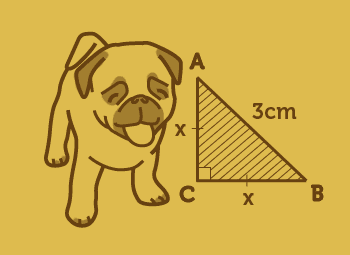
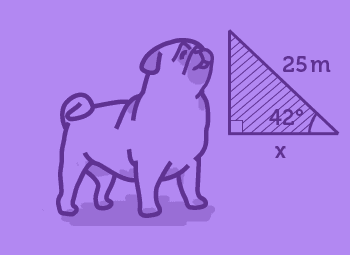
Trigonometry. Grade 10 introduces the three primary trigonometric ratios — sine, cosine, and tangent (SOH-CAH-TOA) — in the context of right triangles. Students practise finding missing side lengths and angles, then apply these skills to real-world problems such as heights, distances, and angles of elevation or depression. In some provincial curricula, the unit extends to the sine law and cosine law for non-right triangles.
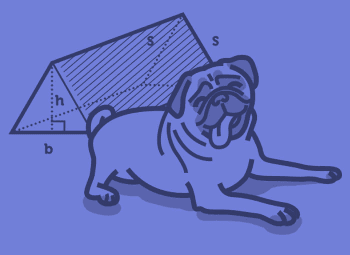
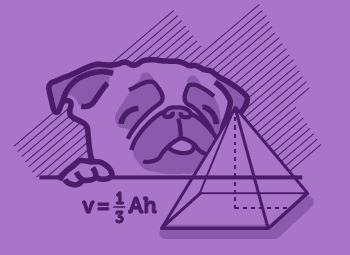
Measurement and Geometry. Depending on province and course stream, Grade 10 also covers surface area and volume of composite 3D figures, circle properties, and coordinate geometry proofs.
Is Grade 10 Math hard?
Grade 10 Math is genuinely challenging for a large proportion of students — and that is not a reflection of ability, but of content density. The course introduces several conceptual shifts at once. Factoring polynomials requires students to think both forwards and backwards algebraically, a type of reasoning that feels unfamiliar at first. Quadratic functions introduce a new family of equations where the rules from linear algebra do not directly transfer. Trigonometry adds a spatial-reasoning layer that many students have not encountered before.
The students who find Grade 10 Math hardest are typically those who have a shaky understanding of Grade 9 algebra — particularly solving equations with one variable, integer operations, and plotting points on a Cartesian plane. If those gaps exist, Grade 10 topics stack on an unstable base. The good news is that every Grade 10 topic follows a clear, repeatable method. With the right step-by-step instruction and consistent practice, the difficulty curve flattens significantly within a few weeks.
How does Grade 10 Math connect to provincial exams and future courses?
In British Columbia, Grade 10 students are required to complete the provincial Numeracy Assessment, which tests applied mathematical reasoning across real-world contexts. Although the assessment is not curriculum-specific to Grade 10 Math, the algebraic and problem-solving skills developed in the course are foundational to performing well. BC students also choose between Foundations of Mathematics and Pre-Calculus 10 (or the combined course), which determines whether their Grade 11 path is academic (Pre-Calculus 11, Calculus 12) or applied (Foundations of Mathematics 11, 12).
In Alberta, successful completion of Grade 10 math courses (Mathematics 10C or Foundations of Mathematics and Pre-calculus 10) unlocks either the -1 stream (leading to Math 30-1 and post-secondary STEM programs) or the -2 stream (leading to Math 30-2 and a broader range of post-secondary options). Alberta diploma exams begin at Grade 11, so Grade 10 is the last year to solidify fundamentals without external exam pressure.
In Ontario, Grade 10 Math is offered in two streams — MPM2D (Academic) and MFM2P (Applied). Academic stream students learn all four core strands and move into Grade 11 Functions (MCR3U), the prerequisite for university-level math. Applied stream students cover selected topics at a slower pace and access different Grade 11 pathways. Stream selection in Grade 10 has significant implications for future academic and career options.
Why StudyPug for Grade 10 Math?
Most students who struggle with Grade 10 Math are not lacking effort — they are lacking a clear explanation of the method behind each type of problem. A textbook shows you an example. A classroom moves at the pace of 30 students. StudyPug's certified-teacher video lessons are built around a single principle: teach the method, not just the answer. When you understand why each step works, you can apply the same reasoning to any exam question you encounter — not just the ones you have already seen.
The platform starts with a short diagnostic assessment that maps where you are right now across every Grade 10 Math topic. Rather than starting from Unit 1 and working forward regardless of what you already know, StudyPug identifies your specific gaps and directs your study time to the topics that will move your grade the most. This is study smarter, not harder — a meaningful difference during a busy school term.
Adaptive practice then reinforces your learning by adjusting the difficulty of practice questions in real time. If you are consistently getting trigonometry questions right, the platform increases the challenge. If you are making repeated errors in polynomial factoring, it slows down and reinforces the underlying concept. Every practice session is calibrated to your current level — which means you spend less time on topics you have already mastered and more time on the ones that need attention.
StudyPug is also built around the 30-day money-back guarantee. There is no subscription risk — if you start and decide it is not working for you within the first 30 days, you get your money back. No conditions, no complicated process.
What you learn — Grade 10 Math curriculum coverage
StudyPug's Grade 10 Math content is aligned to the Canadian provincial curriculum, including BC Math 10 and the Alberta Grade 10 Math curriculum. Lessons are organised by topic so you can navigate directly to the concept your teacher is covering today — whether that is solving systems of equations, factoring quadratics, or applying the cosine law.
For students following the BC curriculum, the BC Math 10 curriculum page maps every StudyPug lesson to the BC learning standards. For students in Alberta, the Alberta Grade 10 Math curriculum page shows how StudyPug content aligns with the provincial program of studies. Students in Ontario, Manitoba, Saskatchewan, and other provinces will find that the core topic library — linear systems, polynomials, quadratics, and trigonometry — covers the vast majority of their provincial content as well.
The lesson library covers every major strand a Canadian Grade 10 student will encounter: linear relations, polynomial algebra, quadratic functions, and trigonometry. Each topic includes at least one concept video, a set of guided practice questions, and additional challenge problems for exam preparation. Practice questions are designed to reflect the style and difficulty of real school assessments — not just textbook drills.
How to use StudyPug for Grade 10 Math
The most effective way to use StudyPug is alongside your regular classroom instruction. Start by taking the diagnostic assessment at the beginning of the semester to identify any gaps from Grade 9. Use the concept videos to preview topics before your teacher introduces them in class — arriving with a basic understanding makes classroom instruction significantly easier to follow. After class, use the practice questions on StudyPug to consolidate what you learned and catch any misconceptions before they compound.
In the weeks before a unit test or final exam, use the practice test feature to work through exam-style questions under timed conditions. Watch the video solution for any question you get wrong — not just to see the correct answer, but to understand the step you missed. This targeted review approach is more efficient than re-reading notes or re-watching full lessons.
If you are a parent supporting a Grade 10 student, StudyPug gives you visibility into which topics your child is working on and how they are progressing. The platform is available on any device, at any time — so your child can get help with a homework problem at 10pm on a Tuesday, not just during a scheduled tutoring session.
StudyPug also includes Photo Search — available for all grades and subjects — which lets students photograph a problem and find the matching lesson instantly, without scrolling through a topic list. It is a practical tool for those moments when homework is due and you need to locate the right explanation quickly.
Grade 10 Math FAQ
Unsure how StudyPug works? Need help with setting up? Check our frequently asked questions or contact us for help.
What do you learn in Grade 10 Math, and what topics does it cover?
Grade 10 Math builds the algebra and geometry foundations you need for all senior math courses. Core topics include linear relations and systems of equations, polynomial operations and factoring, quadratic functions and their graphs, trigonometry (SOH-CAH-TOA and angles in right triangles), and measurement. Depending on your province, you may also cover surface area, circle geometry, or financial literacy. By the end, you should be comfortable graphing functions, solving equations, and applying math to real-world problems.
What is the difference between Grade 10 Math and Grade 11 Math?
Grade 10 Math focuses on foundational algebra, linear and quadratic functions, and introductory trigonometry. Grade 11 Math extends these ideas significantly — you explore more complex quadratics, exponential functions, trigonometric identities, and sequences. Grade 11 also introduces topics like logarithms (in Functions & Relations) or financial math depending on your stream. Think of Grade 10 as learning the language and Grade 11 as using that language to solve harder, more abstract problems.
Is Grade 10 Math hard, and where do students struggle most?
Grade 10 Math is a step up from Grade 9 and many students find the jump challenging, especially in the first few units. The most common struggle points are factoring polynomials (particularly trinomials), understanding quadratic functions and parabolas, and applying trigonometry ratios correctly. Students who fell behind in linear equations in Grade 9 also find Grade 10 harder than expected. The good news is these topics follow clear methods — once you see the steps broken down properly, they become much more manageable with practice.
What should I take before Grade 10 Math, and what comes after it?
You should be comfortable with Grade 9 Math before starting Grade 10 — especially linear equations, basic algebra, and operations with integers and fractions. After Grade 10, your path depends on your province and interests. Most students move into Grade 11 Functions or Foundations of Mathematics. In BC, Grade 10 leads to Foundations & Pre-Calculus 10. In Alberta, it leads into Math 20-1 or Math 20-2. In Ontario, you can take MFM2P or MPM2D depending on your stream. Choosing the right Grade 11 course now has a big impact on future options.
Is Grade 10 Math on the provincial exam, and how is it tested?
In Canada, provincial assessments vary. In British Columbia, Grade 10 students write the Numeracy Assessment (graduation requirement) which tests applied math reasoning — not just Grade 10 curriculum. In Alberta, Grade 10 math courses may have school-based final exams depending on the course, with diploma exams beginning at Grade 11. In Ontario, there is no province-wide Grade 10 math exam, but your school's final exam counts toward your credit. Regardless of province, building solid Grade 10 skills directly supports your performance on later high-stakes assessments.
What is one of the hardest concepts in Grade 10 Math, and how do you tackle it?
Factoring quadratic trinomials (e.g., x² + 5x + 6) is widely considered the most difficult Grade 10 topic. Students often confuse the different factoring methods — trial and error, decomposition, and the difference of squares — and apply the wrong one. The best approach is to first identify what type of expression you have, then apply the matching method step by step. Practising with many examples, not just reading solutions, is essential. Once factoring clicks, solving quadratic equations and graphing parabolas become much more straightforward.




Written by the StudyPug Team
Last updated June 5, 2026
3 M+
students
★★★★★
4.8 average
K–12
all grades