BC Grade 9 Math Help — Step-by-Step Video Lessons & Practice
Help your child understand every Grade 9 math topic and build real confidence, one lesson at a time.
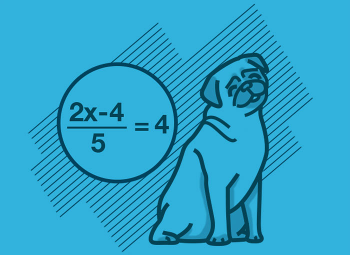
Step-by-Step Videos
Watch the solution then try it yourself.
Unlimited Practice
Keep going until it actually clicks.
Test Prep Included
Practice real exam-style questions included.
Try It Now
Test your knowledge
Our approach aligns with the evidence
Exam Scores
Better Recall
Less Anxiety
BC Grade 9 Math Topics
1. Rational Numbers
2. Power and Exponents
3. Scale Factors and Similarity
4. Polynomials
5. Multiplication and Division of Polynomials
6. Linear Relations
7. Solving Linear Equations
8 Chapters · 29 Topics · 304 Videos

Ready to practice BC Grade 9 Math?
Try practice questions on every BC Grade 9 Math topic — with instant feedback and step-by-step video solutions when you get stuck.
Discover Our Learning Areas
Explore key subjects and start learning with interactive content.











What Is BC Grade 9 Math?
BC Grade 9 math is the final year of middle school mathematics in British Columbia, built on the provincial curriculum framework. It bridges the concrete arithmetic skills from earlier grades with the abstract algebraic thinking required in high school. By the end of the year, students are ready to choose between Foundations of Mathematics 10 and Workplace Mathematics 10 — two very different pathways — so Grade 9 is where the foundation either holds or shows cracks.
The course covers five major strands: number sense (rational numbers, square roots, exponents), linear relations and graphing, polynomial algebra, statistics, and spatial reasoning with geometric properties. Students who leave Grade 9 with these skills in place are set up for genuine success in high school math.
What Topics Are Covered in BC Grade 9 Math?
The BC Grade 9 math curriculum is organized around key concept clusters that build on each other throughout the year.
Rational numbers and number sense opens the year. Students work fluently with fractions, decimals, integers, and negative numbers in the same expression — a step up from the simpler number work of Grade 8. Square roots and powers with integer exponents extend their number sense further.
Linear relations is the heart of the algebra strand. Students learn to represent relationships using tables of values, graphs, and equations. Understanding slope as a rate of change and the y-intercept as a starting value — and being able to move between the equation y = mx + b and its graph — is a core Grade 9 skill that carries directly into high school.
Polynomial operations — adding, subtracting, multiplying, and in some cases factoring polynomials — introduce formal algebraic manipulation. Sign errors and the distributive property are common stumbling blocks here.
Statistics and probability give students tools to analyze data sets, interpret graphs, and reason about chance. This strand often feels more accessible to students who struggle with algebra, building confidence.
Geometric reasoning rounds out the year with properties of angles, triangles, and polygons, often connected to spatial visualization.
Is BC Grade 9 Math Hard? Where Do Students Commonly Struggle?
Grade 9 math is widely regarded as a turning point. For many students, it is the first time math stops feeling like memorized procedures and starts requiring genuine understanding of why something works.
The most common struggle points are:
Linear relations and slope. Understanding slope as a ratio — rise over run — and connecting that number to the steepness and direction of a line takes time. Students often confuse the slope with the y-intercept, or reverse the x and y coordinates when plotting.
Polynomial algebra. Distributing a negative sign across brackets, combining like terms correctly, and multiplying two binomials (the FOIL pattern) all trip students up. A single sign error cascades through an entire solution.
Rational number fluency. Operating with fractions and negative numbers simultaneously — especially in multi-step equations — requires a level of automaticity that some Grade 9 students haven't yet built.
The good news: all of these topics respond well to consistent practice and clear conceptual explanation. When a student sees why a method works — not just how to apply it — mistakes drop quickly.
Why StudyPug for BC Grade 9 Math?
StudyPug is built around a simple idea: real teaching, not just practice. Here is what that looks like for a Grade 9 student in BC.
Diagnostic assessment that finds the real gaps. Before your child spends an hour on polynomials, a quick diagnostic identifies exactly where they need to focus. Maybe they're solid on adding polynomials but shaky on multiplication. The diagnostic tells you — no guessing, no wasted sessions.
Certified-teacher video lessons. Every concept in BC Grade 9 math has a video lesson taught by a real, certified teacher — not AI-generated content. These teachers explain the method step by step, showing how to think through a problem so your child can handle similar questions independently. The videos are short enough to watch after school and clear enough to actually help.
Adaptive practice that builds confidence. After watching a lesson, your child practises with questions that adjust to their current level. If they're getting things right, the difficulty increases. If they're struggling, the system steps back and reinforces the foundation. Confidence grows one step at a time.
Family Plan — one price for up to 5 children. The StudyPug Family Plan gives all your children access — every grade, every subject — under one subscription. The parent dashboard shows each child's progress separately, so you always know where each one stands.
Free practice content and a 30-day money-back guarantee. You can access free daily practice content right away. And every paid plan comes with a 30-day money-back guarantee — so there is no risk to getting started.
What Your Child Will Learn in BC Grade 9 Math
BC Grade 9 math covers the following core areas. Each is supported by video lessons and adaptive practice inside StudyPug:
- Rational numbers — operations with fractions, decimals, and integers
- Powers and exponents with integer bases
- Square roots and irrational numbers
- Linear relations — slope, y-intercept, and graphing y = mx + b
- Solving linear equations and inequalities
- Polynomial operations — addition, subtraction, multiplication
- Statistics — data collection, analysis, and interpretation
- Probability — theoretical and experimental
- Geometric properties — angles, triangles, and polygons
These topics are sequenced to match the BC provincial curriculum, so your child can use StudyPug alongside their classroom pacing throughout the school year.
Note: No validated internal topic-page links are available in the current sitemap for this course. All topics listed above are supported within the StudyPug platform.
How to Use StudyPug for BC Grade 9 Math
Getting started takes about five minutes. Here is a practical approach for Grade 9 students and their parents:
Step 1 — Run the diagnostic. Take the short diagnostic assessment first. It pinpoints the specific Grade 9 topics that need the most attention, so you start in the right place.
Step 2 — Watch the concept video before practising. For each new topic, watch the certified-teacher video lesson first. This is the step most students skip — and it is the most important one. Understanding the method before drilling practice questions is what makes the practice actually stick.
Step 3 — Use adaptive practice to reinforce. After each video, work through the adaptive practice set. Let the system guide the difficulty. If a concept is solid, move on. If it needs more work, the practice flags it.
Step 4 — Check the parent dashboard. Parents can log into the dashboard at any time to see which topics their child has covered, how their practice scores are trending, and where the gaps remain. This makes parent-teacher conversations much more specific and productive.
Step 5 — Use it alongside school, not instead of it. StudyPug works best as a complement to classroom learning. When a new unit starts at school, open the matching StudyPug lessons that evening. When a test is coming up, use the practice sets to identify weak spots first rather than reviewing everything equally.
Grade 9 math is a pivotal year. The students who come out of it with strong linear algebra and number sense skills find high school math far more manageable. StudyPug gives your child the support to get there — clear teaching, targeted practice, and the confidence that comes from actually understanding the work.
BC Grade 9 Math FAQ
Unsure how StudyPug works? Need help with setting up? Check our frequently asked questions or contact us for help.
What does my child learn in BC Grade 9 math, and what topics does it cover?
BC Grade 9 math covers a broad range of number sense and algebra topics aligned to the BC provincial curriculum. Students work with rational numbers, square roots, and exponents; explore linear relations, equations, and inequalities; study polynomials and their operations; and are introduced to statistics and probability. Spatial reasoning and geometric properties round out the year. By the end of Grade 9, students have the foundation they need for Foundations of Mathematics 10 or Workplace Mathematics 10.
Is BC Grade 9 math hard, and where do students commonly struggle?
Grade 9 math is a significant step up for many students. The biggest challenge areas are linear relations — understanding slope and y-intercept — and polynomial operations, where sign errors and distribution mistakes are common. Working with rational numbers (fractions, decimals, and negative values together) also trips many students up. Abstract equation solving and two-variable systems can feel overwhelming without a solid conceptual base. Consistent practice and clear video explanations of the method — not just the answer — make these topics manageable.
What should my child know before Grade 9 math, and what comes next?
Students entering Grade 9 math should be comfortable with integer operations, basic algebra, fractions, and proportional reasoning from Grade 8. A shaky foundation in solving one-variable equations will show up quickly. After Grade 9, students branch into either Foundations of Mathematics 10 or Workplace Mathematics 10 in BC. Strong Grade 9 skills — especially linear relations and polynomials — are essential for both pathways and for later courses like Foundations of Mathematics 11 or Pre-calculus 11.
How does StudyPug's Grade 9 math content map to what my child learns at school in BC?
StudyPug's Grade 9 math lessons are built to align with the BC provincial mathematics curriculum. Topics like linear relations, polynomials, rational numbers, and statistics match the concepts taught in BC classrooms. When your child's teacher moves to a new unit, StudyPug has the supporting video lessons and practice ready. The curriculum alignment means no time is wasted on topics that aren't relevant — your child practises exactly what they're learning right now at school.
What is one of the trickiest concepts in BC Grade 9 math, and how is it taught?
Linear relations — specifically understanding slope as a rate of change and graphing lines from equations in the form y = mx + b — is consistently one of the hardest concepts for Grade 9 students. StudyPug's certified teachers break it down visually: they show how to identify the slope and y-intercept from an equation, plot points step by step, and connect the graph back to real-world meaning. Students then practise with adaptive questions that start simple and gradually increase in difficulty, so the concept builds properly.
How much math practice should my child do at Grade 9?
Most educators recommend 20–30 minutes of focused math practice per day at Grade 9. Short, consistent sessions are more effective than occasional long cramming. After a lesson at school, a targeted practice session that evening reinforces the concept before it fades. StudyPug's adaptive practice adjusts to your child's current level — if they're confident, it pushes further; if they're struggling, it slows down and rebuilds. Regular practice aligned to their classroom pacing keeps Grade 9 students ahead of the curve.




Written by the StudyPug Team
Last updated June 5, 2026
3 M+
students
★★★★★
4.8 average
K–12
all grades