Grade 4 Math Help — Step-by-Step Video Lessons & Practice
Help your child understand every grade 4 math topic and build confidence, one lesson at a time.
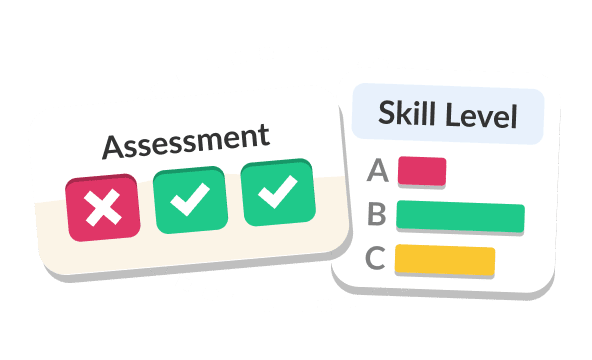
Find Learning Gaps
Know exactly what your child needs.
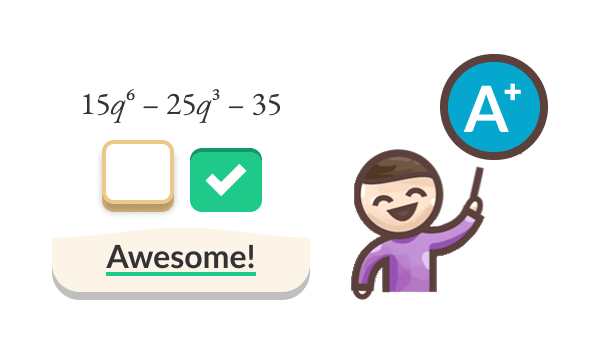
Expert Video Solutions
Teachers explain steps so kids solve alone.

Matches School Work
Matches your child's provincial curriculum.
Try It Now
Test your knowledge
Our approach aligns with the evidence
Exam Scores
Better Recall
Less Anxiety
Grade 4 Math Topics
1. Fractions
2. Introduction to Decimals
3. Adding and Subtracting Numbers
4. Multiplying and Dividing Numbers
5. Place Value
6. Patterns
7. Angles and Lines
8. 2D Shapes and Planes
9. 3D Shapes
10. Perimeter and Area
12. Time
13. Organizing Data
14 Chapters · 76 Topics · 1224 Videos

Ready to practice Grade 4 Math?
Try practice questions on every Grade 4 Math topic — with instant feedback and step-by-step video solutions when you get stuck.
Discover Our Learning Areas
Explore key subjects and start learning with interactive content.










What Is Grade 4 Math?
Grade 4 math is the year when number skills get serious. Children move beyond memorizing addition and subtraction facts and start working with multi-digit multiplication, long division, equivalent fractions, decimals, and measurement — all at once. It is the point where many parents notice their child needs more support than a quick homework check can provide. Grade 4 math lays the groundwork for everything in Grades 5 and beyond, so closing gaps now matters.
What Topics Does Grade 4 Math Cover?
Grade 4 math covers a broad set of connected topics across the school year. The main areas are:
Number sense and numeration — place value up to 10,000, rounding, comparing and ordering numbers, and understanding large numbers in context.
Multiplication and division — moving from single-digit facts to multi-digit multiplication using the standard algorithm, and introduction to long division with remainders.
Fractions and decimals — equivalent fractions, comparing and ordering fractions, and connecting fractions to their decimal representations (e.g., 1/2 = 0.5).
Measurement — perimeter and area of rectangles, unit conversions within the metric system, elapsed time, and reading scales and measuring tools.
Geometry — classifying 2D shapes by properties (angles, sides), lines of symmetry, and an introduction to coordinate grids.
Data management — reading and constructing bar graphs, pictographs, and tables; calculating simple statistics like mean with small data sets.
Each of these areas builds directly on Grade 3 skills, and each one sets up a key strand in Grade 5 — which is why steady, curriculum-aligned practice at Grade 4 is so valuable.
Is Grade 4 Math Hard? Common Struggles and How to Help
Grade 4 is frequently the first year parents hear "I don't get it" at the kitchen table. The jump is real: abstract reasoning starts to replace the concrete manipulatives children used in earlier grades, and the volume of new concepts increases sharply.
The most common struggle areas are:
Multi-digit multiplication. Moving from skip-counting to the full written algorithm is a significant cognitive step. Children who haven't fully internalized their times tables to 10×10 find this especially tough.
Equivalent fractions. Conceptually understanding that 2/4 and 1/2 are the same — and then applying that understanding to compare unlike fractions — trips up many Grade 4 students.
Multi-step word problems. Reading a problem, deciding which operations to use, and carrying out multiple steps in order is a literacy and math challenge combined.
Area and perimeter. Children frequently confuse the two concepts or forget that area requires multiplying while perimeter is about adding side lengths.
The most effective approach is not more drilling — it is clearer explanation followed by structured practice. When a child understands why a method works, they can apply it independently rather than freezing up when a question looks slightly different.
What Should My Child Know Before Grade 4 Math, and What Comes Next?
Before starting Grade 4 math, children should be comfortable with:
- Addition and subtraction with regrouping up to 1,000
- Multiplication and division facts to 10×10
- Basic fractions (halves, thirds, quarters) as parts of a whole
- Telling time to the nearest minute and reading simple calendars
- Reading bar graphs and simple data tables
If any of these foundations are shaky, a diagnostic can identify them quickly so practice time is spent where it counts.
After Grade 4, students move into Grade 5 where they extend to larger multi-digit multiplication, long division with 2-digit divisors, operations with fractions and decimals, and more formal work with data and probability. The students who find Grade 5 manageable are almost always those who left Grade 4 with solid fluency in the core operations and a confident grasp of fractions.
Why StudyPug for Grade 4 Math Help?
StudyPug is built around the idea that every child deserves teaching — not just practice problems with a score at the end. Here is what makes it different for Grade 4 families:
Diagnostic assessment from day one. Before your child practises a single question, a short diagnostic identifies exactly which Grade 4 topics need attention. That means study time is never wasted on concepts already understood, and no hidden gaps slip through.
Certified-teacher video lessons that teach the method. Every concept — from multi-digit multiplication to equivalent fractions — is explained by a real, certified teacher in a short, focused video. The explanation shows your child why the method works, not just what buttons to press. These are not AI-generated videos: they are genuine teaching by educators who know where Grade 4 students get confused and how to address it.
Adaptive practice that grows with your child. Once a lesson clicks, adaptive practice adjusts question difficulty in real time. If your child answers confidently, questions progress. If they struggle, the system steps back and rebuilds from a stronger footing. It builds skills gradually so confidence grows alongside ability.
Printable math worksheets with answer keys. For Grade 4, StudyPug includes printable worksheets for screen-free practice at home — useful on weekends or whenever you want to step away from a screen. Answer keys are included so you can review together.
Curriculum alignment you can trust. Lessons follow Canadian provincial math curricula. Whether your child's teacher follows Ontario's expectations or BC's learning standards, StudyPug's Grade 4 math content maps to what is actually being taught in class — so practice at home reinforces classroom learning rather than confusing it.
Family Plan for up to 5 children. One subscription covers up to 5 kids at all grade levels and subjects. The Parent Dashboard shows each child's progress individually, so you always know who needs encouragement and who is ready for the next challenge.
What Your Child Will Learn: Grade 4 Math Curriculum Coverage
StudyPug covers the full Grade 4 math curriculum as set out by Canadian provincial standards. Core topics include place value and number sense, multi-digit multiplication and division, equivalent fractions and decimal introduction, area and perimeter, geometry and symmetry, and data management.
For a detailed look at how Grade 4 math topics map to your province's expectations, see the Ontario grade 4 math curriculum or the grade 4 math curriculum BC worksheets pages. These break down each strand and learning expectation so you can see exactly what your child is working toward this year.
StudyPug's topic library covers every strand, and lessons are sequenced to mirror classroom progression. Your child can jump to a specific topic they're struggling with, or work through the full course in order — whichever approach suits them best.
How to Use StudyPug for Grade 4 Math
Getting started takes about five minutes. Here is a simple approach that works well for most Grade 4 families:
Step 1 — Run the diagnostic. Let your child complete the short diagnostic assessment. It identifies their current strengths and the specific Grade 4 topics that need the most attention. This gives both of you a clear starting point.
Step 2 — Watch, then practise. For each topic flagged by the diagnostic, your child watches the teacher's video lesson first, then completes the adaptive practice questions. The combination of seeing the method explained and then applying it immediately is what makes the learning stick.
Step 3 — Short sessions, consistently. Fifteen to twenty minutes a day is more effective than an hour once a week. StudyPug is accessible on any device, so your child can practise after school, before bed, or at any point that fits your family's routine.
Step 4 — Check the Parent Dashboard. Log into your parent view to see which topics your child has completed, where they are improving, and where they might need a second look. Use it as a starting point for a brief check-in conversation — not as a performance review.
Step 5 — Use worksheets for variety. Mix in printable Grade 4 math worksheets for screen-free practice — especially useful on weekends. Review the answer key together and let your child explain their thinking. Teaching you what they know is one of the most effective ways to solidify understanding.
All plans come with a 30-day money-back guarantee, and free practice content is available before you subscribe, so you can see the quality for yourself before committing. There is no free trial of the paid plan — just a genuine, no-risk guarantee.
Grade 4 Math FAQ
Unsure how StudyPug works? Need help with setting up? Check our frequently asked questions or contact us for help.
What does my child learn in Grade 4 math, and what topics does it cover?
Grade 4 math builds on earlier number skills and introduces more complex concepts. Children work on multi-digit multiplication and division, equivalent fractions and decimals, place value up to 10,000, geometry (lines, angles, and 2D shapes), measurement (area, perimeter, and unit conversions), and data management with bar graphs and tables. By the end of the year, students are expected to apply these skills to solve multi-step word problems, building a strong foundation for Grade 5 math.
Is Grade 4 math hard, and where do children commonly struggle?
Grade 4 is often the first year where many children find math genuinely challenging. The most common struggle areas are multi-digit multiplication (especially the standard algorithm), understanding fractions as parts of a whole and comparing them, and reading word problems with multiple steps. Geometry and measurement also trip up students who haven't fully visualized shapes and units. The jump from concrete to abstract thinking is real at this age — clear, visual explanations and consistent practice help children through these hurdles more than extra drilling alone.
What should my child know before Grade 4 math, and what comes next?
Before Grade 4, children should be comfortable with addition and subtraction to 1,000, basic multiplication and division facts up to 10×10, simple fractions (halves, thirds, quarters), and telling time. If there are gaps, a diagnostic assessment can identify them quickly. After Grade 4, students move into Grade 5, where they extend multiplication and division to larger numbers, work with decimals and percent, and begin more formal geometry — so a solid Grade 4 foundation makes a real difference.
How does StudyPug math map to what my child learns at school in Grade 4?
StudyPug lessons are aligned to Canadian provincial math curricula, including Ontario and British Columbia. Every Grade 4 math topic — from fractions and multiplication to measurement and data — follows the same sequencing your child's teacher uses. If you want to see exactly how it maps to your province's expectations, you can explore the Ontario grade 4 math curriculum or the grade 4 math curriculum BC worksheets pages for a full topic-by-topic breakdown.
What is one of the trickiest math concepts in Grade 4, and how is it taught on StudyPug?
Equivalent fractions are one of the most consistently tricky Grade 4 concepts. Children often understand that 1/2 and 2/4 are the same in theory but lose confidence when applying it to unlike denominators or word problems. On StudyPug, a certified teacher walks through the concept using visual fraction bars, then shows the step-by-step method for finding equivalent fractions — reinforcing why it works, not just how. Adaptive practice then builds from simple to complex examples, with instant feedback at each step.
How much math practice should my child do at Grade 4?
Most educational research and provincial guidelines suggest 15–20 minutes of focused math practice per day for Grade 4 students is effective. Short, consistent sessions work better than long, infrequent ones. On StudyPug, the adaptive practice system adjusts question difficulty to your child's current level, so those 20 minutes are always productive — neither too easy nor frustrating. Starting with a quick diagnostic helps identify the highest-impact topics to practise first, making study time efficient.





Written by the StudyPug Team
Last updated June 5, 2026
3 M+
students
★★★★★
4.8 average
K–12
all grades