Online Grade 7 Social Studies Help
Practice world history, geography, and civics with step-by-step lessons aligned to provincial standards
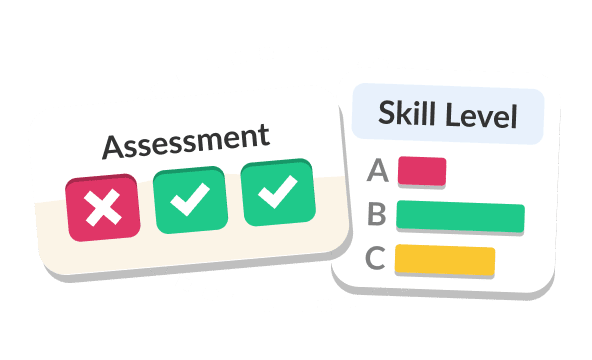
Find Your Weak Spots
Know what your child studies next.
Step-by-Step Video Lessons
Child learns the method not the answer.

School-Aligned
Matches your child's provincial curriculum.
Try It Now
Test your knowledge
Our approach aligns with the evidence
Exam Scores
Better Recall
Less Anxiety
Grade 7 Social Studies Topics
1. Indigenous Societies
2. Early European Contact
3. New France
4. British North America
5. Confederation
6. Expansion
7. Nation Building
8. Key Historical Figures
9. Landforms
10. Climate Zones
11. Ecosystems
12. Natural Resources
13. Population Patterns
14. Economic Activities
15. Transportation Systems
16. Environmental Impact
17. Mesopotamia
18. Ancient Egypt
19. Indus Valley
20. Ancient China
21. Ancient Greece
22. Roman Empire
23. Ancient Americas
24. Legacy of Ancient Worlds
25. Earth Systems
26. Water Systems
27. Climate Patterns
28. Natural Hazards
29. Cultural Regions
30. Economic Networks
31. Political Geography
32. Development Patterns
33. Traditional Knowledge
34. Cultural Continuity
35. Historical Relationships
36. Contemporary Issues
37. Cultural Diffusion
38. Historical Interactions
39. Technological Exchange
40. Modern Diversity
40 Chapters · 40 Topics · 20 Videos
Discover Our Learning Areas
Explore key subjects and start learning with interactive content.


What Is Grade 7 Social Studies?
Grade 7 Social Studies is the year your child's learning expands beyond their own community and country to the wider world. In Canada, Grade 7 typically focuses on world history — from ancient and medieval civilizations through to the early modern period — alongside global geography, cultural diversity, and an introduction to civics and government systems. It is a significant step up from earlier grades, and many students find the jump in complexity challenging. The good news is that with the right practice and support, Grade 7 Social Studies is very manageable.
What Do Students Learn in Grade 7 Social Studies?
Grade 7 Social Studies covers a broad range of topics. In world history, students explore medieval civilizations — including feudal Europe, the Islamic Golden Age, Tang and Song Dynasty China, and Indigenous societies in the Americas. They examine how societies were organized, how trade connected distant cultures, and how major events shaped the modern world. In geography, students build skills in reading maps, understanding climate zones, and analyzing how physical geography influences human settlement and culture. Civics content introduces students to different government systems, the concept of rights and responsibilities, and how laws are made and maintained. Together, these strands give students a well-rounded picture of the world and their place in it.
Is Grade 7 Social Studies Hard?
For many students, Grade 7 Social Studies feels harder than earlier years because the content becomes more abstract and the volume of material increases. Remembering dates, names, and events from medieval history can feel overwhelming. Geography asks students to think spatially and analytically. Civics requires understanding systems and processes rather than concrete facts. These challenges are real — but they are also entirely addressable with the right approach. Adaptive practice that starts where your child is and builds knowledge step by step makes a meaningful difference. Breaking big topics into smaller, focused practice sessions removes the sense of being overwhelmed and builds genuine understanding.
How Is Grade 7 Social Studies Assessed?
In most Canadian provinces, Grade 7 Social Studies is assessed through a combination of classroom tests, projects, and teacher observation. Tests often focus on knowledge of historical events and key concepts, while projects may ask students to research a civilization or analyze a geographic region. Because assessment is ongoing, knowledge gaps that develop early in the year tend to compound — a student who does not fully understand medieval trade routes may struggle later when examining the Age of Exploration. Diagnostic assessments that identify these gaps early allow students to focus practice where it matters most, rather than reviewing everything equally.
What Comes After Grade 7 Social Studies?
Grade 8 Social Studies builds directly on the foundations laid in Grade 7. In Canada, Grade 8 typically covers Canadian history, government, and civics — including Confederation, the development of Canadian identity, and how Canada's political system works. Students who have strong world history and geography skills from Grade 7 find the transition to Canadian history much smoother, because they can place Canadian events in a broader global context. Building solid Grade 7 foundations now pays off directly in Grade 8 and sets students up well for high school social studies.
Why StudyPug for Grade 7 Social Studies?
StudyPug gives your Grade 7 child a complete support system for social studies — not just a collection of videos or a single quiz tool. Certified-teacher video lessons explain world history, geography, and civics clearly, using the same language and approach your child encounters in class. Diagnostic assessments quickly identify which specific topics need work, so your child is never just randomly reviewing material. Adaptive practice then builds on that diagnosis, adjusting difficulty as knowledge grows so that practice is always at the right level — challenging enough to build skill, never so hard it causes frustration. Parent progress reports give you a clear weekly view of where improvement is happening. Everything is aligned to provincial curriculum standards, so what your child practices on StudyPug is directly relevant to what their teacher is covering in class.
What Topics Can Your Child Practice in Grade 7 Social Studies?
StudyPug's Grade 7 Social Studies content covers the full provincial curriculum. Your child can practice world history topics including medieval civilizations, the Crusades, the Renaissance, and early exploration. Geography practice covers map skills, physical and human geography, climate, and global regions. Civics and government content introduces democratic systems, rights and responsibilities, and how societies make decisions. For a full breakdown of BC curriculum topics, see the grade 7 social studies curriculum page. For Ontario-specific content, the grade 7 geography curriculum page outlines exactly what is covered. Whether your child needs to strengthen their understanding of medieval Europe or work on reading thematic maps, there is targeted practice available.
How to Use StudyPug for Grade 7 Social Studies
Getting started is straightforward. When your child signs up, a short diagnostic assessment identifies the Grade 7 Social Studies topics that need the most attention — whether that is world history, geography skills, or civics concepts. From there, adaptive practice questions build knowledge progressively, starting at a comfortable level and increasing in challenge as understanding grows. If your child gets stuck on a concept, certified-teacher video lessons are available for every topic, providing clear step-by-step explanations. You can check the parent dashboard at any time to see a weekly summary of progress across all topics. Because one StudyPug subscription covers all subjects and up to five children, it works for the whole family. The 30-day money-back guarantee means there is no risk in trying it — and free practice content is available before you decide to subscribe.
Grade 7 Social Studies FAQ
Unsure how StudyPug works? Need help with setting up? Check our frequently asked questions or contact us for help.
Can I try it before subscribing?
Yes — sign up free to access sample Grade 7 Social Studies lessons and practice. Subscribe when you're ready, backed by a 30-day money-back guarantee.
How much does it cost?
Plans start with one low monthly payment. Annual options offer the best value. One plan covers up to 5 children and all subjects. 30-day money-back guarantee.
What's included in a subscription?
Full access to certified-teacher video lessons, diagnostic assessments, adaptive practice, Photo Search, and weekly parent progress reports for Grade 7 Social Studies.
How does adaptive practice work?
Questions start at your child's current level and get progressively harder as their knowledge grows — so practice is always challenging but never overwhelming.
How do assessments help my Grade 7 child?
Quick diagnostic assessments identify exactly which world history, geography, or civics topics need work, so practice time is focused and effective.
Is the content aligned with provincial curriculum?
Yes. All Grade 7 Social Studies content is aligned to provincial curriculum standards, covering what your child's teacher is actually teaching in class.





Written by the StudyPug Team
Last updated June 5, 2026
3 M+
students
★★★★★
4.8 average
K–12
all grades