Grade 5 Math Help — Step-by-Step Video Lessons & Practice
Help your child understand every topic and build confidence, one lesson at a time
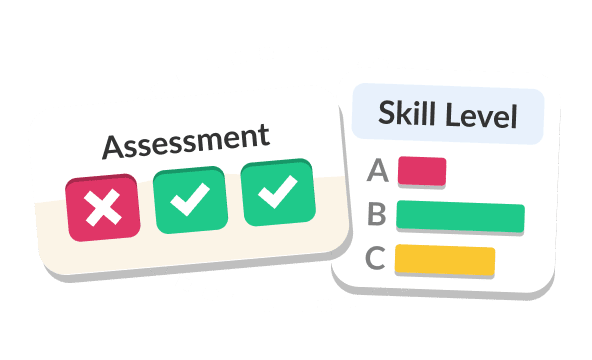
Finds the Gaps
Know exactly what your child must review.
Expert Video Solutions
Real teachers explain until your child understands.

Matches School Work
Matches your child's provincial curriculum.
Try It Now
Test your knowledge
Our approach aligns with the evidence
Exam Scores
Better Recall
Less Anxiety
Grade 5 Math Topics
2. Representing Numbers
3. Patterns
4. Adding and Subtracting Integers
5. Multiplying and Dividing Integers
6. Arithmetic Properties
7. Factors and Multiples
8. Introduction to Fractions
9. Adding and Subtracting Fractions
10. Multiplying Fractions
11. Decimals
12. Estimation
14. Time
15. Angles and Lines
16. Polygons
17. Introduction to 3D Shapes
18. Data Management
19. Statistics
19 Chapters · 76 Topics · 1247 Videos

Ready to practice Grade 5 Math?
Try practice questions on every Grade 5 Math topic — with instant feedback and step-by-step video solutions when you get stuck.
Discover Our Learning Areas
Explore key subjects and start learning with interactive content.








What Is Grade 5 Math?
Grade 5 Math is the point where foundational number skills come together and start getting more demanding. Your child builds on everything from Grade 4 — multiplication, simple fractions, basic geometry — and pushes into more complex territory: fractions with unlike denominators, decimals to thousandths, multi-digit multiplication and long division, patterning and early algebra, measurement of area and volume, and data management. By the end of the year, students are expected to solve multi-step word problems independently, a skill that underpins all of middle school math. For many children, Grade 5 is the first year where math feels genuinely difficult — which is exactly why the right support early makes such a big difference.
What Topics Does Grade 5 Math Cover?
The core strands of Grade 5 Math in Canada include:
Number Sense and Numeration: Reading, writing, and comparing whole numbers to 100,000; multiplication and division with multi-digit numbers; equivalent fractions; adding and subtracting fractions with like and unlike denominators; decimals to thousandths; and introduction to percents in some provincial curricula.
Measurement: Area and perimeter of polygons; volume of rectangular prisms using cubic units; understanding elapsed time and unit conversions within the metric system.
Geometry and Spatial Sense: Properties of 2D shapes and 3D figures; reflections, rotations, and translations; coordinates on a grid.
Patterning and Algebra: Identifying and extending number patterns; writing pattern rules; solving simple equations using guess-and-check and inverse operations.
Data Management and Probability: Collecting, organising, and interpreting data in stem-and-leaf plots and double bar graphs; understanding and calculating simple probability.
Each of these strands builds toward Grade 6, where fractions multiply and divide, ratios and percents deepen, and algebra becomes more explicit. A child who arrives in Grade 6 with solid Grade 5 foundations will find the transition far smoother.
Where Do Grade 5 Students Commonly Struggle with Math?
The most common sticking point is fractions — specifically adding and subtracting fractions with unlike denominators. Many students try to add numerators and denominators separately, which produces a wrong answer. Understanding why you need a common denominator (not just that you do) takes patient, visual explanation before the procedure sticks.
Decimals and place value to thousandths is a close second. Children who are comfortable with whole numbers sometimes misread decimal place value — confusing 0.3 with 0.30 or misordering decimals like 0.45 and 0.5.
Long division with multi-digit divisors is procedurally demanding and easy to lose track of. A single slip in one step cascades through the whole calculation.
Word problems that require selecting the correct operation — and setting up the equation — are where many capable calculators still stumble. Reading comprehension and mathematical reasoning overlap here, which is why simply practising calculations is not always enough.
Targeted practice on these specific areas, paired with a clear explanation of the underlying concept, is the most effective way to close these gaps before they compound in Grade 6.
How Is Grade 5 Math Assessed in Canada?
In Ontario, Grade 5 students are assessed against the Ontario Mathematics Curriculum expectations across the five strands. Provincial report cards use a four-level achievement scale (Level 1–4), and many school boards administer formal unit tests plus classroom observations and performance tasks. In British Columbia, Grade 5 Math is assessed through the BC Curriculum's core competency framework — proficiency scales replace percentage grades in many districts, focusing on demonstrated understanding rather than test scores alone. In Alberta and other provinces, provincial achievement tests may apply at certain grade levels. Across all provinces, Grade 5 Math performance feeds into placement and streaming decisions that begin to matter more in Grades 7 and 8, making it a critical year to stay on track.
Why StudyPug for Grade 5 Math Help?
There are plenty of math resources out there, but most offer either passive videos or random practice worksheets — rarely both, and almost never in a system that adjusts to your child. StudyPug is different in three important ways.
First, the diagnostic assessment identifies exactly where your child needs help. Instead of starting at the beginning or working through topics they already know, your child focuses on the specific Grade 5 concepts that are actually causing trouble. Parents tell us this alone saves weeks of frustration.
Second, the certified-teacher video lessons teach the method, not just the answer. A real teacher explains why the least common denominator works, how to read a decimal's place value correctly, and what to look for in a word problem — the same way a good classroom teacher would, but available any time your child needs a rewatch. These are not AI-generated explanations; they are lessons by qualified educators who understand how Grade 5 students think and where they typically get stuck.
Third, adaptive practice adjusts questions to your child's level. If your child is finding fraction questions straightforward, the system moves them forward. If they keep making the same decimal error, the system gives them more support in that area. This keeps practice from feeling either too easy or overwhelmingly hard — the confidence sweet spot where real learning happens.
The Family Plan covers up to 5 children across all grades and subjects for one price. If you have a child in Grade 3 and one in Grade 7, both are covered. The parent dashboard shows each child's progress separately, so you can see at a glance which Grade 5 topics your child has worked through and how they are performing. And for younger children, printable worksheets with answer keys (Math K–3) provide screen-free practice for those days when devices need a break.
StudyPug lessons are built to match the Canadian provincial curriculum — Ontario, BC, Alberta, and beyond — so your child is always practising the right content for their classroom, not a generic North American syllabus.
What Your Child Will Learn — Grade 5 Math Curriculum Coverage
StudyPug's Grade 5 Math content maps closely to Canadian provincial learning standards. The full topic list includes everything your child's teacher is covering this year:
- Whole number place value, reading, and comparing to 100,000+
- Multi-digit multiplication (standard algorithm)
- Long division with 1- and 2-digit divisors
- Equivalent fractions and simplifying
- Adding and subtracting fractions with unlike denominators
- Decimal place value to thousandths; comparing and ordering decimals
- Adding and subtracting decimals
- Area and perimeter of polygons; volume of rectangular prisms
- Metric measurement and unit conversion
- Transformations: reflections, rotations, translations
- Ordered pairs and coordinate grids
- Number patterns and pattern rules
- Introduction to equations and variables
- Data collection: stem-and-leaf plots and double bar graphs
- Probability: likelihood, experimental and theoretical probability
For a detailed breakdown of what is covered in each province, see the grade 5 math curriculum ontario and the grade 5 math curriculum bc pages, which list every expectation by strand.
How to Use StudyPug for Grade 5 Math
Getting started takes less than five minutes. Here is the most effective approach for Grade 5 students:
Step 1 — Run the diagnostic. The quick diagnostic assessment identifies exactly which Grade 5 topics need the most attention. This is the single most important step: it stops your child from wasting time on material they already know and directs them straight to the concepts that are holding them back.
Step 2 — Watch the concept video. For each flagged topic, a certified teacher explains the concept clearly and walks through example problems step by step. Encourage your child to pause and rewind — that is the entire point of on-demand video. Watching a fraction lesson twice is far more effective than half-following it once.
Step 3 — Complete the adaptive practice. After the video, your child works through practice questions that adjust to their level. The instant feedback tells them immediately whether their answer is right and, if not, shows the correct method — so errors become learning moments rather than sources of confusion.
Step 4 — Check the parent dashboard. Log in to see which topics your child has covered, how they are scoring, and where they still need support. This keeps you informed without having to quiz your child directly — and it makes parent-teacher conversations much more specific and productive.
Step 5 — Keep sessions short and regular. Fifteen to twenty minutes of focused practice five days a week produces far better results than one long session on a Sunday night. Build StudyPug into the after-school routine alongside reading, and you will see consistent, gradual improvement across the year.
Free practice content is available right away, so your child can try lessons before you commit to a plan. And if you subscribe and decide it is not the right fit within the first 30 days, StudyPug's money-back guarantee means you can request a full refund — no questions asked.
Grade 5 Math FAQ
Unsure how StudyPug works? Need help with setting up? Check our frequently asked questions or contact us for help.
What does my child learn in Grade 5 Math, and what topics does it cover?
Grade 5 Math covers a broad range of number and spatial concepts. Children work with fractions (adding, subtracting, comparing), decimals (to thousandths), whole number multiplication and long division, basic geometry (area, perimeter, volume of rectangular prisms), patterning and algebra (rules in tables and number patterns), and data management (graphs, probability). By the end of Grade 5, students are expected to apply these skills to multi-step word problems, building the foundation for Grade 6.
Is Grade 5 Math hard, and where do children commonly struggle?
Grade 5 is often where math starts feeling harder for many children. The biggest sticking points are fractions — especially finding equivalent fractions and adding fractions with unlike denominators — and understanding decimals and place value to thousandths. Long division with multi-digit divisors trips up a lot of students too. Word problems that require choosing the right operation are another common challenge. Early, targeted practice on these specific topics makes a significant difference in preventing gaps from growing.
What should my child know before Grade 5 Math, and what comes next?
Before Grade 5, children should be comfortable with multiplication facts to 12×12, basic division, and simple fractions (halves, quarters, thirds). They should also understand place value to large numbers and basic geometry from Grade 4. Grade 5 Math then sets the stage for Grade 6, where fractions extend to multiplication and division, ratios and percents are introduced, and algebra becomes more formal. Strong Grade 5 skills make the Grade 6 jump much more manageable.
How does StudyPug Grade 5 Math map to what my child learns at school?
StudyPug's Grade 5 Math content is aligned to Canadian provincial curricula. Lessons cover the Ontario Mathematics Curriculum Grade 5 strands and the BC Math 5 learning standards, including number sense, patterning, measurement, geometry, and data. Whether your child's class is working through the Ontario curriculum or the BC curriculum, StudyPug's topics match what their teacher is teaching. You can explore the grade 5 math curriculum ontario and grade 5 math curriculum bc outlines for a detailed topic-by-topic breakdown.
What is one of the trickiest Grade 5 Math concepts, and how is it taught on StudyPug?
Adding and subtracting fractions with unlike denominators is consistently one of the hardest Grade 5 topics. Many children try to add numerators and denominators separately — a common mistake. On StudyPug, a certified teacher walks through finding the least common denominator step by step, shows why the method works (not just what to do), and then provides adaptive practice problems that adjust to your child's level. This approach builds real understanding, so your child can apply the skill independently on tests and assignments.
How much Math practice should my child do at Grade 5?
Most educators recommend 15–20 minutes of focused math practice per day for Grade 5 students — little and often is far more effective than one long weekend session. Consistent short sessions help solidify concepts like fraction equivalence and decimal operations before they stack up. On StudyPug, your child can use the diagnostic to find the exact topics that need attention, then work through targeted practice questions at their own pace. The parent dashboard lets you monitor progress and see which areas are improving week to week.





Written by the StudyPug Team
Last updated June 5, 2026
3 M+
students
★★★★★
4.8 average
K–12
all grades