Grade 2 Math Help — Step-by-Step Video Lessons & Practice
Help your child understand every grade 2 math topic and build real confidence, one lesson at a time.
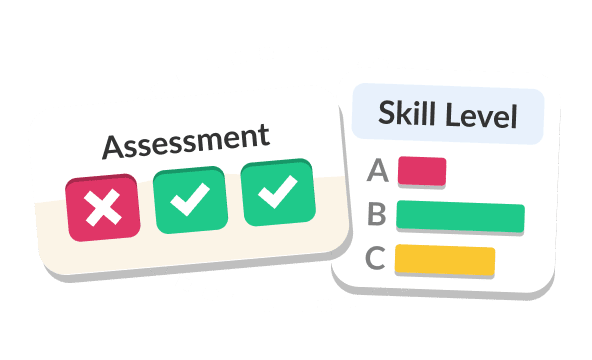
Finds the Gaps
Know exactly what your child needs next.
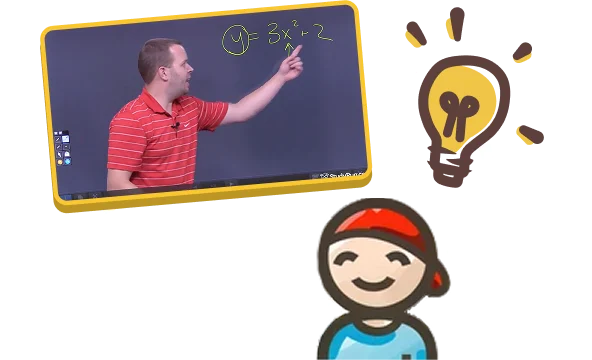
Step-by-Step Videos
Child learns the method not the answer.
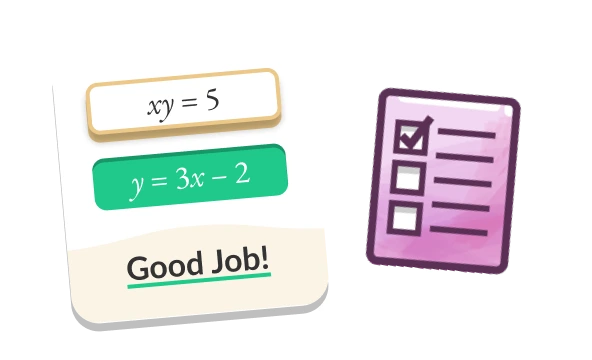
Grows With Them
Questions adapt to keep your child confident.
Try It Now
Test your knowledge
Our approach aligns with the evidence
Exam Scores
Better Recall
Less Anxiety
Grade 2 Math Topics
1. Place Value Up to Hundreds (999)
2. Adding Up to 100
3. Subtracting Up to 100
4. Number Patterns
5. Multiplication Facts Up to 2 Digits
6 Chapters · 43 Topics · 42 Videos

Ready to practice Grade 2 Math?
Try practice questions on every Grade 2 Math topic — with instant feedback and step-by-step video solutions when you get stuck.
Discover Our Learning Areas
Explore key subjects and start learning with interactive content.









What Is Grade 2 Math?
Grade 2 math is the stage where children move from learning to count to learning to calculate — and it lays the groundwork for everything that follows in elementary school. At this level, students work with numbers up to 1,000, develop a solid understanding of place value, and practise the core operations of addition and subtraction with two- and three-digit numbers. They also begin exploring early ideas about multiplication, fractions, measurement, time, and data — all essential building blocks for Grade 3 and beyond.
For parents in Canada, Grade 2 math follows provincial curricula designed to develop number sense progressively. Whether your child is in Ontario, British Columbia, Alberta, or another province, the key strands — number, patterns and algebra, measurement, geometry, and data — are consistent themes that every Grade 2 student works through over the year.
What Topics Does Grade 2 Math Cover?
Grade 2 math covers a broad and carefully sequenced range of topics. Here is what your child will be working on throughout the year:
Numbers and Place Value: Understanding ones, tens, and hundreds; reading, writing, and comparing numbers to 1,000; ordering numbers on a number line.
Addition and Subtraction: Adding and subtracting two- and three-digit numbers, including regrouping (carrying and borrowing); mental math strategies; solving word problems involving addition and subtraction.
Skip Counting and Early Multiplication: Skip counting by 2s, 5s, 10s, and 100s; understanding equal groups as a foundation for multiplication.
Fractions: Recognising and naming halves, thirds, and quarters of shapes and sets of objects.
Measurement: Measuring length using centimetres and metres; comparing and ordering objects by length, mass, and capacity; estimating measurements.
Time and Money: Telling time to the nearest five minutes on both digital and analogue clocks; counting coins and simple money amounts.
Geometry: Identifying and describing 2D shapes and 3D figures; understanding symmetry; exploring patterns.
Data and Graphing: Collecting and organising data; reading and creating simple bar graphs, tally charts, and pictographs.
Is Grade 2 Math Hard? Common Struggles and How to Help
For many children, Grade 2 is when math starts to feel genuinely challenging for the first time. The jump from single-digit to multi-digit arithmetic — and the introduction of regrouping — is where most students hit their first real wall.
Regrouping in addition and subtraction is the single most common struggle in Grade 2. When a child adds 47 + 35 and needs to carry the ten, or subtracts 62 − 28 and needs to borrow from the tens column, they must truly understand place value — not just follow steps. Children who try to memorise the procedure without understanding it tend to make consistent errors.
Place value beyond tens is closely linked. Many children grasp tens and ones in Grade 1 but find the introduction of hundreds in Grade 2 confusing at first. Visual models — like base-ten blocks — are extremely helpful here.
Telling time on an analogue clock is another common sticking point. The concept that the short hand shows hours and the long hand shows minutes, combined with reading to the nearest five minutes, requires practice and patience.
If your child is struggling in any of these areas, the best first step is identifying the specific gap rather than re-doing everything. A targeted approach saves time and keeps your child's confidence intact.
Why StudyPug for Grade 2 Math?
StudyPug is designed to give Grade 2 students exactly what they need to get better at math — and to give parents the tools to support their child without needing to re-learn the curriculum themselves.
A diagnostic that finds the gap immediately. Rather than starting from scratch, StudyPug's diagnostic assessment identifies exactly where your child needs to focus. You'll know within minutes whether the issue is regrouping, place value, fractions, or something else — no guessing, no wasted practice time.
Certified-teacher video lessons that teach the method. Every concept in Grade 2 math has a short video lesson taught by a certified teacher. These aren't automated or AI-generated — they're real educators who explain each concept step by step, using the same visual methods your child's classroom teacher would use. The goal is always understanding, not just getting the right answer, so your child can tackle similar problems independently.
Adaptive practice that builds confidence. After watching a lesson, your child practises with questions that adapt to their level. If they answer correctly, the practice gets a little more challenging. If they struggle, it steps back and reinforces the concept. This means your child is always working at the right level — challenged enough to grow, not so hard they give up.
Printable worksheets for screen-free practice. For Grade 2 math specifically, StudyPug provides printable worksheets with full answer keys. These are perfect for kitchen-table practice away from a screen — a great complement to the video lessons and digital practice.
A Family Plan that covers all your children. If you have more than one child, StudyPug's Family Plan covers up to 5 children at all grade levels and subjects for one price. Your Grade 2 student and your Grade 5 student can both use the platform under the same subscription.
A parent dashboard so you always know how they're doing. The parent dashboard shows you each child's progress — topics completed, areas of strength, and areas that still need work. You don't need to quiz your child at the dinner table; the dashboard tells you what you need to know.
What Your Child Will Learn — Grade 2 Math Curriculum Coverage
StudyPug's Grade 2 math content is fully aligned to Canadian provincial curricula. Whether your child follows the Ontario mathematics curriculum or the British Columbia mathematics framework, the topics on StudyPug match what their teacher is covering in the classroom.
Key curriculum strands covered include: numbers to 1,000 and place value; addition and subtraction with regrouping; skip counting and early multiplication concepts; fractions; linear measurement; time to the nearest five minutes; 2D and 3D geometry; and data literacy through graphs and charts.
For a detailed breakdown of how StudyPug content maps to your province, see the grade 2 math curriculum ontario and grade 2 math curriculum bc pages. These pages list the specific expectations and show exactly which StudyPug lessons cover each one.
This alignment means your child isn't learning a parallel or different version of math — they're getting direct support for the exact concepts their teacher is introducing, in the right sequence.
How to Use StudyPug for Grade 2 Math
Getting started with StudyPug for Grade 2 math takes less than five minutes, and there's free practice content available right away so you can explore before committing to a subscription.
Step 1 — Run the diagnostic. When your child first logs in, the diagnostic assessment will identify where they are in the Grade 2 curriculum and flag any gaps from Grade 1. This takes about 10–15 minutes and gives you a clear picture of where to start.
Step 2 — Watch a concept video together. For younger learners, watching the first few video lessons alongside your child helps them feel comfortable and lets you answer questions as they come up. The videos are short — typically 5–10 minutes — and clearly paced for a 7- or 8-year-old.
Step 3 — Let them practise independently. After the video, encourage your child to attempt the practice questions on their own. The adaptive system will adjust to their responses. Most children do 10–15 minutes of practice on school days.
Step 4 — Check the parent dashboard. At the end of the week, spend two minutes reviewing the dashboard. You'll see which topics your child has worked through, how they performed, and what the platform recommends next.
Step 5 — Print a worksheet for the weekend. For Grade 2 math, use the printable worksheets for a short screen-free session on a Saturday morning. Ten minutes with a pencil and paper reinforces the week's learning in a different format.
All paid plans come with a 30-day money-back guarantee — the only guarantee StudyPug makes. If it isn't the right fit for your child within the first month, you get a full refund. There is no free trial of the paid plan, but free practice content and sample lessons are available without signing up, so you can see the quality of the teaching before you commit.
Grade 2 Math FAQ
Unsure how StudyPug works? Need help with setting up? Check our frequently asked questions or contact us for help.
What does my child learn in Grade 2 math, and what topics does it cover?
In Grade 2 math, children build on early number skills to work with numbers up to 1,000. Core topics include two- and three-digit addition and subtraction, place value (ones, tens, hundreds), skip counting by 2s, 5s, and 10s, introduction to multiplication through equal groups, basic fractions (halves, thirds, quarters), measurement using standard units, telling time to the nearest five minutes, and reading simple graphs and charts. Canadian provincial curricula align closely across these strands, setting a strong foundation for Grade 3 math.
Is Grade 2 math hard, and where do children commonly struggle?
Grade 2 math introduces concepts that require a shift from counting to reasoning, which many children find challenging. The most common struggle points are regrouping (carrying and borrowing) in two- and three-digit addition and subtraction, understanding place value beyond tens, and telling time on an analogue clock. Children who haven't fully memorised addition facts to 20 often slow down here too. The good news is that these are very teachable gaps — a focused diagnostic can pinpoint exactly which skill needs attention so practice time is spent in the right place.
What should my child know before Grade 2 math, and what comes next?
Before Grade 2, children should be comfortable counting to 100, adding and subtracting single-digit numbers, and recognising basic 2D shapes. They should also understand the concept of tens and ones from Grade 1 place value work. Coming out of Grade 2, children move into Grade 3 math where they begin formal multiplication and division, work with larger numbers up to 10,000, explore fractions more deeply, and start measuring perimeter and area. A strong Grade 2 foundation — especially in place value and basic operations — makes Grade 3 significantly smoother.
How does StudyPug Grade 2 math map to what my child learns at school?
StudyPug's Grade 2 math content is aligned to Canadian provincial curricula, including the Ontario and British Columbia mathematics frameworks. Every topic your child's teacher introduces in class — from two-digit addition to data and graphing — has a matching video lesson and practice set on StudyPug. You can explore how the content maps to your province: see the grade 2 math curriculum ontario and grade 2 math curriculum bc pages for detailed topic breakdowns. This means your child isn't learning something different from school — they're reinforcing exactly what their teacher expects them to know.
What is one of the trickiest Grade 2 math concepts, and how is it taught?
Regrouping — also called carrying or borrowing — is consistently the trickiest concept in Grade 2 math. When children add 47 + 35 and must carry the ten, or subtract 62 − 28 and must borrow from the tens column, it requires understanding place value deeply, not just following a procedure. On StudyPug, a certified teacher walks through regrouping using visual models (base-ten blocks) before moving to the written algorithm. The video teaches the concept step by step so children understand *why* regrouping works, not just *how* to do it — making it stick long-term.
How much math practice should my child do at Grade 2?
For Grade 2, education research and most provincial guidelines suggest 10–15 minutes of focused math practice on school days is ideal — enough to reinforce classroom learning without fatigue. Short, consistent sessions beat long infrequent ones at this age. A good routine: watch a short concept video with your child once or twice a week, then let them try 5–10 adaptive practice questions on their own. StudyPug's practice adjusts to your child's level, so they're always working at the right challenge — not too easy, not frustrating.





Written by the StudyPug Team
Last updated June 5, 2026
3 M+
students
★★★★★
4.8 average
K–12
all grades