Online Grade 3 Social Studies Help
Adaptive practice builds community, history, and geography skills at their pace
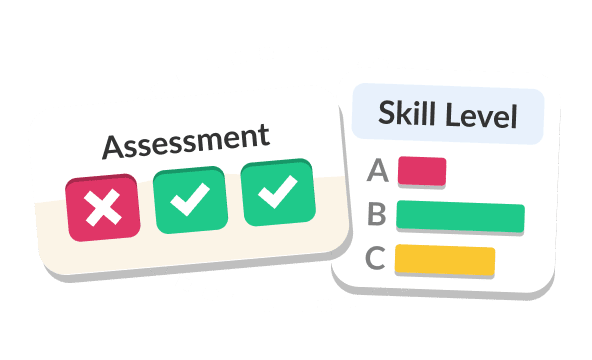
Find Learning Gaps
See exactly where your child needs help.
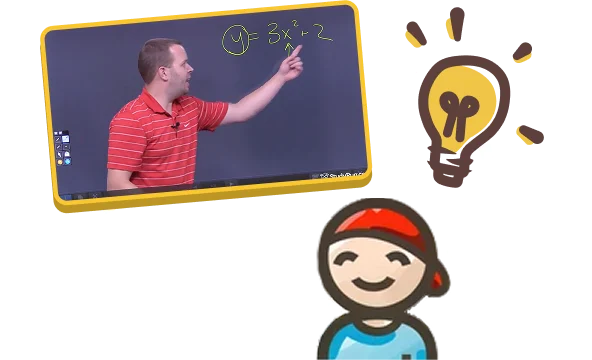
Step-by-Step Video Lessons
Lessons your child can follow alone.
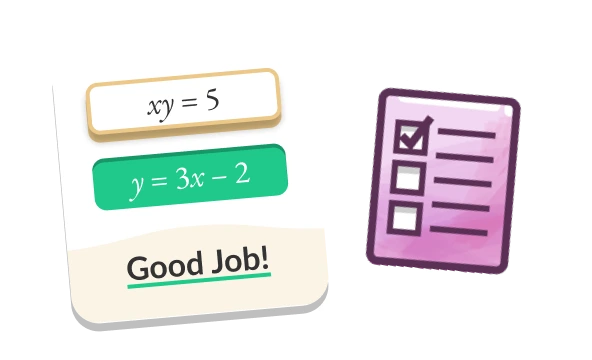
Adaptive Practice
Questions adapt to build your child's confidence.
Try It Now
Test your knowledge
Our approach aligns with the evidence
Exam Scores
Better Recall
Less Anxiety
Grade 3 Social Studies Topics
1. Natural Resources
2. Protected Areas
3. Human Impact
4. Sustainability
5. Population Changes
6. Infrastructure
7. Urban Planning
8. Future Planning
9. Needs and Wants
10. Economic Activities
11. Trade
12. Economic Choices
13. Community Work
14. Work Changes
15. Global Trade
16. Future Work
17. Human Rights
18. Canadian Charter
19. Advocacy
20. Global Rights
21. Community Action
22. Leadership
23. Decision Making
24. Global Citizenship
25. Settlement History
26. Population Movement
27. First Peoples
28. Cultural Contact
29. Transportation
30. Communication
31. Technology Impact
32. Cultural Exchange
33. Map Reading
34. Geographic Tools
35. Regions
36. Location Analysis
37. Physical Systems
38. Human Systems
39. Interaction
40. Geographic Change
40 Chapters · 40 Topics · 33 Videos
Discover Our Learning Areas
Explore key subjects and start learning with interactive content.

What Is Grade 3 Social Studies in Canada?
Grade 3 Social Studies introduces children to the world just beyond their front door — local communities, provincial geography, basic map reading, Indigenous peoples and cultures, simple government concepts, and the foundations of economics. It is the first year where students move from exploring their immediate neighbourhood (Grades 1–2) toward understanding how communities across Canada are connected and different. Provincial curriculum standards in Ontario, British Columbia, Alberta, and other provinces all emphasise these community and inquiry themes, though the specific topics vary by region. By the end of Grade 3, students are expected to identify features on simple maps, explain how communities meet people's needs, and describe how people in the past shaped the places we live in today.
What Do Grade 3 Students Actually Learn in Social Studies?
The four core strands across most Canadian provincial curricula at Grade 3 are:
- Communities and belonging — how local communities are organised, what makes them unique, and how people depend on each other.
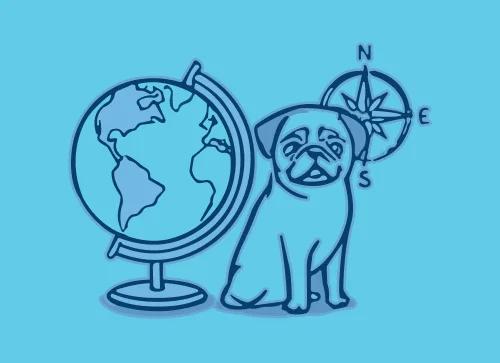
- Geography and mapping — reading simple maps and globes, understanding cardinal directions, identifying landforms, and locating key places within Canada and the world.
- Local and Indigenous history — exploring how communities have changed over time and the contributions and perspectives of Indigenous peoples who have lived on these lands.
- Economics basics — understanding needs vs. wants, how goods and services work, and why communities trade and share resources.
These topics build the foundation for Grade 4 provincial history and Canada-wide geography. Students who feel confident in Grade 3 find the transition into more detailed historical study much smoother.
Is Grade 3 Social Studies Hard for Kids?
For many children, Grade 3 Social Studies is the first time concepts feel genuinely abstract. Mapping coordinates, understanding government roles, or grasping how communities existed hundreds of years ago can be puzzling when a child has no personal reference point. The language of social studies — words like "economy," "Indigenous," "community services," and "province" — is also new and sometimes confusing.
The good news is that Grade 3 Social Studies is designed to be approached through curiosity, not memorisation. With the right support — clear explanations, visual examples, and plenty of practice — most children find the subject genuinely interesting. StudyPug's certified-teacher video lessons break each concept into short, easy steps, and adaptive practice questions build understanding gradually so no child is left behind.
How Is Grade 3 Social Studies Assessed?
In Canadian schools, Grade 3 Social Studies is typically assessed through a mix of teacher observation, in-class projects (like creating a simple map or community poster), oral responses, and short quizzes on key vocabulary and concepts. Formal standardised tests are rare at this level — assessment is mostly about checking that children understand ideas and can apply them in simple tasks.
StudyPug's diagnostic assessments are designed to reflect this approach. Rather than drilling isolated facts, they check whether your child understands the concepts behind the topics — identifying gaps so practice can focus where it truly matters.
What Comes Next After Grade 3 Social Studies?
Grade 4 Social Studies expands the scope significantly. Students move from local communities to their province as a whole — exploring provincial history, Canada's regions, the contributions of Indigenous peoples in greater depth, and early Canadian settlement. The mapping and geography skills built in Grade 3 become the backbone of Grade 4 regional studies. Children who enter Grade 4 with solid community, history, and geography foundations tend to find the jump much more manageable.
How Does StudyPug Support Grade 3 Social Studies Practice?
StudyPug gives Grade 3 students two powerful tools working together: certified-teacher video lessons that explain concepts step by step, and adaptive practice that adjusts to each child's level in real time.
The video lessons are taught by real teachers — not AI-generated content — and cover every major Grade 3 Social Studies topic from community helpers and local history to map skills and provincial geography. Lessons are short enough to hold a young child's attention, and each concept is explained with clear language and visuals suited to the 5th-grade reading level.
Adaptive practice starts from where your child actually is. If they find map questions straightforward, the practice increases in difficulty. If community and history questions are trickier, the system stays at that level until understanding is solid before moving on. This means no wasted time on topics already known, and no frustration from questions that are too hard too soon.
What Grade 3 Social Studies Topics Can You Practice on StudyPug?
StudyPug's Grade 3 Social Studies content is aligned with provincial curriculum standards across Canada. Core practice topics include:
- Understanding local and provincial communities
- Reading and interpreting simple maps and globes
- Indigenous peoples, cultures, and contributions
- How communities change over time — local history
- Basic government and community services
- Needs, wants, goods, and services (economics basics)
If you are in British Columbia, you can explore the full grade 3 social studies curriculum bc breakdown to see exactly which topics and learning standards are covered. Ontario families can review the ontario grade 3 social studies curriculum page for a detailed look at the provincial expectations your child is working toward.
Why StudyPug for Grade 3 Social Studies?
Parents choose StudyPug for Grade 3 Social Studies because it combines three things that are genuinely hard to find together: curriculum alignment, adaptive practice, and real-teacher explanations — all in one place.
Curriculum-aligned from day one. Every lesson and practice question maps to provincial social studies standards, so what your child works on in StudyPug directly supports what their teacher is covering in class. No mismatched content, no off-topic questions.
Practice that meets your child where they are. The adaptive system means a child who is ahead on geography but behind on history gets exactly the right balance of practice — without a parent having to figure out what to assign. The platform does the planning.
Progress you can actually see. The parent dashboard shows a clear weekly summary of what your child has practised and how their knowledge is growing. You always know where they stand, and you can see improvement week by week.
One low-cost plan for the whole family. A single StudyPug subscription covers up to five children across all subjects and all grades — so if you have a Grade 3 student working on social studies and an older sibling needing help with another subject, both are covered. Every plan comes with a 30-day money-back guarantee.
How to Use StudyPug for Grade 3 Social Studies
Getting started is straightforward. After signing up, your child takes a short diagnostic assessment that identifies which Grade 3 Social Studies topics they already understand and which need more work. From there, StudyPug recommends the right starting point — whether that is community concepts, map skills, or local history.
A typical session looks like this: your child watches a short certified-teacher video lesson on a topic, then completes adaptive practice questions on that same topic. If they get questions right consistently, the difficulty increases. If they hit a wall, the practice adjusts and the relevant video lesson is available to rewatch. Parents can check the dashboard at any time to see what was completed and how confidence is building.
Even two or three short sessions per week make a real difference for Grade 3 students. Social studies knowledge at this level builds cumulatively — each new concept connects to something already learned. Regular, focused practice with StudyPug keeps those connections strong and makes classroom learning easier every single week.
Grade 3 Social Studies FAQ
Unsure how StudyPug works? Need help with setting up? Check our frequently asked questions or contact us for help.
Can I sign up free to try it?
Yes — sign up free to access sample Grade 3 Social Studies lessons and practice. Subscribe when you're ready, backed by a 30-day money-back guarantee.
How much does it cost?
Plans start with one low monthly payment, with annual options for the best value. One plan covers up to 5 children and all subjects. 30-day money-back guarantee.
What's included in the subscription?
Full access to certified-teacher video lessons, diagnostic assessments, adaptive practice, Photo Search, and parent progress reports for Grade 3 Social Studies.
How does adaptive practice work?
Practice questions start at your child's current level and get gradually harder as their knowledge grows — so they're always challenged without feeling overwhelmed.
Is it aligned with the provincial curriculum?
Yes! All Grade 3 content matches provincial social studies standards, covering community, local history, geography, and cultural awareness taught in Canadian classrooms.
What topics does Grade 3 Social Studies cover?
Grade 3 Social Studies covers local communities, provincial geography, basic map skills, Indigenous peoples and cultures, local government concepts, and economics basics.





Written by the StudyPug Team
Last updated June 5, 2026
3 M+
students
★★★★★
4.8 average
K–12
all grades