Kindergarten Math Help — Step-by-Step Video Lessons & Practice
Help your child understand every kindergarten math topic and build confidence, one lesson at a time.
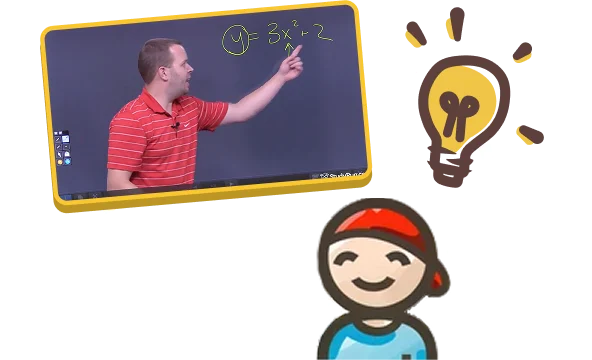
Certified-Teacher Video Lessons
Friendly, certified teachers walk your child through every kindergarten math concept step by step — real teaching that helps them solve similar problems on their own.
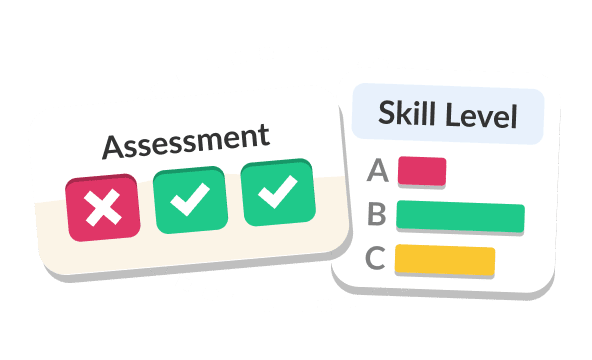
Find the Gaps Fast — Diagnostic Assessment
A quick diagnostic pinpoints exactly where your child needs support, so you know what to celebrate and what to work on — no guessing.

Matches Their Classroom Curriculum
Every lesson aligns to the Canadian provincial curriculum your child follows, so what they learn on StudyPug connects directly to what they see at school.
Try It Now
Test your knowledge
Our approach aligns with the evidence
Exam Scores
Better Recall
Less Anxiety
Kindergarten Topics
1. Counting Up to 5
2. Counting and Sequences Up to 20
3. Adding Up to 5
4. Adding Up to 10
5. Subtracting Up to 5
6. Subtracting Up to 10
7. Comparing Numbers
9. 3D Shapes
Discover Our Learning Areas
Explore key subjects and start learning with interactive content.









What Is Kindergarten Math?
Kindergarten math is the first formal step in your child's mathematical journey. It builds the number sense, spatial reasoning, and logical thinking your child will draw on for every math class ahead. At this stage, learning happens through exploration, play, and structured practice — and the concepts introduced here, from counting and comparing to shapes and patterns, form the bedrock of all future math learning. Whether your child is just starting to recognize numerals or is already counting to 20, kindergarten math meets them where they are and moves them forward.
What Do Children Learn in Kindergarten Math?
Kindergarten math in Canadian provincial curricula covers six core areas. Your child will work on counting and cardinality — counting objects to 20 and understanding that the last number counted tells you how many are in the group. They'll develop number sense, learning to recognize, write, and compare numerals, and to understand more, fewer, and equal. Basic operations are introduced informally: combining groups of objects to represent addition, and removing objects to represent subtraction. Geometry introduces 2D shapes (circle, square, triangle, rectangle) and 3D shapes (sphere, cube, cylinder), including sorting and describing them. Patterning teaches children to recognize, copy, and extend repeating patterns — a skill that underpins algebraic thinking. Finally, measurement and data covers comparing lengths, weights, and capacities using everyday language (longer, heavier, more).
Is Kindergarten Math Hard? Common Struggles and How to Help
Most children take to kindergarten math readily, but a few concepts consistently challenge young learners. One-to-one correspondence — touching each object once while saying one number — sounds simple but requires coordination and focus that many five-year-olds are still developing. Number conservation is another common stumbling block: understanding that five objects spread apart and five objects pushed together are still the same amount. Subitizing (recognizing small quantities at a glance) and understanding the concept of zero also trip up many children early on.
The best support is consistent, low-pressure daily practice. Short sessions focused on one concept at a time — rather than a long weekly session — make a much bigger difference at this age. If your child is frustrated, step back to an easier version of the same concept and rebuild from there. StudyPug's adaptive practice does exactly this automatically, adjusting to your child's current level so they're always working in their confidence zone.
What Should My Child Know Before Kindergarten Math — and What Comes Next?
Children entering kindergarten typically benefit from some informal pre-math experience: sorting objects by colour or size, recognizing a few numerals, and counting small groups by touch. These skills develop naturally through play and don't need to be formally taught before school starts.
After kindergarten, Grade 1 math builds directly on this foundation. Children move into addition and subtraction to 20 using number lines and ten frames, begin to understand place value (ones and tens), explore measurement with standard units, and work with data in simple graphs and charts. A strong kindergarten math foundation — especially solid counting and number sense — makes that transition smooth. StudyPug's kindergarten course is designed with that Grade 1 step in mind, so your child is always building toward what's next.
How Does Kindergarten Math Fit the Canadian Provincial Curriculum?
Canadian kindergarten math varies slightly by province but follows consistent expectations around number sense, geometry, patterning, and measurement. StudyPug lessons are aligned to these provincial curricula so the topics, vocabulary, and progression your child encounters on StudyPug match what their teacher is covering in the classroom.
You can explore exactly what's covered in your province through these curriculum resources: the Ontario kindergarten math curriculum and the BC kindergarten math curriculum outline the specific expectations at each stage. This alignment means StudyPug works as a genuine extension of school learning — not a separate programme your child has to mentally switch into.
Why StudyPug for Kindergarten Math?
StudyPug is built around the way children actually learn — through understanding, not memorization. Here's what sets it apart for kindergarten math support.
Certified-teacher concept videos. Every lesson is taught by a friendly, certified teacher who explains the concept step by step — not just the answer, but the reasoning behind it. This means your child learns how to approach a problem, not just how to repeat a procedure. These are real teacher-made videos, not AI-generated content.
Diagnostic assessment. Before your child starts practising, a quick diagnostic finds exactly where they are — which concepts are solid and which need attention. You stop guessing what to work on and start focusing where it matters. No more reviewing things your child already knows while gaps quietly grow elsewhere.
Adaptive practice. Questions adjust to your child's current level in real time. If they get something right, the next question builds on it. If they're struggling, the practice steps back and rebuilds their confidence before moving forward. This keeps learning in the right zone — challenging but achievable.
Printable worksheets with answer keys. For kindergarten math, StudyPug includes printable worksheets you can use for screen-free practice. These are perfect for the kitchen table, car journeys, or any time your child needs a break from a screen. Answer keys are included so you can check their work at a glance.
Family Plan. One subscription covers up to 5 children across all grade levels and all subjects. The parent dashboard shows you each child's progress separately — so you can see what your kindergartner is working on while also keeping an eye on your Grade 4 child's science practice.
30-day money-back guarantee. If StudyPug isn't the right fit, you get a full refund within 30 days. No complicated process, no questions asked.
What Your Child Will Learn — Kindergarten Math Curriculum Coverage
StudyPug's kindergarten math course covers all the core topics in the Canadian provincial curriculum, including:
- Numbers to 20 — counting, recognizing, writing, and ordering numerals
- Comparing quantities — more than, fewer than, and equal to
- Addition and subtraction readiness — combining and separating groups of objects
- 2D and 3D shapes — identifying, naming, sorting, and describing shapes
- Patterns — recognizing, copying, and extending repeating patterns
- Measurement — comparing length, height, weight, and capacity using everyday language
- Sorting and data — grouping objects and describing collections
Each topic is broken into short, focused lessons so your child can work on one concept at a time without feeling overwhelmed. The Ontario kindergarten math curriculum and the BC kindergarten math curriculum pages (linked above in the curriculum section) show exactly how these topics map to provincial expectations.
Using StudyPug for Kindergarten Math — Getting Started
Getting started is straightforward. Once your child has an account, the diagnostic assessment takes around 10 minutes and gives you an immediate picture of where they are. From there, StudyPug will suggest where to begin based on the results — but you can also browse topics directly if you know there's a specific area your child needs help with right now.
For kindergarten, we recommend starting with a 10–15 minute session each day. Pick one topic, watch the video lesson together the first time, then let your child try the practice questions on their own. Use the printable worksheets for screen-free reinforcement on alternate days. Check the parent dashboard once a week to see which topics have been completed and where your child is spending the most time — those are usually the areas that need a bit more attention.
Free daily practice content is available on StudyPug, so you can explore the platform and let your child try a few practice questions before you decide to subscribe. When you're ready, the Family Plan is the best value if you have more than one child — one price, up to five profiles, all subjects, all grade levels.
Kindergarten FAQ
Unsure how StudyPug works? Need help with setting up? Check our frequently asked questions or contact us for help.
What does my child learn in kindergarten math, and what topics does it cover?
Kindergarten math covers the foundations your child needs for all future math learning. Topics include counting and representing numbers to 20, recognizing and writing numerals, comparing groups of objects (more, fewer, equal), basic addition and subtraction concepts, recognizing and sorting 2D and 3D shapes, understanding patterns, and measuring length and weight informally. In Canadian provincial curricula, these skills are introduced through hands-on exploration and play-based learning. StudyPug covers every one of these topics with short, clear video lessons and guided practice your child can follow at home.
Is kindergarten math hard, and where do children commonly struggle?
Kindergarten math is foundational, but many children find certain areas tricky. The most common struggle points are number sense — truly understanding what a number means rather than just reciting it — and one-to-one correspondence (matching each object to exactly one number when counting). Recognizing number patterns and understanding the concept of "one more" or "one less" can also be challenging. The good news is these are exactly the areas where short, focused practice makes the biggest difference. StudyPug's certified-teacher videos slow down at the tricky spots and explain the concept clearly before moving on to practice.
What should my child know before kindergarten math, and what comes next?
Before kindergarten math, children benefit from being able to sort objects by colour or size, count small groups of objects by touch, and recognize a few numerals. These skills often develop naturally through everyday play. After kindergarten, Grade 1 math builds directly on this foundation — children move into addition and subtraction to 20, place value (tens and ones), and more formal measurement. Making sure your child has a solid grasp of counting and basic number sense in kindergarten sets them up for a smooth transition into Grade 1 math.
How does StudyPug kindergarten math map to what they learn at school?
StudyPug's kindergarten math lessons are aligned to the Canadian provincial curriculum, including the Ontario mathematics curriculum and the BC mathematics curriculum. That means the topics, vocabulary, and approaches your child sees on StudyPug match what their teacher is covering in class. You can explore the Ontario kindergarten math curriculum and the BC kindergarten math curriculum to see exactly how lessons align. This makes StudyPug an effective complement to schoolwork — not something separate your child has to context-switch into.
What is one of the trickiest kindergarten math concepts, and how is it taught?
One of the trickiest concepts in kindergarten math is subitizing — recognizing small quantities instantly without counting. Children who can subitize groups of 2, 3, or 4 objects develop much faster number sense. It's tricky because it requires visual pattern recognition, not just counting. On StudyPug, certified teachers introduce subitizing using dot patterns and ten frames, then use adaptive practice to build the skill step by step. Your child starts with groups of two and three, builds confidence, and gradually works up to five and beyond — always with immediate feedback.
How much math practice should my child do at the kindergarten level?
For kindergarten, short and frequent practice sessions work best — around 10 to 15 minutes per day is ideal. Young children learn through repetition but lose focus quickly, so brief daily sessions are far more effective than longer weekly ones. Focus on one concept at a time: a few days on counting, then shapes, then patterns. StudyPug's adaptive practice adjusts the difficulty to your child's current level, so even 10 minutes of targeted practice each day builds real skills. Free daily practice content is available so you can try it out before committing.