Differential Equations Help: Video Lessons & Practice
Work through every topic with clear solutions. Start your free practice test now!
Value vs. Private Tutor
Expert Differential Equations help cheap.

Multi-Subject
One subscription unlocks all subjects.

Practice Until Perfect
Don't move on before it truly clicks.
Try It Now
Test your knowledge
Our approach aligns with the evidence
Exam Scores
Better Recall
Less Anxiety
Differential Equations Topics
1. Introduction to Differential Equations
2. First Order Differential Equations
3. Second Order Differential Equations
4. Laplace Transforms
4 Chapters · 26 Topics · 151 Videos
Discover Our Learning Areas
Explore key subjects and start learning with interactive content.




What Is Differential Equations?
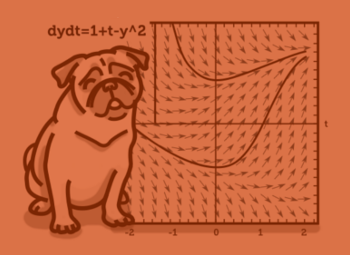
Differential Equations is a university mathematics course that studies equations relating a function to its derivatives — describing how quantities change and interact over time or space. Where Calculus teaches you to differentiate or integrate a known function, Differential Equations works in reverse: you start with information about rates of change and find the function itself. It is one of the most widely applied areas of mathematics, sitting at the core of engineering, physics, biology, economics, and data science.
The course typically spans first-order and second-order ordinary differential equations (ODEs), systems of equations, Laplace transforms, and an introduction to numerical methods. At New Zealand universities, it is usually a second-year paper taken after completing Calculus I and II, and it forms a gateway to advanced applied mathematics, Partial Differential Equations, and technical engineering courses.
What Topics Are Covered in a Differential Equations Course?
A typical Differential Equations course moves through a structured sequence of techniques and ideas. First-order ODEs come first — separable equations, linear equations with integrating factors, exact equations, and substitution methods. Students learn to match the structure of an equation to the right solution strategy, which is a core skill that carries through the entire course.
Second-order linear ODEs follow, including homogeneous equations with constant coefficients, the method of undetermined coefficients, and variation of parameters for non-homogeneous cases. These underpin virtually every vibration, electrical circuit, and heat-transfer model in engineering. Systems of differential equations introduce eigenvalue methods and phase-plane analysis. Laplace transforms provide a powerful algebraic approach to solving initial-value problems, especially for piecewise or impulsive forcing functions. Many courses close with power series solutions and a brief treatment of numerical methods such as Euler's method or Runge–Kutta.
How Is Differential Equations Different from Calculus III?
Calculus III (Multivariable Calculus) extends single-variable calculus into multiple dimensions — partial derivatives, multiple integrals, vector fields, and theorems like Green's and Stokes'. It is primarily about functions of several variables.
Differential Equations shifts the focus entirely: you are no longer studying the geometry of functions in space but instead solving for unknown functions defined by their rates of change. The techniques are completely distinct — Laplace transforms, eigenvalue methods, phase-plane analysis, and series solutions have no direct equivalent in Calculus III. The two courses are often taken in the same year and are complementary rather than overlapping, with Calculus III providing useful background in series and partial derivatives.
Where Do Students Struggle Most in Differential Equations?
The most common difficulty is method selection. Unlike integration in Calculus, where a handful of techniques cover most cases, Differential Equations presents over a dozen distinct methods and students must identify the equation type before choosing an approach. A wrong classification means a wrong method, regardless of how accurately you execute the algebra.
Laplace transforms are a second consistent struggle. The technique involves three stages — transforming, solving algebraically, and inverting — and requires fluency with partial fractions and the transform table simultaneously. Systems of ODEs using eigenvalues are a third difficulty spike, particularly when eigenvalues are complex or repeated. The practical solution is deliberate practice across varied problem types rather than re-reading notes: you need to build pattern recognition through repetition, not passive review.
How Is Differential Equations Assessed at New Zealand Universities?
Assessment structures vary by institution, but the typical New Zealand university Differential Equations paper allocates roughly 20–30% of the grade to coursework assignments submitted throughout the semester, with the remaining 70–80% coming from a final examination. Many courses also include a mid-semester test worth 15–25% as a checkpoint.
Final exams are closed-book and timed, generally covering all major techniques. Questions expect you to identify the equation type, apply the correct method, and carry the solution through to completion without errors. Speed and accuracy under exam conditions require practice with timed past papers and mock tests — not just an understanding of the theory. Photo Search on StudyPug can help you quickly find a matching lesson if you encounter an unfamiliar problem type while revising.
What Prerequisites Do You Need for Differential Equations?
The minimum prerequisite is a solid foundation in Calculus I and II: differentiation rules, integration techniques (substitution, integration by parts, partial fractions), and an understanding of infinite series. Many students find gaps in their integration fluency — particularly partial fractions — are the biggest obstacle once the ODE techniques are introduced.
Calculus III is recommended at many institutions before or alongside ODEs, as familiarity with partial derivatives is useful for exact equations and later for Partial Differential Equations. Some exposure to complex numbers is helpful for understanding eigenvalue solutions with complex roots. After completing Differential Equations, common next courses include Linear Algebra, Partial Differential Equations, Numerical Analysis, and upper-level engineering mathematics.
Why StudyPug for Differential Equations Help?
Differential Equations is a course where passive studying rarely works. You need to see problems solved clearly, attempt them yourself, and get feedback that adjusts to where you actually are. StudyPug is built around exactly that cycle.
Start with the diagnostic assessment — a short, targeted test that identifies your specific gaps across all Differential Equations topics. Rather than working through the entire course from the beginning, you focus on the sections that will move your grade the most. No wasted hours on topics you already understand.
From there, certified-teacher video lessons walk through each method step by step. These are not AI-generated walkthroughs — they are lessons made by experienced instructors who explain why each technique works, not just how to execute it mechanically. Understanding the method deeply means you can apply it to unfamiliar exam questions, not just recognise the type you practised last night.
Adaptive practice adjusts the difficulty of each problem set based on your performance. If you are getting separable equations consistently right, the system moves you on; if you are struggling with variation of parameters, it keeps you there with varied problems until the method is secure. Mock exams mirror the structure and difficulty of university mid-semester tests and finals, so exam conditions feel familiar when it counts.
One subscription covers every course on StudyPug — Differential Equations, Calculus I–III, Linear Algebra, Statistics, and more. If you pick up a gap from Calculus II mid-semester, you can address it immediately without paying for a separate resource. All plans include a 30-day money-back guarantee.
What You Learn: Differential Equations Topics on StudyPug
StudyPug's Differential Equations course covers every major topic area you will encounter at a New Zealand university, organised so you can jump directly to the section you need or work through the full course in order.
- First-Order ODEs: Separable equations, linear equations and integrating factors, exact equations, substitution methods (Bernoulli, homogeneous substitution)
- Second-Order Linear ODEs: Homogeneous equations with constant coefficients, characteristic equation, repeated and complex roots, undetermined coefficients, variation of parameters
- Laplace Transforms: Definition and properties, transform tables, partial fraction decomposition, inverse Laplace, solving IVPs with Laplace methods, step functions and impulse inputs
- Systems of Differential Equations: Matrix methods, eigenvalue–eigenvector solutions, real and complex eigenvalues, repeated eigenvalues, phase-plane analysis
- Series Solutions: Power series solutions about ordinary points, Frobenius method at regular singular points
- Numerical Methods: Euler's method, improved Euler (Heun's method), Runge–Kutta methods
No validated topic-specific URLs are currently available in the internal link map for this page — lessons are accessible directly from the Differential Equations course dashboard on StudyPug.
How to Use StudyPug for Differential Equations
The most effective way to use StudyPug for Differential Equations is to let the diagnostic guide your starting point. Run the short diagnostic before your first study session and let it surface which topic areas need the most work. This is especially useful mid-semester when you have a test coming up and limited time — rather than reviewing everything, you focus on what matters most.
For each topic, the recommended workflow is: watch the certified-teacher concept video once through for understanding, then attempt the practice problems. When you get a problem wrong, re-watch the relevant section — you can rewind and replay as many times as needed, unlike a lecture. Adaptive practice then builds fluency by varying the problem structure so you practise recognising the method, not just executing a memorised template.
In the two weeks before a mid-semester test or final exam, shift to the mock exam mode. Work through full timed practice tests under exam conditions, then review every wrong answer with the video solutions. This mirrors the NZ university assessment format — closed-book, timed, technique-selection under pressure — and is the fastest way to close the gap between understanding a method and performing reliably on it.
StudyPug is fully mobile-optimised, so you can watch a Laplace transform walkthrough between lectures or complete an adaptive practice set on the bus. Free daily practice content is available without a subscription, giving you a genuine low-friction starting point before you decide to subscribe.
If you ever get stuck on a problem from a textbook or assignment, use Photo Search to find the matching lesson instantly — take a photo of the problem and StudyPug identifies the relevant concept video or practice set. Available across all subjects and grades.
Differential Equations FAQ
Unsure how StudyPug works? Need help with setting up? Check our frequently asked questions or contact us for help.
What do you learn in Differential Equations, and what topics does it cover?
Differential Equations teaches you how to model and solve equations involving rates of change. Core topics include first-order ODEs (separable, linear, exact), second-order linear equations (homogeneous and non-homogeneous), systems of differential equations, Laplace transforms, series solutions, and numerical methods. The course also introduces modelling real-world phenomena like population growth, heat flow, and mechanical vibrations — giving mathematical methods direct physical meaning you'll use in engineering, physics, and applied mathematics.
What is the difference between Differential Equations and Calculus?
Calculus builds the foundation — derivatives and integrals — while Differential Equations uses those tools to study how quantities change over time or space. In Calculus you differentiate or integrate a given function; in Differential Equations you find the function itself given information about its rate of change. Differential Equations is typically taken after Calculus II or III and is considered a step up in abstraction, requiring you to select and apply different solution techniques depending on the equation type.
What are the prerequisites for Differential Equations, and what course comes after it?
You need a solid understanding of Calculus I and II — particularly differentiation, integration techniques, and sequences and series. Many programmes also recommend Calculus III (multivariable) before or alongside ODEs. After Differential Equations, students typically progress to Partial Differential Equations, Linear Algebra (if not already taken), Numerical Analysis, or advanced applied mathematics courses. Engineering students commonly move on to Signals and Systems or Structural Analysis, both of which rely heavily on ODE methods.
Is Differential Equations hard, and where do students struggle most?
Differential Equations is widely considered one of the more challenging first-year university mathematics courses. Students most often struggle with selecting the correct solution method — there are many techniques and knowing when to use each one takes practice. Laplace transforms, systems of ODEs, and variation of parameters are consistent difficulty spikes. The jump from mechanical differentiation to conceptual modelling also catches many students off guard. Consistent practice with worked examples, rather than just reading notes, is the most effective way to build fluency.
How is Differential Equations assessed — tests, assignments, and final exams?
At New Zealand universities, Differential Equations is typically assessed through a combination of coursework assignments (worth roughly 20–30%), mid-semester tests, and a final examination that counts for the majority of the grade. Some courses include online quizzes or lab components for numerical methods. Final exams are generally closed-book and focus on applying solution techniques under time pressure. Preparation should prioritise timed practice with past exam papers and mock tests to build speed and accuracy across all major topic areas.
What is one of the hardest topics in Differential Equations, and how do you approach it?
Laplace transforms are consistently the most challenging topic for students. The method requires you to transform a differential equation into an algebraic problem, solve it in a new domain, then invert back — a three-stage process where errors at any stage lose all marks. The key is to build a strong working knowledge of the transform table and partial fractions first, then practise the full pipeline from start to finish with varied problems. Breaking it into sub-skills and drilling each one separately before combining them is the most effective approach.




Written by the StudyPug Team
Last updated June 5, 2026
3 M+
students
★★★★★
4.8 average
K–12
all grades